
























 Pin
Pin Photo Courtesy of Horizon Dwellers
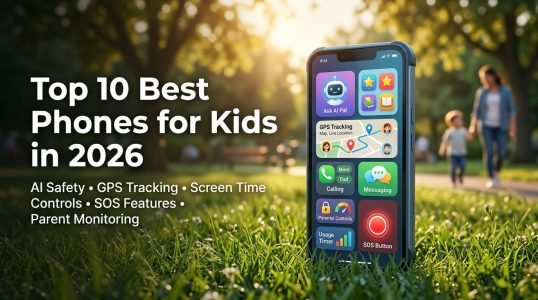
Synopsis: Best Phones for Kids have come a long way in 2026, and the good ones now do more than ring and text. This guide walks through ten phones built with real safety features baked in — GPS tracking, screen time limits, content filters, and parental-control tools that catch trouble early. Some are dedicated kid phones, others are mainstream Android and Apple devices carrying strong parental controls. A comparison table and age-by-age picks make the choice simple.
A parent facing the question of a child’s first phone quickly learns there is no clean answer sitting on a shelf. Give too much freedom and the worry sets in before bedtime. Give too little and the child feels handed a brick with buttons. Phone makers have finally noticed this tug-of-war, and 2026 has produced a decent crop of devices built with a parent’s nerves in mind rather than as some afterthought stitched on later.
The result is a batch of phones that mix real safety tools with enough usefulness that a kid won’t feel shortchanged. Screen time limits, location sharing, and content filters now arrive built in, not buried three menus deep in an app nobody remembers to open. Some of these come from companies built entirely around child safety; others are the same phones grown-ups carry, dressed down with strong parental controls.
Below sits a quick side-by-side of all ten, followed by a closer look at each one and picks sorted by age.
Table of Contents
Quick Comparison
A side-by-side often settles an argument faster than any amount of reading, so here is how the ten stack up at a glance.
| Rank | Phone | Best For | Key Safety & Smart Features |
|---|---|---|---|
| 1 | Bark Phone | Best overall for families | AI scans texts, photos & social apps for bullying and risk, within parent-set privacy limits |
| 2 | Pinwheel Phone | Best first smartphone | Parent-approved apps only, no browser, custom permissions per child |
| 3 | Gabb Phone 4 Pro | Best distraction-free phone | Restricted app ecosystem, filtered messaging, no social media or open web |
| 4 | Troomi Phone | Best for younger children | Intelligent web filtering, GPS, full parent app management |
| 5 | Google Pixel 10a | Best budget Android AI phone | Gemini AI tools plus Google Family Link for screen time and app control |
| 6 | Samsung Galaxy A07 | Best budget-friendly teen pick | Samsung Kids, solid battery life, Family Link support |
| 7 | Apple iPhone 17 | Best for Apple households | Screen Time, Communication Safety & Family Sharing handle child safety |
| 8 | Google Pixel 10 Pro | Premium Android AI choice | Advanced Gemini AI, Live Translate, strong parental tools |
| 9 | Samsung Galaxy S26 | Premium Android alternative | Galaxy AI, Circle to Search, Samsung Kids |
| 10 | imoo Z7 | Best for the youngest owners | GPS, video calling, health tracking rather than generative AI |
Two patterns stand out in this table: the dedicated kid phones lean on locking things down, while the mainstream Android and Apple devices lean on parental-control software running alongside their everyday AI assistants. Neither approach is wrong, it simply depends on how much of the internet a family is ready to hand over.
1. Bark Phone
 Pin
Pin Photo courtesy of Horizon Dwellers
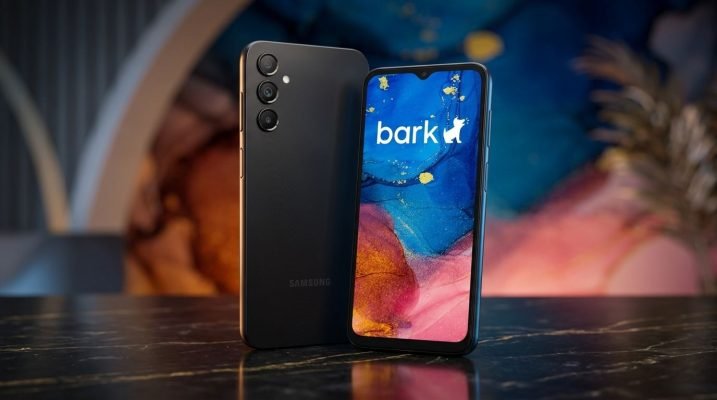
Bark built its name on watching for trouble instead of just blocking everything in sight, and the Bark Phone carries that reputation into hardware. Named best overall in more than one 2026 family safety roundup, it runs AI monitoring across texts, photos, social apps, and web browsing, flagging bullying, self-harm language, and contact from strangers, all within the privacy limits a parent sets, rather than leaving parents to comb through every message on their own.
What sets it apart is flexibility. A nine-year-old can run it in a locked-down starter mode, then the very same hardware opens up more freedom as the years pass, so a family isn’t stuck rebuying a new device every couple of years just because a child grew up a little.
- Works on Bark’s own network, not a family’s existing carrier
- 32GB of storage, plenty for most kids
- Parents approve every app before it lands on the phone
2. Pinwheel Phone
 Pin
Pin Photo courtesy of Horizon Dwellers
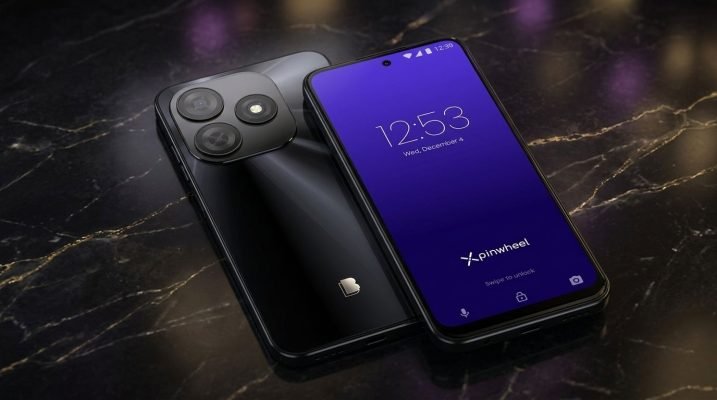
Pinwheel earns its reputation as many families’ first pick, and it’s easy to see why. The phone strips away the open internet and social media entirely, replacing them with a curated set of parent-approved apps that keeps growing. A caregiver portal shows call and text history, so nothing slips past unnoticed.
What sets Pinwheel apart from some rivals is customization. Each child in a household can carry different permission settings tuned to their own readiness, rather than one blanket rule stamped across every device in the house. It also pairs with Bark’s monitoring app for families wanting an extra layer without buying a second device.
- No web browser, no app store, no surprises
- Several phone models at different price points
- Multi-line discounts for families with more than one child
3. Gabb Phone 4 Pro
 Pin
Pin Photo courtesy of Horizon Dwellers
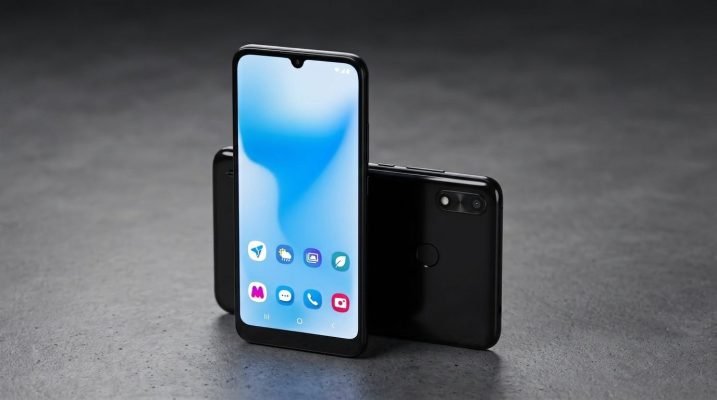
Gabb takes the opposite approach from phones stuffed with features, and plenty of parents are grateful for it. There is no internet browser, no social media, and no app store hiding in a corner waiting to be discovered. Gabb emphasizes a restricted app ecosystem, filtered communication, and strong parental controls rather than any generative AI layer, giving the Gabb Phone 4 Pro a set of parent-approved apps, a music library scrubbed of explicit lyrics, and a messaging system built specifically for children.
The Pro model bends slightly further than the standard Gabb Phone 4, allowing a curated batch of third-party apps as a child edges toward the teenage years, without ever opening the floodgates. It suits a family that wants a phone to feel like a phone, not a miniature computer.
- Runs on the Verizon network exclusively
- Often bundled free with a Gabb service plan
- Best suited to ages nine through early teens
4. Troomi Phone
 Pin
Pin Photo courtesy of Horizon Dwellers
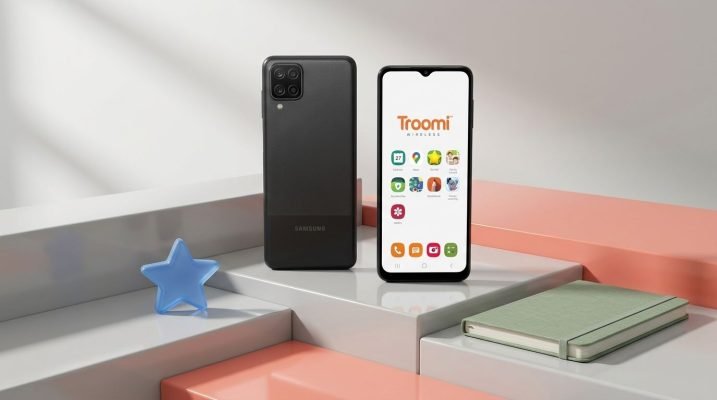
Troomi built its name catering to the youngest phone owners, the ones barely old enough to spell smartphone. Its intelligent web filtering catches anything unsuitable before a child ever sees it, while parents keep full control over which apps make the cut through parent-managed content controls. GPS tracking and screen-time scheduling round out the basics.
Where Troomi earns its spot on this list is the middle ground it occupies. It isn’t as bare-bones as Gabb, nor as open as Bark, sitting comfortably as a phone for a family easing a young child into technology one careful step at a time, rather than handing over the whole internet on day one.
- Aimed mainly at ages five through ten
- Optional web browser, switched off by default
- Parent dashboard manages every app remotely
5. Google Pixel 10a
 Pin
Pin Photo courtesy of Horizon Dwellers
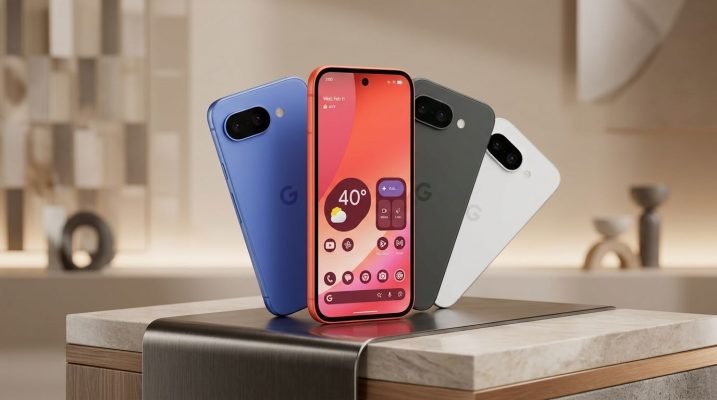
Stepping outside the world of dedicated kid phones, the Pixel 10a shows what a mainstream Android device looks like once Google Family Link gets involved. Gemini AI provides writing help, summaries, translation, and other everyday tools, while Family Link is the piece actually doing the parenting: setting app limits, approving downloads, sharing location, and restricting content.
The 10a suits an older child, one ready for a phone that looks and feels like everyone else’s, minus the parts a parent would rather keep out of reach. It runs on the same Tensor chip found in Google’s pricier models, so the AI features aren’t a watered-down imitation, even if the safety work still comes down to Family Link.
- A genuinely budget-friendly AI phone
- Family Link controls app time and content
- Best suited to ages twelve and up
6. Samsung Galaxy A07
 Pin
Pin Photo courtesy of Horizon Dwellers
Samsung’s budget line has quietly become a solid option for a teenager’s first real smartphone. The Galaxy A07 offers Samsung Kids, solid battery life, and compatibility with Google Family Link. It doesn’t include the full Galaxy AI suite found on Samsung’s premium devices, but that was never really the point of buying it.
It isn’t flashy, and nobody buys it expecting flagship cameras. What it offers instead is dependable safety tools without asking a family to spend flagship money on a device a teenager is bound to drop at least once.
- Samsung Kids built in for a simplified, child-safe interface
- Compatible with Google Family Link
- An affordable entry point rather than a flagship-AI device
7. Apple iPhone 17
 Pin
Pin Photo courtesy of Horizon Dwellers
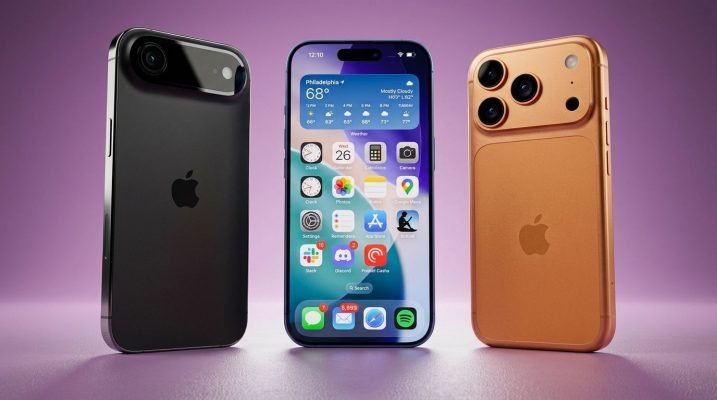
Families already living inside Apple’s ecosystem tend to land here, and for good reason. Screen Time, Communication Safety, and Family Sharing are the features actually doing the child-safety work, catching inappropriate images or messages and managing purchases and app limits across every Apple device in the house. Apple Intelligence sits alongside these tools as a productivity and writing assistant, not a dedicated safety monitor.
The iPhone 17 isn’t the cheapest option on this list, but for a household with iPads and laptops already scattered around, the consistency of one ecosystem often outweighs the price tag. Every parental control a family already knows from their own iPhone carries straight over.
- Communication Safety flags explicit images automatically
- Family Sharing manages purchases and screen time together
- Best suited to teenagers already used to iOS
8. Google Pixel 10 Pro
 Pin
Pin Photo courtesy of Horizon Dwellers
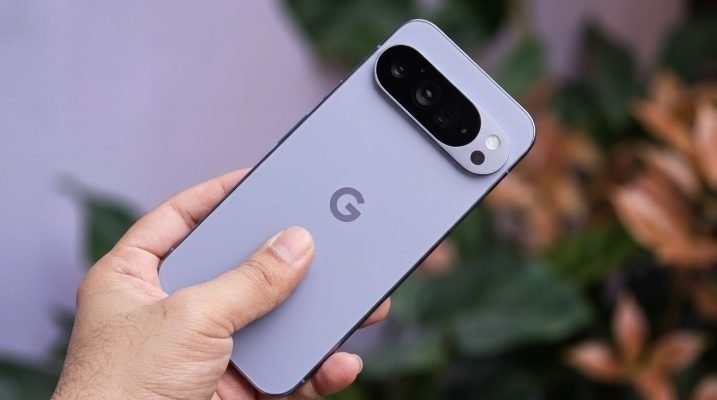
Not every family wants a starter phone, and the Pixel 10 Pro sits at the premium end for a reason. It carries Google’s most advanced Gemini AI tools, live translation for calls and messages, and the same Family Link controls found on cheaper Pixels, so a parent isn’t trading away oversight just because the hardware got fancier.
This one makes the most sense for an older teenager who already handles a phone responsibly and wants something that keeps pace with what the adults in the house are carrying. It’s an upgrade in capability more than a change in the safety approach underneath.
- Best suited to teens fifteen and older
- Runs on Family Link, same as the Pixel 10a
- Advanced camera and translation tools, not aimed at younger kids
9. Samsung Galaxy S26
 Pin
Pin Photo courtesy of Horizon Dwellers
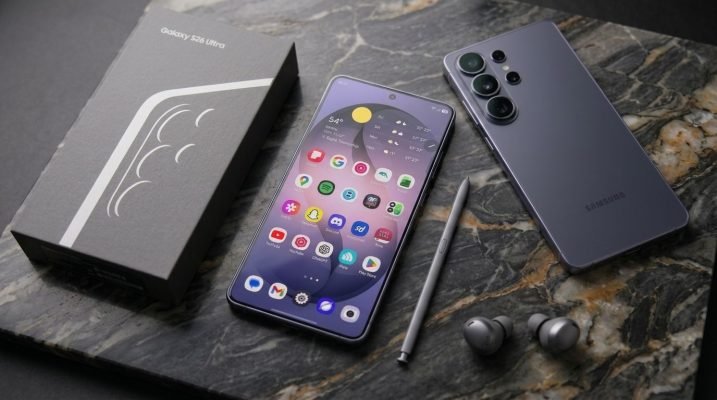
The Galaxy S26 plays a similar role on Samsung’s side of the fence. Galaxy AI and Circle to Search handle the everyday convenience work, while Samsung Kids turns the phone into a simplified, restricted interface whenever a parent wants to hand it over without worry.
Families already invested in Samsung’s ecosystem, or simply preferring Android’s flexibility over Apple’s tighter walls, tend to land here for an older teenager. It’s a flagship phone first, with the child-safety layer built in rather than bolted on.
- Best suited to teens fifteen and older
- Samsung Kids for a locked-down, simplified mode
- Circle to Search and Galaxy AI aimed at convenience, not safety
10. imoo Z7
 Pin
Pin Photo courtesy of Horizon Dwellers
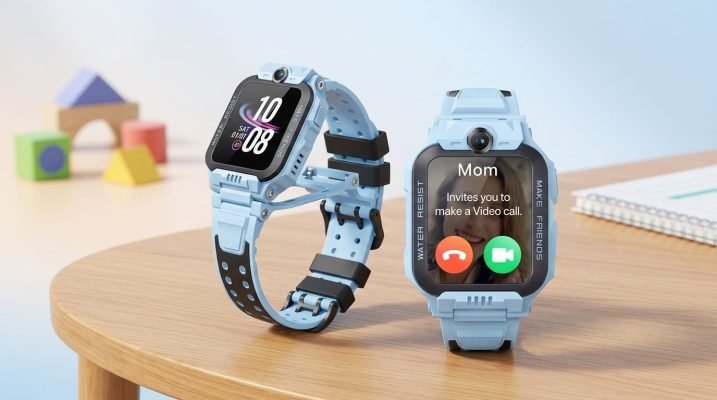
At the opposite end of this list sits the imoo Z7, built specifically for young children rather than adapted from an adult phone. It focuses on GPS tracking, video calling, and health monitoring rather than advanced generative AI features, which suits a child who needs a way to reach a parent, not a pocket computer.
Its whole design leans toward reassurance over capability. A parent can see where the phone is, take a call from a worried child, and keep tabs on basic wellbeing, all without opening the door to social media or an app store a five-year-old has no business browsing.
- Fits ages five through eight
- GPS, SOS alerts, and video calling built in
- No open internet or social media, by design
Choosing by Age
No single phone on this list fits every child, and age turns out to be the simplest sorting tool available. A five-year-old and a fifteen-year-old need entirely different things from a device, and matching the phone to the stage rather than the trend saves a family both money and headaches down the line.
A rough guide, drawn from how each phone is actually built and marketed, tends to hold up well across most households. Worth noting too: smartwatch phones like TickTalk or Cosmo JrTrack are often a better starting point than any smartphone for a child under eight, since they cover calling, GPS, and SOS alerts while keeping distractions out of the picture entirely.
- Ages 5–8: imoo Z7, Troomi Phone, or a kid’s smartwatch like TickTalk
- Ages 8–12: Pinwheel Phone or Bark Phone
- Ages 12–16: Google Pixel 10a or Samsung Galaxy A07, with Family Link enabled
- Teens 13 and older: iPhone 17 or Galaxy S26, with parental controls switched on
Final Verdict
After weighing every option, three phones stand clearly ahead of the pack. The Bark Phone takes first place for its AI-driven monitoring and the way it grows alongside a child instead of becoming outdated in two years. Pinwheel comes a close second, ideal for a family wanting a true kid-safe phone without any back door to the open internet. Rounding out the podium is the Pixel 10a, the pick for a family already comfortable with mainstream Android and Google Family Link, offering Gemini AI without a dedicated kid-phone price tag.
None of these guarantees a worry-free household, of course. No phone does that job on its own. But each one hands a parent real tools instead of empty promises, which is about as much as anyone can reasonably ask from a slab of glass and silicon riding around in a child’s pocket.
FAQs
For ages five to ten, Troomi, the imoo Z7, or a kid’s smartwatch offer GPS tracking, no open internet, and full parent control — a gentle first step before anything more complex.
Yes. Apple’s Screen Time and Family Sharing, or Google’s Family Link, add strong parental controls to mainstream phones like the iPhone 17 or Pixel 10a.
Most families start between ages nine and twelve, though readiness depends more on the child than the calendar. Start restrictive and loosen controls gradually.
Not always. Bark and Gabb use their own network deals, while Pinwheel and Troomi allow more carrier flexibility. Check before buying.
The Bark Phone leads here, using AI to scan texts, photos, and social apps for signs of bullying or distress, alerting parents only when something looks wrong.









 Login with Google