














 Pin
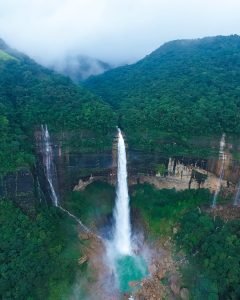
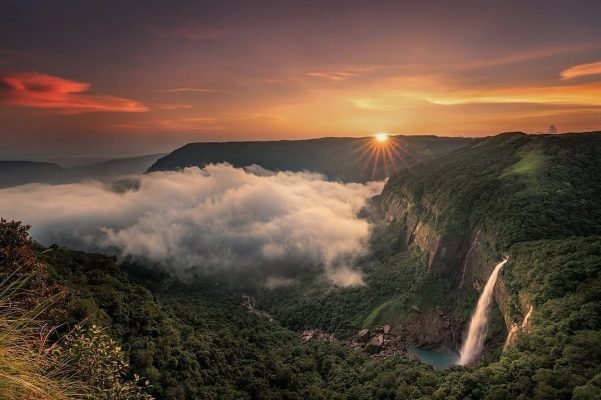
Pin Nohkalikai Falls near Cherrapunji, Meghalaya – Monsoon Destinations in India / Photo Courtesy of Dhinuraja
Synopsis: India turns itself inside out every monsoon — hills go green overnight, waterfalls roar to life, and the air smells like the earth finally exhaling. But not every corner of the country handles the rains the same way. Some places flood; some landslide. These ten monsoon destinations in India — plus one bonus pick — are the rare ones that bloom gracefully under the downpour, offering breathtaking scenery without the safety headaches. Misty valleys, royal lake cities, and flower-carpeted Himalayan trails — this list covers it all.
There is a version of India that most travelers never see. Not the version with crowded summer queues at forts, or the dry, dusty roads of peak tourist season. This version arrives quietly every June, carried on southwest winds from the Arabian Sea. It smells like wet mud and jasmine. It sounds like rain on a tin roof in some forgotten hill town. And for those willing to pack a raincoat and board a train, it is, without any exaggeration, the most gorgeous version of the subcontinent that exists.
The monsoon season in India runs roughly from June to September, sweeping across the country in two great arcs — the Bay of Bengal branch heading northeast, and the Arabian Sea branch climbing the Western Ghats. What it leaves behind in its wake is the stuff of postcards: mist-drowned hills, rivers that find their voice again, and entire forests that turn an almost unreal shade of emerald. The trouble, of course, is that not every destination weathers the rains gracefully. Landslides block mountain roads. Coastal towns brace for storms. Certain river valleys flood without warning.
That is what this list is for. These ten places — plus one bonus destination — are the sweet spot: where nature puts on its most spectacular show, and the traveler can actually enjoy it without worrying about being washed off a hillside. Romantic lake cities, tea-scented mountain towns, a valley in the Himalayas that bursts into six hundred varieties of wildflowers, and a coastal corner that keeps the old world charm intact through it all. India in the monsoon is worth every damp sock. Here is where to go.
Table of Contents
1. Mahabaleshwar, Maharashtra
 Pin
Pin Photo courtesy of Cravings and Co
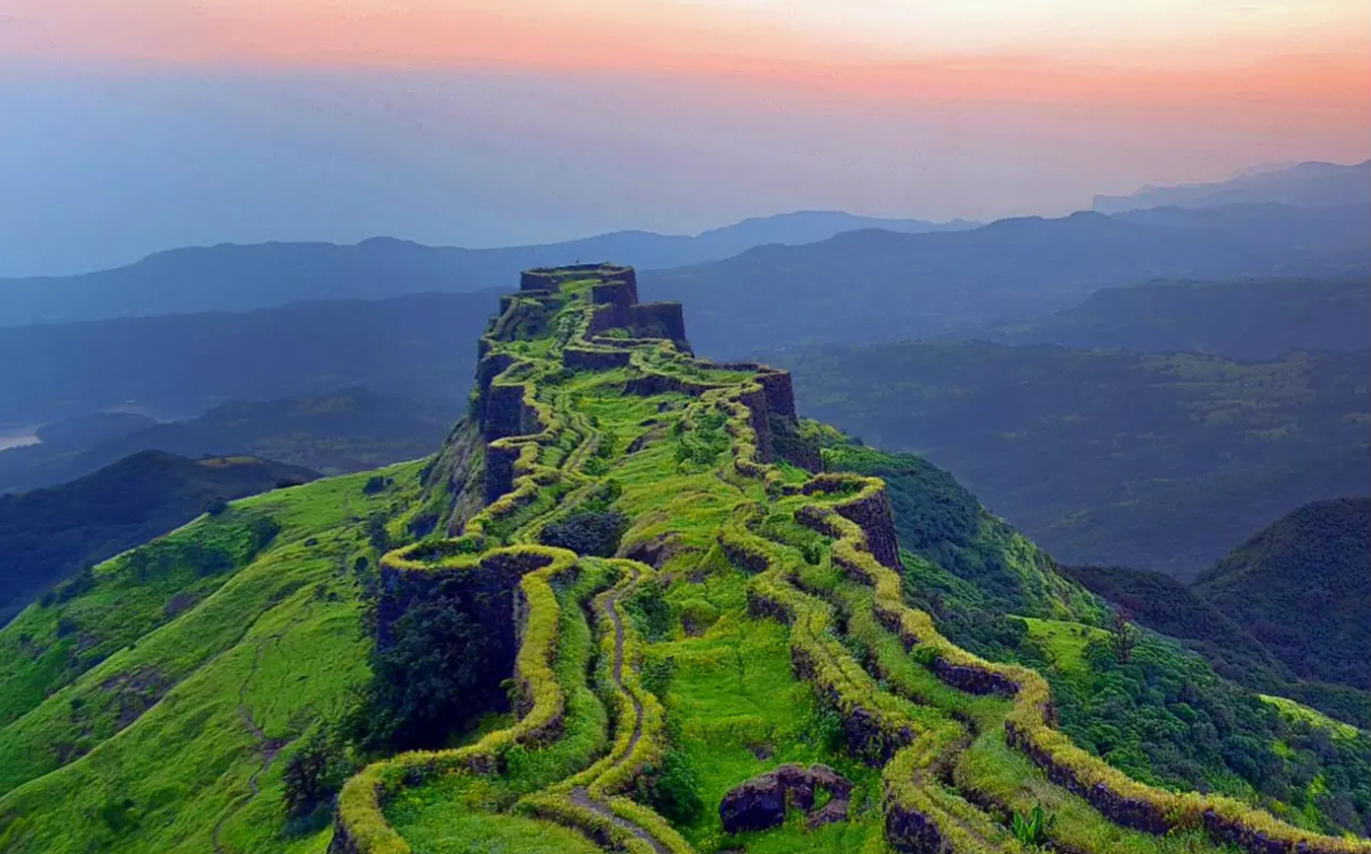
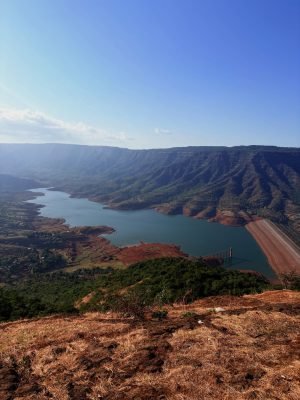
Tucked into the Sahyadri range at about 1,372 metres above sea level, Mahabaleshwar is the kind of hill station that exists to be rained on. The surrounding forests absorb the downpour and turn theatrical about it — mist rolls across the valleys in slow waves, the Lingmala Falls doubles in fury, and the strawberry farms that line the roadsides glisten under the grey sky like something out of a children’s storybook.
The town itself is a familiar favorite for families driving up from Mumbai and Pune. Roads are well-maintained, hotels are plentiful, and the rainfall — while generous — stays manageable through most of the season. Venna Lake takes on a silvery, romantic quality when the clouds are low, and the surrounding viewpoints offer vistas so dramatic they look digitally enhanced.
Top things to do during the monsoon:
- Watch Lingmala Falls in full monsoon roar — it’s a genuinely spectacular sight.
- Boat on Venna Lake surrounded by mist and overhanging trees.
- Eat corn patties and strawberry jam straight from the farm stalls along the road.
- Drive through Wilson Point at sunrise for staggering views over the cloud-filled valley.
2. Udaipur, Rajasthan
 Pin
Pin Photo courtesy of Kuldeep / MigrantCreationalMedia.com
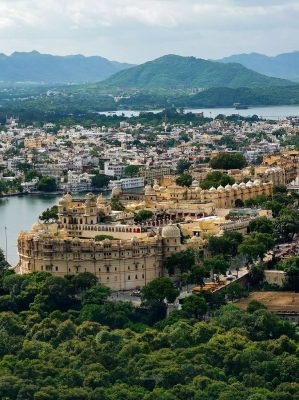
Rajasthan is not typically associated with the monsoon. The desert state bakes through most of the year, and tourists generally avoid July. But Udaipur operates by different rules. Sitting in the southern part of the state, sheltered by the Aravalli hills, the City of Lakes receives mild, well-distributed rainfall — enough to fill its lakes and turn its hillsides green, but not enough to cause disruption. It is, in fact, at its most beautiful during the rains.
Lake Pichola fills up and the Lake Palace — floating at its centre — takes on an almost fictional quality when the clouds bunch low and the water reflects the marble. The City Palace, rising from the lake’s edge, drips with atmosphere. The streets of the old city stay alive with colour even under an overcast sky. Tourist crowds thin out considerably, which means shorter queues, quieter boat rides, and significantly better hotel rates.
What makes it one of the safest monsoon picks:
- Low to moderate rainfall — flooding and major travel disruptions are uncommon compared with many monsoon destinations.
- Excellent infrastructure — reliable roads, well-run heritage hotels.
- Monsoon Palace offers one of the most dramatic sunset viewpoints in all of India.
3. Munnar, Kerala
 Pin
Pin Photo courtesy of Ft. Niyazzzzz
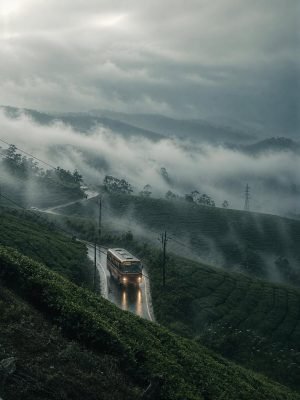
Munnar sits at around 1,600 metres in the Western Ghats of Kerala, surrounded by an almost continuous carpet of tea bushes. During the monsoon, the temperature dips to a cool 15–18°C, the mist settles heavy over the ridgelines, and the tea gardens turn a shade of green so saturated it looks painted. The roads into Munnar are well-maintained and the town itself has good amenities — though visitors should monitor weather advisories during periods of exceptionally heavy rain, when Kerala’s hill regions can occasionally see landslide activity.
The Attukal Waterfalls, a short drive from town, reaches its full potential during these months. Mattupetty Dam fills up and the surrounding grasslands blur into the low clouds in a way that seems almost theatrical. Early mornings are often clearer, with the best views of the rolling hills before the afternoon rains settle in.
Monsoon highlights:
- Walk through wet tea plantations at dawn — the scent alone is worth the trip.
- Visit Eravikulam National Park, home to the endangered Nilgiri Tahr.
- Stay in a plantation bungalow and listen to the rain hammer the corrugated roof all night.
- Check weather forecasts daily — heavy spells can make some routes slippery.
4. Coorg, Karnataka
 Pin
Pin Photo courtesy of Sannu Photography/youtube.com/@sannucreation
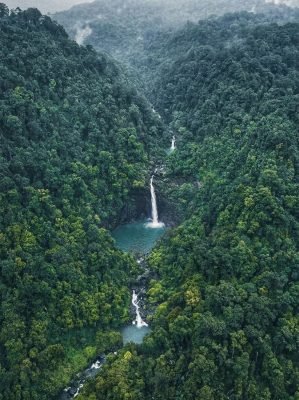
Coorg — or Kodagu, as the locals properly call it — sits in the highlands of Karnataka at around 1,000–1,600 metres, draped in thick forests, coffee estates, and the kind of silence that city people travel hundreds of miles to find. The monsoon here is gloriously theatrical. Abbey Falls, a 70-foot cascade tucked behind a curtain of forest, roars at full capacity. The Pushpagiri Wildlife Sanctuary drips. The coffee estates fill with the scent of wet soil and ripe berries.
The Kodava people — the indigenous community of Coorg — have a deep relationship with the land, and their culture is at its most vivid during the harvest seasons that follow the rains. Plantation stays are the best way to experience the region, waking up to misty mornings with a hot cup of estate-grown coffee and the sound of water moving through the forest.
Don’t miss:
- Abbey Falls at full monsoon flow — genuinely breathtaking.
- Dubare Elephant Camp — accessible and responsible wildlife experience.
- Raja’s Seat at dusk — the view over the valley in rain is something to carry home.
5. Lonavala, Maharashtra
 Pin
Pin Photo courtesy of thesphereticket.com
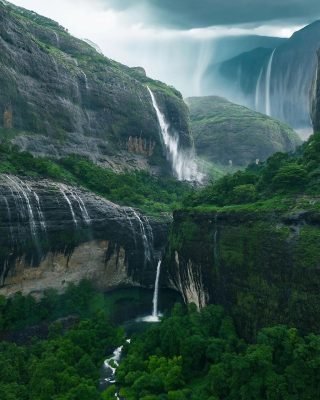
Lonavala has been doing this for over a century — offering people from Mumbai and Pune a quick escape into the hills whenever the heat or the city becomes too much. During the monsoon, it earns its reputation all over again. The Western Ghats around it turn electric green, waterfalls appear from nowhere along the highway, and the mist is so thick in the morning that visibility at Bhushi Dam drops to a few feet.
Bhushi Dam is perhaps the most famous monsoon spot in Maharashtra — crowds gather here to wade in the overflow channels, water rushing cheerfully around their ankles. Avoid entering fast-flowing overflow channels and follow local safety advisories, as authorities occasionally restrict access during very strong water flow. Tiger’s Leap, a cliff-edge viewpoint shaped like a crouching tiger, offers jaw-dropping views over the valley below, clouds permitting. The roads are good, the food stalls sell legendary vada pav and chikki, and the whole experience has the easy, informal energy of a place that knows exactly what it’s good at.
- Bhushi Dam overflow — the classic monsoon pilgrimage for Mumbaikars.
- Tiger’s Leap viewpoint — dramatic valley views from the cliff edge.
- Karla Caves — ancient Buddhist rock-cut caves, quiet and impressive on a grey afternoon.
6. Wayanad, Kerala
 Pin
Pin Photo courtesy unknown
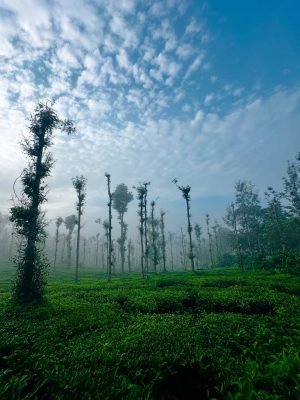
Wayanad sits at the northern edge of Kerala, where the state bleeds into Karnataka and Tamil Nadu, and the forests get dense and old. During the monsoon, the place goes feral in the best possible way — waterfalls erupt from cliff faces that were dry three weeks earlier, the tribal villages settle into the rhythm of the rains, and the wildlife in the Wayanad Wildlife Sanctuary becomes more active as the forest thickens.
What makes Wayanad particularly worth visiting during this season is the Splash festival — a three-day monsoon celebration that the local tourism authorities have built into a genuine cultural event. Beyond the festival, the region offers trekking, elephant spotting at Muthanga, and the Edakkal Caves, a remarkable site containing petroglyphs estimated to be over 6,000 years old. The rains soften the roads somewhat, so four-wheel drives are wise for the more remote trails.
- Soochippara and Meenmutty Falls — best visited during peak monsoon for full flow.
- Edakkal Caves — ancient petroglyphs in a surreal jungle setting.
- Muthanga Wildlife Sanctuary — elephant and deer sightings are common in the wet season.
7. Cherrapunji, Meghalaya
 Pin
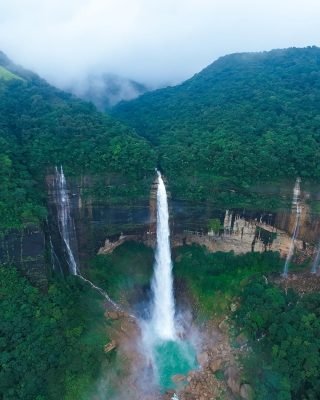
Pin Nohkalikai Falls near Cherrapunji, Meghalaya – Monsoon Destinations in India / Photo Courtesy of Dhinuraja
There is a point in Cherrapunji, standing at the edge of a cliff above the Bangladesh plains, where the entire world below disappears into cloud. Nohkalikai Falls, standing about 340 metres high and ranked as India’s tallest plunge waterfall, drops into a turquoise pool that the monsoon turns jade green. The Khasi Hills receive some of the highest rainfall on earth here, and the landscape reflects it: every surface is alive with moss, every stream has become a river, every distant gorge is stitched together with waterfalls.
The living root bridges of Meghalaya — woven over centuries from the aerial roots of rubber fig trees by the Khasi people — are in the nearby village of Nongriat. Crossing them in the rain, with water rushing below and mist above, is one of the more genuinely memorable experiences available in this country. Roads in the area can be slippery, so hiring a local driver is strongly advisable.
- Nohkalikai Falls at full monsoon — one of India’s truly unmissable sights.
- Double-decker living root bridge in Nongriat — a steep trek rewarded spectacularly.
- Mawsmai Cave — a limestone cave system that glitters in the rain-season humidity.
8. Valley of Flowers, Uttarakhand
 Pin
Pin Photo courtesy of Ajeet AK
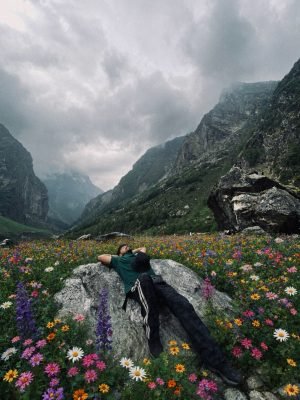
In 1931, British mountaineer Frank Smythe stumbled upon a high-altitude Himalayan valley on his way back from conquering Mount Kamet. He was so struck by what he saw that he wrote a book about it and called it, without irony, a paradise on earth. The Valley of Flowers in Chamoli district, Uttarakhand, has been earning that description ever since. A UNESCO World Heritage Site sitting between 3,352 and 3,658 metres, it hosts over 600 species of flowering plants — and the monsoon is precisely when it all blooms.
Between mid-July and late August, the valley floor becomes a moving carpet of the striking Blue Poppy, Cobra Lily, and dozens of other species found nowhere else in the world. The nearby high-altitude areas around Hemkund Sahib are especially famed for the Brahma Kamal — the sacred white flower that blooms only at night — which thrives at the greater elevations of that region. Himalayan peaks frame the whole scene from every direction. The trek from Govindghat is roughly 14 kilometres one way — manageable for reasonably fit travelers — and the route passes
Ghangaria, a small settlement with basic but functional lodges.
- Best visited: mid-July through late August for peak bloom.
- Combine with Hemkund Sahib — a sacred Sikh pilgrimage site nearby.
- Entry permit required at Ghangaria; fees are revised periodically, so checking the latest rates before travel is recommended.
- Nearest airport: Jolly Grant, Dehradun (292 km); nearest railhead: Rishikesh (273 km).
9. Darjeeling, West Bengal
 Pin
Pin Photo courtesy of Travelling My India
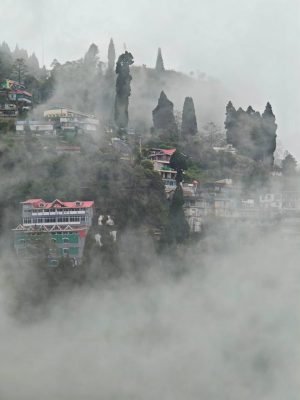
Darjeeling is one of those places that seems to have been designed for overcast skies. The colonial-era bungalows, the narrow lanes of the bazaar, the smell of first-flush tea drying in the factory sheds — all of it feels right under a grey monsoon sky in a way it simply doesn’t under harsh summer sun. The tea gardens turn a deep, almost luminous green, and the Himalayan Railway — the UNESCO-listed Toy Train — winds through cloud and drizzle like something from a quiet dream.
Sunrise at Tiger Hill is a lottery during monsoon — most mornings Kanchenjunga stays hidden behind cloud — but when it does appear, the mountain takes your breath cleanly away. The Happy Valley Tea Estate welcomes visitors year-round and the tasting sessions there are best when rain is falling outside and the factory air smells of damp leaves and warmth. Mall Road in the evenings, still busy with locals umbrellas up, has a particular calm that peak-season tourists rarely see.
- Ride the Darjeeling Himalayan Railway through monsoon mist — the views are otherworldly.
- Visit Happy Valley Tea Estate for a guided tour and tasting.
- Peace Pagoda and Ghum Monastery — quiet, atmospheric, particularly beautiful in the rain.
10. Alleppey, Kerala
 Pin
Pin Photo courtesy of Nabina Nazar
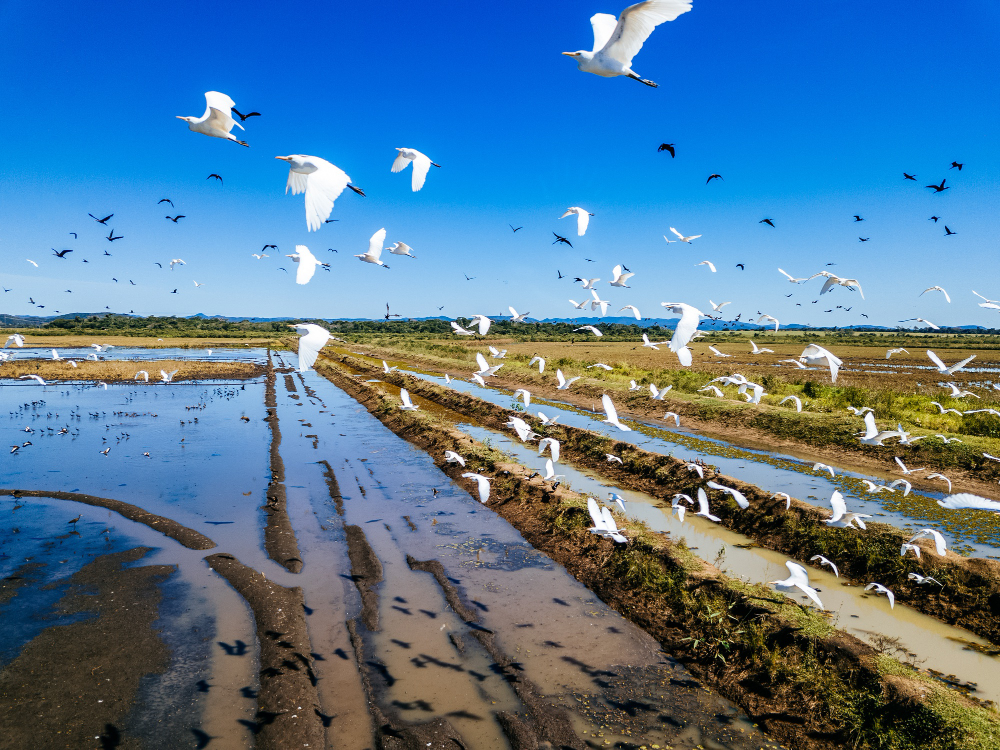
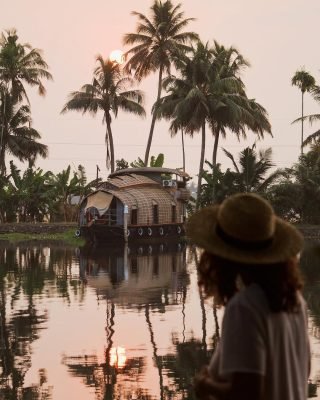
Alleppey — properly spelled Alappuzha — is the gateway to Kerala’s backwater network, a 900-kilometre system of canals, lagoons, and lakes that runs parallel to the Arabian Sea coast. It’s a destination that requires no particular season to be beautiful. But during the monsoon, the entire landscape shifts into something different. The paddy fields flood and turn mirror-flat, reflecting grey skies and swaying palms. Canals fill to their banks. The houseboat moves through a world that feels temporarily underwater.
A houseboat journey through the Kuttanad region during the rains is a deeply particular experience — slow, quiet, and hypnotic. Rain drums on the wooden roof while the cook prepares a Kerala fish curry in the galley below. Villages appear and disappear along the bank. Licensed houseboats under Kerala Tourism Development Corporation approval carry life jackets, fire extinguishers, and certified crew, and night travel on the canals is restricted, so boats anchor safely by evening — book only through KTDC-approved operators and look for the green certification board displayed on the vessel. The famous Nehru Trophy Boat Race is held in August, when the snake boats carry dozens of oarsmen in a thunderous sprint across Punnamada Lake.
Bonus Destination: Shillong, Meghalaya
 Pin
Pin Photo courtesy of Manish Lakhani
Shillong is a city unlike any other in India. The capital of Meghalaya — a state whose name literally means ‘the abode of clouds’ — it sits at 1,500 metres in the Khasi Hills, its colonial bungalows and pine-covered ridgelines giving it a vaguely Scottish quality that the British settlers clearly appreciated. During the monsoon, Shillong earns its geography completely. The hills surrounding the city gush with waterfalls. The air tastes clean and cold. The local music scene — Shillong has a remarkable culture of rock and jazz — fills the cafes and the evenings.
Elephant Falls, a short drive from the city centre, cascades in three tiers through a mossy gorge that the rains make genuinely spectacular. Ward’s Lake in the centre of town fills completely and reflects the sky. The Khasi markets overflow with local produce — bamboo shoots, smoked meat, and the region’s particular dried fish — and the streets carry the particular energy of a city that is entirely comfortable in its own skin.
Shillong sits about 80 kilometres from Cherrapunji, which makes it an easy base for exploring Meghalaya’s waterfall belt. Roads between the two are well-maintained, and the drive itself — through cloud forest and open plateaus — is half the experience. As a bonus entry on this list, it sums up what the best monsoon destinations in India share: a landscape shaped to receive rain, a culture comfortable with it, and scenery that no other season can replicate.
- Elephant Falls — a three-tiered cascade at its most powerful during peak monsoon.
- Day trip to Cherrapunji for Nohkalikai Falls and the living root bridges.
- Try jadoh (rice and meat), tungrymbai (fermented soybean), and doh-khlieh at a local market.
- The Shillong live music scene is surprisingly vibrant — check venues around Police Bazaar.
FAQs
Udaipur. Mild rainfall, excellent roads, gorgeous lake-and-palace scenery, and a well-developed tourism infrastructure make it the most risk-free choice for anyone new to monsoon travel in India.
Mid-July to late August is the sweet spot. That’s when the maximum number of species bloom simultaneously — including the rare Blue Poppy and Cobra Lily. Brahma Kamal, the sacred night-blooming flower, is best found in the nearby Hemkund Sahib area at higher elevations. The park is open June to October, but early and late season offer far fewer flowers.
Monsoon is actually the off-season for Kerala tourism, which means houseboat rates drop considerably — sometimes by 30–40% compared to peak winter season. It’s genuinely the best time to go if budget matters.
Generally yes, with a few precautions. Roads can be slippery, and trekking to the living root bridges in Nongriat involves steep descents. Hire a local driver rather than self-driving, and avoid treks immediately after very heavy rainfall.
A compact waterproof jacket, quick-dry clothes, sealed bags for electronics, sturdy waterproof footwear, and a downloaded offline map of your destination. A small first-aid kit and travel insurance that covers weather disruptions are also wise additions.







 Login with Google