
























 Pin
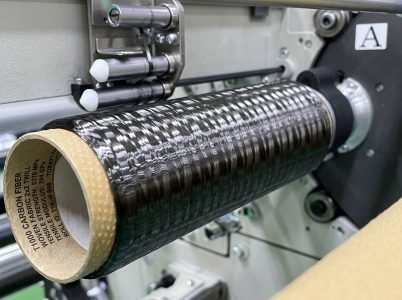
Pin T1000 Carbon Fiber / Photo Courtesy of Horizon Dwellers (AI Generated)
Synopsis: A single thread of T1000 Carbon Fiber is thinner than a human hair, yet a bundle no heavier than a paperclip can hold up a small car. Toray Industries commercialized it in Japan in the late 1980s, and it has been quietly holding together jets, rockets, and race cars ever since. This piece walks through where the fiber came from, how factories spin something this strong, why it earned the nickname “black gold,” and how China’s recent breakthrough is closing the gap with a market long dominated by Japan and the United States.
Nobody invites carbon fiber to a dinner party, and that is a shame, because it has more stories worth telling than most guests who show up. It sits under the skin of jetliners, wraps around rocket tanks, and holds Formula One drivers together at 200 miles an hour, and hardly anyone gives it a second look. This is the tale of one particular grade of it — one of the toughest money can buy — and how a handful of scientists in Japan turned soot-black thread into one of the most valuable materials on Earth, and how China is now racing to catch up.
In the late 1980s, engineers at Toray Industries were hunting for a fiber that could outlast anything then on the market, and what came out of their labs was T1000 Carbon Fiber — a material so tightly wound at the molecular level that it laughed off forces that would snap steel cable. Toray had been making carbon fiber since 1971, but this new grade pushed the idea further than anyone expected.
The trick was in the lineup. Carbon atoms, when stretched and heated just right, line up like soldiers standing at attention instead of slouching in a crowd. The straighter that lineup, the more punishment the fiber can absorb before it gives way. Toray’s chemists spent years chasing that alignment, and this grade was the payoff.
A few numbers help make sense of it:
- Tensile strength above 6.4–6.6 GPa, depending on the producer
- Sold as a 12K small-tow fiber, meaning each bundle holds about 12,000 individual filaments
- Filament diameter of roughly 5 to 7 microns, about one-tenth the width of a human hair
None of those numbers mean much until you see what they let engineers build.
Table of Contents
How Factories Actually Spin It
Spinning a fiber this strong is not something done in an afternoon. It starts with a chemical called polyacrylonitrile, or PAN for short, which gets drawn into a fine thread and then baked through a series of ovens that would make a pizza oven blush.
The fiber passes through stabilization at moderate heat, then carbonization furnaces running past 1,000°C, burning away everything except carbon atoms. What comes out the other end is almost pure carbon, arranged in tight, crystal-like sheets rolled into a thread.
Toray’s original route is called dry-jet wet spinning, and getting it right took decades of trial and error. Small mistakes — a fraction of a degree off, a slightly uneven pull — can weaken an entire batch. That precision is a big reason so few companies in the world have ever pulled off this trick at real scale.
What the Strength Numbers Actually Mean
Strength figures on a data sheet do not mean much to most readers, so it helps to set them beside something familiar. A steel cable strong enough to do the same job would weigh roughly five times as much for the same performance.
Engineers care about two things mainly: tensile strength (how much pulling force it survives) and modulus (how much it resists bending). This fiber ranks near the top on strength while holding a modulus similar to fibers a full grade below it — meaning the extra strength does not cost it flexibility where flexibility is needed.
A quick comparison worth remembering:
- A one-meter 12K bundle — a tow of about 12,000 filaments — weighs roughly half a gram
- That same bundle can support more than 200 kilograms under laboratory test conditions
- It resists both pulling and compressing forces, unlike many brittle materials
That kind of ratio is exactly why weight-obsessed industries keep circling back to it.
Earning the Name 'Black Gold'
For decades, only a small handful of companies on Earth knew how to make this stuff, and they were not shy about pricing it accordingly. Buyers sometimes paid the equivalent of hundreds of dollars per kilogram — more than some precious metals, gram for gram, in certain years.
The nickname stuck for two reasons. It is dark as coal, and it has historically been priced like treasure, guarded like a family recipe passed down through generations of engineers rather than published in any open catalog. Chinese media in particular have long called high-performance carbon fiber “black gold,” and the name has carried over as the country built its own supply.
For years, buyers who needed it for aerospace or defense projects had to lean on suppliers overseas, and that dependence came with real consequences: shipments delayed, order sizes capped, and prices set largely by whoever held the patents.
Holding Rockets and Satellites Together
Aerospace engineers do not reach for expensive materials to show off. They use them because a single kilogram saved on a rocket can mean an extra kilogram of payload reaching orbit, and this fiber earns its keep there better than almost anything else available.
It shows up wrapped tightly around pressure vessels that hold helium and other gases at extreme pressure aboard rockets and satellites. A metal tank doing the same job would need thicker walls and far more weight, cutting straight into how much cargo a rocket can actually carry.
Common uses include:
- Composite overwrapped pressure vessels on launch vehicles
- Satellite frames, trusses, and structural panels
- Hydrogen storage tanks for next-generation fuel systems
Every gram saved here echoes all the way to the launch pad.
Why Airlines Care About a Few Grams
Passenger jets do not chase every gram the way rockets do, but weight still means fuel, and fuel means money on every single flight for the life of the aircraft. That is a big part of why Boeing leaned so heavily on carbon fiber composites for its 787 Dreamliner.
Roughly half the Dreamliner’s structural weight comes from composite material, covering the fuselage, wings, and tail sections. Toray supplies composite material for those primary structures, drawing on a range of its carbon fiber grades rather than this single grade alone, and the shift away from thousands of aluminum sheets and rivets cut tens of thousands of fasteners from every airplane built.
The payoff shows up in fuel bills. Airlines flying the Dreamliner report meaningfully better fuel efficiency compared to older aluminum jets flying the same routes, and that savings compounds over a fleet flying for twenty or thirty years.
Racing Chassis and Featherweight Bikes
Race teams live and die by tenths of a second, and shaving weight off a chassis without losing strength is one of the cheapest ways to find that speed. Formula One teams and premium bike makers both reach for high-strength carbon fiber grades whenever the budget allows it.
In cycling, frame builders mix grades strategically rather than building an entire bike from the priciest fiber available. The highest-strength material gets placed at stress points — bottom brackets, head tubes, dropouts — where crashes and pedaling force hit hardest, while cheaper grades fill in the rest of the frame.
The same logic applies to race car chassis, where a stronger tub around the driver means better crash protection without piling on extra pounds that would slow the car down on every single lap.
The Quiet Defense Connection
Militaries do not advertise their supply chains, but reporting over the years has made it fairly clear that high-grade carbon fiber sits inside armor plating, missile casings, and various defense structures where weight and strength both matter under battlefield conditions.
That defense connection is part of why supply has historically been tightly controlled. Countries producing the highest grades have treated it as a strategic material, restricting exports much the way they might restrict advanced semiconductors or precision optics.
This is also why nations without a domestic supply have spent years, sometimes decades, trying to build their own manufacturing capability rather than stay dependent on a small handful of foreign suppliers.
China Closes the Gap in High-Performance Carbon Fiber
For decades, Japan and the United States dominated the market for this grade of fiber, though companies in Europe and South Korea also built advanced carbon fiber programs of their own along the way. That balance started shifting in late 2025, when a production line in Datong, in China’s Shanxi province, began turning out T1000-grade fiber at scale for the first time domestically.
Researchers at the Institute of Coal Chemistry, working alongside Shanxi Huayang Carbon Material Technology, spent close to nine years developing their own version of the dry-jet wet spinning process before the line went live. The output matched international benchmarks for strength and stiffness, filling a gap that had constrained the country’s aerospace and defense programs for years.
Reports since then note domestic prices running 20 to 30 percent below imported material at similar performance levels. In mid-2026, Sinopec’s Shanghai Petrochemical unit added a second route to the same T1000 grade using wet spinning rather than the dry-jet wet method, giving the country two independent ways to manufacture this fiber at scale rather than a single production line to depend on.
What Cheaper Supply Could Unlock
Whenever a material this expensive becomes cheaper to produce, industries that once could not afford it start lining up at the door. That is exactly what analysts expect here, as domestic manufacturing scales up and prices keep sliding downward.
Electric flying taxis, wind turbine blades, and hydrogen storage tanks are three areas already eyeing wider use once supply loosens up. China’s electric vertical takeoff aircraft market alone is projected to need tens of thousands of tons of high-grade fiber by the end of the decade.
Sectors watching closely include:
- Urban air mobility and drone manufacturing
- Wind energy, where lighter blades mean more efficient turbines
- Hydrogen fuel infrastructure, which needs lightweight high-pressure tanks
Cheaper supply rarely stays contained to one industry for very long.
The Next Grade Is Already Here
Toray did not stop innovating once this grade hit the market. It has since released stronger versions at its Ehime Prefecture facility in Japan, and manufacturers racing to catch up are pushing their own next-generation grades through testing right now.
Toray’s newer T1200 grade claims tensile strength over ten percent higher than anything it previously sold commercially. In China, Zhongfu Shenying Carbon Fiber has gone further on the production side, announcing mass production of its own T1200-grade fiber, marketed as SYT80, with tensile strength above 8.0 GPa — reported as the world’s first T1200-grade carbon fiber to reach mass production.
What this points to is a slow but steady contest in materials science, one where the winners will not be measured in flashy headlines but in how light the next generation of planes, rockets, and turbines can get.
FAQs
Pound for pound, it holds roughly five times the strength of steel while weighing a fraction as much — exactly why aerospace engineers reach for it when weight matters most.
Decades of tightly guarded manufacturing know-how, few producers, and heavy demand from aerospace and defense buyers kept prices sky-high, though new production lines are finally pushing costs down.
Yes — premium bicycles, high-end tennis rackets, and some sports cars use it at key stress points, though full-frame use is still mostly reserved for aerospace and racing budgets.
A Shanxi-based facility began domestic mass production in late 2025, and Sinopec added a second production route in 2026, closing a gap that once left the country dependent on Japan and the US.
Toray has already released a stronger T1200 grade, and China’s Zhongfu Shenying reports mass production of its own T1200-grade fiber, so the race for lighter, stronger fiber is far from over.










 Login with Google