
























 Pin
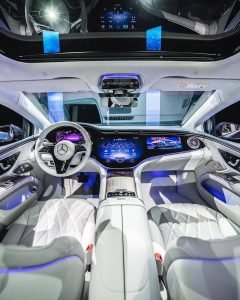
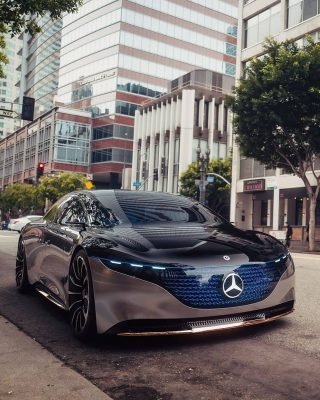
Pin Mercedes EQS / Photo Courtesy of @mbmaybachluxury
Synopsis: Top 10 AI-Powered Cars have quietly rewritten what a family car is supposed to do. One SUV keeps a drone in its roof. A sedan reads the driver’s face for signs of fatigue. Several talk back in full sentences, thanks to language models tucked under the dashboard. This list studies ten machines that treat the steering wheel as just one control among many, and finds a fair bit of genuine cleverness sitting behind the marketing copy.
A car, not so long ago, was judged by its engine and little else. That standard has aged out of fashion. The vehicles rolling out of factories in Shenzhen, Stuttgart, and Fremont now carry more computing power than the spacecraft that first reached the moon, and they put it to work in ways no engineer of the last century would have guessed.
One SUV on this list stows a drone the way older cars stow a spare tire. A sedan elsewhere in the lineup keeps a pair of lasers spinning on its front fenders, watching the road with more patience than most drivers manage after an hour behind the wheel.
The thread running through all ten is a simple wager: that software, sensors, and a healthy dose of artificial intelligence can do more for safety and comfort than another twenty horsepower ever could. Here is the list, one machine at a time.
Table of Contents
A Different Kind of Horsepower Race
The old contest among automakers was fought in cylinders and quarter-mile times. That fight hasn’t ended, but a second one has grown up right beside it, waged almost entirely in code. Every major manufacturer now keeps a small army of software engineers on payroll, often outnumbering the folks who actually bolt the car together.
The prize isn’t purely a faster car so much as a more watchful one, built to notice a drowsy driver before the driver notices himself, or nudge a wandering wheel back into its lane a half-second before a small mistake turns into a large one. Homegrown chips from BYD and Nio now matter to a car’s identity almost as much as the badge on the hood.
A few things separate today’s smartest cars from yesterday’s fast ones:
- Camera, radar, and sometimes lidar sensors doing the seeing
- Onboard AI chips doing the thinking, often on par with a small data center
- Over-the-air updates doing the improving, long after the car has left the factory floor
1. Yangwang U8
 Pin
Pin Photo courtesy of SUNNATULLO JALOLOV
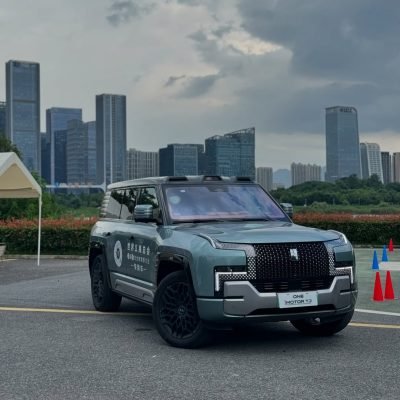
BYD’s Yangwang U8 is the rare vehicle that answers the question nobody asked: what if a family SUV also carried a drone? The roof houses a compact hangar built with DJI, complete with spare batteries and a one-touch launch button, so an owner stuck behind a jam can send a small aircraft up to see how bad things really are ahead.
The drone returns home and lands itself, following the vehicle at speeds up to 54 kilometers an hour along the way. That’s a neat trick for a road trip video, but the U8’s more serious talents lie elsewhere — infrared night vision that spots a person from 300 meters out, and four independently controlled motors that let the truck float across water or spin in place like a compass needle.
Useful specs worth knowing:
- Drone returns to its charging dock automatically within 2 km
- Night vision detects people and vehicles up to 300 meters away
- Satellite communication keeps the driver connected off the grid
2. Mercedes S-Class
 Pin
Pin Photo courtesy of Bruce Davis
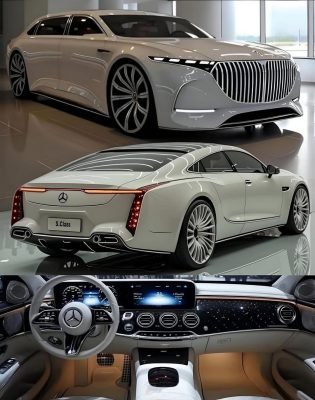
The S-Class has always been the car other luxury sedans measure themselves against, and the latest version leans harder than ever into artificial intelligence. Its MBUX Superscreen spans the dashboard in glass, and the voice assistant riding inside it now holds a real conversation rather than waiting for a rehearsed command.
That assistant borrows brainpower from more than one source, blending Google’s automotive AI tools with a conversational model to answer questions the old system would have simply ignored. Mercedes continues offering Drive Pilot technology in selected markets and conditions, while increasingly emphasizing a more capable Level 2++ system called Drive Assist Pro that works across a wider range of roads and traffic situations.
Standout features include:
- A generative-AI voice assistant with short-term memory of recent requests
- Active Brake Assist that reads traffic patterns ahead of a sudden stop
- Augmented-reality navigation overlaid directly on the road view
3. Mercedes EQS
 Pin
Pin Photo courtesy of Maybach Fans
If the S-Class is Mercedes’ traditionalist flagship, the EQS is its electric showpiece, and nowhere is that clearer than the Hyperscreen, a curved slab of glass stretching pillar to pillar and housing three separate displays. It’s the sort of thing that makes a first-time passenger go quiet for a moment.
Underneath the spectacle sits the same AI-driven safety architecture found across the Mercedes lineup, tuned for a car that spends most of its life gliding rather than roaring. The EQS also carries Mercedes’ more advanced Drive Pilot system in markets where regulators allow it, letting the driver’s hands leave the wheel under specific highway conditions.
What makes the cabin feel different:
- 56-inch Hyperscreen with driver, center, and passenger displays in one glass panel
- Conditional hands-off driving via Drive Pilot on approved highways
- Energizing wellness programs that adjust climate, lighting, and massage together
4. Tesla Model S
 Pin
Pin Photo courtesy of Tesla Power Hour
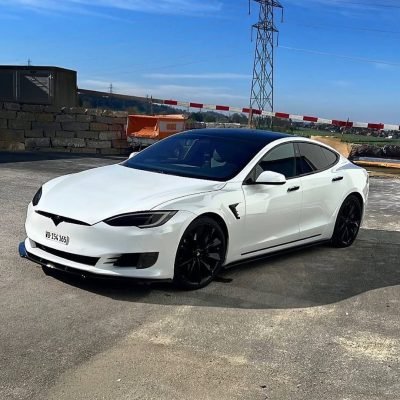
No list of AI-driven cars gets far without mentioning the Model S, the sedan that made a touchscreen dashboard feel normal and turned software updates into a selling point rather than an afterthought. Tesla’s Full Self-Driving package, still labeled Supervised for good reason, can change lanes, take highway exits, and navigate city streets on its own while the driver keeps a hand near the wheel.
Tesla reports meaningfully fewer collisions among cars using the system compared with those driven manually, though regulators and safety researchers continue to study the real-world numbers closely. The Model S remains, for better or worse, the car every rival is quietly benchmarked against.
Worth knowing before you buy:
- FSD (Supervised) works on highways and city streets alike, under active driver attention
- Smart Summon can maneuver the car through a parking lot on its own
- Software improves through regular over-the-air updates rather than dealership visits
5. Volvo EX90
 Pin
Pin Photo courtesy of Volvo Cars Manhattan
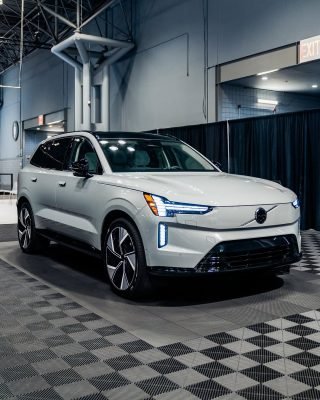
Volvo built its reputation on the three-point seatbelt, and the EX90 carries that obsession into the software age. Two interior cameras and a capacitive steering wheel track whether the driver looks tired or distracted, while a wide sensor set watches the world outside for pedestrians and sudden hazards.
The EX90 was originally billed as the safest Volvo ever thanks in part to a roof-mounted lidar sensor, though Volvo introduced some 2026 EX90 variants without that hardware following supply-chain issues with its lidar partner, while continuing to support vehicles already equipped with the technology. Volvo insists the safety story holds up either way, leaning on a beefed-up onboard computer alongside its camera-and-radar array. Its occupant-sensing system, built to catch a sleeping child left behind in a hot car, remains one of the more quietly important features on this whole list.
Notable safety layers:
- Driver understanding system flags drowsiness or distraction early
- Occupant sensing warns against accidentally leaving a child or pet inside
- Pilot Assist handles speed and steering support on the highway
6. BMW i7
 Pin
Pin Photo courtesy of Oztorun Oto
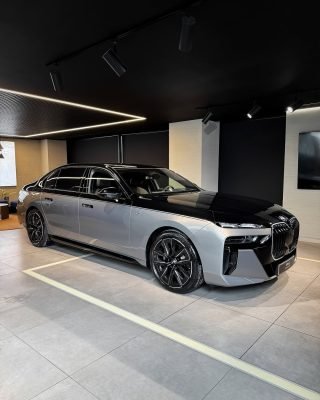
The BMW i7 treats the back seat like a private theater, and it isn’t exaggerating by much. A 31.3-inch screen glides down from the roofline, streams in 8K, and pairs with a Bowers & Wilkins sound system loud enough to drown out the road entirely. It’s the kind of feature that turns a long commute into something passengers look forward to.
Up front, the driver gets augmented-reality navigation that lays directional arrows over a live camera feed, along with a personal assistant now built on Amazon’s Alexa+ technology for more natural conversation. BMW’s Driving Assistant Professional handles steering, braking, and lane changes on the highway, always with the driver’s hands ready to take back control.
Cabin highlights include:
- 31.3-inch rear Theatre Screen with built-in Amazon Fire TV
- Gesture control that responds to a simple twirl of the finger
- AR head-up display projecting directions onto the windscreen
7. NIO ET9
 Pin
Pin Photo courtesy of Nio Edition
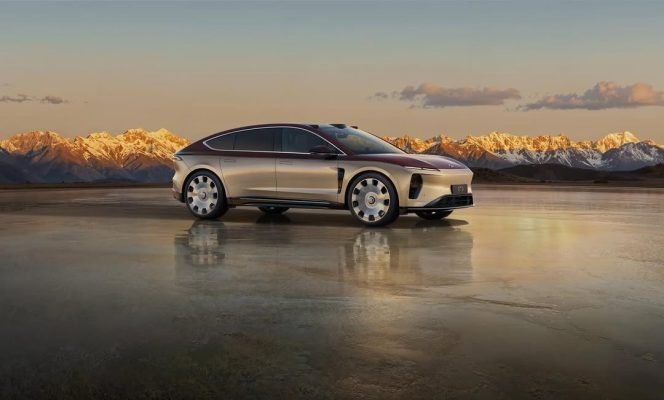
The NIO ET9 packs enough sensing hardware to make a Formula One team jealous: 31 sensors in total, including a long-range lidar up front and two more mounted on the fenders, all feeding into a pair of NIO’s own 5-nanometer chips. The result is a car that claims full-scenario pilot assistance on highways, city roads, and parking lots alike.
Underneath, a hydraulic active suspension smooths out bumps before the driver even feels them, and NIO states the system is designed to help stabilize the vehicle rapidly during sudden events such as a high-speed tire failure. NIO built the ET9 as a flagship meant to go toe-to-toe with German luxury sedans, and the spec sheet backs up the ambition.
Standout hardware:
- 31-sensor Aquila suite with three lidar units for all-weather perception
- SkyRide active suspension reacts to road imperfections in real time
- Nine airbags standard, including side airbags for rear passengers
8. AITO M9
 Pin
Pin Photo courtesy of Taizhou O.N.T
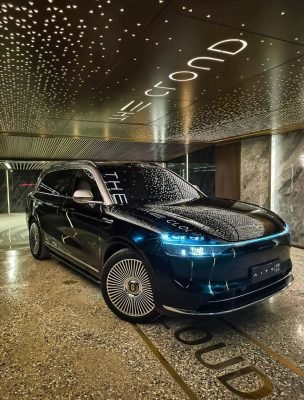
The AITO M9, built by Seres in partnership with Huawei, has quietly outsold plenty of German rivals in China’s luxury SUV segment for close to two years running. It runs one of the industry’s most sensor-rich ADAS platforms, combining multiple lidar units, cameras, radar, and ultrasonic sensors, including a next-generation lidar that Huawei says delivers image-grade clarity, letting the car spot a small obstacle more than 120 meters away.
All of that hardware feeds Huawei’s ADS driving-assistance software, which handles navigation-guided driving on highways, city streets, and parking structures without needing detailed local maps first. The cabin runs on HarmonyOS with a conversational assistant named Celia, and gesture controls let passengers close a door or dim a light with a wave rather than a button press.
Why buyers are drawn in:
- Multiple lidar units, including a high-resolution front sensor on top trims
- Assisted driving standard across every trim, not just the top one
- Gesture-based controls for doors, lighting, and rear screens
9. XPeng G9
 Pin
Pin Photo courtesy of XPeng Mexico
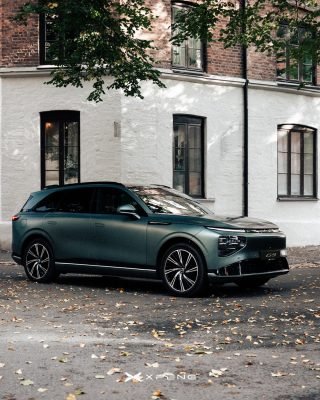
Where most of this list leans on lidar, the XPeng G9 has gone the other way. Some recent versions of the G9 move toward a vision-first architecture called Turing AI, reducing reliance on lidar while continuing to use camera and radar fusion, echoing an approach Tesla has long championed.
XPeng’s reasoning is straightforward: cameras are cheaper, and a system trained well enough on visual data alone can read the road much the way a human eye does, without two different sensor types occasionally disagreeing with each other. The G9 backs its ADAS ambitions with an 800-volt charging platform quick enough to add real range during a coffee break.
Quick technical notes:
- Turing AI vision system replaces lidar with camera and radar fusion
- XNGP handles both highway and city-street driving assistance
- 5C batteries charge from 10 to 80 percent in around 12 minutes
10. Tesla Cybertruck
 Pin
Pin Photo courtesy of TeslaPro
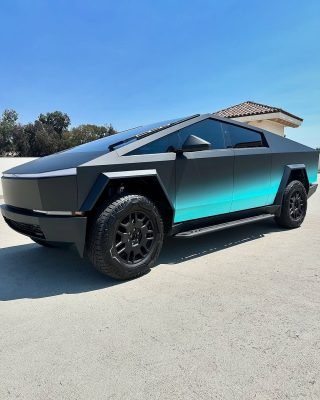
Few vehicles arrived to as much skepticism as the Cybertruck, with its angular stainless-steel body drawing comparisons to a prop rather than a production car. That skepticism didn’t survive contact with crash-test data: the Cybertruck earned the IIHS’s top Top Safety Pick+ rating for 2026, the only full-size pickup to do so.
Its 30X cold-rolled steel exoskeleton resists denting far better than a conventional painted body, and Tesla backs the passive structure with active safety software, including collision avoidance and Full Self-Driving on its higher trims. It’s an unlikely combination — a truck that looks built for a demolition derby, yet tests as the safest one money can buy.
Why it stands out:
- Only full-size pickup with a 2026 IIHS Top Safety Pick+ rating
- Stainless-steel exoskeleton resists dents and corrosion
- FSD and Actually Smart Summon available on higher trims
FAQs
The Yangwang U8 stores a modified DJI drone in a rooftop hangar, launching and landing at the push of a button.
None fully. All still require an attentive driver, even the most advanced Tesla and Mercedes systems.
A supplier dispute with Luminar led Volvo to drop the sensor for the 2026 model year.
Automakers disagree. Tesla and XPeng use cameras alone; NIO and AITO rely heavily on lidar.
The Tesla Cybertruck holds the IIHS Top Safety Pick+ award, the only full-size pickup with that rating in 2026.








 Login with Google