























 Pin
Pin Photo Courtesy of The Trillionaire Life
Synopsis: How Warren Buffett made his first $1000 started with a pack of chewing gum and a borrowed library book. Long before he became the Oracle of Omaha, young Warren was door-knocking neighborhoods, running paper routes, and flipping pinball machines. His earliest money moves were dead simple — no inherited fortune, no business handed to him. Just a kid who paid attention to numbers and never stopped moving. Here is the real story, and why it still matters in 2026.
Omaha, Nebraska, in the late 1930s was not a city bursting with opportunity. America was still shaking off the dust of the Great Depression, and most families were thinking about putting dinner on the table — not about building wealth. But one boy in a quiet corner of Omaha had other things on his mind.
Warren Buffett was born on August 30, 1930, the second of three children and the only son of Howard Buffett, a stockbroker and later a U.S. Congressman. The household ran close to the bone at times, but Warren’s fascination with numbers and money showed up almost the moment he could count. His school friends remembered a kid who could do long calculations in his head without pencil or paper — which is either impressive or mildly unsettling, depending on how much math you like.
What made young Warren different was not just the number-crunching. It was what he did with it. While most children were swapping baseball cards and playing stickball, Buffett was already thinking about where money came from, how it moved, and how to get more of it. By the time he hit his teens, he had already built several small businesses, filed his own taxes, and had more savings than most adults in his neighborhood. This is how it all started.
Table of Contents
The Six-Year-Old Salesman
 Pin
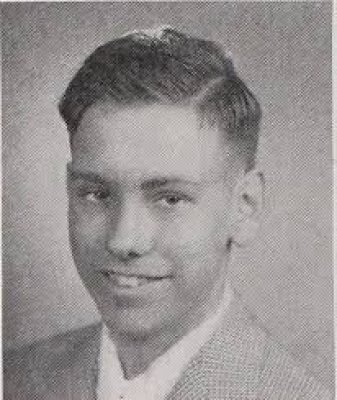
Pin Young Warren Buffett / Photo courtesy of Warren Buffett
The first dollar Warren Buffett ever made came from a pack of Juicy Fruit gum. He was six years old. His grandfather’s grocery store was the source — Warren would buy packs of Wrigley’s chewing gum (Juicy Fruit, Spearmint, and Doublemint), load them onto a tray, and walk through his neighborhood selling them at five sticks for a nickel.
But even at six, the kid had rules. A neighbor once asked to buy just one stick of gum for a penny. Warren refused. As he later told his biographer Alice Schroeder, he still remembered the woman’s name decades later: “We don’t break up packs of gum — I mean, I’ve got my principles.” No discounts, no exceptions, no bulk breaks. A tiny principle that would underpin a lifetime of disciplined business thinking.
That same summer, he noticed that selling Coca-Cola had better margins than gum. He started buying six-packs for 25 cents and selling individual bottles door to door for a nickel each, clearing a profit on every single bottle. He was already thinking like a wholesale buyer and a retail seller — at six. The arithmetic was simple; the instinct behind it was anything but.
Key Takeaways From Age 6:
- Bought low, sold slightly higher — the oldest business model on earth
- Refused to give discounts — protected his margins from day one
- Shifted to a higher-profit product (Coke over gum) when he spotted the difference
- Started tracking what sold and what did not
The Library Book That Changed Everything
 Pin
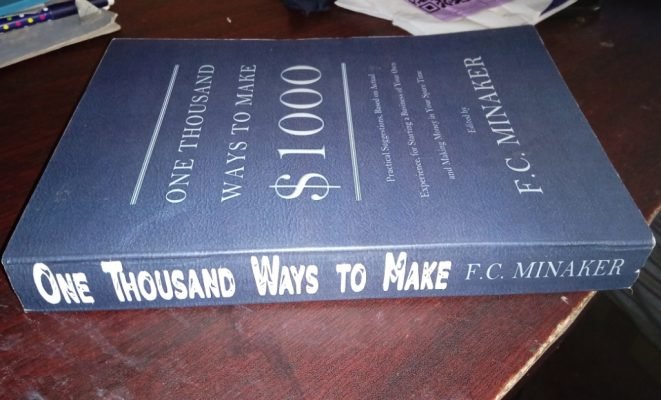
Pin A Book called “One Thousand Ways to Make \$1,000” by Frances C. Minaker / Photo courtesy of Daraz.com.bd
When Warren was seven, he ended up in the hospital for an appendectomy. To pass the time, he was given books. One of them, borrowed from Omaha’s Benson Library, was called “One Thousand Ways to Make $1,000” by Frances C. Minaker. Published in 1936 during the Great Depression, it was a collection of real stories about ordinary people who built real income from small starting points.
Buffett practically memorized the thing. In HBO’s 2017 documentary “Becoming Warren Buffett,” he recalled: he took the book out of the Benson Library when he was about seven, and it was the kind of read that stuck. The concept that hit him hardest was compound interest — the idea that money working over time could multiply itself without you doing anything extra. A weighing machine that generated quarters, which could buy another weighing machine, which generated more quarters. Simple. Logical. Unstoppable.
That realization changed how Warren looked at time. Every year he delayed was a year of compounding lost. At age 10, he walked up to a friend and calmly announced he would be a millionaire by 35. He was not bragging. He was doing math. And as it turned out, he did it by 32.
What the Book Taught Him:
- Compound interest: small money, grown long enough, becomes big money
- Time is the most valuable ingredient — start early, always
- Real people built real wealth from nothing — it was repeatable
- The earlier you act, the longer money has to multiply
The Paper Route Empire
At 13, Buffett’s family moved to Washington D.C., where his father had won a seat in Congress. For most kids, a new city means a new school, new friends, new awkwardness. For Warren, it meant a new opportunity. He landed a job delivering The Washington Post — waking up at 4:30 a.m. every single morning, rain or shine, to fling papers across a neighborhood while his classmates slept.
What set him apart from every other paperboy was how he thought about the route. He timed himself. He looked for faster ways to do the same loop. He sold magazine subscriptions on the side to the same customers. He checked expiration dates on their existing subscriptions and pitched renewals at exactly the right moment. He hired other kids to run routes for him and took a percentage of what they earned. He was 13, running what was essentially a small distribution operation.
By the time he was 15, that paper route had put several thousand dollars in his pocket. He used $1,200 of it to buy 40 acres of farmland in Nebraska, which he rented out to a tenant farmer. A teenager. Owning land. Collecting rent. The Oracle of Omaha was not born — he was built, one early morning at a time.
The Paper Route by the Numbers:
- Delivered 600,000 newspapers throughout his paper route career
- Earned several thousand dollars from the route by his mid-teens
- Filed his first documented tax return at 14, deducting his bike and watch as business expenses
- Invested route profits into 40 acres of Nebraska farmland at 14
The Pinball Machine Hustle
At 17, Warren Buffett spotted a broken pinball machine for $25 and bought it. He then went to his friend Don Danly and proposed a partnership: Danly would fix the machine, and Warren would handle the business side. Their company had a name — Wilson’s Coin-Operated Machine Company. The name was fictional. Mr. Wilson did not exist. But the revenue was very real.
Warren walked into a local barbershop and pitched the owner a deal: let them place the machine in the waiting area, and the barber would get half the profits. The barber said yes. On the very first night, the machine pulled in four dollars. Within a week, Buffett had recovered his entire $25 investment. He immediately reinvested it into another machine, placed in another barbershop, under the same deal.
By the time the dust settled, they had seven to eight machines running across multiple barbershops. When they eventually sold the business to a returning war veteran, they walked away with \$1,200 — nearly 50 times their original \$25 investment. Buffett later said this was where he first understood what scaling actually felt like: one machine becomes many, and the system earns while you sleep.
The Pinball Business Blueprint:
- Initial investment: $25 for one broken machine
- Revenue model: 50/50 split with barbershop owners
- Scaled from 1 machine to 7-8 machines by reinvesting profits
- Exit price: $1,200 — roughly 48x the original stake
Golf Balls, Stamps, and Thinking Like a Trader
Between the paperboy gigs and the pinball empire, young Buffett ran a handful of other side hustles that most people forget. He collected used golf balls from the rough around local courses and resold them to players at a discount. By the time he was done with that operation, he had sold hundreds of refurbished golf balls for a tidy profit.
He also ran a stamp trading business, selling collectible stamps through the mail to buyers out of state. He called it “Buffett’s Approval Service.” Customers could look at stamps, keep the ones they wanted, and mail back the rest. For a teenager in the 1940s, running a mail-order business was not nothing. It required organization, trust-building, and a basic understanding of inventory.
What ties all of these ventures together is a pattern: Warren was always looking for things people already wanted, finding them at one price, and reselling them at a slightly higher one. Gum. Coke. Golf balls. Stamps. Pinball access. Each product was different. The thinking behind each one was identical. That ability to spot a margin gap and fill it — simply, repeatably — is the thread that runs through every business he has ever touched.
Other Buffett Side Hustles Before Age 18:
- Sold hundreds of refurbished golf balls for profit
- Ran a mail-order stamp business (Buffett’s Approval Service)
- Sold magazine subscriptions alongside his paper route
- Collected bottle caps to study which brands were most popular
His First Stock Purchase at Age 11
At 11 years old, Warren Buffett bought his first stock. He purchased three shares of Cities Service Preferred at $38 a share, and bought three more shares for his sister Doris. The price dipped to \$27 shortly after — a sinking feeling he described clearly later in life. He held on. When it climbed back to $40, he sold. He felt good about it.
Then Cities Service shot up to $202. And that became one of the most expensive lessons of his investing life — not in money, but in understanding. The lesson was patience. Selling too early because you’re nervous about a paper loss is a way to be technically right and financially wrong at the same time. Buffett never forgot it.
He also bought stock in a company called GEICO much later, but the Cities Service experience established his long-term philosophy before he could even shave. He later said: “I always knew I was going to be rich. I don’t think I ever doubted it for a minute.” That sentence only sounds like confidence. Really, it sounds like someone who spent years doing math and liked what the numbers said.
Cities Service Stock — What Buffett Learned:
- Bought at $38, saw it fall to $27 — resisted the urge to panic sell
- Sold at $40 for a small gain — then watched it climb to $202
- The lesson: patience multiplies returns; impatience destroys them
- Applied this principle to every investment for the next 80+ years
The Tax Return at 14 and the Farming Investment at 14
Most 13-year-olds are figuring out which lunch table to sit at. Warren Buffett was earning enough from his paper route to owe taxes. By 1944, at 14, he filed what is now his most publicly documented tax return — and deducted $35 for the use of his bicycle and wristwatch as business tools.
This was not just paperwork. It was a mindset. He understood that every dollar going out was a dollar not compounding. Every legitimate deduction was a dollar saved. Every dollar saved was a dollar that could be deployed elsewhere. He tracked everything — his Cities Service stock, the paper route income, the golf ball sales, the pinball profits — in what his biographer described as squiggly, uneven handwriting in a notebook.
The year after filing that tax return, at 14, Buffett bought 40 acres of Nebraska farmland for $1,200. He rented it to a tenant farmer and collected rent. He was not yet old enough to drive alone, but he was already a landlord. By the time he graduated high school, he had combined savings of approximately $9,800 — the equivalent of over $100,000 today. Every cent came from his own businesses, his own hours, and his own decisions.
Financial Milestones Before Age 18:
- Age 14: Filed first documented tax return, deducted bike and watch as business expenses
- Age 14: Bought 40 acres of Nebraska farmland, rented it out for income
- Age 16: Had saved \$5,000 — worth roughly \$53,000 in today’s money
- Age 18: Graduated high school with approximately $9,800 saved
The Mindset That Made It All Possible
It would be easy to look at young Buffett’s story and assume he was simply lucky — lucky to have a father in finance, lucky to grow up in America, lucky to be wired a certain way. There is truth in some of that. But the habits that built his first $1,000 were not gifts. They were choices, made over and over, every morning before school.
He read constantly. By the time he finished high school, he had reportedly consumed a large number of books on business and investing — more than most adults would read in a lifetime. He tracked every penny he made. He did not spend money on things that did not return more money. He reinvested profits — from pinball machines, from golf balls, from the paper route — rather than spending them on the things teenagers normally spend money on. He treated every dollar as a seed, not a snack.
He also had a remarkable ability to delay gratification. Selling Cities Service too early taught him that. The pinball machine business taught him that one unit, scaled patiently, could become eight. The library book taught him that time was not neutral — it was either working for you or against you. That combination of reading, tracking, and reinvesting is not a secret formula. It is a habit system. And habit systems can be learned.
Core Habits Behind Buffett’s Early Wealth:
- Read voraciously — reportedly consumed a large number of business books before college
- Tracked every cent earned and spent in a notebook
- Reinvested profits instead of spending them
- Delayed gratification — always chose future gain over present comfort
- Looked for margin gaps: things to buy cheap and sell slightly higher
What Kids (and Adults) Can Actually Do Right Now in 2026
Here is where the story stops being about Warren Buffett and starts being about anyone reading this. The tools available in 2026 are so far beyond what a teenager in Omaha had access to in 1945 that the comparison is almost funny. The internet alone eliminates almost every barrier that once stood between a kid with an idea and the first dollar that idea produces.
Selling something you are good at — tutoring, designing, writing, making videos, fixing things — has never been easier to start. Platforms exist for almost every skill and almost every age group. Reselling is simpler than ever: thrift stores, online marketplaces, and local buy-sell groups give anyone a way to do what Buffett did with golf balls and stamps, just faster. The principles are exactly the same. Buy low, sell slightly higher, reinvest the margin.
The part most people skip is the part that mattered most to Buffett: tracking. Write down what you spend. Write down what you earn. Look at the gap. Then figure out how to widen it. Buffett did this with squiggly handwriting in a notebook. Today there are free apps that do it automatically. The behavior — not the tool — is what changes the outcome.
Modern-Day Equivalents of Buffett’s Kid Hustles:
- Selling gum/Coke = Selling snacks at school or at local events
- Paper route = Delivering for gig platforms, running errands locally
- Pinball machine = Renting out equipment (cameras, tools, gaming gear)
- Golf ball resale = Thrift flipping on eBay, OLX, Facebook Marketplace
- Stamp business = Selling niche products on Etsy or Amazon
- Stock at 11 = Starting a micro-investment account with pocket money
The Compounding Lesson Nobody Taught in School
The most powerful idea in “One Thousand Ways to Make $1,000” was not a trick. It was arithmetic. Compound interest — the process of earning returns on returns — is so simple to explain and so hard for most people to truly feel in their gut that it often takes a concrete example to make it click.
Here is what Buffett understood at age seven that most adults still have not absorbed: if you compound $1,000 at 10% annually for 30 years, you end up with over $17,000. Wait 40 years, and that same $1,000 becomes over $45,000 — without adding a single extra dollar. The difference between starting at 20 and starting at 30 is not 10 years. It is roughly $28,000 on a $1,000 investment, assuming the same rate. Time is the variable that does the heavy lifting.
Buffett grasped this and immediately reframed how he thought about every dollar. Spending $1,000 today was not spending $1,000. It was spending whatever that $1,000 would become over the next 40 years. That mental shift — from “cost of the thing” to “opportunity cost of the money” — is what separates people who accumulate wealth slowly from people who wonder where all their money went.
Compound Interest at a Glance (10% Annual Growth):
- $1,000 invested for 10 years = ~$2,594
- $1,000 invested for 20 years = ~$6,727
- $1,000 invested for 30 years = ~$17,449
- $1,000 invested for 40 years = ~$45,259
- The earlier you start, the less you need to invest to reach the same goal
From $25 to a Billion — The Straight Line Nobody Sees
There is a temptation to read Warren Buffett’s childhood story as something exceptional — a set of conditions that cannot be repeated. That is a comfortable thought, because it lets most people off the hook. But the honest read of his early years points to something different: a boy who simply started, stayed consistent, and never confused earning money with spending money.
By 16, he had $5,000 saved — around $53,000 in today’s terms. Not because he was a genius, but because he had been reinvesting for a decade. Every small venture built the next one. Gum funded Coke. The paper route funded farmland. The pinball profits went back into more machines. The golf ball earnings went into a notebook alongside everything else. Nothing went to waste.
The billionaire he became was not built in a boardroom. It was built in a neighborhood, on a paper route, in a barbershop waiting room, at a library checkout desk. Every principle that would later make Berkshire Hathaway one of the most valuable companies on earth was already visible in the behavior of a kid who refused to sell one stick of gum for a penny. That is not a cute anecdote. It is the whole story, in miniature.
The Straight Line From $25 to Billions:
- Age 6: First dollars from gum and Coke — learned buy low, sell high
- Age 7: Library book on compounding — learned that time is the multiplier
- Age 11: First stock purchase — learned that patience beats panic
- Age 14: First documented tax return — learned to track and protect every dollar
- Age 14: First property investment — learned passive income from assets
- Age 17: Pinball machine business — learned scaling and the value of systems
- Age 18: ~$9,800 saved — the grubstake for everything that followed
FAQs
At age six, he sold packs of Juicy Fruit and Spearmint gum door to door for a nickel per pack, then moved to reselling Coca-Cola bottles individually for a higher margin per sale.
“One Thousand Ways to Make $1,000” by Frances C. Minaker, borrowed from Omaha’s Benson Library at age seven. It introduced him to compound interest and real entrepreneurial stories.
Approximately $9,800 — all from his own businesses, paper routes, stock investments, and land rent. In today’s money, that is over $100,000.
His father was a stockbroker and later a Congressman, so there was some stability and early exposure to investing — but no trust fund, no business handed to him. Every dollar in his early years came from his own work and reinvestment.
Yes. The core moves — reselling items for a margin, offering a service, tracking every dollar, reinvesting profits instead of spending them — work exactly the same in 2026 as they did in 1940.










 Login with Google