




















 Pin
Pin Photo courtesy of Elontribe
Synopsis: What inspired Elon Musk to start his business traces back to a bookish boy in Pretoria, South Africa, where an encyclopedia, a dusty computer, and a relentless imagination quietly built the foundation of a world-changing mind. By age 12, he had already written and sold his first piece of software. By his 20s, he was betting everything on ideas most people laughed off. From Zip2 to SpaceX to Tesla, Musk’s drive was never about money — it was about solving the problems no one else seemed bold enough to touch.
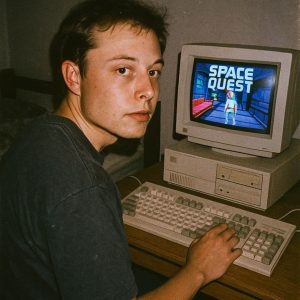
Elon Musk grew up in Pretoria, South Africa, in a house where curiosity wasn’t just tolerated — it was the furniture. His father, Errol, was an engineer. His mother, Maye, was a successful model and dietitian. Between the two of them, their son Elon had everything a restless mind needed: a computer, a full set of Encyclopedia Britannica, and enough quiet to disappear into books for hours at a stretch.
When his parents divorced in 1979, young Elon — around nine years old — chose to live with his father, where he had access to books and computers that fueled his curiosity. Whether it was the encyclopedia on the shelf or simply his father’s engineering world that drew him in, what mattered was that the environment fit the boy. He reportedly read for up to ten hours a day, devouring everything from physics textbooks to science fiction novels.
Those science fiction shelves did serious work. Isaac Asimov’s Foundation series, which depicted the fall of a galactic civilization and the desperate human effort to preserve knowledge, lodged itself deep in Musk’s mind. Arthur C. Clarke’s 2001: A Space Odyssey showed him that the cosmos wasn’t just a ceiling — it was a destination. These weren’t just stories to him. They were blueprints.
Table of Contents
A 12-Year-Old Who Sold Code
 Pin
Pin Photo courtesy of You For USA
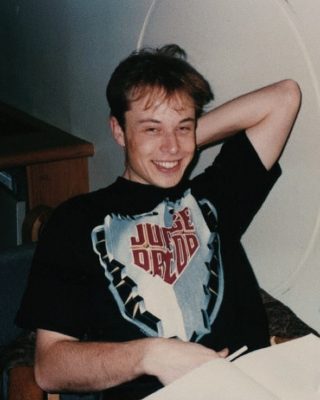
Most kids at twelve are trying to sneak extra screen time. Elon Musk, at twelve, was writing screen content and selling it. He taught himself BASIC — a computer programming language — and built a small space-themed game he called Blastar. The premise was simple: destroy an alien freighter carrying deadly hydrogen bombs. He wrote the whole thing in 167 lines of code.
He then sold the source code to PC and Office Technology magazine for approximately $500. For a twelve-year-old in early 1980s South Africa, that was real money. But more than the money, what this moment revealed was a pattern: Musk didn’t just tinker for fun. He built things with the intention of putting them into the world.
At sixteen, he and his brother Kimbal tried to open an arcade near their school. City officials shut the idea down before it ever opened, citing permit issues. It was his first taste of bureaucratic friction — a flavor he’d encounter many more times over the following decades, and one that never seemed to slow him down for long.
Early signals of the Musk pattern: learn fast, build fast, sell the thing, try again.
Leaving South Africa Behind
 Pin
Pin Photo courtesy of I Wealthy Fox
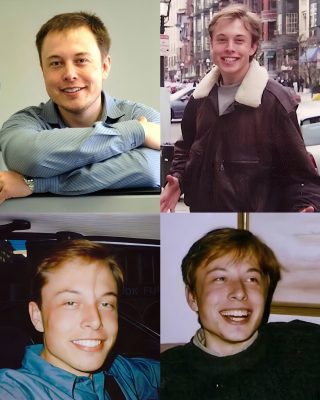
At seventeen, Musk made a decision that was equal parts practical and philosophical. He left South Africa. The country was still living under apartheid, a system of racial segregation that Musk and his family openly disliked. Staying felt like accepting a future that didn’t match the one he was building in his head.
He moved to Canada first, attending Queen’s University, before transferring to the University of Pennsylvania in the United States. There, he pursued dual degrees in economics and physics — a combination that may seem unusual, but in hindsight makes perfect sense. Economics gave him the language of markets. Physics gave him the laws of reality. Together, they handed him both the dream and the math to chase it.
He later enrolled at Stanford University for a PhD in energy physics, a program he famously abandoned after just two days. The Internet boom was exploding around him, and Musk decided that sitting in a classroom while the world rewired itself was not the way to spend his twenties. He withdrew, and started a company instead.
Zip2: The First Real Bet
 Pin
Pin Photo courtesy of golldies
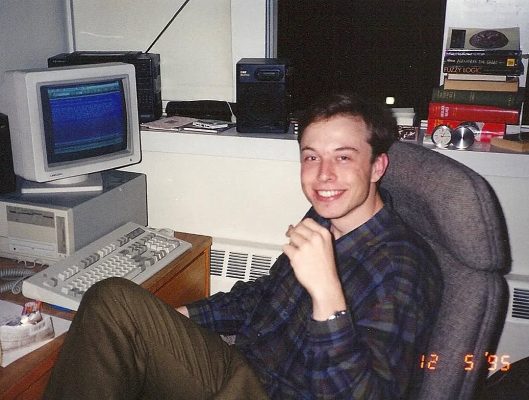
In 1995, Musk, his brother Kimbal, and a business partner named Greg Kouri rented a small office in Palo Alto and got to work. Their idea was a web software company that would give businesses online directories and maps — essentially a digital Yellow Pages at a time when most newspapers still didn’t have websites. They called it Zip2.
The early days were lean. Musk was sleeping in the office, showering at the YMCA, and driving himself past the point of exhaustion. He later noted that with $40,000 in support from his parents combined with a group of angel investors, they built something functional enough to attract real newspaper clients. The hustle was relentless and a little unglamorous — exactly the kind of founding story that gets cleaned up in retrospect.
In 1999, Compaq acquired Zip2 for around $300 million. Musk walked away with roughly $22 million. He was twenty-seven years old and already a multimillionaire. Most people would have found a nice house and retired quietly. Musk promptly put most of his earnings into his next idea.
- Zip2 provided business listings and maps to major newspapers
- Sold to Compaq in 1999 for approximately $300 million
- Musk’s share: ~$22 million — immediately reinvested
X.com, PayPal, and the Art of the Pivot
Musk’s next venture was X.com, launched in 1999 as an online bank. The concept was simple: make sending money over the internet as easy as sending an email. The world wasn’t quite ready to trust the internet with its savings, but Musk pushed forward anyway. X.com soon found itself competing with a Silicon Valley startup called Confinity, which had a product called PayPal.
Rather than fight a war of attrition, the two companies merged. The combined entity operated under the PayPal name. The timing was fortunate: eBay had created a massive need for online payment platforms, and PayPal filled it beautifully. It grew fast. The board, however, grew wary of Musk’s leadership style and his insistence on rebuilding the technical infrastructure — moves they saw as risky. He was removed as CEO while on vacation in 2000.
He remained a major shareholder. When eBay acquired PayPal for $1.5 billion in 2002, Musk received roughly $180 million from the sale. He was now thirty years old, had built and sold two companies, and had a sum of money most people couldn’t spend in a lifetime. His next move was to spend nearly all of it on two companies almost everyone thought were destined to fail.
The Idea That Started SpaceX
In 2001, Musk had an idea that sounded more like a publicity stunt than a business plan: send a small greenhouse of plants to Mars. He called it Mars Oasis. The goal was to reignite public interest in space exploration by placing something living on another planet. He flew to Russia — twice — to try to buy refurbished intercontinental ballistic missiles to use as launch vehicles.
The Russians quoted him a price he found absurd. On the plane ride back, Musk pulled out a spreadsheet and started calculating whether he could build a rocket himself for less. The math, remarkably, said yes. In 2002, he founded Space Exploration Technologies Corp — SpaceX — with a mission to reduce the cost of space travel and, eventually, make humanity a multi-planetary species.
His reasoning wasn’t sentimental. It was almost coldly logical. He told interviewers: “I think there is a strong humanitarian argument for making life multi-planetary, in order to safeguard the existence of humanity in the event that something catastrophic were to happen.” Five mass extinction events in Earth’s geological record had convinced him that betting everything on a single planet was a gamble civilization couldn’t afford.
The fear wasn’t of space — it was of what happens when humanity has nowhere else to go.
Tesla and the Electric Car Nobody Wanted
 Pin
Pin Photo courtesy of Musk Spacex
Musk didn’t found Tesla Motors — that distinction belongs to Martin Eberhard and Marc Tarpenning, who launched the company in 2003. But Musk joined as chairman and lead investor in 2004, contributing $6.5 million of his own money in the first funding round. By 2008, he was CEO. What drew him in was the same thread that ran through everything: sustainability.
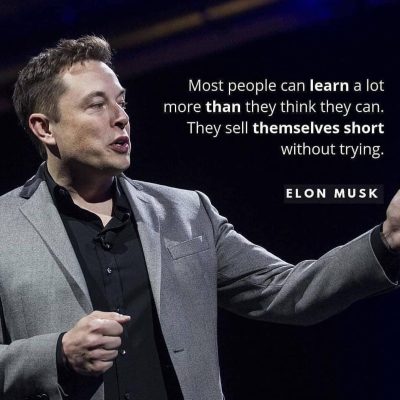
In his own words: “My original interest in electric cars and solar energy was not based on environmental concern — it was based on sustainability, in the sense of ensuring that civilization can continue to progress.” He believed the world would eventually run out of oil. He believed the transition away from fossil fuels was inevitable. His logic was that if it was going to happen anyway, someone might as well make it happen faster.
The early years were brutal. Tesla’s Roadster had serious production problems. In 2008, the same year SpaceX’s first three rockets failed to reach orbit, Tesla was burning through cash and teetering on the edge of bankruptcy. Musk divided his remaining $75 million between the two companies. He later said it was the hardest period of his professional life — and possibly his personal life too, since his first marriage ended that same year.
- Tesla co-founded in 2003 by Martin Eberhard and Marc Tarpenning
- Musk joined as lead investor in 2004 with $6.5 million
- Became CEO in 2008 — the same year both Tesla and SpaceX nearly collapsed
The Year Everything Almost Died
 Pin
Pin Photo courtesy of Rise with me
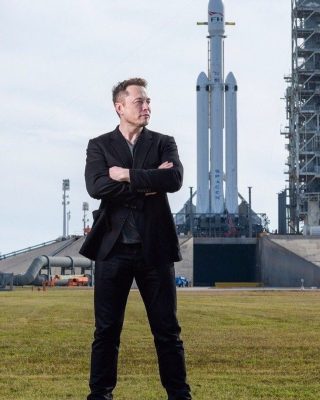
2008 is the year that defines Elon Musk more than any other. SpaceX had attempted three Falcon 1 launches. All three failed. Tesla’s manufacturing was in chaos. Musk was personally broke by Silicon Valley standards — down to his last $75 million, which sounds wealthy until you’re deciding which company to save with it. He split the money between both, essentially betting on two losing hands at the same table.
The fourth Falcon 1 launch, in September 2008, succeeded. It was the first privately developed liquid-fueled rocket to reach orbit. Months later, NASA awarded SpaceX a $1.6 billion contract to resupply the International Space Station. Tesla, meanwhile, closed a crucial funding round just hours before it would have had to declare bankruptcy. The margin of survival, in both cases, was measured in days.
When asked later how he kept going through that period, Musk pointed not to optimism but to resolve. “Failure is an option,” he has said, “but fear is not.” The distinction matters. He wasn’t certain things would work. He just refused to let uncertainty stop him. That particular stubbornness — or courage, depending on how you frame it — is perhaps the clearest thread through his entire story.
Thinking in First Principles
One of the questions people ask most about Musk is how he operates across so many industries simultaneously — aerospace, electric vehicles, solar energy, tunneling, neural interfaces, satellite internet — without losing the thread. The answer he gives most often is a concept he calls first principles thinking: stripping a problem down to its most fundamental truths rather than reasoning by analogy from what already exists.
Applied to rockets, this meant asking: what does a rocket actually cost to make, at the level of raw materials? The answer was roughly two percent of what aerospace companies were charging. The rest was markup, tradition, and lack of competition. Musk decided to build the rockets himself, cutting launch costs dramatically and making SpaceX the world’s dominant launch provider by the mid-2020s.
Applied to cars, the same logic asked: why are electric vehicles so expensive? Mostly because batteries are expensive. What if you built the batteries yourself, at scale, in a factory designed from scratch? That thinking produced Tesla’s Gigafactory — a facility designed for tens of gigawatt-hours of annual battery production, and built to run on solar energy.
First principles thinking isn’t about being contrarian. It’s about refusing to inherit other people’s assumptions.
The Bigger Picture He Keeps Painting
By the time SpaceX landed its reusable Falcon 9 rocket booster — an achievement most aerospace engineers had spent decades insisting was impossible — Musk had become something beyond a tech entrepreneur. He had become an argument. An argument that the private sector could do what governments couldn’t or wouldn’t, that ambition didn’t have to be reasonable to be effective, and that the most useful thing a person with resources could do was deploy them against civilization’s biggest problems.
The list of problems he took on grew longer with each passing year. SolarCity, which he co-founded in 2006, aimed to make rooftop solar accessible to ordinary homeowners. Neuralink, founded in 2016, is exploring the integration of the human brain with artificial intelligence. The Boring Company, started that same year after Musk sat fuming in Los Angeles traffic, is building underground tunnels for high-speed transportation. Each venture begins with the same question: what is the actual problem, and what would actually solve it?
His acquisition of Twitter in 2022 — renamed X — fit the same framework in his mind, even if it alienated as many people as it inspired. He believed the platform had become too restrictive in what it permitted people to say, and that free speech was foundational to a functioning democracy. Whether one agrees or not, the logic was consistent: identify a system he thought was broken, and take control of it.
What It All Adds Up To
The story of what inspired Elon Musk to start his business doesn’t have a single clean origin point. It doesn’t reduce to a garage epiphany or a chance encounter with the right mentor at the right moment. It is, instead, a long accumulation: a boy in Pretoria reading encyclopedias and science fiction, a teenager who coded games and sold them, a young man who left his country for a continent of possibilities, and a series of high-stakes bets that could easily have ended in ruin.
What ties it together is not confidence — Musk has spoken openly about anxiety, about the personal toll of near-bankruptcy, about the grinding difficulty of building hardware companies from scratch. What ties it together is a kind of useful terror: a genuine belief that if certain things don’t happen — sustainable energy, multi-planetary civilization, regulated AI — the long-term prospects for humanity are poor. His companies are not trophies. They are, in his framing, responses to emergencies.
Whether history judges that framing as visionary or grandiose remains to be seen. What isn’t in question is that he built real things — rockets that land themselves, cars that don’t need gasoline, a satellite network that brings internet to remote corners of the world — out of ideas that most people, at the time he had them, considered absurd. The boy who once read ten hours a day in a house full of books turned out to be reading toward something.
FAQs
Musk sold his first software — a space game called Blastar — at age 12 for $500. That early experience of building something useful and selling it set the template for everything that followed.
He was enrolled in a PhD program in energy physics but worried he’d miss the Internet boom. He withdrew in 1995 and co-founded Zip2 instead — a decision that made him a multimillionaire by twenty-seven.
Not primarily. He founded it after calculating he could build rockets cheaper than Russia could sell them, driven by a belief that humanity needed a backup planet to survive long-term catastrophic events.
He split his last $75 million between both companies. SpaceX’s fourth rocket launch succeeded that September; Tesla closed a critical funding round hours before bankruptcy. Both survived by days.
He has consistently said his interest in clean energy and space was never about environmentalism — it was about the long-term survival of civilization. Whether you find that credible, his companies have materially advanced both fields.





 Login with Google