
















 Pin
Pin Photo courtesy of Crowdpuff
Synopsis: The top 10 most beautiful coral reefs in the world span from Australia’s vast Great Barrier Reef to the remote Flower Garden Banks off Texas. These underwater cities cover less than 1% of the ocean floor yet sustain roughly 25% of all marine life. They feed over a billion people, protect coastlines, and shelter thousands of species found nowhere else on Earth. From the species-rich waters of Raja Ampat in Indonesia to Palau’s legendary dive sites, each reef tells a different story — of resilience, extraordinary beauty, and a natural world well worth protecting.
There’s something almost unfair about coral reefs. They sit just beneath the surface — quiet, colorful, alive in ways that seem almost theatrical — while most of the world strolls the beach above, completely unaware of what’s happening a few feet below their toes.
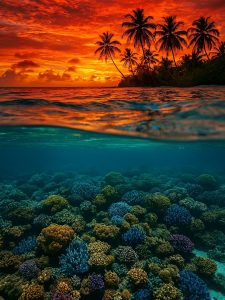
Coral reefs cover less than 1% of the ocean floor, yet they support roughly 25% of all marine life. They feed over a billion people worldwide. They shield coastlines from storm surges. They store centuries of ecological memory. And yes — they are breathtakingly, unreasonably beautiful.
This article takes a leisurely walk through the ten most stunning coral reef systems on Earth. Not the kind of walk that comes with a sales pitch or a bucket list checkbox — but the kind where you stop, look closely, and feel genuinely grateful that such places exist. Grab your metaphorical snorkel. Let’s go.
Table of Contents
1. Great Barrier Reef — Australia
 Pin
Pin Photo courtesy of Dave Wilcock
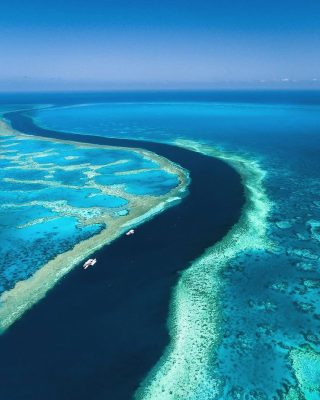
If coral reefs had a hall of fame, the Great Barrier Reef would have its own wing. Stretching over 2,300 kilometers along Australia’s northeastern coast in Queensland, it is the largest coral reef system on Earth — so large that astronauts can see it from space. It holds more than 2,900 individual reefs, roughly 400 types of coral, and over 1,500 species of fish. It is a UNESCO World Heritage Site, one of the Seven Natural Wonders of the World, and, by almost every metric, the single most extraordinary living structure the planet has produced.
The reef is ancient in ways that put human timekeeping to shame. The living coral sits atop geological formations that could be as old as 20 million years. What visitors see today — the vivid staghorn corals, the schools of parrotfish, the resident reef sharks drifting through cathedral-sized formations — is simply the latest chapter in an impossibly long story.
Recent years have brought sobering news about bleaching events caused by rising ocean temperatures. But 2023 and 2024 brought encouraging signs too. Several sections of the reef showed their highest coral cover in decades, thanks to aggressive conservation measures and active coral restoration projects. The Great Barrier Reef has taken blows — and keeps coming back.
Key Facts:
- Length: 2,300+ km along Queensland’s coast
- Coral species: 400+ | Fish species: 1,500+
- UNESCO World Heritage Site since 1981
- Best time to visit: June to October
2. Raja Ampat — Indonesia
 Pin
Pin Photo courtesy of Skyroad Media
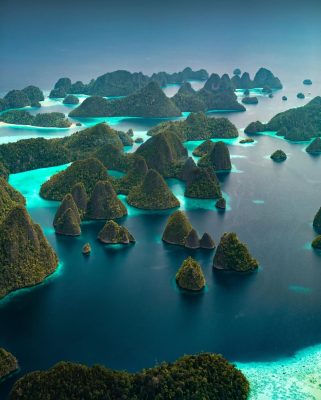
Raja Ampat sits in the eastern corner of Indonesia, a tangled archipelago of over 1,500 islands dropped into the heart of the Coral Triangle. It holds more than 600 species of hard coral — roughly 75% of the world’s known coral species — in one region. That is not a typo. Marine biologists who visit Raja Ampat for the first time tend to describe it the same way: they run out of words.
The biodiversity here is staggering in the truest sense. Cape Kri, one of its most famous dive sites, holds a world record for the highest number of fish species counted in a single dive. Under the jetties at Arborek village, thick coral gardens grow undisturbed, home to pygmy seahorses no bigger than a thumbnail. The waters are warm, clear, and stunningly well-preserved — partly because of strict protection policies and genuine community involvement in conservation.
Tourists find getting here requires some effort — flights through Sorong and then a ferry — but that distance is precisely what has kept Raja Ampat so pristine. The Indonesian government and local communities have both chosen protection over mass development, and the reef reflects that decision in every direction a diver looks. With 537 documented coral species and more being identified each year, Raja Ampat remains one of the most scientifically important marine ecosystems on Earth.
Key Facts:
- Coral species: 600+ (75% of world’s known species)
- Located in the Coral Triangle, West Papua, Indonesia
- Home to the world’s highest single-dive fish-species count
- Best time to visit: October to April
3. Palau Reef System — Micronesia
 Pin
Pin Photo courtesy of Raffaela Parente
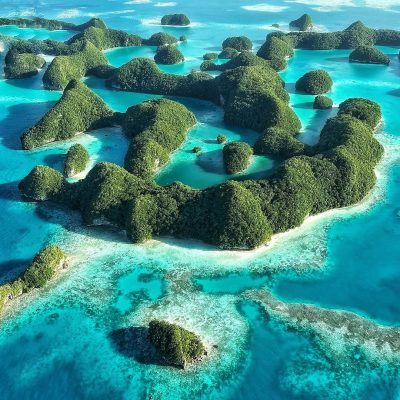
Palau is a small island nation in Micronesia that punches considerably above its weight when it comes to ocean conservation. Its reef system is legendary among serious divers — a place where manta rays glide overhead like living kites, saltwater crocodiles lurk in mangroves, and the walls of coral drop hundreds of feet into blue darkness. The reefs here are part of the Coral Triangle, making them among the most biologically rich waters on the planet.
Palau is also home to one of the most surreal marine experiences anywhere: Jellyfish Lake. This landlocked marine lake holds millions of golden jellyfish that lost their sting over evolutionary time. Snorkeling through them — pulsing, drifting, completely harmless — is the sort of thing that resets a person’s sense of what ‘normal nature’ looks like. Just outside the lake, Palau’s proper reef system holds over 700 coral species and 1,500 types of fish.
In 2009, Palau became the world’s first shark sanctuary. The government banned all commercial shark fishing within its waters — a bold, costly, and ultimately successful decision. Shark populations here are healthy and visible, which creates dive conditions that are simultaneously thrilling and deeply reassuring. Water temperatures run between 27–30°C year-round, and visibility regularly exceeds 30 meters. An environmental fee of $100 helps fund the marine protection programs that keep it this way.
Key Facts:
- World’s first shark sanctuary, declared 2009
- Home to 700+ coral species and Jellyfish Lake
- Best diving: November through May
- $100 environmental fee supports reef conservation
4. Belize Barrier Reef — Central America
 Pin
Pin Photo courtesy of David Keeling
The Belize Barrier Reef is the largest barrier reef in the northern hemisphere and the second largest in the world, stretching across roughly 300 kilometers off the coast of Belize. It is a UNESCO World Heritage Site, inscribed in 1996, and it shelters one of the most ecologically complex marine environments in the Atlantic. Scientists estimate that only about 10% of the reef’s species have actually been documented — meaning the remaining 90% is still out there, unnamed and uncatalogued.
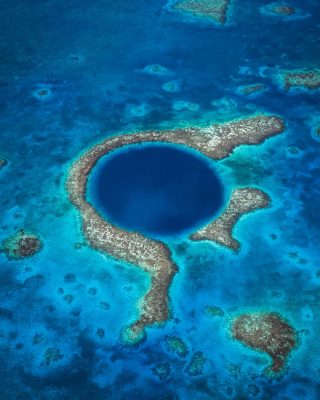
The reef’s most famous feature is the Great Blue Hole — a massive, perfectly circular submarine sinkhole about 300 meters across and 125 meters deep, sitting in the middle of a coral atoll. It became globally famous after Jacques Cousteau declared it one of the top diving sites on Earth. The walls of the hole are lined with stalactites formed during the last Ice Age, when the cave sat above water. It is geological history made visible, framed by coral.
Beyond the Blue Hole, the reef system is rich with living complexity. So far, researchers have catalogued 70 hard coral species, 36 soft coral species, and 500 species of fish. Endangered animals — including manatees, hawksbill sea turtles, and the American marine crocodile — make their homes here. The reef also drives Belize’s economy significantly, drawing thousands of divers and snorkelers each year who contribute directly to its conservation funding.
Key Facts:
- 2nd largest barrier reef system in the world
- UNESCO World Heritage Site since 1996
- 70 hard + 36 soft coral species | 500+ fish species
- Home to the Great Blue Hole, a famous dive icon
5. Red Sea Coral Reef — Egypt & Saudi Arabia
 Pin
Pin Photo courtesy of Renata Romeo
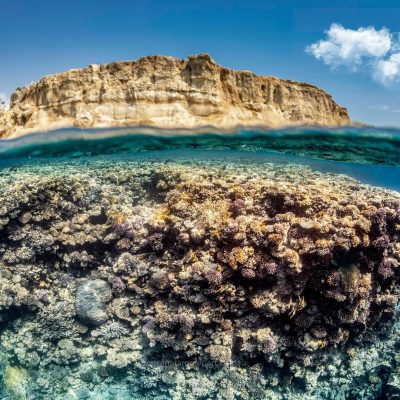
The Red Sea sits between two of the world’s most forbidding deserts — the Sahara on one side, the Arabian on the other. The landscape surrounding it is stark, pale, and bone-dry. And yet, just beneath the surface of that improbable strip of water, one of the most biodiverse coral reef systems on Earth has been quietly thriving for over 5,000 years. The Red Sea Coral Reef stretches approximately 1,900 kilometers along its coastlines, and it is home to 300 hard coral species and over 1,200 fish species — 10% of which are found nowhere else in the world.
What makes the Red Sea reef particularly remarkable is its resilience. High salinity, extreme temperature swings, and very little freshwater input — conditions that would stress most reefs into decline — seem to bother these corals not at all. Scientists studying Red Sea corals have found that they possess a natural heat tolerance that other reef populations lack. In a world where ocean warming is bleaching reefs globally, the Red Sea’s heat-resistant genetics are drawing serious research attention as a possible model for reef survival.
Diving in Egypt’s southern Red Sea — around Daedalus Reef or the Brothers Islands — offers encounters with grey reef sharks, oceanic whitetips, and hammerheads. The visibility is extraordinary, often exceeding 30 meters, and the waters are warm year-round. The Northern Red Sea around Sharm el-Sheikh is busier and more accessible, while the southern stretches are quieter, rawer, and arguably more spectacular.
Key Facts:
- Over 5,000 years old | ~1,900 km long
- 300 hard coral species | 1,200+ fish species
- 10% of fish species found nowhere else on Earth
- Natural heat resistance makes it a critical climate research site
6. Tubbataha Reef Natural Park — Philippines
 Pin
Pin Photo courtesy of Andrei Voinigescu
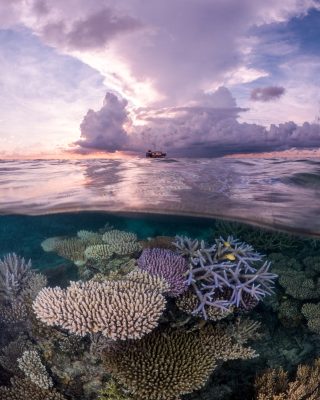
Tubbataha Reef sits in the middle of the Sulu Sea — remote, protected, and radically alive. Getting there requires a 10–12 hour liveaboard journey from Puerto Princesa on Palawan, which is not a casual weekend trip. But divers who make the passage find a reef system that is as close to untouched as marine ecosystems get in the modern world. Tubbataha is a UNESCO World Heritage Site and a national park, and it shows — the coral walls are dense, healthy, and absolutely teeming.
The numbers are serious: 600 species of fish, 360 species of coral, 11 species of sharks, 13 species of dolphins and whales, and over 100 bird species. The reef contains roughly 40% of all reef fish species found in the Coral Triangle — one of the highest concentrations of marine biodiversity anywhere on Earth. Dive sites like Seafan Alley, where enormous gorgonian sea fans bloom in multiple colors, and Amos Rock, where Napoleon wrasses cruise at depth, have become famous among experienced divers worldwide.
Conservation here is taken seriously. Entry is restricted. Only licensed liveaboard operators are permitted, visitor numbers are capped, and rangers patrol the waters actively. The Malayan Wreck — a sunken vessel in the southern atoll, now draped in coral — adds a haunting layer to the dive experience, offering a reminder of how quickly nature reclaims what humans leave behind in the sea.
Key Facts:
- UNESCO World Heritage Site | Sulu Sea, Philippines
- 600 fish species | 360 coral species | 11 shark species
- Contains 40% of all Coral Triangle reef fish species
- Access by liveaboard only; strictly regulated
7. New Caledonia Lagoon — South Pacific
 Pin
Pin Photo courtesy of Mark Paxton
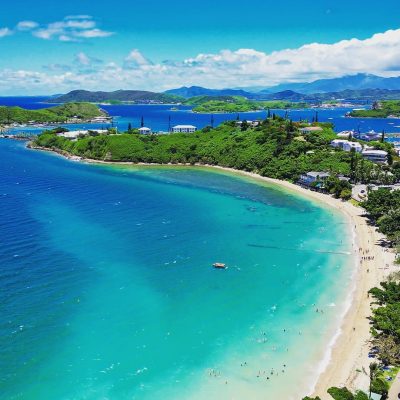
New Caledonia is a French territory tucked in the South Pacific, halfway between Australia and Fiji. Its surrounding lagoon is the largest enclosed lagoon in the world — covering more than 24,000 square kilometers — and it is enclosed by the second largest double barrier reef on Earth. In 2008, UNESCO inscribed the lagoons of New Caledonia as a World Heritage Site, recognizing their exceptional ecological significance and the sheer scope of what they contain.
The variety of life here is extraordinary. Green turtles, hawksbill turtles, loggerhead turtles, and the massive leatherback — all four species nest and feed within the lagoon’s waters. Humpback whales arrive each year from Antarctic feeding grounds to breed in the warmth. Rare crabs, dugongs, and tropical seabirds fill in the ecological picture. The reef system itself features 30 protected marine reserves, making it one of the most comprehensively managed reef environments on the planet.
What makes New Caledonia slightly different from other reefs on this list is its sheer geological grandeur. The lagoon is so large that it has its own internal weather patterns. The barrier reefs create visible lines of white foam on the ocean surface, visible from aircraft. For anyone traveling to the South Pacific, New Caledonia represents a reef experience that feels genuinely different — quieter, grander in scale, and less trafficked than more famous destinations.
Key Facts:
- World’s largest enclosed lagoon: 24,000+ sq km
- UNESCO World Heritage Site since 2008
- 30 protected marine reserves
- Home to humpback whales, dugongs, and four sea turtle species
8. Maldives Reef System — Indian Ocean
 Pin
Pin Photo courtesy of Kerafa Hussain Aiman
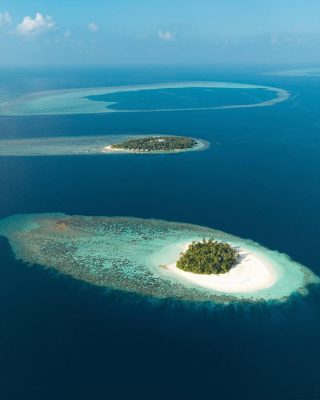
The Maldives is an archipelago of 1,200 islands and 26 atolls spread across the Indian Ocean. Most people know it for white-sand beaches and overwater villas. What they underestimate is the submarine world — nearly 9,000 square kilometers of coral reef systems that include some of the most dramatic marine encounters available to recreational divers anywhere on Earth. The Maldives is one of the few places where swimming with whale sharks and manta rays is a fairly ordinary Tuesday.
The reef system here hosts roughly 1,000 species of fish, 700 types of sponges, and hundreds of invertebrate species. The Baa Atoll, a UNESCO Biosphere Reserve, is where manta rays gather in concentrations that are almost hard to believe — dozens of them at once, filtering plankton-rich water, entirely indifferent to the humans floating nearby. The shallow house reefs around many resort islands offer snorkeling quality that rivals deep dive sites elsewhere in the world.
The 1998 El Niño bleaching event hit the Maldives hard, killing off large portions of shallow reef coral. The recovery since then has been slow in some areas and surprisingly robust in others. Scientists attribute the resilience of certain Maldivian corals to genetic adaptations and favorable current patterns that bring cooler, deeper water up around the atolls. Conservation investment has accelerated in recent years, driven partly by tourism revenue and partly by a government that is acutely aware of what it stands to lose.
Key Facts:
- 1,200 islands | 26 atolls | ~9,000 sq km of reef
- 1,000+ fish species | 700+ sponge species
- Baa Atoll: UNESCO Biosphere Reserve
- Best encounters with manta rays: May to November
9. Apo Reef Natural Park — Philippines
 Pin
Pin Photo courtesy of Jimmy Melo
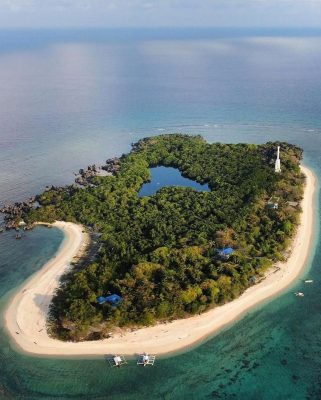
Apo Reef is the second largest contiguous coral reef in the world, after Australia’s Great Barrier Reef. Covering 34 square kilometers of the Sulu Sea off the coast of Occidental Mindoro in the Philippines, it is a massive, beautiful reef that many international travelers have never heard of — which is precisely why it remains so spectacularly intact. The reef was declared a Marine Park in 1980, protected as a Natural Park in 1996, and received the prestigious Platinum Blue Park Award from the Marine Conservation Institute in 2022 for its exceptional management.
The statistics tell part of the story: over 500 fish species, 400 coral types, and a cast of charismatic megafauna that includes whale sharks, hammerhead sharks, mobula rays, dolphins, dugongs, and multiple species of endangered sea turtles. The reef’s two coral platforms are separated by a 30-meter-deep channel of crystal-clear water, and the walls drop dramatically into the blue — making it a genuinely thrilling drift-dive destination for experienced underwater visitors.
Access here is intentionally limited. Only about 2,800 visitors made the journey in 2023, down from a peak of 7,586 in 2017. Visitors must be accompanied by an accredited guide. The remoteness — about 33 kilometers from the nearest coast — has been its greatest guardian. The best time to visit is during the dry season, December through May, when the water is calm and visibility peaks. Apo Reef is also a submitted UNESCO World Heritage candidate, which would give it an additional layer of international recognition and protection.
Key Facts:
- 2nd largest contiguous coral reef in the world
- 500+ fish species | 400+ coral types
- Platinum Blue Park Award winner (2022)
- UNESCO World Heritage Site nomination pending
10. Flower Garden Banks — Gulf of Mexico, USA
 Pin
Pin Photo courtesy of Tennessee Aquarium
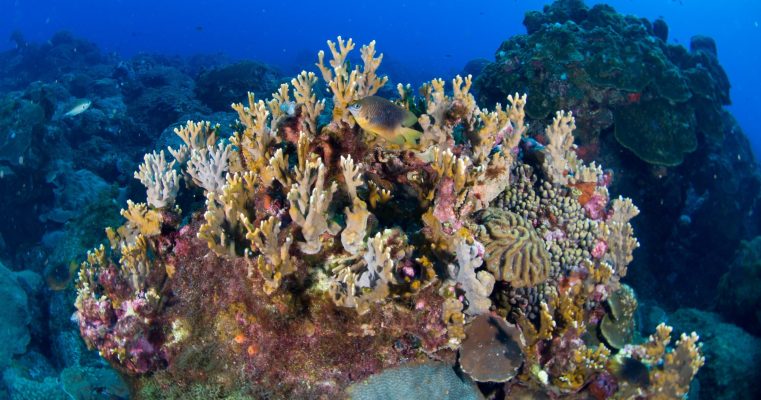
About 180 kilometers off the coast of Galveston, Texas — well out into the Gulf of Mexico — a pair of underwater mountains rise from depths of over 100 meters to within 17 meters of the surface. On their crowns, something quite unexpected has taken hold: the northernmost coral reefs in the continental United States, thriving in waters most people would never associate with coral. The Flower Garden Banks National Marine Sanctuary was established by NOAA in 1992, and it remains one of the healthiest reef systems in the entire Caribbean-Gulf region.
The reefs are named for the spectacular flower-like patterns of their brain corals, star corals, and boulder corals — dense, closely-spaced formations that give the reef tops the look of an ornate garden seen from above. The sanctuary is home to nearly 250 fish species, 23 coral species, and an abundance of crustaceans, sponges, and marine plants. Manta rays visit seasonally. Whale sharks pass through. Loggerhead and hawksbill sea turtles can be found year-round.
What makes the Flower Garden Banks particularly notable is their isolation and their condition. Because they sit far from river outflows and coastal development, the water here is remarkably clear and the coral cover is unusually high — in some areas, coral covers more than 50% of the seafloor, compared to Caribbean averages of under 10%. The reefs were formed by the geological uplift of ancient salt domes, a process that began 10,000 to 15,000 years ago, making them both geologically unique and ecologically precious. A surprise for any traveler who thought coral reefs belonged only to tropical postcards.
Key Facts:
- Northernmost coral reefs in the continental United States
- ~180 km offshore from Galveston, Texas
- 250 fish species | 23 coral species
- Coral cover up to 50%+ — among the highest in the region
Visiting Coral Reefs Responsibly
A reef that has been loved carelessly is a reef on the way out. And it does not take industrial negligence to cause damage — a single careless flipper kick on a coral colony can undo decades of growth. When visiting any of the world’s great reef systems, the most generous thing a traveler can do is follow the rules, choose operators who enforce them, and spend money with businesses that put conservation first.
Sunscreen is a real issue. Oxybenzone and octinoxate — common chemical UV filters — have been shown to damage coral DNA, disrupt reproduction, and contribute to bleaching even at minute concentrations. Hawaii, Palau, Bonaire, and several other destinations have banned these chemicals outright. Using reef-safe mineral sunscreen (zinc oxide or titanium dioxide) is not just a courtesy — in some destinations, it is the law.
Sustainable reef tourism actively supports conservation when done right. Entry fees, liveaboard charges, and guided dive fees flow back into ranger programs, restoration projects, and research. Choosing certified operators, respecting no-take zones, and refusing to purchase souvenirs made from coral or marine animals are all choices that have compounding positive effects. The reefs on this list exist in their current condition partly because enough people chose to protect them. That is not a small thing.
Responsible Reef Visitor Checklist:
- Use reef-safe mineral sunscreen only (zinc oxide / titanium dioxide)
- Never touch, stand on, or anchor near coral
- Book with operators who follow conservation guidelines
- Respect marine protected area boundaries and regulations
- Never purchase coral, shells, or reef animal souvenirs
- Offset your dive trip’s carbon footprint where possible
FAQs
Most marine experts point to Raja Ampat, Indonesia, for sheer biodiversity — 600+ coral species — while the Great Barrier Reef wins on scale. Beauty, in this case, is genuinely in the eye of the beholder (and the depth of the diver).
The Maldives and Belize offer accessible house reefs and calm lagoons ideal for beginners. Many resorts in the Maldives have thriving reef systems just steps from the beach, requiring no boat trip or certification.
About 50% of the world’s reefs have been lost over the past 30 years. However, 2024 brought recovery signs in several regions, including Australia’s Great Barrier Reef. Conservation, reduced pollution, and stricter protections are showing measurable results.
It varies by location. For the Great Barrier Reef, June–October is ideal. Raja Ampat shines from October to April. The Red Sea is diveable year-round. Always check local conditions and avoid peak bleaching season in warmer months.
Look for operators certified by bodies like PADI’s Eco Center program, Green Fins, or local environmental authorities. Ask directly whether they enforce no-touch policies, use reef-safe products, and limit group sizes near sensitive coral areas.








 Login with Google