























 Pin
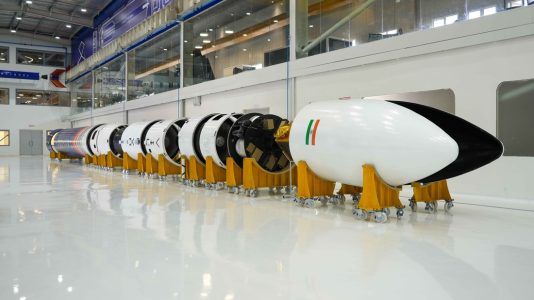
Pin Photo courtesy of Skyroot Aerospace
Synopsis: India’s private space industry has seen a seismic shift over the last few years. Once the exclusive domain of ISRO, the skies above India are now crowded with private ambition. Startups like Skyroot Aerospace, Pixxel, Dhruva Space, and Agnikul Cosmos are no longer just experimenting — they are launching rockets, deploying satellites, and signing real contracts with governments and Fortune 500 companies alike. This article breaks down what each of these four companies is doing, why it matters, and how they are quietly rewriting the rules of a very expensive, very competitive global space race.
For most of its history, India’s space program meant one thing: ISRO. The Indian Space Research Organisation had carried the country’s dreams on its back since Aryabhata lifted off in 1975. It was government-run, government-funded, and entirely government-controlled. Nobody questioned it. It worked. And for decades, that was enough.
Then, in 2020, the Indian government did something quietly historic. It cracked open the space sector to private companies — fully, officially, and with real regulatory support. That single policy decision unlocked a door that had been welded shut for generations, and a wave of engineers, entrepreneurs, and dreamers walked straight through it. The India’s private space industry that followed did not emerge slowly. It grew at a pace that surprised everyone, including those who built it.
Within just a few years, startups were filing patents, building rocket factories, and making headlines with actual launches. The government formed IN-SPACe — the Indian National Space Promotion and Authorisation Centre — to be the regulatory bridge between ISRO’s vast infrastructure and the private sector’s appetite. The story of Skyroot Aerospace, Pixxel, Dhruva Space, and Agnikul Cosmos is the story of what happens when decades of pent-up technical talent finally gets permission to fly.
Table of Contents
Skyroot Aerospace: India's Private Space Industry
 Pin
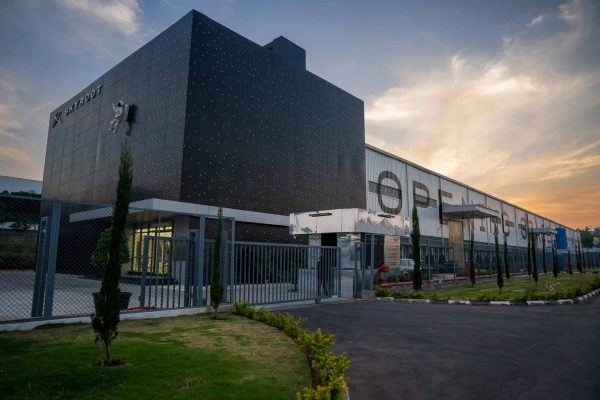
Pin Photo courtesy of Skyroot Aerospace
In November 2022, a small rocket named Vikram-S rose from the launchpad at Sriharikota and crossed the boundary of outer space at 89.5 km altitude. It was not the most powerful rocket ever built. It was not even orbital. But it was the first rocket an Indian private company had ever launched from Indian soil, and the reverberations were felt across the entire domestic aerospace industry. Skyroot Aerospace, founded in 2018 by two former ISRO engineers — Pawan Kumar Chandana and Naga Bharath Daka — had just written the first line of a new chapter.
The company started small, in a Hyderabad coworking space called T-Hub, with ten people and a plan. They named their rocket family after Vikram Sarabhai, the father of India’s space program. The engines were named after Indian scientists — Raman, Kalam, Dhawan. Every choice was deliberate. They were not trying to be India’s SpaceX. They were trying to be India’s first private orbital launch company, which is a different and arguably harder thing.
What sets Skyroot apart is a combination of materials science and manufacturing philosophy. The Vikram-1 rocket — their orbital vehicle — features an all-carbon-fiber body, 3D-printed liquid engines, and a modular multi-stage design capable of placing up to 350 kg into low Earth orbit. By May 2026, the rocket had been shipped to the Satish Dhawan Space Centre ahead of what would be India’s first-ever private orbital launch attempt. The company had simultaneously crossed a milestone that no Indian space startup had ever reached before: a valuation of $1.1 billion, making it the country’s first space-tech unicorn.
Key Skyroot Milestones at a Glance
- 2018: Founded by ex-ISRO engineers in Hyderabad
- 2022: Vikram-S becomes India’s first privately launched rocket (89.5 km apogee)
- 2025: PM Modi inaugurates Infinity Campus — a 200,000 sq ft rocket manufacturing facility
- May 2026: Raises $60M, becomes India’s first space-tech unicorn at $1.1B valuation
- June 2026: Vikram-1 orbital launch window opens — India’s first private orbital attempt
Agnikul Cosmos
 Pin
Pin Photo courtesy of Agnikul Cosmos
Out of the campuses of IIT Madras in Chennai, a company was asking a question that most rocket engineers would have considered absurd just a decade ago: what if you printed the engine? Not assembled it from thousands of precision parts, but printed it — a single, seamless, unbroken piece of metal — straight out of a 3D printer. Agnikul Cosmos, founded in 2017 by Srinath Ravichandran and Moin SPM, built the world’s first single-piece 3D-printed semi-cryogenic rocket engine, and then flew it.
The engine is called Agnilet. It burns liquid oxygen and kerosene, and it is remarkable not just because it was 3D-printed, but because the printing eliminates the hundreds of welds, joints, and assembly steps that typically define rocket engine manufacturing — and typically cause rocket engines to fail. On May 30, 2024, Agnikul launched their Agnibaan SOrTeD (Suborbital Technology Demonstrator) from their own private launchpad — called Dhanush — at Sriharikota. It reached 20 km altitude, became the world’s first flight powered by a single-piece 3D-printed engine, and set three records simultaneously.
The business model beneath all of this engineering is clever. Agnikul offers what it calls a “Space Cab” service — a dedicated, customizable launch for small satellites rather than the shared rideshare model that dominates the market. A 30 kg payload uses four engines; a 100 kg payload uses seven. The rocket sizes itself to the customer, and the 3D printing means a qualification report is generated automatically the moment an engine comes off the printer. What used to take three months of paperwork can now happen in a matter of hours. Their ambition is to be launch-ready within two weeks of receiving a contract — a claim that, if realized, would place them in genuinely rare company globally.
What Makes Agnikul’s Approach Different
- World’s first single-piece 3D-printed semi-cryogenic engine (Agnilet)
- India’s first private launchpad — Dhanush (ALP-01) at Sriharikota
- First Indian rocket to use Linux-based flight computers and Ethernet-based architecture
- Rocket prices are configured to payload mass — customers only pay for what they launch
- Orbital Agnibaan vehicle: 18m tall, up to 300 kg payload to 700 km orbit
Pixxel
 Pin
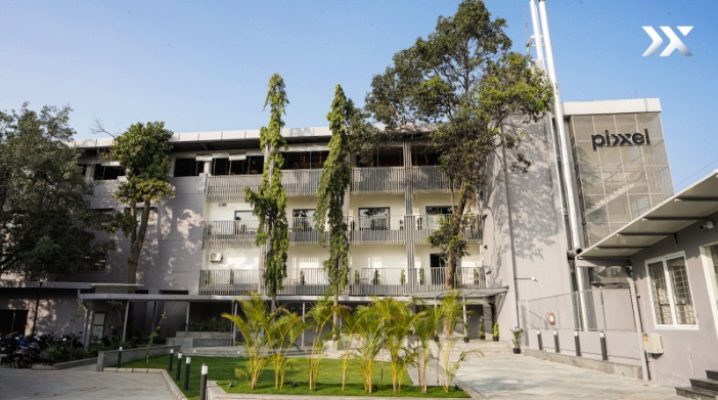
Pin Photo courtesy of Rishi2605
Most satellites see the Earth in a handful of colors — the same way a basic camera does. Pixxel’s satellites see it in hundreds of colors at once, capturing wavelengths far beyond what the human eye or a conventional sensor can detect. That difference is not trivial. It is the difference between seeing that a crop field is green and knowing that the crop field is stressed, infected with a specific fungus, and losing yield at a measurable rate. Pixxel calls their constellation a “health monitor for the planet,” and that description turns out to be unusually precise.
Awais Ahmed and Kshitij Khandelwal founded the company in 2019 while studying at BITS Pilani — with virtually no capital, no space manufacturing ecosystem in India, and no industry experience. By 2025, all six of their commercial Firefly hyperspectral satellites were in orbit and operational, having been launched aboard SpaceX and ISRO vehicles. Fortune 500 clients in agriculture, mining, and energy were paying for the data. The Indian Air Force signed a SPARK grant agreement with Pixxel to develop advanced payloads for miniaturized military satellites.
Each Firefly satellite captures more than 135 spectral bands across a 40 km swath at 5-meter resolution. Building one took about 24 months, with the hyperspectral camera undergoing multiple design iterations before it performed as intended. The economics are striking: each satellite costs “in the low single-digit million dollars range” to build and launch, with annual operating costs below $1 million per satellite. In August 2025, Pixxel led a consortium — alongside Dhruva Space, SatSure, and PierSight — that won India’s first fully-indigenous private Earth Observation satellite network contract from IN-SPACe. Their ground analytics platform, Aurora, allows customers to process hyperspectral data without writing a single line of code.
Pixxel’s Constellation in Numbers
- 3 demo satellites launched between 2021–2022 (Anand, Shakuntala, and a third)
- 6 Firefly commercial satellites — all successfully launched and operational by August 2025
- 135+ spectral bands, 5m spatial resolution, 40 km swath per satellite
- Fortune 500 clients across agriculture, mining, and energy sectors
- Aurora: a no-code Earth observation analytics platform built in-house
- $95M raised from Google, M&G Catalyst, Lightspeed, Radical Ventures, and others
Dhruva Space
 Pin
Pin Photo courtesy of OrissaPOST
If Skyroot is building the rockets and Pixxel is building the eyes, Dhruva Space is building the infrastructure that holds everything together. Founded in 2012 — eight years before the sector was formally opened to private players — Dhruva Space had the patience to wait and the foresight to prepare. By the time IN-SPACe came into existence, Dhruva already had products, partnerships, and a mission philosophy: offer a full-stack space solution that covers satellites, launch systems, and ground stations under one roof.
The company, led by CEO Sanjay Nekkanti, was the first private company to receive authorization from IN-SPACe for space activities. Their Thybolt-1 and Thybolt-2 satellites were the first private Indian satellites to be authorized by IN-SPACe and successfully deployed in orbit. Their Satellite Orbital Deployers — available in 1U, 3U, and 6U configurations — have been space-qualified on multiple ISRO PSLV missions. In July 2024, they received authorization to offer Ground Stations as a Service (GSaaS), making them one of very few companies in the world that can handle a satellite from design through deployment through ground operations.
In December 2024, Dhruva launched AstraView, their commercial satellite imagery service. In early 2026, they were set to deploy a satellite stack aboard ISRO’s PSLV-C62, integrating their own satellite platforms, separation systems, and ground services into a single commercial mission. A 280,000 sq ft spacecraft manufacturing facility near Hyderabad’s Rajiv Gandhi International Airport — the largest private spacecraft manufacturing plant in India — was advancing through its first phase. When complete, it will be capable of producing satellites up to 500 kg in mass.
Dhruva Space’s Full-Stack Capabilities
- Founded 2012 — one of India’s oldest private space companies
- First private company authorized by IN-SPACe for space activities (2022)
- Satellite Orbital Deployers space-qualified in 1U, 3U, and 6U configurations
- GSaaS (Ground Stations as a Service) authorization — July 2024
- AstraView commercial satellite imagery service — launched December 2024
- 280,000 sq ft spacecraft manufacturing facility under development in Hyderabad
The 2020 Decision — How India Unlocked Its Own Space Race
The four companies above did not appear out of nowhere. They were made possible — at least in their current form — by a single government decision that restructured sixty years of institutional logic. In June 2020, the Indian cabinet approved reforms allowing private entities to build launch vehicles, own and operate satellites, and use ISRO’s infrastructure on commercial terms. The Indian National Space Promotion and Authorisation Centre (IN-SPACe) was created as the nodal agency to implement and oversee these reforms.
The timing was not accidental. India had watched the global small satellite market explode — driven by cheaper electronics, miniaturized sensors, and the commercial ambitions of companies like SpaceX and Planet Labs. ISRO had a world-class launch record but limited bandwidth to chase commercial contracts while also running the country’s space program. Opening the sector to private companies created a parallel track: let startups chase the commercial market while ISRO focuses on deep-space science, human spaceflight, and national security missions.
The Indian Space Policy 2023, which followed, went further. It established clear frameworks for FDI in the space sector, created intellectual property protections for space technologies developed by private companies, and enabled startups to sign framework agreements with ISRO for access to its facilities and technical expertise. By early 2026, India had nearly 400 space-tech startups. The country’s space economy — estimated at $8.4 billion — was projected to reach $44 billion by 2033. The government’s target: capture 10% of the global space economy within a decade.
Where India Fits in the Global Space Race
To understand why these four companies matter beyond India’s borders, it helps to look at what the global small satellite launch market actually needs. Hundreds of companies — from agricultural intelligence firms to climate monitoring organizations to telecommunications providers — need affordable, reliable, and frequent access to low Earth orbit. For years, that meant waiting in line behind larger payloads on bigger rockets, or paying SpaceX’s Falcon 9 rideshare prices. India is offering a third option: a competitive, cost-effective launch ecosystem built on significantly lower manufacturing and labor costs.
Agnikul reportedly plans to charge roughly 20–25% less than SpaceX’s rideshare rate for a 50 kg payload. Skyroot’s Vikram-1, with its carbon-fiber construction and modular design, offers a cost-to-performance ratio that investors — including Singapore’s sovereign wealth fund GIC, Ram Shriram of Sherpalo Ventures, and BlackRock-affiliated funds — found compelling enough to back at unicorn valuations. Pixxel’s hyperspectral data costs a fraction of what comparable data from established players would command, partly because they source 50–55% of their components from India’s domestic supply chain at a 2–5x cost advantage.
The global signal is clear. India’s private space companies are not playing a catch-up game; they are competing in the present. Pixxel was named one of TIME’s 100 Best Inventions in 2023 and a World Economic Forum Technology Pioneer in 2024. Skyroot’s investors include some of the world’s most respected technology-sector names. Agnikul’s 3D-printing approach is being studied internationally as a potential model for reducing rocket manufacturing costs. Dhruva’s full-stack approach is drawing partnerships from France, Australia, Singapore, and South Korea.
ISRO Is Not Stepping Back — It Is Stepping Up
A frequent misconception in coverage of India’s private space sector is that ISRO is being displaced. The reality is more interesting. As private companies absorb commercial satellite launch demand, ISRO is being freed to pursue the missions that no private company can or will attempt on a commercial basis: crewed spaceflight, lunar exploration, interplanetary missions, and deep-space science. The Gaganyaan human spaceflight program — India’s first crewed mission to orbit — is an ISRO initiative. The Chandrayaan program, which placed a lander on the lunar south pole in 2023, was ISRO.
What has changed is the infrastructure relationship. Skyroot launched Vikram-S from the Satish Dhawan Space Centre — ISRO’s own spaceport. Agnikul built its Dhanush launchpad adjacent to ISRO facilities at the same location. Dhruva Space signed a framework agreement with ISRO for access to technical expertise. Pixxel launched its demo satellites on ISRO’s PSLV. The relationship is collaborative and symbiotic rather than competitive: private companies are using ISRO’s infrastructure and institutional knowledge, and ISRO is gaining a domestic industrial base capable of sustaining its broader ambitions.
IN-SPACe, which sits between the two worlds, has been expanding its mandate aggressively. In mid-2024, it launched the Earth-Observation Public-Private-Partnership (EO-PPP) program, inviting private consortia to design, build, launch, and operate multi-sensor satellite networks for national and global use. In August 2025, the first award went to the Pixxel-led consortium that included Dhruva Space. The message was deliberate: India’s space sector is transitioning from a state-run enterprise to a national ecosystem, and the government is using commercial contracts — not just regulatory frameworks — to accelerate that transition.
Timelines, Setbacks, and What Remains Hard
None of this has been frictionless. Agnikul attempted four launches before the May 30, 2024 success of Agnibaan SOrTeD. Skyroot’s Vikram-1 orbital launch, originally targeted for early 2024, was still awaiting its orbital debut in mid-2026. Pixxel’s first satellite launch had to be scrubbed weeks before liftoff. The founding team of two college students faced skepticism — from potential investors, from industry veterans, from people who simply could not believe that Indian startups would succeed in an arena that had historically required the resources of nation-states.
The challenges are not only technical. India’s private space sector still lacks the deep pool of experienced aerospace engineers that the United States or Europe possess after decades of defense and commercial space investment. Supply chains for certain specialized components remain immature. Regulatory processes, while improving, can still take significantly longer than the startup timelines demand. Access to testing facilities — while expanding — is still limited in ways that affect development cadence for smaller companies outside the ISRO partnership framework.
Financing is another pressure point. While Skyroot’s unicorn status and Pixxel’s $95 million in funding demonstrate that international capital is available, earlier-stage startups face a more difficult path. Space businesses have long development timelines, high capital requirements, and uncertain revenue ramps — a combination that makes traditional venture capital uncomfortable. The EO-PPP program and IN-SPACe’s framework agreements are helping, but the capital market for Indian space startups is still maturing, and many good ideas are underfunded.
The Next Five Years — What These Companies Are Building Toward
Skyroot’s next vehicle, Vikram-2, is a heavier-lift rocket featuring a cryogenic upper stage capable of placing up to 900 kg into low Earth orbit. The company aims to launch one orbital rocket per month from its Infinity Campus in Hyderabad — a pace that would make it one of the highest-cadence small-launch providers in the world. The Infinity Campus itself, inaugurated by Prime Minister Modi in November 2025, spans 200,000 sq ft and is designed for full vertical integration of launch vehicles from manufacturing through final checkout.
Agnikul is developing orbital Agnibaan — the full three-stage vehicle — following the suborbital SOrTeD demonstrator. The company inaugurated India’s largest 3D metal printer in its LFAMM facility at IIT Madras Research Park, capable of printing rocket components at a scale that was previously unavailable in the country. In February 2026, the company announced a partnership with Neevcloud to develop a proof-of-concept space-based AI data center — processing data in orbit using the cold vacuum of space to manage heat — with a target launch as early as 2027. Pixxel’s Phase II constellation, called Honeybees, will expand coverage, resolution, and revisit frequency beyond what the Firefly constellation offers. Dhruva Space’s Polar Access-1 mission aboard PSLV-C62 is designed to demonstrate a repeatable, structured pathway to orbit for commercial customers — the company’s answer to the question of how to make routine satellite deployment genuinely routine.
The Tamil Nadu government took an equity stake in Agnikul in early 2026 — the first time a state government in India has invested in a space startup. The Government of Telangana signed an agreement with Skyroot at the World Economic Forum in January 2025 for a dedicated rocket manufacturing facility. State governments, central government, and foreign investors are all, quietly, making the same bet: that this generation of Indian space companies is building infrastructure for the long run.
What All of This Actually Means
There is a tendency, when covering technology startups, to let the excitement of the moment crowd out the slower, more important question: what does this actually change? In the case of India’s private space industry, the honest answer is: quite a lot, and for reasons that go well beyond national pride. The ability to deploy hyperspectral satellites cheaply means that farmers in Karnataka and miners in Jharkhand can access the kind of precision environmental data that was previously available only to the wealthiest governments. The ability to launch small satellites frequently and affordably means that IoT networks, climate sensors, and communications infrastructure can reach places that fiber and cell towers cannot.
Agnikul’s 3D-printed engine approach, if it scales as hoped, could fundamentally reduce the cost of entering orbit — not just for Indian customers, but globally. Skyroot’s modular carbon-fiber rockets offer a manufacturing model that sidesteps some of the most expensive bottlenecks in traditional aerospace. Pixxel’s Aurora platform is designed to make satellite data analysis accessible to users who have never written a line of code. Dhruva’s full-stack approach means that a startup or research institution with a satellite idea does not need to assemble partnerships with half a dozen separate vendors to reach orbit.
None of this erases the gap between where these companies are and where the most mature space companies in the world operate. The orbital launch market remains dominated by SpaceX. The most capable Earth observation satellites still come from established players with decades of institutional experience. But the gap is closing faster than almost anyone expected. And the benchmark being set — that a group of young engineers, working from IIT campuses and Hyderabad coworking spaces, can build and launch actual rockets and actual satellites within a few years of founding — will change what the next generation of Indian engineers believes is possible. That, ultimately, is the most durable thing any of these four companies is building.
India's Space Future Is Already Being Built
India’s story in space has always been one of doing more with less. ISRO put a spacecraft in Mars orbit on its very first attempt, at a cost that was lower than the budget of the Hollywood film Gravity. That reputation for frugal engineering paired with genuine technical excellence is now the inheritance of a private sector that barely existed five years ago. Skyroot, Pixxel, Dhruva, and Agnikul are not trying to replicate what America or Europe built over half a century. They are building something new — leaner, faster, more modular, and priced for a global market that wants access to space without writing nine-figure checks.
The world is also watching in a way it was not ten years ago. Singapore’s GIC, American venture fund Sherpalo, Google, and BlackRock-affiliated capital are all on Indian space company cap tables. The French space agency CNES has partnerships with Dhruva. South Korea has signed agreements with Pixxel. The International Astronautical Congress featured Agnikul prominently in 2025. When the world’s largest institutions put money and partnerships into Indian space startups, the era of India’s private space industry is not approaching — it has already arrived.
The launchpad at Sriharikota has seen a lot of history. It watched ISRO send Mangalyaan to Mars, and Chandrayaan-3 to the Moon. Now it is watching something different: a seven-story carbon-fiber rocket built by a Hyderabad startup, fueled by a 3D-printed engine built by a Chennai IIT team, carrying satellites built by a Bengaluru company funded by Google, waiting for a launch window. The sky, as it turns out, was never the limit. It was just the beginning.
FAQs
The 2020 government reform that opened the space sector to private companies — and the creation of IN-SPACe as a regulatory body — was the primary catalyst. Before that, private companies could not independently build rockets, own satellites, or use ISRO infrastructure commercially.
As of mid-2026, Skyroot Aerospace is on the verge of becoming the first. Their Vikram-1 rocket — India’s first privately built orbital vehicle — shipped to the Sriharikota launchpad in April 2026, with a launch window expected in June 2026. Agnikul completed a suborbital flight in May 2024, and is working toward its orbital vehicle.
The Agnilet engine is 3D-printed as a single piece with no welds or joints — eliminating many common failure points. It is a semi-cryogenic engine burning LOX and kerosene, and it is currently the only single-piece 3D-printed rocket engine in the world to have actually flown.
Real applications include detecting crop disease before it becomes visible to the eye, identifying methane leaks from industrial sites, monitoring wildfire risk, tracking water quality changes in rivers and coastal areas, and supporting oil spill detection. Fortune 500 clients in agriculture, mining, and energy are current paying customers.
ISRO has been collaborative rather than competitive. It has opened its launchpads, testing facilities, and technical expertise to private startups through formal agreements. The arrangement allows ISRO to focus on deep-space missions like Gaganyaan and lunar exploration while private companies handle the growing commercial small-satellite market.









 Login with Google