













 Pin
Pin The Li River / Photo courtesy of Shui Yang
Synopsis: The world’s most expensive river destinations aren’t just about luxury cruises or high-end resorts. They’re places where nature is still raw, ecosystems are thriving, and wildlife roams freely along ancient riverbanks. From the Amazon’s dense canopy to the Mekong’s golden delta, these rivers carry some of Earth’s most spectacular biodiversity. These rivers carry histories, living creatures, and entire civilizations within their currents — and the more one learns about them, the more apparent it becomes why reaching them comes at a real price.
Most people think of rivers as background scenery — something to cross on a bridge or spot from an airplane window. But certain rivers on this planet operate as entire worlds unto themselves. They carry ecosystems, civilizations, and wildlife that no zoo or nature documentary can fully replicate.
These aren’t just rivers. They’re lifelines of the natural world, some flowing for thousands of miles through jungles, gorges, and ancient deltas that have remained largely unchanged for millennia. And in 2026, with river tourism rising sharply across every continent, travelers are finally beginning to grasp what scientists and local communities have always known — that rivers are among the most alive places on Earth.
Here are the ten most scenic and expensive river destinations on the planet, ranked not just for their beauty, but for the wildness, rarity, and sheer ecological drama they put on display every single day.
Table of Contents
1. The Amazon River — South America
 Pin
Pin Photo courtesy of Tudo e Incrivel
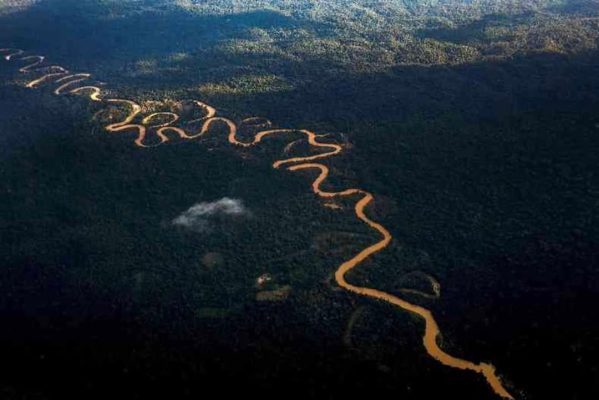
No list of rivers begins anywhere else. The Amazon is not merely a river — it’s an argument. An argument that the natural world, given enough space and enough time, will fill every inch of it with something astonishing. Running over 4,000 miles through Brazil, Peru, and Colombia, the Amazon carries more water than any other river on Earth, and beneath its olive-green surface, it hides a universe.
Pink dolphins navigate its murky tributaries. Black caimans patrol the flooded forest floors. Hundreds of species of fish that have never been seen anywhere else on Earth dart through root systems so dense that light barely reaches the riverbed. Luxury river cruises aboard vessels like the Delfin III or the M/V Anakonda now weave through the Maranon, Yanallpa, and Pacaya rivers, offering travelers close encounters with this extraordinary wildlife in something approaching comfort.
The price of access is honest and steep. Premium Amazon cruise packages in 2026 run anywhere from $600 to over $16,000 per person for trips of five to fifteen days — and the cost is entirely justified. No rainforest on Earth is thicker, no canopy taller, no river more alive.
Quick Facts:
- Length: Over 4,000 miles across South America
- Wildlife: Pink dolphins, piranhas, giant river otters, macaws, anacondas
- Best for: Luxury wildlife cruises, canopy walks, indigenous village visits
- Peak season: July – September (lower water, easier wildlife viewing)
2. The Mekong River — Southeast Asia
 Pin
Pin Photo courtesy of Chris Schalkx
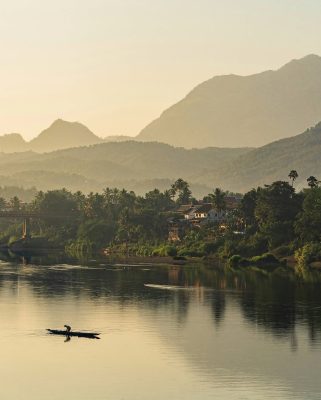
At roughly 2,700 miles long, the Mekong is Southeast Asia’s longest river — and its most culturally loaded. It begins high in the Tibetan Himalayas, pushes through the gorges of Yunnan Province in China, then unspools through Myanmar, Laos, Thailand, Cambodia, and Vietnam before emptying into the South China Sea near Ho Chi Minh City. Along the way, it feeds the lives and livelihoods of over 60 million people.
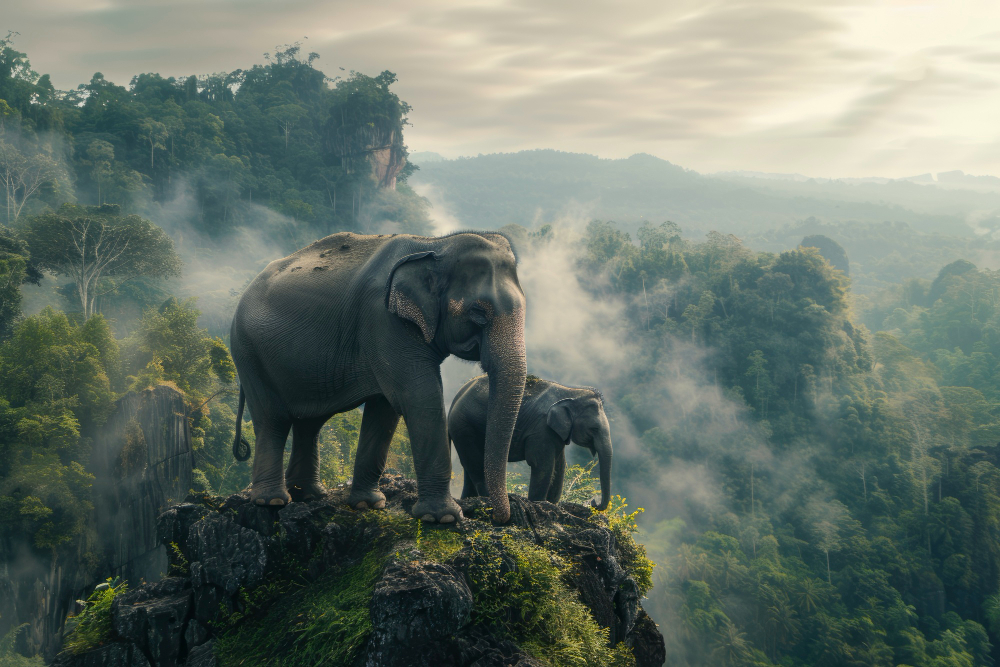
Travelers who board a Mekong cruise pass through floating markets at dawn, stop at ancient Khmer temples still half-swallowed by jungle, and watch Laotian monks collect alms along muddy riverbanks at first light. The wildlife along the lower Mekong is no less remarkable — isolated pockets of Cambodian forest shelter tigers, Asian elephants, sun bears, and gibbons, making this one of the most biodiverse river corridors in all of Asia.
AmaWaterways’ Mekong sailings offer cabins starting around CAD $4,300 per person, rising to nearly CAD $8,000 for premium suites. The cost of entry reflects the depth of what’s on offer — a journey through living Buddhist culture, ancient ecosystems, and one of the world’s last great slow rivers.
Quick Facts:
- Length: ~2,700 miles through 6 countries
- Wildlife: Irrawaddy dolphins, Asian elephants, gibbons, rare waterbirds
- Best for: Cultural immersion, temple visits, floating market mornings
- Peak season: November – February (cool and dry)
3. The Zambezi River — Southern Africa
 Pin
Pin Photo courtesy of Fred Mg
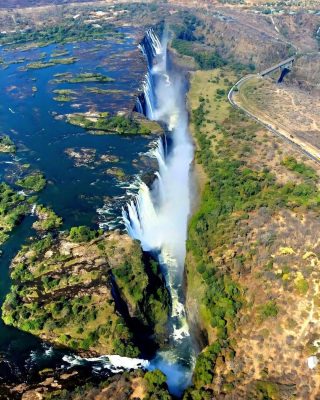
The Zambezi has a way of making people feel very small, and very grateful. At its most dramatic point — the border of Zambia and Zimbabwe — it drops off the edge of a basalt cliff and becomes Victoria Falls, known by the local Lozi people as Mosi-oa-Tunya, which translates with elegant accuracy as “The Smoke That Thunders.” The falls are not merely the world’s largest sheet of falling water by volume. They are a full-body experience — felt in the chest, tasted on the lips, heard long before they’re seen.
Beyond the falls, the Zambezi spans 1,599 miles from its source in Zambia through eastern Angola, along the borders of Namibia and Botswana, and onward through Zimbabwe and Mozambique to the Indian Ocean. Its floodplains and gorges are home to hippopotamuses, Nile crocodiles, elephants, buffalo, zebra, and dozens of bird species that make even the most seasoned wildlife watchers stop and stare.
In 2026, AmaWaterways introduced dedicated Africa safari and wildlife cruise routes incorporating the Chobe River and Victoria Falls stays. These itineraries blend raw African wilderness with a level of comfort that the continent’s early explorers could not have fathomed.
Quick Facts:
- Length: 1,599 miles across southern Africa
- Wildlife: Hippos, crocodiles, elephants, buffalo, over 400 bird species
- Best for: Victoria Falls, river safaris, canoeing in remote gorges
- Peak season: May – October (dry season, wildlife congregates near water)
4. The Yangtze River — China
 Pin
Pin Photo courtesy of Cruise Collective
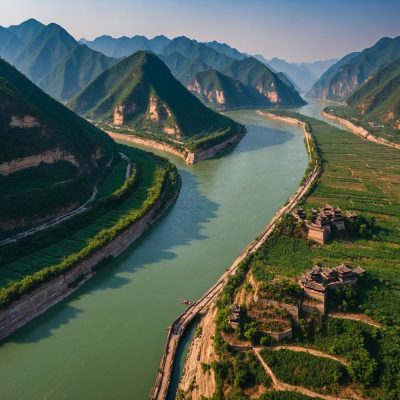
China calls it Chang Jiang — the Long River — and that is precisely what it is. Stretching 6,387 kilometers from the Tibetan Plateau to the East China Sea, the Yangtze is the third longest river on Earth and Asia’s most important waterway. Its most celebrated stretch, the Three Gorges region, carves through limestone cliffs that tower hundreds of meters above the water. Ancient carvings, abandoned villages, and Han Dynasty temples cling to the canyon walls on either side.
The Yangtze’s ecosystem, despite the pressures of industrialization, remains extraordinary. The Yangtze finless porpoise still navigates its murky waters. Giant salamanders, the world’s largest amphibians, shelter in cold river tributaries. Restoration efforts along the river have intensified since 2020, and in 2025 and 2026, conservation tourism has grown steadily as travelers seek to witness what remains of this ancient ecosystem.
Cruising the Three Gorges on a modern vessel between Chongqing and Shanghai is considered one of the great inland journeys of the travel world. The scenery alone, regardless of cost, earns its place on this list without argument.
Quick Facts:
- Length: 6,387 km — third longest river in the world
- Wildlife: Yangtze finless porpoise, giant salamanders, Siberian cranes
- Best for: Three Gorges cruises, ancient temple excursions, landscape photography
- Peak season: March – May and September – November
5. The Nile River — Egypt & Northeast Africa
 Pin
Pin Photo courtesy of Marc Bachtold
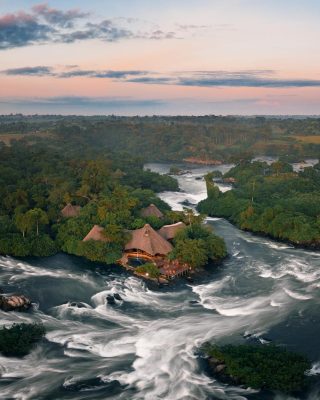
Certain rivers carry freight beyond geography. The Nile carries history — the weight of pharaohs, dynasties, agricultural miracles, and a civilization that somehow bloomed in the middle of one of the world’s most punishing deserts. At 4,132 miles, it remains the world’s longest river, running from its source in Lake Victoria through Sudan and into Egypt, where it spreads across the most fertile delta in Africa before meeting the Mediterranean Sea.
Nile river cruises in 2026 have surged in popularity, with Egypt’s tourism authorities actively positioning river travel as a safe, culturally immersive experience. Travelers on Nile cruises visit Luxor and Karnak, glide past the Valley of the Kings, and anchor near Aswan’s granite quarries where obelisks were once cut for Rome. Along the river’s banks, Nile monitors, sacred ibis, and African fish eagles are common sights.
What makes the Nile expensive isn’t just the logistics — it’s the sheer density of archaeological wonder packed into every bend of the river. There is no other river on Earth where a traveler can watch the sun set over a 3,000-year-old temple from the deck of a floating hotel.
Quick Facts:
- Length: 4,132 miles — the world’s longest river
- Wildlife: Nile crocodiles, hippos, Nile monitors, African fish eagles, ibis
- Best for: Archaeological cruises, temple excursions, sunset photography
- Peak season: October – April (cooler temperatures)
6. The Okavango River & Delta — Botswana
 Pin
Pin Photo courtesy of Solly Levi
The Okavango does something no other major river does: it never reaches the sea. It flows 1,000 miles from the highlands of Angola, crosses Namibia’s Caprivi Strip, and then spreads silently into the sands of the Kalahari Desert in Botswana, forming the Okavango Delta — the world’s largest inland delta. Instead of emptying into an ocean, it simply floods a desert and fills it with life.
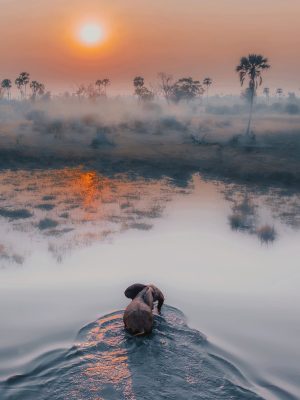
The result is one of the most staggering wildlife spectacles on the planet. Elephants wade chest-deep through papyrus channels. Lions swim between islands. Leopards rest in fever trees that grow straight out of water. The Okavango hosts elephants, lions, leopards, buffalo, giraffes, hippos, crocodiles, and dozens of antelope species in numbers that most African game reserves cannot match. It is, in every sense, Africa at its most pure.
The Okavango’s remoteness drives the cost. Private mokoro (dugout canoe) safaris, fly-in camps, and exclusive lodge stays run well into the thousands per person per night. Botswana has long pursued a high-value, low-volume tourism policy — and the Okavango is the jewel that policy was built around.
Quick Facts:
- Length: ~1,000 miles; delta spans ~15,000 sq km seasonally
- Wildlife: Elephants, lions, leopards, hippos, wild dogs, over 500 bird species
- Best for: Mokoro safaris, fly-in bush camps, birdwatching
- Peak season: June – October (dry season flood arrives, wildlife concentrates)
7. The Danube River — Central Europe
 Pin
Pin Photo courtesy of Andrei Miron
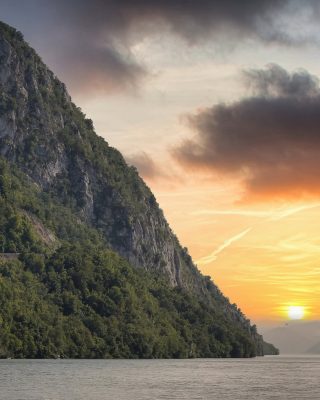
The Danube is Europe’s answer to the Amazon — not in size, but in significance. Flowing 1,770 miles through ten countries, from the Black Forest of Germany to the Black Sea of Romania, the Danube carries more history per kilometer than almost any other river on Earth. Medieval castles perch on limestone bluffs above the water. Vineyard terraces climb the hillsides. The spires of Vienna, Bratislava, and Budapest rise from its banks like a succession of postcards that somehow turned out to be real.
In 2026, AmaWaterways debuted the AmaSofia on Danube routes — a new vessel with signature twin-balcony staterooms designed specifically to frame the river’s UNESCO World Heritage sites. Tourism in Budapest, Bratislava, and Vienna has surged as a result, with the river serving as a connective thread between some of Europe’s most beloved cities.
The Danube’s wildlife is quieter than the rivers of Africa or the Amazon, but no less present. The Iron Gates gorge along the Serbian-Romanian border hosts eagles, peregrine falcons, and Europe’s largest population of wild sturgeon — a fish that has been navigating this river since the age of dinosaurs.
Quick Facts:
- Length: 1,770 miles through 10 European countries
- Wildlife: White-tailed eagles, sturgeon, cormorants, otters, beavers
- Best for: Cultural cruises, UNESCO site visits, European city-hopping
- Peak season: April – October (spring bloom and autumn foliage are exceptional)
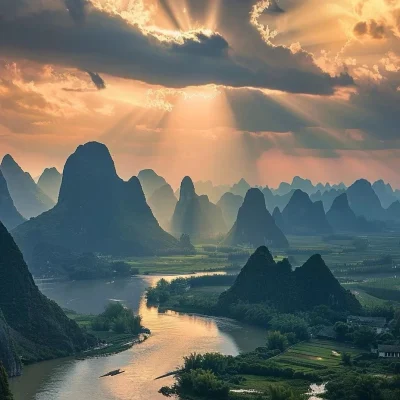
8. The Li River — China
 Pin
Pin Photo courtesy of Shui Yang
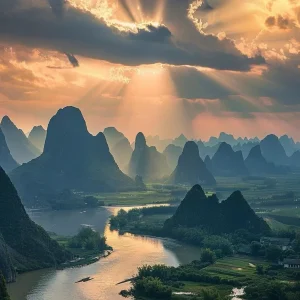
The Li River in Guangxi Province doesn’t look like a real place. It looks like a Chinese ink painting — the kind one might see in a museum and assume was exaggerated. The karst limestone peaks that line its banks rise from the river like the spines of ancient creatures, their reflections perfectly doubled in water so green and clear that the riverbed is visible from a bamboo raft. There are no dramatic waterfalls here, no thunderous cataracts. Just silence, mist, and mountains.
The 49-mile stretch between Guilin and Yangshuo has been ranked among the top things to do in China for 2026, with Li River Scenic Area earning a spot on major travel platforms’ “China’s Best” lists this year. Bamboo rafting tours on the Yulong River, a tributary of the Li, offer some of the most serene hours a traveler can spend anywhere in Asia.
Wildlife here is subtler than in Africa or the Amazon, but no less real — egrets wade in the shallows, cormorants dive from bamboo poles, and the forested karst hills shelter leopard cats, pangolins, and dozens of endemic bird species that treat the valley as their private paradise.
Quick Facts:
- Length: ~83 miles of navigable river from Guilin to Yangshuo
- Wildlife: Egrets, cormorants, leopard cats, pangolins, endemic birdlife
- Best for: Bamboo rafting, sunrise photography, rural Guilin village walks
- Peak season: April – October
9. The Caño Cristales — Colombia
 Pin
Pin Photo courtesy of Solo Cuba e Solo America Latina
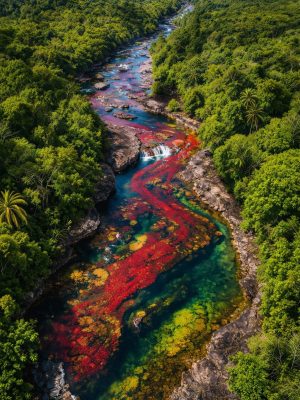
For five spectacular months each year, a river in the Colombian jungle does something that no other river on Earth does. Its bed turns red. Then yellow. Then green, black, and blue, all at once, all in the same glittering stretch of clear mountain water. Caño Cristales, nestled inside the Serranía de la Macarena National Park in the Meta department of Colombia, owes this phenomenon to a single aquatic plant called Macarenia clavigera, which blooms in brilliant crimson when water levels hit a precise seasonal balance between the wet and dry seasons.
Getting there is a commitment. Visitors fly from Bogotá to La Macarena, then travel by motorboat and 4×4 truck before a final two-kilometer hike through national park jungle. No overnight camping is permitted within the park. The reward is a river that looks, without any exaggeration, as though someone poured a painting into a mountain stream. Tour packages from Bogotá typically run between $365 and $490 per person for three to four days.
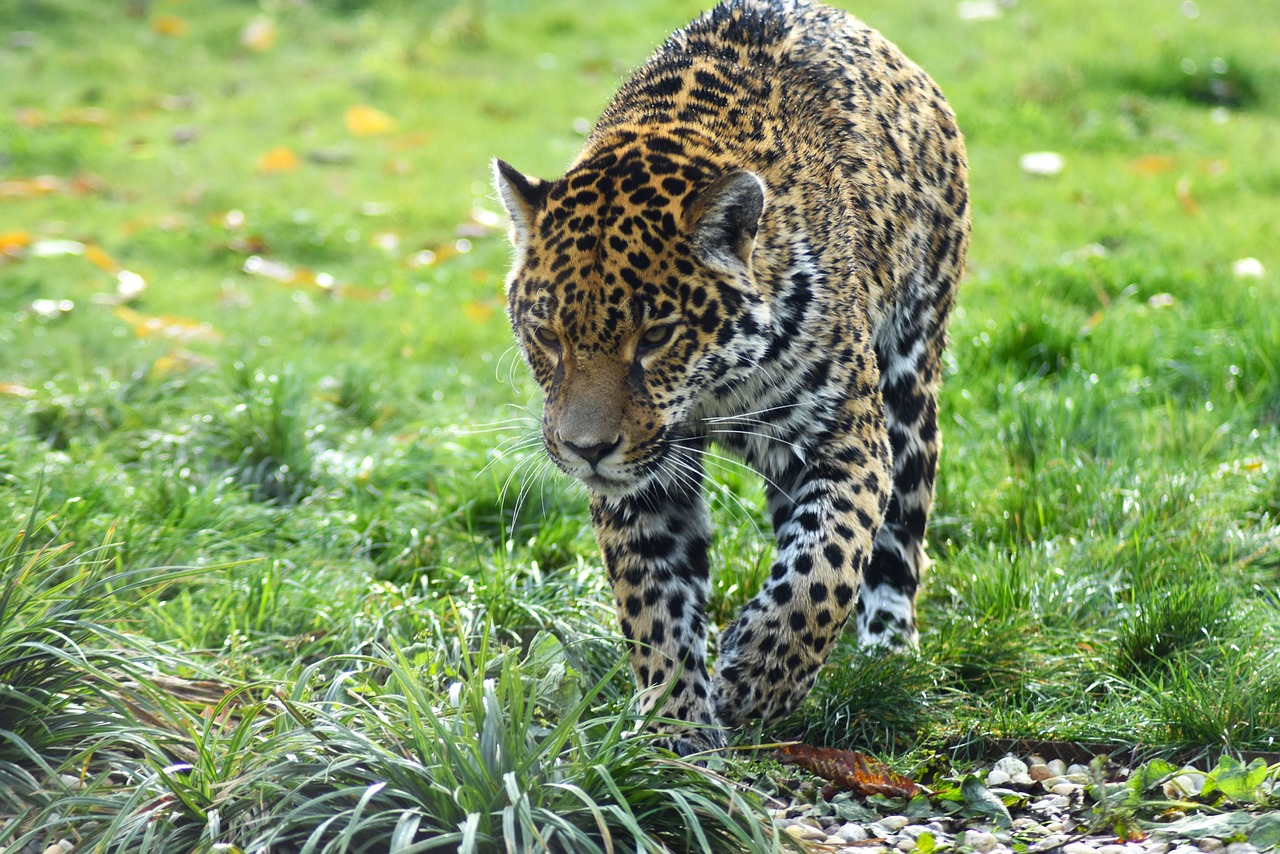
Beyond the colors, Serranía de la Macarena hosts over 400 bird species, 50 orchid varieties, jaguars, tapirs, and the kind of ecological richness that national park protection was invented to preserve.
Quick Facts:
- Location: Serranía de la Macarena National Park, Colombia
- Wildlife: Jaguars, tapirs, 400+ bird species, 50+ orchid varieties
- Best for: Color photography, guided jungle hikes, natural pools
- Peak season: July – November (Macarenia plants at full bloom)
10. The Rhine River — Western Europe
 Pin
Pin Photo courtesy of Oliver Asmussen
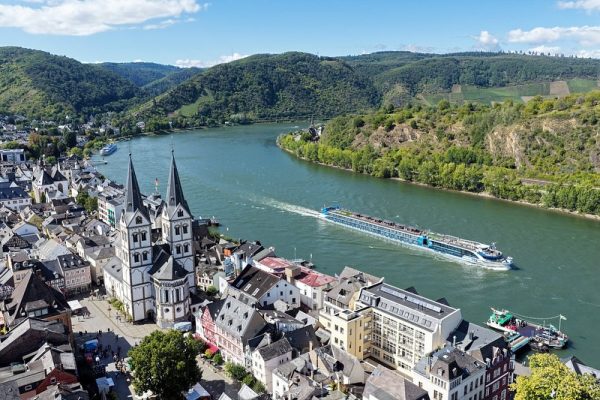
The Rhine winds 764 miles from the Swiss Alps through Germany, France, and the Netherlands before emptying into the North Sea. Its most celebrated stretch — the Middle Rhine Gorge between Koblenz and Bingen — is a UNESCO World Heritage Site lined with medieval castles, steep vineyard terraces, and small riverside towns that seem entirely undisturbed by the passage of time.
Rhine cruises remain among the most booked river journeys in Europe, and in 2026, demand has remained strong across both first-time and return visitors. The river flows past Cologne’s gothic cathedral, Rüdesheim’s wine taverns, and the Lorelei Rock, which has accumulated enough myth and poetry to fill a library. European river cruise operators report that the Rhine consistently attracts travelers seeking a gentler, more culturally layered experience than the safari-style rivers of Africa or Asia.
The Rhine’s ecological comeback over the past three decades is itself a story worth telling. Once declared ecologically dead from industrial pollution, the river now supports salmon, sea trout, otters, beavers, and white-tailed eagles — a recovery that conservationists hold up as one of Europe’s greatest environmental successes.
Quick Facts:
- Length: 764 miles from Switzerland to the North Sea
- Wildlife: Salmon, otters, beavers, white-tailed eagles, cormorants
- Best for: Castle-gazing, wine tasting, UNESCO gorge cruises
- Peak season: May – October (summer bloom and autumn harvest season)
Why These Rivers Cost What They Cost
There is a reason that the world’s finest river journeys carry premium price tags. It isn’t simply the boats, the guides, or the remote logistics — though those matter. It’s the rarity of what these rivers offer. A morning watching pink dolphins surface in the Amazon. A day spent drifting through a gorge so old that the rocks on either side predate the dinosaurs. A twilight over Victoria Falls when the mist catches the last of the sun and the sound of the water makes conversation impossible.
These are not experiences that can be replicated or replaced. The rivers on this list are, in the truest sense, irreplaceable. They have been flowing since before any human being thought to name them, and they carry within their currents the kind of natural richness that reminds even the most well-traveled person that the world, at its best, still has the capacity to leave one speechless.
In 2026, with river tourism accelerating across every continent and luxury cruise operators expanding into new routes at a rapid pace, there has never been a better moment to see these waterways before more visitors arrive, before prices climb further, and before the pressures of a warming world alter what they offer. The rivers are ready. The only question is whether the traveler is.
FAQs
The Okavango Delta in Botswana ranks among the priciest, with exclusive fly-in safari camps often exceeding \$1,500–\$3,000+ per person per night. Its remote location and strict low-volume tourism policy keep both prices and wildlife populations high.
The Amazon River holds the greatest biodiversity of any river on Earth, hosting over 3,000 species of freshwater fish, 1,300 bird species, and countless mammals, reptiles, and amphibians found nowhere else on the planet.
Absolutely. The combination of flight, motorboat, 4×4, and hiking required to reach it is part of what keeps it pristine. Visitors who make the trip consistently describe it as one of the most visually surreal natural experiences of their lives.
November through February offers the most comfortable travel conditions — cool temperatures, lower humidity, and clear water. Floating markets and cultural sites along the Cambodian and Vietnamese stretches are at their most accessible during these months.
Several are accessible at lower price points. The Li River in China offers bamboo rafting from around $20–30. Caño Cristales tours from Bogotá start under $500. The Nile has budget-friendly felucca sailing options. The Amazon, Okavango, and Danube luxury routes are where costs climb steeply.




 Login with Google