























 Pin
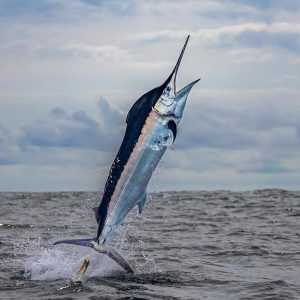
Pin Black Marlin / Photo courtesy of John-Austin Gallardo
Synopsis: Nature has its own elite squad. Some animals move so fast that even high-speed cameras struggle to catch them in action. A predator launches at prey in a fraction of a second. A tiny insect vanishes mid-air before the eye even registers movement. Speed, for these creatures, is not a trick — it is survival. This article breaks down 10 of the most remarkable fast animals on Earth, how fast they actually move, why they evolved that way, and what makes each one genuinely worth knowing.
There is a quiet war happening all around — in the skies, in rivers, on open plains, and even underground. It is not fought with weapons. It is fought with speed. The animal that moves faster gets to eat. The one that moves slower ends up as dinner. That is the blunt, unromantic truth of nature, and it has been shaping life on this planet for hundreds of millions of years.
Speed is not just about running fast on four legs. It takes many forms — a dive, a strike, a flicker of wings, a tongue shooting out before the prey even senses danger. Every animal on this list has mastered one of those forms to a degree that seems almost unfair to the rest of the animal kingdom.
What follows is a look at ten creatures that treat speed the way a musician treats music — not as an effort, but as a way of being.
Table of Contents
1. The Peregrine Falcon — 240 mph
 Pin
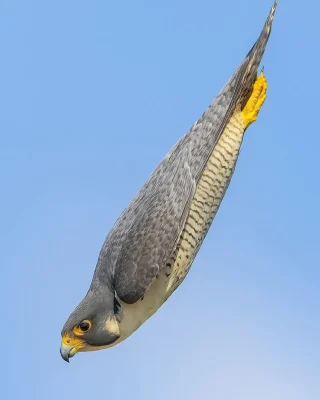
Pin Photo courtesy of photo falcons
The peregrine falcon does not simply fly fast. It falls fast — on purpose. When a peregrine spots prey from high above, it tucks its wings tight against its body and drops into a controlled dive called a stoop. In that dive, it reaches speeds of up to 240 miles per hour, making it the fastest animal on Earth by a wide margin.
The bird’s body is engineered for this moment. Its nostrils have small bony cones inside them that redirect the rushing air so its lungs are not overwhelmed. Its eyes can track a pigeon from over a mile away. Its feet, when they strike, hit with enough force to kill on impact.
People have trained peregrines for thousands of years, yet the falcon never truly submits to domestication. It merely tolerates it. Speed gave it that kind of confidence.
- Top speed: ~240 mph (386 km/h) in a dive
- Found on every continent except Antarctica
- Can spot prey from 1 mile (1.6 km) away
2. The Cheetah — 70 mph
 Pin
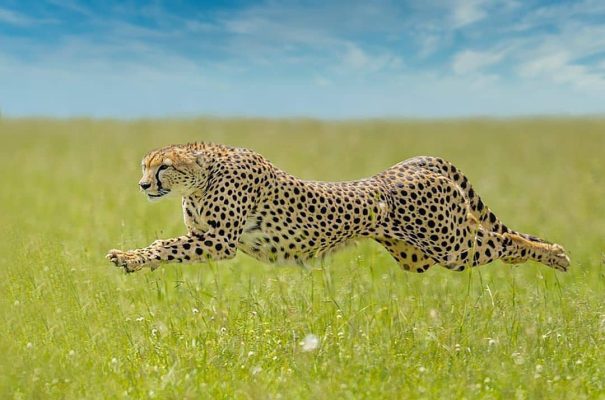
Pin Photo courtesy of Ahmed
On land, nothing alive runs as fast as the cheetah. It goes from a standstill to 60 miles per hour in under three seconds — faster than most sports cars off the line. At full sprint, its stride covers 23 feet at a time and its feet barely seem to touch the ground at all.
The cheetah’s entire skeleton is built around this moment. Its spine acts like a coiled spring, compressing and releasing with each stride to add explosive length. Its claws, unlike those of other big cats, are semi-retractable, giving it grip like cleats on a track.
But there is a cost. A full sprint lasts only 20 to 30 seconds before the cheetah overheats and must rest. It is the sprinter of the cat world — brilliant at the dash, completely spent at the finish line.
- 0 to 60 mph in under 3 seconds
- Must rest up to 30 minutes after a chase
- Loses half its kills to larger predators who steal after the hunt
3. The Black Marlin — 82 mph
 Pin
Pin Photo courtesy of John-Austin Gallardo
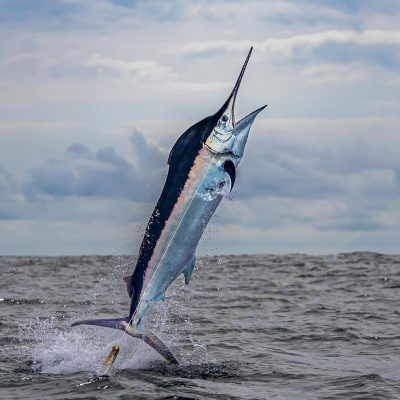
The ocean has its own speed champions, and none are more impressive in the water than the black marlin. Clocked at speeds approaching 82 miles per hour, this fish moves through water the way a missile moves through air — with a body that seems designed by someone who thought physics was a suggestion.
Its pointed bill slices through resistance. Its body is torpedo-shaped, with a crescent tail that generates enormous thrust. Anglers who have hooked one describe the line going taut and then smoking off the reel so fast it can cause burns.
The black marlin does not just swim — it launches. It leaps from the water in long, arcing jumps, lands, and keeps going. Watching one run is one of the more humbling things the ocean has to offer.
4. The Sailfish — 68 mph
 Pin
Pin Photo courtesy of Yukilin
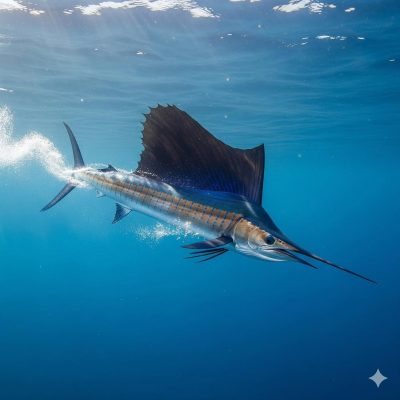
The sailfish raises its magnificent dorsal fin — that enormous, sail-like crest that gives it its name — not to look dramatic, but to herd prey. It uses the fin to confuse schools of fish, collapsing and raising it to disorient them before striking with terrifying precision.
At 68 miles per hour, it is among the fastest fish in the sea, though the black marlin edges it out. What makes the sailfish remarkable is its hunting intelligence combined with that speed. It does not simply outrun its prey — it outthinks it first.
The sailfish also has a bill designed for stunning fish mid-chase, slashing sideways through a school to injure several before circling back to pick them off. Efficiency and speed working together — a rare combination even in nature.
5. The Brazilian Free-Tailed Bat — 100 mph
 Pin
Pin Photo courtesy of Carlsbad Caverns National Park
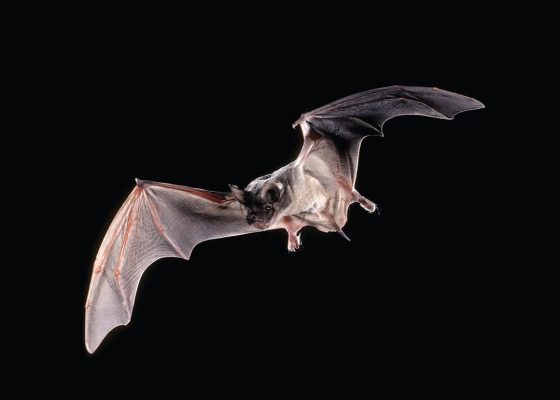
For a long time, the peregrine falcon was considered the undisputed speed champion of the animal world. Then scientists started paying closer attention to bats. Specifically, to the Brazilian free-tailed bat, a small, unassuming creature that researchers tracked at horizontal flight speeds exceeding 100 miles per hour.
That is faster than the peregrine in level flight, though the falcon’s dive still wins overall. The bat achieves this not through brute wing strength alone, but through an extraordinary wing shape — long and narrow, built for velocity rather than maneuverability.
They migrate in massive colonies across North America, and on warm evenings they pour out of caves in the millions. Watching them emerge is like watching a river made of living creatures — and every single one of them is faster than almost anything else in the sky.
6. The Mantis Shrimp — Strike Speed: 50 mph
 Pin
Pin Photo courtesy of Cesar Rodriguez
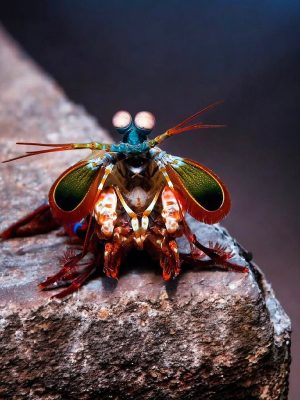
Speed is not always about distance covered. Sometimes it is about the speed of a single, devastating movement. The mantis shrimp delivers a punch that accelerates faster than a bullet fired from a gun — reaching speeds of 50 miles per hour in an arm that is only a few inches long.
The punch generates a cavitation bubble — a pocket of near-vacuum that collapses with a shockwave hot enough to briefly match the surface temperature of the sun. Crabs, snails, and clams have their shells shattered before they even register the strike.
Aquariums have to house mantis shrimp in specially reinforced tanks because they have been known to crack standard aquarium glass. For an animal roughly the size of a hot dog, that is a rather startling level of destructive capability.
- Strike acceleration: 10,000 g’s of force
- Eyes can see 16 types of color receptors (humans have 3)
- Cavitation bubble reaches ~8,000°F briefly on collapse
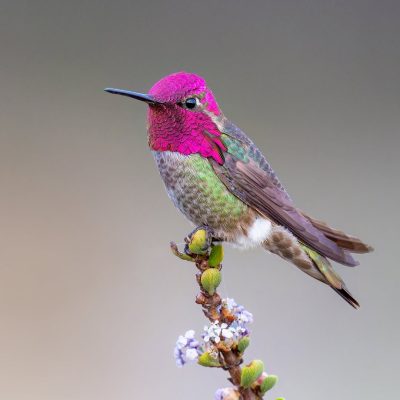
7. Anna's Hummingbird — 385 Body Lengths Per Second
 Pin
Pin Photo courtesy of Rick Fridell
Raw speed in miles per hour does not tell the whole story. Body-length-per-second is another way to measure speed — how fast an animal moves relative to its own size. By that measure, the Anna’s hummingbird is one of the fastest creatures alive, covering 385 body lengths per second during its courtship dive.
To put that in perspective: a fighter jet at full throttle covers roughly 150 body lengths per second. The hummingbird, a creature that weighs less than a nickel, beats it handily. During its dive, it also experiences gravitational forces of about 10 g’s — the point at which fighter pilots begin to lose consciousness.
The hummingbird completes its dive, pulls up, and then goes to hover over a flower as if nothing happened. It visits up to 1,000 flowers a day, its wings beating 80 times per second. Rest is not really part of its schedule.
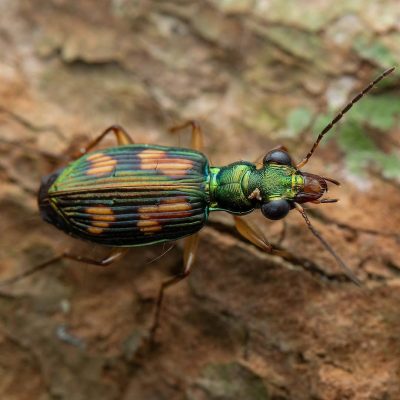
8. The Tiger Beetle — Fastest Insect on Land
 Pin
Pin Photo courtesy of Wee Mad Beasties
The tiger beetle runs so fast that it temporarily goes blind. At top speed, its legs move so quickly and its surroundings blur so severely that its brain cannot process the visual information fast enough. So it stops, recalibrates, then sprints again — a cycle of blindness and clarity in pursuit of prey.
The Australian tiger beetle holds the record for fastest land insect, covering about 5.6 miles per hour — which sounds modest until one considers that its body is about an inch long. Relative to size, that translates to covering 171 body lengths per second. A human running at an equivalent pace would be moving at around 480 miles per hour.
There is something almost philosophical about an animal that moves so fast it outruns its own senses. It represents speed at its most extreme — where the body has gone beyond what the nervous system was built to handle.
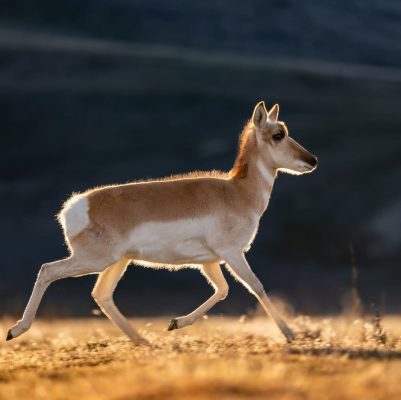
9. The Pronghorn Antelope — Built to Outrun a Ghost
 Pin
Pin Photo courtesy of Chris
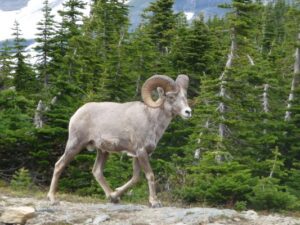
The cheetah is the fastest land animal, but the pronghorn antelope of North America could outrun one in a race of any meaningful distance. The cheetah sprints at 70 mph for 30 seconds. The pronghorn runs at 55 mph — and keeps going. It can sustain that speed for miles without stopping.
Biologists find this puzzling because there is no predator alive in North America today fast enough to require such endurance speed. The leading theory: the pronghorn evolved during the Pleistocene, when North America was home to American cheetahs, now extinct. The pronghorn is still running from a predator that no longer exists.
It is one of the more haunting facts in the animal world — a creature carrying the evolutionary memory of a threat the world forgot, its body still tuned to a danger that vanished ten thousand years ago.
- Sustained speed: 55 mph for several miles
- Windpipe, heart, and lungs are oversized for its body
- Second fastest land animal on Earth after the cheetah
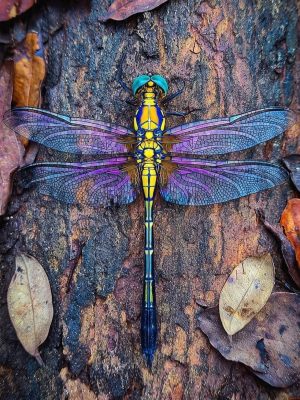
10. The Dragonfly — 95% Hunt Success Rate
 Pin
Pin Photo courtesy of Your Soul’s Toolbox
Speed alone does not make a predator remarkable. The dragonfly combines speed — up to 35 miles per hour — with a hunting success rate of around 95%. That figure is almost unheard of in the animal kingdom. Lions succeed about 25% of the time. Great white sharks, perhaps 55%. The dragonfly catches nearly every target it goes after.
The secret is predictive flight. The dragonfly does not chase its prey from behind like most predators. It calculates where the prey will be and intercepts it there. Its eyes cover nearly 360 degrees of vision, and its four wings operate independently, allowing it to fly forward, backward, hover, and change direction instantaneously.
It also hunts mostly in mid-air, snatching other insects with its legs in a maneuver so fast that it is nearly invisible to the naked eye. The dragonfly has been operating this way for 300 million years. It was doing this before the dinosaurs arrived and is still doing it now. That kind of track record speaks for itself.
- 95% hunting success rate — highest of any predator
- Four wings move independently for total aerial control
- Has existed for over 300 million years, essentially unchanged
Final Thought
Speed in the animal kingdom is never just about being fast. It is about being fast enough — to eat, to escape, to survive another day. Each of these ten animals evolved their remarkable abilities under pressure that humans can barely comprehend, shaped over millions of years by nothing more than the relentless logic of survival.
They are not showing off when they move. They are simply doing what their bodies were built to do. And they do it with a kind of effortless precision that makes every human athletic achievement look, by comparison, like a polite suggestion.
FAQs
The peregrine falcon holds the title at ~240 mph during a dive. On land, the cheetah wins at 70 mph. In water, the black marlin reaches 82 mph.
No. The cheetah can only sprint at top speed for 20–30 seconds before overheating. It needs up to 30 minutes of rest before attempting another chase.
Its strike is so fast it creates cavitation bubbles — collapsing shockwaves with extreme heat and force — that can shatter shells and crack aquarium glass.
Yes. Researchers have confirmed it through high-speed camera studies. The dragonfly’s predictive targeting and near-360° vision make it the most efficient aerial predator known.
It evolved during the Pleistocene alongside American cheetahs, now extinct. Its speed is an evolutionary legacy — the memory of a predator the planet lost 10,000 years ago.







 Login with Google