























 Pin
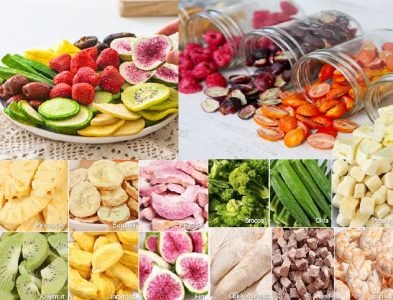
Pin Freeze Dried Fruits, Vegetables and Meat / Photo Courtesy of Dalle
Synopsis: How to start a freeze-dried & dehydrated fruits vegetables and meat business is a question more home cooks are asking every year, and for good reason. A single machine, a bit of counter space, and a genuine curiosity about food preservation are often all it takes to begin. This guide lays out the full journey — equipment, cost, food safety, packaging, pricing, and selling — in plain, practical language, so anyone starting from scratch knows exactly where to put their first rupee and their first batch of strawberries.
Every kitchen has a drawer full of good intentions — the dehydrator someone bought during a health kick, the mangoes that went soft a day too soon. Somewhere between that drawer and the local farmers’ market lies a business that a surprising number of ordinary people have managed to build, one tray at a time.
The appeal is simple enough. Fresh produce is cheap when it’s in season and painfully short-lived. Freeze-drying and dehydration solve that problem by turning ripeness into something that can sit on a shelf for months, sometimes years, without losing much of what made it worth eating in the first place.
What follows is a plain walk through the whole process — the machines, the money, the rules, and the selling — written for anyone who’s curious but hasn’t yet made a single batch.
Table of Contents
Understanding Freeze-Drying vs Dehydration
 Pin
Pin Photo Courtesy of Horizon Dwellers (AI)
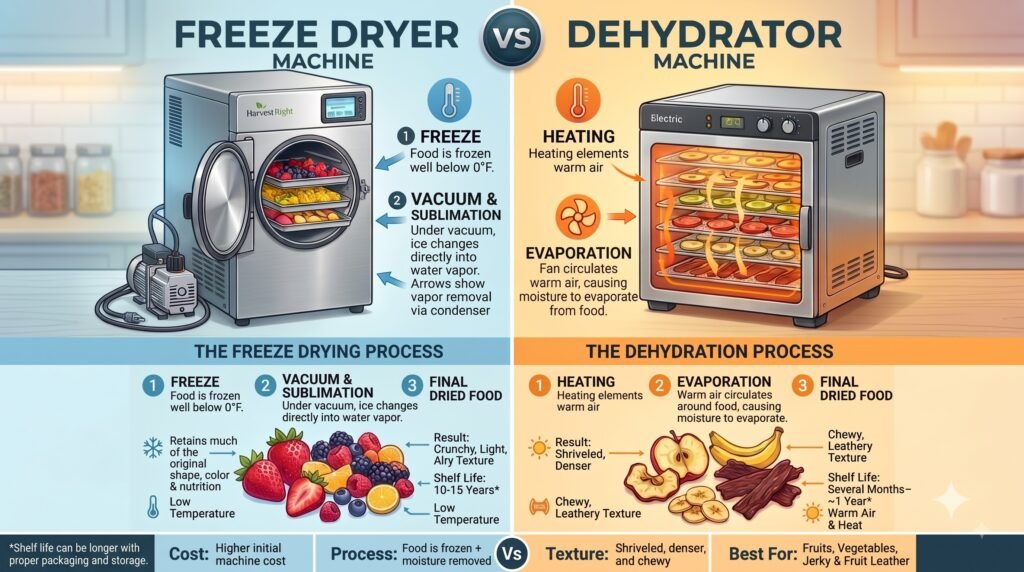
Two methods get lumped together constantly, and they behave nothing alike once the process starts. Dehydration works with warm air, slowly coaxing moisture out over several hours, leaving behind something chewy and shrunken — jerky, dried mango, that sort of thing. Freeze-drying takes the opposite route: it freezes the food solid first, then draws the moisture out as vapor inside a vacuum chamber, skipping the liquid stage entirely.
The difference shows up on the plate. Freeze-dried produce keeps its original shape and most of its color, and snaps back to something close to fresh the moment water touches it again. Dehydrated food never really goes back — it stays leathery, which is fine for snacks but limiting for recipes that need real texture.
- Dehydration: lower cost, chewy result, needs airtight storage
- Freeze-drying: higher upfront cost, near-fresh taste, shelf life reported up to 25 years
- A sensible starting point is dehydration for testing an idea, freeze-drying for building a lasting brand
Which Foods Can You Process?
Not every ingredient behaves the same way once it enters a dryer, and knowing the categories early saves a lot of wasted trays. Fruits are the most forgiving place to begin — strawberries, mango, banana, and apple all hold up well and sell easily as snacks. Vegetables follow close behind, with peas, corn, carrots, and leafy greens working nicely for soup mixes and camping meals.
Herbs and spices dry fast and store for ages, making them a low-risk side product. Ready-to-eat meals — rice dishes, curries, pasta — are trickier but hugely popular for outdoor and emergency food kits. Meat sits in its own category entirely, demanding far stricter handling than anything plant-based.
- 🍓 Fruits: strawberries, mango, banana, apple, berries
- 🥕 Vegetables: peas, carrots, corn, spinach, beans
- 🌿 Herbs & spices: basil, mint, chili, curry leave
- 🍜 Ready-to-eat meals: rice bowls, curries, soups
- 🍗 Meat: chicken, beef, fish — highest risk, highest reward
Freeze-Dried vs Dehydrated — Which Is Better for Business?
There’s no single right answer here, only a better fit for the situation at hand. Dehydrated goods cost less to make and sell at a lower price, which suits a seller chasing volume or testing a new market with limited funds. The machines are cheaper too, so the early risk stays manageable.
Freeze-dried goods command a premium, sometimes three or four times what dried versions fetch, because the texture and taste come so much closer to fresh. That premium pays for itself over time, but only after the freeze dryer itself is paid off, which takes longer given the steeper starting cost.
A blended approach tends to work best in practice — dehydrated herbs and snacks to generate steady cash flow, freeze-dried fruit and ready meals to build the brand’s reputation and margins.
Equipment Required to Start at Home
The equipment list looks longer on paper than it feels in the kitchen. A dehydrator or freeze dryer sits at the center, but neither works alone — washing stations, cutting tools, weighing scales, and vacuum sealers all play supporting roles that beginners tend to underestimate.
Freeze dryers, in particular, ask for a bit more from the space around them. Larger home units often need a dedicated 20-amp circuit, something not every house has sitting around, so checking the electrical setup before ordering saves a frustrating surprise later.
- Freeze dryer or food dehydrator (the centerpiece)
- Digital kitchen scale for accurate batching
- Vacuum sealer and mylar bags for storage
- Stainless steel prep tools and cutting boards
- Oxygen absorbers for long-term shelf stability
How Much Investment Is Required?
Numbers vary wildly depending on ambition, and that’s actually good news for anyone starting small. A basic countertop dehydrator can be had for a modest sum, low enough that testing the whole idea barely dents a monthly budget.
Freeze dryers ask for considerably more. Entry-level home units generally run somewhere between $2,500 and $6,000, with electricity for each cycle adding roughly $1.50 to $3.50 depending on batch size. Packaging supplies — mylar bags, oxygen absorbers, sealed jars — form a smaller but recurring cost that adds up over a year of steady production.
- Dehydrator route: low cost, quick to start
- Freeze dryer route: $2,500–$6,000 for entry-level home units
- Ongoing costs: electricity, packaging, ingredients, and FSSAI compliance (for India)
Food Safety, Hygiene and FSSAI Licensing
Good food and legal food aren’t automatically the same thing, and this is where many enthusiastic beginners stumble. In India, any business that produces, packages, or sells food — including one run entirely from a home kitchen — needs to register with the Food Safety and Standards Authority of India before a single product reaches a customer.
The good news is that the entry point is forgiving. A Basic FSSAI Registration covers food businesses earning up to ₹12 lakh a year, requiring little more than identity proof, address proof, and a modest fee. Crossing that turnover moves the business into State License territory, with a more detailed application.
Meat products deserve extra caution beyond the license itself — separate equipment, stricter temperature control, and careful sourcing all matter far more than they do with fruit or vegetables, since the margin for error with raw meat is much smaller.
Packaging and Moisture Protection
All that careful drying goes to waste the moment moisture sneaks back in, which makes packaging one of the most underrated parts of the entire business. Freeze-dried and dehydrated foods are hungry for humidity, and a poorly sealed bag can undo weeks of good work within days.
Mylar bags paired with oxygen absorbers remain the gold standard for long shelf life, especially for products meant to sit in a pantry for months. Resealable pouches with a one-way valve suit smaller snack packs meant for quicker turnover, where convenience matters more than multi-year storage.
- Mylar bags + oxygen absorbers for long-term stock
- Vacuum-sealed pouches for retail-ready snack packs
- Clear labeling with batch date and best-before period
- Moisture-proof storage away from direct sunlight and heat
How to Calculate Your Cost and Selling Price
Pricing freeze-dried and dehydrated food trips people up because the weight shrinks dramatically, and it’s easy to either undercharge out of habit or overcharge out of guesswork. The honest way to price is to work backward from raw ingredient cost per kilogram, then add electricity, packaging, labor, and a fair margin on top.
Freeze-dried strawberries, for instance, might lose around 90 percent of their original weight, meaning a kilogram of fresh fruit yields only a fraction of that in finished product — a detail that has to be baked into the price from day one, not discovered after the first sale.
- Raw material cost ÷ yield after drying = true cost per finished kilogram
- Add packaging, electricity, and labor per batch
- Compare against competitor pricing before settling on a final number
- Round pricing to feel premium, not discount-bin
How to Build Your Own Food Brand
A brand is more than a logo slapped on a pouch — it’s the reason a customer picks one bag over another sitting right next to it on a shelf. Choosing a name that’s easy to say and remember matters more than it seems, especially for word-of-mouth growth in local markets.
Packaging design deserves real attention too, since freeze-dried food often sells on looks before taste ever enters the conversation. A consistent color palette, honest photography of the actual product, and a short story about why the brand exists all help build trust faster than any discount ever could.
- Pick a memorable, easy-to-pronounce name
- Invest in clean, honest packaging design
- Share the story behind the brand on every platform
- Stay consistent across labels, social media, and website
Selling Through Amazon, Flipkart, Meesho & Your Own Website
Getting the product right is only half the job — getting it in front of the right eyes is the other half. Amazon and Flipkart offer massive built-in audiences, though both demand tight compliance on labeling, weight declarations, and FSSAI details before a listing goes live.
Meesho works well for social-commerce-style selling, particularly for smaller batches and regional buyers who prefer simpler checkout experiences. A dedicated website, meanwhile, becomes valuable once repeat customers start asking for it directly, since it keeps margins higher by cutting out marketplace commissions.
- Amazon/Flipkart: wide reach, strict compliance
- Meesho: lighter setup, regional and social buyers
- Own website: best margins, needs marketing effort
- Local retail counters: quick cash flow, smaller volume
Marketing, Local Retail and Scaling the Business
Marketing this kind of product works best when it’s shown, not just described — a slow-motion video of water hitting a freeze-dried strawberry and bringing it back to life tends to do more convincing than any paragraph of copy. Instagram Reels and short YouTube videos built around that “reveal” moment consistently outperform standard product photos.
Local retail counters, farmers’ markets, and small grocery tie-ups offer a steady, low-pressure way to build a customer base while online orders grow in the background. Once demand outpaces one machine’s output, scaling usually means either running a second unit or shifting toward a small shared commercial kitchen space.
- Short-form video showing rehydration works better than static photos
- Farmers’ markets and local grocers build trust early
- Add a second machine before renting commercial space
- Track which products sell fastest before expanding the range
FAQs
A basic dehydrator setup can start under ₹20,000, while home freeze dryers typically run $2,500–$6,000 plus packaging costs.
Yes. Any business producing or selling food in India needs FSSAI registration, even from a home kitchen.
Freeze-dried commands higher prices and better texture; dehydrated is cheaper to make and easier to start with.
Yes, but it needs separate equipment, stricter hygiene, and closer temperature control than fruits or vegetables.
Amazon, Flipkart, Meesho, personal websites, farmers’ markets, and local retail counters all work well.










 Login with Google