























 Pin
Pin Honey Badger / Courtesy of Mark De La Rosa
Synopsis: Honey badgers are among nature’s toughest survivors, famous for their fearless attitude and remarkable resilience. These compact carnivores possess incredible defense mechanisms including thick skin, powerful jaws, and resistance to venom. While they seem nearly indestructible, honey badgers aren’t invincible. Predators like lions, leopards, and large pythons can overpower them, especially young or injured individuals. Understanding what threatens these ferocious animals reveals the delicate balance between their extraordinary adaptations and the harsh realities of survival in the wild.
The honey badger has earned itself a legendary reputation in the natural world, the kind that comes from being too stubborn to know when you’re supposed to quit. These stocky little fighters, no bigger than a medium-sized dog, have made careers out of picking fights they shouldn’t win and somehow walking away to tell the tale. Their scientific name, *Mellivora capensis*, sounds dignified enough, but watch one raid a beehive while getting stung a hundred times over and you’ll understand that dignity isn’t exactly their calling card.
“Courage is resistance to fear, not absence of it.” The honey badger survival skills embody this truth completely. Their thick, loose skin works like nature’s own suit of armor, allowing them to twist and writhe inside their own hide when something’s got hold of them. A leopard might think it’s caught dinner, only to find its meal has spun from around inside that baggy coat and is now biting back with considerable enthusiasm. Add to this their famous tolerance for snake venom and their absolute refusal to retreat from anything, and you’ve got yourself an animal that nature seems to have built specifically to irritate everything else.
But hold on now, before we get too carried away with the mythology. The honey badger dies just like everything else that walks, crawls, or flies on this earth. For all their grit and determination, they face genuine dangers in the thorny acacia country and rocky highlands they call home. Understanding what can actually kill these tough customers tells us something honest about survival itself: it’s not about being invincible, but about being just tough enough, just often enough, to make it through another day.
Table of Contents
The Armor That Isn't Perfect
 Pin
Pin Courtesy of Msaro African Adventures
That famous thick skin everyone talks about is real enough, measuring about six millimeters in some places, which is roughly a quarter inch of pure toughness. It hangs loose on their bodies like an oversized coat, and when a predator bites down, the honey badger can actually rotate inside this skin to counterattack. It’s the kind of evolutionary trick that makes you think nature has a sense of humor.
But here’s what the viral videos don’t show you. That skin, tough as it is, can still be punctured by the right set of teeth or claws. A full-grown lion’s canines measure up to three inches long and can exert over 650 pounds of pressure per square inch. When something that powerful decides it wants you dead, even the best armor has its limits. The skin protects against many attacks, sure enough, but it’s not made of steel.
“In nature, nothing is perfect and everything is perfect,” goes the old saying, and the honey badger’s hide proves it. The loose skin saves them countless times, letting them escape from pythons, fight off hyenas, and shrug off porcupine quills that would kill other animals. Yet it can’t save them every time, and that’s the honest truth of it.
When Lions Get Serious
 Pin
Pin Courtesy of Wild Anjadenker
Lions don’t usually waste their time on honey badgers, and there’s a good reason for that. Taking on a honey badger means getting bitten, clawed, and generally having a worse afternoon than you’d planned. Most lions would rather chase down a nice zebra that’ll provide more meat with less sass. But when a lion does decide to kill a honey badger, particularly a big male or a coordinated pride, the outcome isn’t much in doubt.
The size difference tells the whole story. A male lion can weigh 420 pounds, while a honey badger tops out around 35 pounds. That’s twelve times the weight, with corresponding strength to match. A lioness might be smaller, but she’s still pushing 280 pounds and has spent her whole life perfecting the art of killing things. When survival comes down to pure physics and power, even the toughest attitude can’t overcome those numbers.
There are documented cases of lions killing honey badgers, usually when the badger has been caught out in the open or has foolishly tried to defend a den with cubs inside. The badger fights, of course. It always fights. But sometimes fighting just isn’t enough, and that’s a hard lesson the savanna teaches every creature born on it.
The Leopard's Patient Game
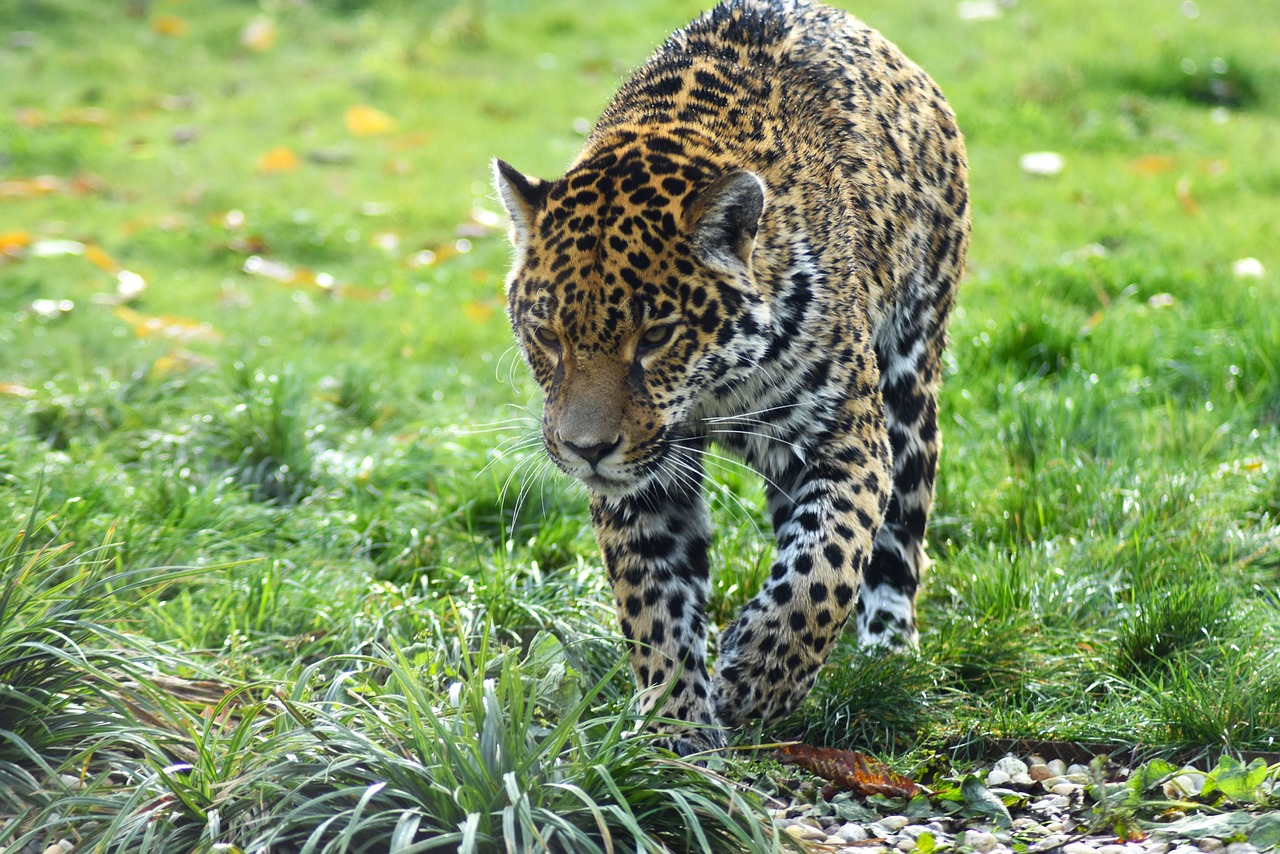
Leopards and honey badgers share a complicated relationship, like two bad-tempered neighbors who’ve learned to mostly avoid each other. Leopards are solo hunters, sleek and calculating, and they’ve got a particular talent for suffocation kills. They don’t rely on brute strength alone but on technique, patience, and knowing exactly where to bite. A leopard’s bite force reaches about 310 pounds per square inch, concentrated through sharp teeth designed for precision work.
“Patience is bitter, but its fruit is sweet,” and leopards understand this better than most. They’ll avoid a healthy adult honey badger if they can, because even a successful kill means getting torn up in the process. But a young badger, an injured one, or one weakened by disease presents a different calculation entirely. The leopard can afford to wait, to stalk, to choose its moment when the badger’s guard is down.
When a leopard does attack, it goes for the throat or the back of the neck, clamping down and holding on despite the honey badger’s desperate twisting and fighting. The loose skin that usually saves them becomes less effective when the leopard’s long canines punch through and maintain their grip. It’s an ugly business, nature’s way of reminding us that every defense has a counter, every strength has a weakness waiting to exploit it.
Python's Deadly Embrace
The African rock python grows to twenty feet long and can weigh over 200 pounds of pure muscle. When it wraps around something, it doesn’t inject venom or tear with claws. It simply squeezes, tightening a little more with each breath its victim exhales until there’s no breath left to take. Honey badgers have tangled with these serpents many times, and while they often win against smaller snakes, a truly large python presents a different sort of problem.
The honey badger’s venom resistance doesn’t help against constriction. Their tough skin doesn’t matter much when the pressure comes evenly distributed around their entire body. A python doesn’t care if you can twist in your skin when it’s got six coils around you, each one tightening independently. The badger will bite, will claw, will fight with every ounce of fury in its compact body, but muscle fatigue eventually wins the day.
Researchers have found honey badger remains in python stomachs, proving that sometimes the snake does win this ancient contest. It’s not common, mind you. Most honey badgers are too quick, too aggressive, and too much trouble for a python to bother with. But in the quiet moments near a waterhole at dusk, when a badger lets its guard down just long enough, nature shows us that no amount of toughness guarantees another sunrise.
The Pack Mentality Problem
A single hyena has good reason to avoid a honey badger. Those jaws can break bones, those claws can open up serious wounds, and the attitude problem makes every fight more trouble than it’s worth. But hyenas don’t always hunt alone, and when they run in packs, the whole equation changes. Spotted hyenas are intelligent, social hunters with bite forces exceeding 1,000 pounds per square inch, the strongest of any mammal their size.
“United we stand, divided we fall,” and hyenas understand teamwork better than most. They’ll surround a honey badger, darting in and out, testing for weakness while staying out of range of those snapping jaws. One hyena distracts while another attacks from behind. It’s the sort of coordinated assault that overwhelms even the toughest solo fighter. The honey badger might take down one hyena, might injure two, but three or four working together eventually wear down even the fiercest defender.
These encounters happen most often during droughts when food becomes scarce and competition turns desperate. Hyenas that might normally ignore a honey badger as too much trouble suddenly see protein they can’t afford to pass up. The badger dies fighting, as they always do, but dead is still dead when the sun comes up.
When Bees Win the Battle
There’s a certain irony in an animal called a honey badger being killed by bees, but it happens more often than you’d think. Honey badgers have thick skin and can tolerate dozens of stings while raiding hives, but they’re not immune to bee venom. They’ve simply got a high pain tolerance and healing ability that lets them push through the attack to get at the honey and larvae inside. But there’s a big difference between surviving fifty stings and surviving five thousand.
African honeybees are famously defensive, and when a hive feels truly threatened, they can swarm in numbers that overwhelm any defense. The bees go for the eyes, the nose, the mouth, any soft tissue they can find. Even a honey badger’s tough hide has vulnerable spots, and enough venom in the right places can cause anaphylactic shock, breathing difficulties, and death. Young badgers are particularly vulnerable, lacking the experience to know when a hive is too aggressive to tackle.
“Know when to hold them, know when to fold them,” but honey badgers aren’t famous for their restraint. That fearless attitude that serves them so well in most situations becomes a liability when they can’t recognize a fight they shouldn’t pick. Beekeepers in Africa report finding dead honey badgers near commercial hives sometimes, victims of their own relentless appetite and inability to quit while they’re ahead.
The Human Factor
Humans have killed more honey badgers than all the predators combined, and we’ve done it in ways that are efficient, impersonal, and thoroughly unsporting. Farmers view them as pests because they raid chicken coops, dig up crops looking for rodents, and generally make nuisances of themselves. Beekeepers particularly despise them, understandably enough, since honey badgers can destroy months of work in a single night. The solutions tend to be permanent: poison, traps, guns.
Poisoned bait kills indiscriminately and cruelly. A honey badger that eats a poisoned chicken carcass dies slowly, painfully, often crawling back to its burrow to suffer alone. Steel-jaw traps break bones and cause agonizing injuries even when they don’t kill outright. Shooting is at least quick, but it’s often done without consideration for whether the badger is male, female, pregnant, or raising cubs. The orphaned young starve underground, unable to fend for themselves.
The honest truth is that humans kill honey badgers not because they’re dangerous to us, but because they’re inconvenient. We’ve taken their habitat, moved our livestock and bees into their territory, and then punished them for behaving exactly as they’ve behaved for millions of years. “We have met the enemy, and he is us,” and the honey badger’s survival story increasingly includes us as the main antagonist.
Disease and Parasites
For all their toughness against visible threats, honey badgers are just as vulnerable to invisible killers as any other animal. Rabies sweeps through wildlife populations in Africa periodically, and an infected honey badger loses the judgment and caution that normally keeps it alive. They’ll attack anything that moves, fight battles they’d normally avoid, and eventually succumb to the virus’s inevitable progression. Other badgers and predators catch the disease through bites, spreading it further.
Parasites work more slowly but just as effectively. Intestinal worms can multiply until they cause blockages or malnutrition. Trypanosomiasis, spread by tsetse flies, attacks the nervous system and proves fatal without treatment that wild animals never receive. Mange mites burrow into skin, causing intense itching, hair loss, and secondary infections. A honey badger weakened by disease becomes easy prey for predators that would otherwise leave it alone.
Distemper and tuberculosis have been documented in honey badger populations, often caught from domestic dogs or livestock. These diseases don’t respect toughness or fighting spirit. They’re democratic in the worst way, killing the strong and weak alike. A honey badger might survive a cobra bite and a leopard attack, only to die from a microscopic organism it never saw coming.
The Vulnerability of Youth
Baby honey badgers, called cubs or kits, are born blind, helpless, and completely dependent on their mothers for the first several months of life. They have none of the defenses that make adults so formidable. Their skin hasn’t toughened up yet, their venom resistance hasn’t developed fully, and they lack the size, strength, and experience to fight off threats. In their underground dens, they’re vulnerable to anything that can dig or squeeze through the entrance.
Monitor lizards, large snakes, and even aggressive male honey badgers will kill cubs if they find them undefended. The mother usually stays close, but she has to hunt, and those hours when she’s away are dangerous ones for her offspring. Jackals working in pairs have been known to draw a mother away while one slips into the den. It’s calculated, cruel, and completely natural, the way life has always worked in places where only the clever and lucky survive.
“The child is father of the man,” or in this case, the cub is mother to the badger, and many never make it that far. Mortality rates for young honey badgers run high, with some estimates suggesting only forty percent survive their first year. Even among nature’s toughest customers, childhood remains the most dangerous time, a gauntlet that claims more lives than all the adult predators combined.
Starvation and Environmental Pressures
Honey badgers need to eat about one-third of their body weight daily to maintain their high-energy lifestyle. That’s roughly ten to twelve pounds of food for an adult, which means constant hunting, digging, scavenging, and raiding. During droughts or in territories where prey populations have crashed, finding enough food becomes a desperate daily struggle. A honey badger’s metabolism doesn’t pause for hard times. It demands fuel, and without it, the animal weakens rapidly.
Habitat loss compounds the problem. As human settlements expand, honey badgers find their territories squeezed, their prey base diminished, and their traditional food sources unavailable. They’re adaptable creatures, capable of eating everything from scorpions to melons, but adaptation has limits. A starving honey badger becomes reckless, taking chances it wouldn’t normally consider, fighting over scraps it would usually ignore. Weakness invites attack, and predators can smell desperation.
Climate change alters rainfall patterns, shifts prey populations, and creates unpredictable conditions that disadvantage long-lived animals adapted to specific environments. The honey badger that survived a cobra bite last month might starve this month simply because the rains failed and the rodents moved on. “Nature, red in tooth and claw,” ultimately means that even the toughest fighter needs food, water, and a viable habitat to call home.
The Truth About Invincibility
The honey badger’s reputation for invincibility comes partly from selective observation. We notice and remember the times they survive impossible odds, but we don’t see the ones that die quietly in their dens or get dragged off by predators in the middle of the night. Survival bias makes them seem unkillable, but carcasses don’t upload videos to the internet. Dead badgers tell no tales, so we only hear about the warriors, never about the casualties.
Their actual survival depends on a combination of physical adaptations, behavioral fierceness, and quite a lot of luck. The thick skin helps, the venom resistance helps, the willingness to fight anything helps, but none of these traits guarantees survival in a world full of things bigger, stronger, or more numerous than they are. What makes honey badgers successful isn’t that they can’t be killed, it’s that they make killing them so expensive that most predators decide the cost exceeds the benefit.
“It’s not the size of the dog in the fight, it’s the size of the fight in the dog,” and honey badgers have fight to spare. But fighting spirit, admirable as it is, can’t overcome every obstacle. They die from predation, disease, starvation, and human conflict just like every other creature. Understanding what can kill a honey badger doesn’t diminish their toughness. If anything, it makes their survival more impressive, because they face real dangers and keep going anyway, one stubborn day at a time.
FAQs
Sometimes, yes, particularly if they can escape quickly or if the lion decides the fight isn’t worth it. But a determined lion will win through sheer size and power.
They’re highly resistant, not immune. They can survive bites that would kill other animals, but enough venom can still prove fatal, especially to young or weak individuals.
Large predators like lions and leopards pose the greatest danger to adults, while cubs face threats from various animals including snakes, jackals, and other badgers.
Rarely, but they’re not suicidal. They’ll retreat if injured or clearly outmatched, though their threshold for “outmatched” is considerably higher than most animals.
Wild honey badgers typically live seven to eight years, though some reach their early teens. Captive individuals have lived over twenty years with veterinary care.










 Login with Google