

















 Pin
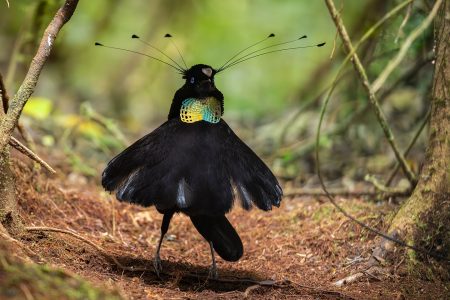
Pin Dancing Western Parotia / Courtesy of David Stowe
Synopsis: There exists a hidden theater in nature where performers need no stage. Birds across the globe have mastered the language of movement, turning simple gestures into elaborate rituals. Each species carries its own choreography, passed down through generations like precious family traditions. Their dances speak of dedication, beauty, and the universal desire to be chosen. Through careful observation, we can witness these fleeting moments of grace—performances that happen whether anyone watches or not.
In quiet corners of the world, extraordinary performances unfold daily. The top 10 dancing birds in the world have perfected an art form that predates human civilization, where every step carries meaning and every gesture speaks volumes. These aren’t random movements but carefully honed traditions refined over millions of years.
What separates a dancing bird from others lies in commitment. While many species hop or flutter during courtship, true dancers dedicate themselves to perfection. They practice routines, clear stages, and perform with the seriousness of devoted artists. Males especially invest countless hours preparing, knowing that one flawless performance might determine their entire reproductive success.
The connection between movement and survival runs deep in avian life. A poorly executed dance means no offspring, no continuation of the bloodline. Yet when done right, these displays create moments of pure wonder—nature’s reminder that beauty and purpose often walk hand in hand through the forest.
Table of Contents
1. The Red-Capped Manakin
 Pin
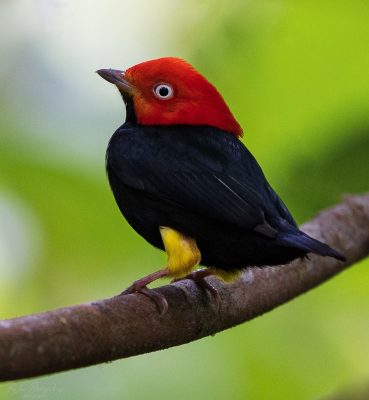
Pin Courtesy of Rodo Gonzalez
Deep in Central American rainforests, a small black bird with a brilliant red head performs what can only be called a moonwalk. The red-capped manakin has mastered backward slides along branches that would make any pop star envious. Males gather at traditional display sites called leks, where they compete through pure skill.
Each performance follows precise choreography. The bird snaps his wings to create sharp clicking sounds, then rapidly shuffles backward along his chosen branch. The speed creates an illusion of floating, defying what seems physically possible for something so small. Females perch nearby, watching multiple males before making their choice.
What makes this dance remarkable is its learning curve. Young males spend years as apprentices, observing veterans and practicing moves until they achieve mastery. The dance isn’t instinctive but cultural, passed from generation to generation like a treasured family recipe.
2. The Japanese Crane
 Pin
Pin Courtesy of Julian Cook Photography
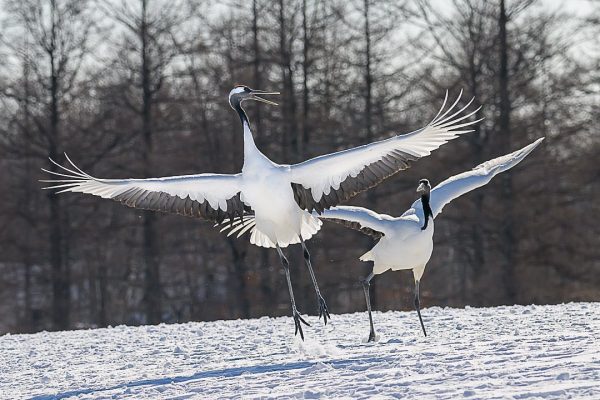
Across snowy Hokkaido landscapes, Japanese cranes perform duets that symbolize lifelong partnership. These tall, elegant birds bow deeply, leap skyward with wings spread wide, and call to each other in synchronized harmony. Their dances occur throughout the year, not just during breeding season, strengthening bonds between mated pairs.
The movements carry profound symbolism in human culture as well, representing fidelity and longevity. Pairs face each other, bobbing their heads in rhythm before launching into spectacular jumps. When airborne, they seem to hang suspended for impossible moments, white wings catching winter light against dark earth.
These performances require years to perfect. Young cranes practice with siblings and peers, gradually learning the subtle timing that makes a good dance great. By the time they find a mate, their movements flow with the ease of breathing, two bodies moving as one consciousness.
3. The Blue-Footed Booby
 Pin
Pin Courtesy of Humboldt
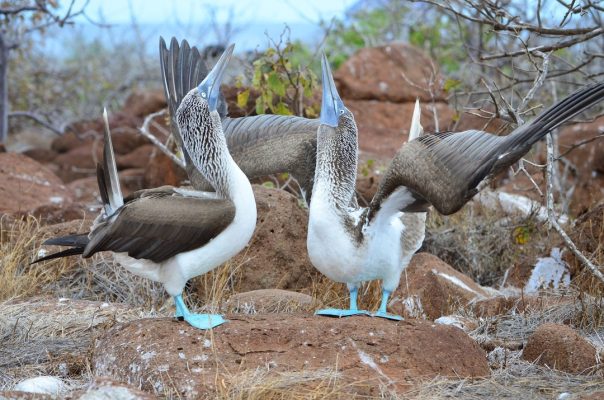
On Galápagos shores, a seabird with impossibly bright blue feet struts like a proud dancer showing off new shoes. Blue-footed boobies base their entire courtship on foot color and presentation. Males lift each foot high in exaggerated steps, pointing wing tips skyward while whistling sharply. The bluer the feet, the healthier the bird.
The dance includes offering gifts—usually sticks or small stones—presented with elaborate ceremony. Males bow, stretch their necks, and display their feet at every angle, ensuring females notice the vivid coloring. Competition runs fierce, with multiple males often performing simultaneously for a single female’s attention.
What seems comical to human eyes serves serious purpose. Foot color directly indicates fish consumption and overall health, making the dance an honest advertisement of genetic quality. Females watch carefully, judging not just the feet but the energy and precision of each movement.
4. The Western Parotia
 Pin
Pin Courtesy of Bamby Randhawa
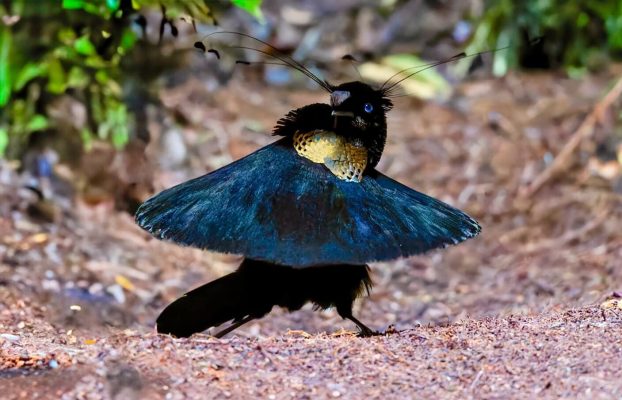
In New Guinea’s mountain forests, the western parotia performs what looks like a ballerina’s preparation routine. Males clear circular stages on the forest floor, removing every leaf and twig to create perfect performance spaces. When a female approaches, the male puffs his plumage into a black tutu-like shape and begins rapid side-to-side head movements.
The effect creates a hypnotic optical illusion. Six wire-like head feathers bounce rhythmically while the bird’s body remains still, creating the appearance of disconnected motion. The dance happens at ground level, with the male hopping in tight circles around the watching female, never breaking eye contact.
This performance requires extraordinary physical control. The bird must maintain balance while moving different body parts at varying speeds, all while tracking the female’s position. One misstep or loss of rhythm typically ends the courtship attempt immediately, sending the female searching for more competent partners.
5. The Sage Grouse
 Pin
Pin Courtesy of Ecofreak
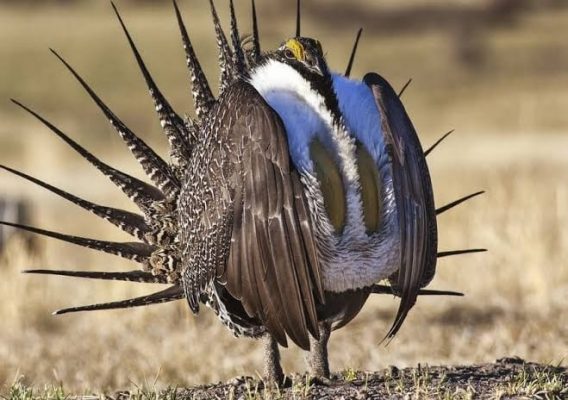
On North American prairies, sage grouse gather at dawn for dramatic displays of inflation and sound. Males puff enormous yellow air sacs on their chests, creating balloon-like structures that amplify their calls. They strut with tail feathers fanned like elaborate headdresses, creating patterns of brown, white, and gold.
The signature move involves rapidly inflating and deflating chest sacs, producing deep popping sounds that carry across open grasslands. Males position themselves in prime territory within the lek, defending their spots from rivals while performing continuously for hours. The most dominant males occupy center positions, attracting the majority of female attention.
Stamina matters as much as technique. Successful males return to the same leks year after year, performing from before sunrise until late morning during the entire breeding season. The physical demands are immense, with top performers losing significant body weight through weeks of relentless display.
6. The Superb Lyrebird
 Pin
Pin Courtesy of Penny Evans
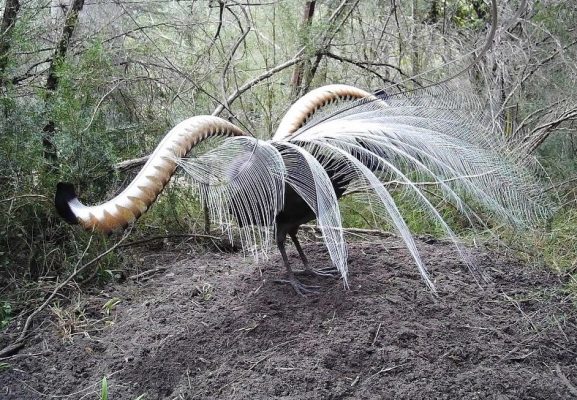
Australian forests host a dancer who doubles as a master impressionist. Male superb lyrebirds construct stages by scratching away ground litter, creating amphitheater-like spaces for performances. They possess the longest tail feathers of any songbird, which they throw forward over their heads in a shimmering silver-and-brown cascade.
The dance combines movement with acoustic artistry. While stepping delicately in circles, males cycle through incredible vocal mimicry—copying chainsaws, camera shutters, car alarms, and other birds with perfect accuracy. The tail vibrates and sways, catching light like liquid metal, while the bird’s feet pound out precise rhythms.
What makes this remarkable is the combination of multiple talents. The bird must simultaneously coordinate complex movements, maintain vocal precision, and track the female’s interest level. Performances can last over an hour, each one a unique improvisation within a traditional structure.
7. The Andean Cock-of-the-Rock
 Pin
Pin Courtesy of Marc Guyt
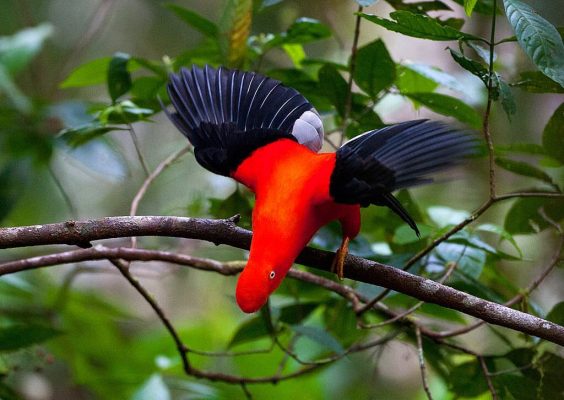
In misty South American cloud forests, bright orange males gather in competitive groups. Andean cocks-of-the-rock create communal display sites where dozens of males perform simultaneously, each trying to outshine his neighbors. Their disc-shaped head crests and electric plumage make them look like living flames against green vegetation.
Males crouch low, spread their wings, and bounce repeatedly while emitting loud squawks. They compete for the best perches, sometimes engaging in brief physical contests before returning to their routines. The synchronization creates a pulsing wave of orange motion, visible from remarkable distances through forest clearness.
Females visit these leks specifically to compare options. They move systematically between displaying males, sometimes watching the same performer multiple times before deciding. The chosen male’s reward is brief—mating lasts only seconds—but the evolutionary payoff of being selected makes the elaborate investment worthwhile.
8. The Victoria's Riflebird
 Pin
Pin Courtesy of Birds of Australia
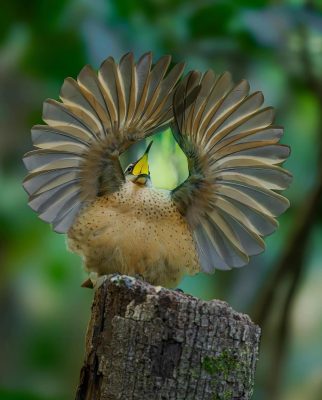
In Australian rainforests, a black bird with iridescent throat patches performs a dance of slow revelation. Victoria’s riflebirds spread their wings into perfect semicircles, then sway from side to side like a hypnotist’s pendulum. The movement displays metallic blue-green throat feathers that flash with each tilt, creating pulses of color against darkness.
The performance happens in vertical space. Males position themselves on exposed branches, using height to maximize visibility of their wing movements. They call loudly between dance sequences, advertising their location to distant females. When a female approaches, the male intensifies his display, sometimes adding head bobs and sharp clicks.
Precision defines success here. The wing movements must be perfectly symmetrical and timed to catch light at exact angles. Younger males practice for years before achieving the smooth control that attracts mates, often performing to empty forest while honing their technique.
9. The Peacock
 Pin
Pin Courtesy of Peter Ormond
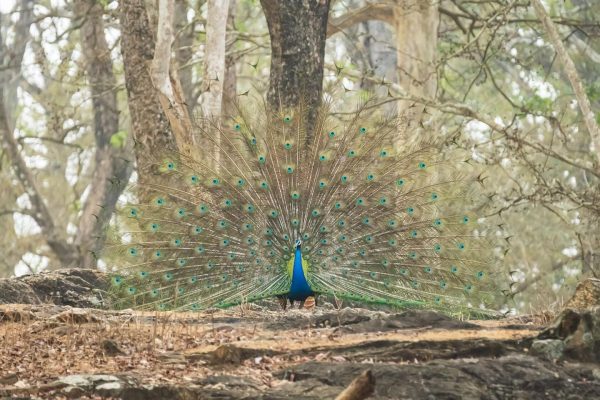
Perhaps the most famous dancer, male peacocks deploy fans of tail feathers that seem to defy structural logic. These trains contain up to 200 feathers covered in iridescent eyespots that create mesmerizing patterns. Males rattle their feathers to create rustling sounds, then rotate slowly to ensure females view the display from every angle.
The dance involves careful positioning and timing. Peacocks spread their trains while facing directly toward females, then turn their backs to show the full rear view before spinning dramatically to face forward again. They combine this with high-stepping walks and sharp calls, creating a multi-sensory experience.
What’s fascinating is the honest cost. Growing and maintaining such elaborate plumage requires excellent health and nutrition. Poor-quality males cannot produce impressive trains, making the display a reliable indicator of genetic fitness. Females judge based on eyespot number, symmetry, and the sheen of colors—details that reveal developmental quality.
10. The Club-Winged Manakin
 Pin
Pin Courtesy of Neel Murali
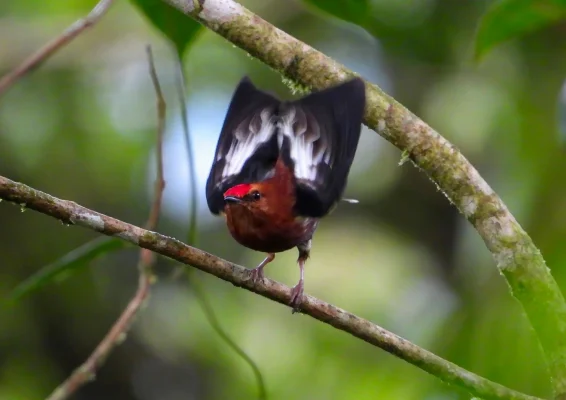
High in Ecuadorian cloud forests, a small brown bird produces a sound that scientists initially thought came from insects. Club-winged manakins have evolved specialized wing feathers that act as violin and bow. Males vibrate these feathers together at extraordinary speed, creating a clear, sustained tone like a wooden flute.
The dance integrates this unique music with precise movements. Males position themselves on bare branches, then lift their wings into specific angles while vibrating them at over 100 times per second. The result is a pure musical note that carries through dense vegetation, guiding females to their location.
This represents one of nature’s most specialized adaptations. The feathers have thickened shafts and ridges that produce sound through friction, similar to how crickets chirp but far more complex. Each male must master the physical coordination to maintain the tone while holding challenging poses, demonstrating both stamina and fine motor control.
FAQs
Dancing allows females to assess male fitness, health, and genetic quality through observable skills. The best dancers typically father healthier offspring.
Some species feature dancing females, though it’s less common. In cranes and grebes, both partners participate in synchronized duets that strengthen pair bonds.
Many species spend years perfecting moves. Young manakins and lyrebirds observe adults for multiple seasons before attempting serious courtship displays themselves.
Yes, cultural transmission occurs in several species. Young males learn by watching successful performers, sometimes copying innovations that spread through populations.
Failed dancers typically don’t mate that season. They must return the following year and try again, assuming they survive predators and environmental challenges.










 Login with Google