




















 Pin
Pin Courtesy of Tiktok Videos
Synopsis: A clever farmer in Sichuan province has turned an old cultural memory into a viral business sensation. This modern version of sugarcane stealing in China invites paying customers to sneak through fields and harvest stalks while dodging the farmer and his dog in a theatrical game of cat and mouse. What sounds like organized theft is actually a brilliant marketing scheme that’s boosted one farmer’s nightly sales from 50 sticks to over 500. The experience taps into deep nostalgia for rural adventures and offers stressed urbanites a chance to play in the countryside. It’s part performance art, part agriculture, and entirely profitable, proving that sometimes the best business ideas come from understanding what makes people laugh, remember, and want to participate in something wonderfully silly.
Down in Meishan, Sichuan province, a farmer looked at his sugarcane field and saw something most people wouldn’t—an amusement park waiting to happen. Instead of selling his crop through traditional wholesale channels and watching profits trickle in slowly, he decided to let people experience the harvest themselves. But here’s the twist that made it brilliant: he didn’t just offer U-pick agriculture like you’d find at a berry farm. He turned it into a game where visitors become pretend thieves and he becomes the vigilant guardian trying to catch them.
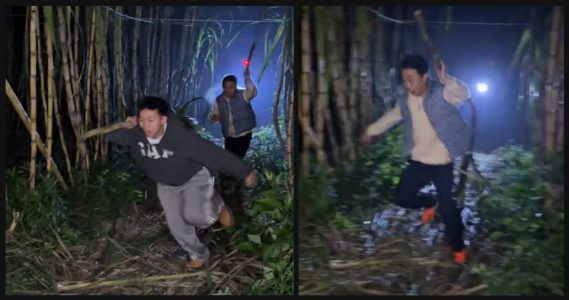
The setup is delightfully theatrical. The farmer and his dog patrol the rows of tall sugarcane like characters in a play, while visitors crouch and creep through the field, trying to snap off stalks without getting spotted. When someone gets “caught,” there’s mock outrage and laughter all around. Nobody’s actually in trouble, but the pretend stakes make the whole experience feel thrilling in a way that regular farm shopping never could.
This wasn’t some corporate marketing team’s idea cooked up in a boardroom. It came from listening to what people actually wanted. During his livestreams, viewers kept joking that sugarcane always tastes better when it’s stolen, referencing an old saying that forbidden fruit is sweeter. The farmer heard that nostalgia and playfulness in their comments and realized he could build an entire business model around it. Sometimes the best ideas hide in plain sight, waiting for someone to take them seriously.
Table of Contents
How the Stealing Game Actually Works
The mechanics are simple enough that anyone can understand them in about thirty seconds, which is part of why it caught on so fast. Visitors pay an entry fee to access the field, then they’re free to roam through the rows of sugarcane trying to harvest as much as they can carry. The farmer and his dog wander the field playing their roles as guardians, and if they spot you, they give chase. The whole thing plays out like a childhood game of tag, except instead of just running around pointlessly, you’re working for actual sugarcane you get to take home.
The pricing structure adds just enough consequence to make things interesting without actually hurting anyone’s wallet. If you manage to sneak out of the field without getting caught by the farmer or his dog, you pay 9.9 yuan per stick, which works out to about a dollar and forty cents. That’s already a fair price for fresh sugarcane. But if you do get caught during your escape attempt, the price goes up to 14.9 yuan per stick, roughly two dollars and ten cents. The difference amounts to less than a dollar, so nobody feels gouged, but it’s enough to make people genuinely try to avoid capture and squeal with laughter when they fail.
What makes this pricing genius is that the farmer wins either way, and so do the customers. The “caught” price is still reasonable enough that people don’t mind paying it, and the “escaped” price feels like a reward for their stealth skills. More importantly, both outcomes create moments worth sharing on social media. Whether you post a video celebrating your successful theft or film yourself getting chased down by a determined farmer, you’ve got content that’ll make your friends laugh. The experience practically markets itself through every phone camera that enters the field.
The Numbers Behind the Success
Before this whole scheme started, the farmer was moving roughly 50 sticks of sugarcane per night through traditional wholesale arrangements. Those sales kept the lights on but didn’t exactly make him wealthy. Wholesale buyers negotiate hard on price, take their time deciding, and often leave farmers waiting on payment. It’s steady income but not exciting, and certainly not enough to make farming feel like anything other than difficult work with modest rewards.
After launching the stealing game experience, those numbers exploded to somewhere between 500 and 600 sticks sold per night. That’s a tenfold increase in volume, and because he’s selling directly to consumers instead of through wholesalers, his profit margin on each stick is significantly higher too. The math works out beautifully. Even accounting for the time and energy spent playing the guardian role and managing crowds of visitors, he’s making far more money than he ever did through conventional sales channels.
The ripple effects go beyond just his own bank account. Other farmers in the region have started paying attention and considering similar models for their own crops. Local businesses benefit from the increased foot traffic as visitors need places to eat, park, and sometimes stay overnight if they’re traveling from distant cities. The whole area has seen an economic boost from what started as one farmer’s creative experiment. It turns out that when you give people a memorable experience instead of just selling them a product, they’re willing to pay more and tell everyone they know about it.
The Cultural Roots Run Deep
This game didn’t appear out of nowhere—it’s tapping into something that’s been part of Chinese culture for well over a thousand years. The tradition of “stealing vegetables” dates back roughly 1,400 years, originally tied to festivals and celebrations where young people would playfully raid gardens as part of courtship rituals and community bonding. It wasn’t really theft in any criminal sense, but rather a sanctioned form of mischief that brought people together and created shared stories. Communities understood the game and accepted it as part of their seasonal rhythms.
That ancient tradition got a modern revival in the late 2000s when a massively popular online game swept through Chinese social media. Players would tend virtual farms and could visit their friends’ farms to “steal” crops, which would then show up in their own inventory. The game became a social phenomenon, with people setting alarms to wake up at odd hours to harvest before their friends could raid them. It was silly and addictive, creating a whole new generation of people who associated vegetable stealing with fun, friendship, and a little bit of harmless competition.
The Sichuan farmer’s real-world version bridges both traditions beautifully. Older visitors remember the folk customs from their childhoods or their parents’ stories, while younger ones connect it to the digital game they played on their phones and computers. Both groups find something familiar and nostalgic in the experience, which explains why it resonates so strongly across different age ranges. The farmer didn’t invent a new concept so much as he recognized an old one that was ready for revival and gave it a physical form that people could actually touch, taste, and laugh about together.
Why City People Can't Get Enough
Urban life in modern China moves at a relentless pace. Cities are crowded, work is demanding, and people spend most of their time in concrete environments surrounded by other stressed humans. The countryside represents everything city life isn’t—spacious, quiet, simple, and connected to natural rhythms instead of quarterly reports and performance reviews. But most urbanites don’t actually want to become farmers or give up their comfortable lives. They just want a brief taste of that simpler existence, preferably one that comes with good stories to tell.
The sugarcane stealing game offers exactly that kind of escape. For a couple of hours, visitors can pretend they’re mischievous kids again, running through fields without a care in the world beyond whether they’ll get caught by the farmer. There are no emails to check, no bosses to impress, no complex social dynamics to navigate. The rules are clear, the stakes are low, and the outcome is guaranteed to be pleasant whether you “win” or “lose.” It’s what psychologists might call safe chaos—the thrill of doing something slightly naughty without any real danger or consequence.
There’s also something deeply satisfying about participating in harvest work, even in this playful form. You’re not just buying sugarcane that someone else cut and packaged. You’re out there snapping the stalks yourself, feeling the resistance as they break, carrying your prize out of the field with your own hands. That direct connection to where food comes from scratches an itch that supermarket shopping never quite reaches. People leave not just with sugarcane but with a story about how they got it, and that story is worth far more than the yuan they spent on admission.
The Social Media Engine
None of this would have spread so fast without phones and social media turning every visitor into a potential marketer. The experience is almost perfectly designed for short video platforms. There’s action, humor, beautiful countryside scenery, and that satisfying moment of either successful escape or comic capture. Every element translates well to a 30-second clip that people will watch, enjoy, and share with their networks.
The videos follow predictable but entertaining patterns. Someone films themselves creeping through the sugarcane rows, whispering nervously into the camera. Suddenly the farmer or his dog appears, and chaos erupts. The person runs, usually laughing too hard to be very effective at escaping, while their friends film the whole chase. Sometimes they make it out successfully and celebrate like they’ve won an Olympic medal. Other times they get caught and ham it up for the camera, pretending to be devastated while everyone cracks up. Either way, it’s content gold.
What started as one farmer’s experiment quickly became a viral sensation because each visitor effectively advertised the experience to hundreds or thousands of their followers. Those followers saw the videos, wanted that same experience themselves, and made plans to visit. They brought their own cameras, created their own content, and the cycle continued. The farmer didn’t need to spend money on traditional advertising when his customers were doing it for free, and doing it more effectively than any professional campaign could have managed. Authenticity and genuine fun sell themselves in ways that polished marketing never quite achieves.
The Economics of Experience
This sugarcane field represents a larger shift happening across global agriculture, where farmers are learning that experiences can be more profitable than products alone. Traditional farming operates on thin margins, with growers at the mercy of wholesale prices, weather, and market fluctuations. You work hard all season and hope the harvest brings enough money to cover costs and leave something extra for your family. It’s honest work but financially precarious, and many farming communities have struggled as younger generations move to cities seeking more stable income.
The experience economy offers a different model. Instead of just selling sugarcane as a commodity, the farmer is selling entertainment, nostalgia, social bonding, and Instagram-worthy moments. Those things command higher prices and create customer loyalty in ways that commodity agriculture cannot. People don’t remember which vendor they bought carrots from last month, but they absolutely remember the night they played thief in a moonlit sugarcane field and got chased by a farmer and his dog.
Other agricultural regions are watching and learning. Some farms are adding their own theatrical elements to harvest activities. Others are creating different games or experiences that tap into local traditions and cultural memories. The core lesson is universal: when you can transform agricultural work into shared experiences that make people laugh and feel connected, you’ve found a business model that’s both more profitable and more sustainable than traditional farming alone. The product becomes secondary to the memory, and memories are what people truly value.
The Perfect Storm of Timing
This phenomenon exploded right now for reasons that go beyond just one clever farmer’s idea. China’s urban population has been growing increasingly nostalgic for rural life as more people grow up in cities without direct connections to farming or countryside living. That creates demand for authentic rural experiences, but only if they’re accessible and fun rather than actually requiring the backbreaking work that real farming involves.
The timing also coincides with a broader cultural moment where people are seeking joy in simple pleasures. After years of rapid economic growth, intense competition, and social pressure to succeed, there’s a counter-movement toward finding happiness in uncomplicated activities that don’t require achievement or status. Playing around in a sugarcane field, getting dirty, and laughing with strangers offers exactly that kind of uncomplicated joy. It’s the opposite of climbing career ladders or optimizing your life for productivity.
Social media platforms have also matured to the point where they reward authentic, fun content over the highly polished, aspirational material that dominated earlier eras. Videos of people genuinely laughing and having silly adventures perform better than carefully staged perfection. The sugarcane stealing game creates content that feels real because it is real—people are actually having fun, not just pretending for the camera. That authenticity resonates with audiences tired of influencer culture and looking for something more genuine to engage with online.
What the Farmer Actually Does
Running this operation takes more skill and energy than it might appear from the outside. The farmer isn’t just standing around watching people harvest his crops. He’s performing a role, and performing it well enough that people genuinely enjoy the chase without ever feeling actually threatened or uncomfortable. That requires reading the crowd, understanding when to chase hard and when to let people escape, and maintaining the playful tone that makes the whole thing work.
His dog plays an equally important role, trained to participate in the chase without actually causing problems. The dog needs to be energetic and enthusiastic enough to make the pursuit feel real, but gentle enough that nobody gets knocked over or frightened. Finding that balance and maintaining it across hundreds of visitors each night takes patience and skill. Both the farmer and his dog have essentially become performers, and like any good performers, they’ve learned how to work the crowd and create moments that people remember.
Behind the scenes, there’s also logistics to manage. Fields need to be accessible but safe, with enough lighting for evening visitors but not so much that it ruins the atmosphere. The farmer has to track inventory, handle money, manage the flow of people so the field doesn’t get too crowded, and ensure everyone leaves satisfied. He’s running what amounts to an outdoor theater production every single night, where the audience also plays characters and the crop is both prop and product. It’s exhausting work, but the financial rewards and genuine enjoyment he gets from people’s happiness make it worthwhile in ways that traditional farming never quite did.
The Spread Beyond Sugarcane
Once the model proved successful, it was only a matter of time before others adapted it to different crops and contexts. Farmers with orchards have started offering similar chase games during apple or pear season. Vegetable growers have created scavenger hunts through their fields where participants search for specific items while avoiding patrols. Each variation keeps the core concept—turning harvest into play—while adapting the details to suit different crops and landscapes.
Some farmers have added complexity, creating team challenges where groups compete against each other or adding puzzle elements that must be solved before you can harvest certain sections. Others have kept things simple, recognizing that the basic formula works and doesn’t need embellishment. The beauty of the concept is its flexibility. Almost any harvestable crop can become the basis for some kind of game, as long as the farmer can figure out how to make the experience safe, fun, and worth documenting on social media.
The trend has even inspired urban variations. Some city markets and event spaces have created temporary “stealing” experiences where people can play the game with purchased produce in warehouse settings. These lack the authenticity of the real countryside version, but they serve populations who can’t easily travel to rural areas. The core appeal—playful transgression, physical activity, and social bonding—translates even when the setting changes. What started as one farmer’s creative solution to slow sales has become a template that’s being adapted across different contexts and communities.
The Deeper Meaning Behind the Fun
On the surface, this is just people playing around in a field and buying sugarcane. But dig deeper and you find something more meaningful about what humans need and how we find it. The experience offers a temporary escape from rigid social hierarchies and adult responsibilities. For a few hours, everyone is equal—just players in a game where the only thing that matters is whether you can grab some sugarcane and run fast enough to avoid getting caught.
There’s also something powerful about shared silliness. Modern life often feels isolating, with people locked into their own struggles and worries. But when you’re running through a field laughing hysterically because a farmer’s dog is gaining on you, those barriers break down. Strangers become fellow conspirators, united in the shared absurdity of paying to steal crops while being chased by someone who’s also being paid to chase you. The whole thing is wonderfully ridiculous, and that ridiculousness creates connections between people who might never otherwise interact.
Perhaps most importantly, the experience reminds people that joy doesn’t have to be complicated or expensive. You don’t need exotic travel or luxury goods to have a genuinely good time. Sometimes all it takes is a field, some sugarcane, a playful farmer with a dog, and permission to act like a kid again. That’s a valuable lesson in an age where people often feel like happiness requires constant consumption of ever more elaborate experiences. Sometimes the simplest ideas, executed with creativity and heart, provide the deepest satisfaction.
FAQs
The entry fee varies, but participants pay either 9.9 yuan (about $1.40) per stick if they escape uncaught, or 14.9 yuan (about $2.10) if the farmer catches them—a small difference that adds fun without breaking the bank.
Yes, completely legal. Unlike actual crop theft, this is an organized agritainment business where the farmer owns the land and explicitly invites paying customers to harvest sugarcane as part of a theatrical experience.
The farmer and his dog are trained to keep things playful rather than dangerous. The field is maintained for safe running, and the “chase” is more theatrical than intense, ensuring everyone has fun without risk of injury.
Smart farmers designate specific sections for the game and rotate them to prevent overuse. They also limit participant numbers per session and guide traffic flow to protect areas not ready for harvest.
While similar agritainment concepts exist globally, this specific “stealing” game format remains primarily Chinese due to its cultural roots. However, farmers worldwide are watching and adapting the experience-based model to their own contexts.








 Login with Google