













 Pin
Pin Courtesy of Reddit user r/MapPorn
Synopsis: The longest train ride in the world runs from Portugal’s Atlantic coast to Singapore’s tropical shores, covering 18,755 kilometers without a single flight. This three-week rail odyssey crosses 13 countries, connecting European metros with Siberian wilderness and Southeast Asian cities. The journey costs approximately $4,000 and requires connecting multiple international train services across different railway systems. Travelers witness dramatic landscape shifts, from Mediterranean coasts through frozen taiga forests to humid jungles, making it the ultimate test of wanderlust and patience.
Most people fly from Europe to Asia in under twelve hours. Yet thousands choose the opposite route each year, boarding trains in Portugal and not stopping until Singapore appears through the window. This isn’t about speed or convenience.
The appeal lies in watching the world change gradually rather than teleporting across continents. Flying makes everything feel the same distance away. Trains force you to understand just how massive Eurasia really is, how many cultures exist between two endpoints, and how landscapes shift in ways no airplane window can capture.
There’s also something deeply satisfying about staying grounded. No security lines, no baggage limits, no recycled air at 35,000 feet. Just platforms, railway stations, and the rhythmic clatter of wheels on tracks for 21 straight days. It’s travel as meditation, as education, as endurance sport all rolled into one continuous experience.
Table of Contents
The Full Route Through 13 Countries
 Pin
Pin Courtesy of Riccardo
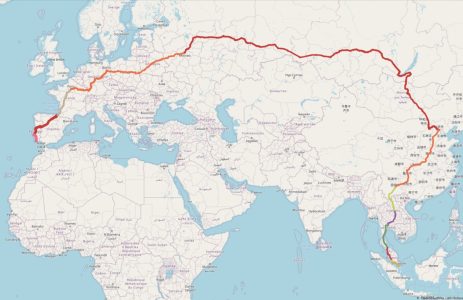
This rail marathon starts in Lagos or Lisbon, Portugal, and ends at Singapore’s gleaming Woodlands station. Between these two points lie eleven other countries, each requiring different tickets, different trains, and often different languages at the ticket counter.
The route threads through Spain and France before cutting northeast through Germany and Poland. Then comes the real commitment: entering Belarus and Russia, where the Trans-Siberian Railway eats up nearly a third of the total distance. After crossing into Mongolia and China, the journey turns southward through Laos, Thailand, and Malaysia before that final arrival in Singapore.
Each border crossing brings new paperwork, new currency, and new railway systems with their own quirks. European high-speed trains give way to Soviet-era carriages, which eventually transform into modern Chinese rail networks and then Southeast Asian diesels. The train itself becomes a history lesson in railway development across three continents.
Starting Point – Portugal Through Western Europe
 Pin
Pin Courtesy of Pexel
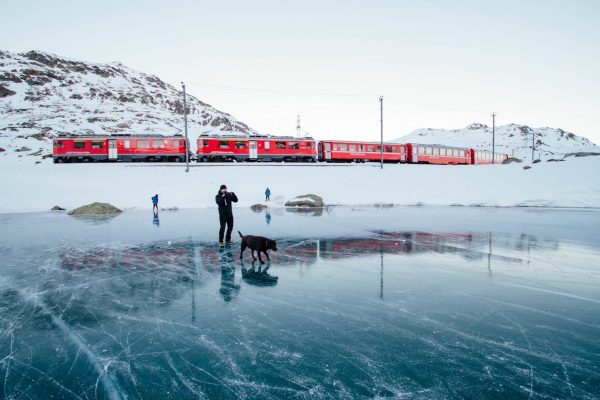
The Atlantic Ocean sparkles outside the window as the first train pulls away from Portugal’s coast. This opening section feels almost too familiar, too comfortable. Clean stations, reliable schedules, announcements in multiple languages.
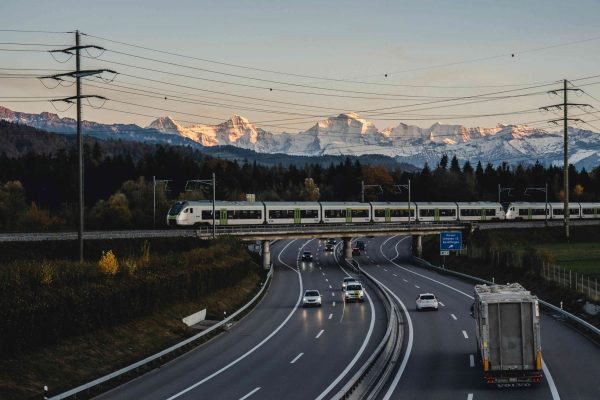
Crossing into Spain brings the first taste of distance. The landscape opens up into golden plains and ancient cities that have watched travelers pass for centuries. France arrives quickly, and suddenly the train is slicing through vineyards at 300 kilometers per hour on rails so smooth the coffee barely ripples.
Germany and Poland continue this European rhythm. Big cities appear, get explored during layovers, then fade into the rearview. The stations grow colder as the route pushes east. By Warsaw, winter coats come out of bags. The comfortable part of the journey is ending, and something wilder waits just beyond the next border.
The Trans-Siberian Section – 6,000 Kilometers of Russia
Russia doesn’t just dominate this journey; it defines it. The Trans-Siberian Railway stretches for roughly 6,000 kilometers, turning what could be a two-week trip into a three-week odyssey. This is where time starts feeling different.
The landscape becomes hypnotic in its repetition. Endless forests of birch and pine scroll past like a screensaver. Small villages appear suddenly, their wooden houses painted in fading blues and greens, then vanish back into the wilderness. Occasionally, a city emerges: Yekaterinburg, Novosibirsk, Irkutsk. Each one offers a brief window into Russian life before the forest swallows everything again.
The train itself becomes home during this stretch. Fellow passengers become familiar faces. Meal routines develop. Sleep schedules adjust to the constant motion and the strange twilight of northern latitudes. Some travelers report that by day five in Russia, they stop checking how far they’ve gone and simply accept that this is life now.
Mongolia and China – Where East Truly Begins
Crossing into Mongolia brings the first major landscape shock. The forests thin out and disappear, replaced by steppes that stretch to every horizon. The grasslands roll on for hundreds of kilometers, dotted with occasional gers and horse herds that seem unchanged since Genghis Khan’s time.
Ulaanbaatar offers a jarring contrast: a modern capital dropped into the middle of nowhere, surrounded by mountains and sky. Then the train pushes south toward China, and the landscape transforms yet again. The Gobi Desert creeps into view, all sand and rock and emptiness.
China announces itself with infrastructure. Suddenly the stations are enormous, gleaming, packed with people. The trains get faster and smoother. Cities appear with populations larger than entire European countries. The railway cuts through terraced hillsides, industrial zones, and megacities that seem to go on forever. This is where the journey shifts from wilderness adventure to urban exploration.
The Final Push Through Southeast Asia
The route from China into Southeast Asia requires careful planning because direct rail connections keep changing. Currently, the path drops through Laos, where new Chinese-built railways have opened routes that didn’t exist five years ago. The landscape turns green and humid.
Thailand brings temples, night markets visible from the train window, and the organized chaos of Bangkok’s central station. The trains get more crowded here, packed with local commuters mixed with backpackers and long-distance travelers. Air conditioning becomes crucial as the temperature and humidity climb.
Malaysia forms the final leg, with trains running down the peninsula toward Singapore. The jungle presses close to the tracks. Stations smell like rain and street food. Then, after three weeks of motion, the train glides into Woodlands station in Singapore. The journey ends not with fanfare but with the simple act of stepping onto a platform and realizing there’s nowhere left to go.
Planning and Booking This Monster Trip
Nobody sells a single ticket for this entire route. The journey requires booking multiple segments across different railway systems, some of which don’t communicate with each other. European sections can be booked online through standard rail sites, but Russian trains often require working with specialized agencies.
Visas complicate everything. Russia, Belarus, China, and several Southeast Asian countries require advance paperwork. Some travelers spend months sorting out documentation, making sure each visa covers the dates they’ll actually be in each country. Miss a connection, and suddenly visa dates don’t line up anymore.
The total cost hovers around $4,000, though this varies wildly based on choices. Sleeping in third-class bunks saves money but costs comfort. Private compartments multiply the price but preserve sanity. Food costs depend on whether stations offer cheap meals or whether everything comes from the dining car at premium prices. Smart planning can cut costs; poor planning can double them.
Daily Life Aboard Multiple Train Systems
Each railway system has its own culture. European trains feel businesslike, with quiet cars and efficient service. Russian trains become mobile communities, where strangers share food, stories, and vodka across language barriers. Chinese trains are orderly and punctual, with constant announcements and attendants who take their jobs seriously.
Sleep happens in shifts and snatches. Overnight trains make the kilometers disappear during unconscious hours, but the quality of rest varies dramatically. Some sleeper cars rock gently and lull passengers into deep sleep. Others rattle and shake, making every pothole in the track feel personal. Earplugs and eye masks become essential survival gear.
Food ranges from excellent to questionable. Station vendors offer local specialties during brief stops. Dining cars serve meals that reflect regional cuisines, though quality and price fluctuate wildly. Many veterans of this route pack snacks, instant noodles, and a portable kettle. The real luxury isn’t the food itself but having options when the train is rolling through empty countryside at midnight.
Windows Into Different Worlds
The view from the window tells the story of human civilization better than any textbook. European farmland shows centuries of careful cultivation, every field and fence reflecting generations of planning. Russian wilderness reveals what land looks like when humans are optional, not central, to the landscape.
Mongolian steppes put scale into perspective. The grasslands stretch so far that weather systems become visible from hundreds of kilometers away. Rain approaches as a dark curtain slowly crossing the horizon. Sunsets take an hour, painting the entire sky in colors that shift from gold to purple to black.
Southeast Asian landscapes show density. Every available space hosts something: rice paddies, villages, gardens, temples. The jungle fights to reclaim anything humans pause maintaining. Cities explode with neon and movement even late at night. The visual contrast between Siberia’s emptiness and Bangkok’s intensity feels almost impossible to reconcile as part of the same planet.
The Hard Parts Nobody Warns You About
Boredom hits around day eight or nine. The novelty wears off, but the journey isn’t even half finished. The train’s motion becomes background noise. The landscape repeats. Every station starts looking like every other station. This is when the trip tests mental endurance more than physical comfort.
Language barriers create constant small challenges. Ticket agents don’t speak English, signs make no sense, and sometimes even pointing and gesturing fails. Wrong platforms get boarded. Connections get missed. Stress accumulates from never quite knowing if things are going according to plan or quietly falling apart.
Physical discomfort compounds over time. Showers become irregular luxuries. Clothes get worn repeatedly. Muscles ache from sitting, standing, and sleeping in positions the human body wasn’t designed for. By week three, even people who love trains start fantasizing about airplanes. The final days require willpower and stubbornness more than enthusiasm.
Should You Actually Do This?
This journey isn’t for everyone, and that’s fine. It demands time most people don’t have and patience that’s hard to manufacture. Three weeks without regular internet, without familiar food, without beds that don’t move requires a specific kind of person or a specific moment in life.
But for those with the time and temperament, this route offers something increasingly rare: genuine adventure in an age when everything feels accessible and documented. The journey provides forced disconnection from normal life, creating space for thoughts that never surface during busy routines. Some travelers report that the trip changed how they see the world, made them appreciate both vastness and connection.
The real question isn’t whether this is the best way to travel but whether it’s the right way for a particular person at a particular time. Flying makes sense for most trips. But sometimes the point isn’t reaching the destination efficiently. Sometimes the point is understanding what exists between here and there, and that understanding only comes from watching every kilometer pass outside the window.
FAQs
Yes! The route is real and possible, though it requires connecting multiple train systems across 13 countries. Careful planning and proper visas make it achievable for anyone with time and patience.
The total typically runs around $4,000, though this varies based on class choices and booking timing. Budget travelers spending on third-class bunks can cut costs; luxury private compartments increase the price significantly.
Mental endurance becomes the real challenge. Physical discomfort, language barriers, and crushing boredom around the midpoint test travelers more than any single difficult moment. The journey demands psychological preparation, not just logistics.
No special skills required, just flexibility and patience. Basic travel experience helps, but thousands complete this journey as their first major solo adventure. Being comfortable with uncertainty matters more than expertise.
Yes, the Russian section alone covers roughly 6,000 kilometers and consumes nearly a third of the total journey time. It’s the longest continuous railway stretch on the entire route and the most challenging mentally.








 Login with Google