












 Pin
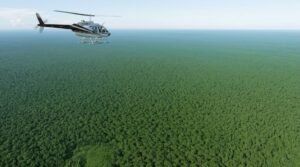
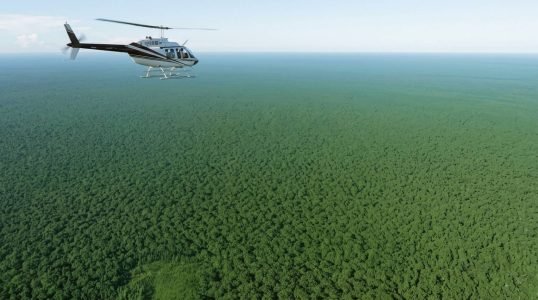
Vast Amazon Forest View / Photo Source: Instagram
Synopsis: The Amazon rainforest covers about 5.5 million square kilometres across nine countries and territories, which makes it the largest tropical rainforest on Earth and far bigger than India. It holds an estimated 390 billion trees and one in ten of the world’s known species. This article measures it against things people already know, follows its river, and then goes where the maps get vague: the true stories of people who got lost in it, and what rescuers say keeps people alive.
Maps of the Amazon tend to look slightly embarrassed, like a cartographer who ran out of paper and carried on regardless. Ask ten people for its size and the answers scatter like startled parrots. Most guess too small, a few guess too big, and nobody is quite right.
So, how big is the Amazon rainforest? About 5.5 million square kilometres of it, spread across nine countries and territories, with Brazil holding roughly 60 percent of it. It is the largest tropical rainforest on Earth, and the number is so large that the human brain files it under “a lot” and moves on. A few quick facts, before the brain gets the chance:
- 🌳 An estimated 390 billion trees thicker than 10 cm across
- 🗺️ Over half of the world’s remaining tropical rainforest
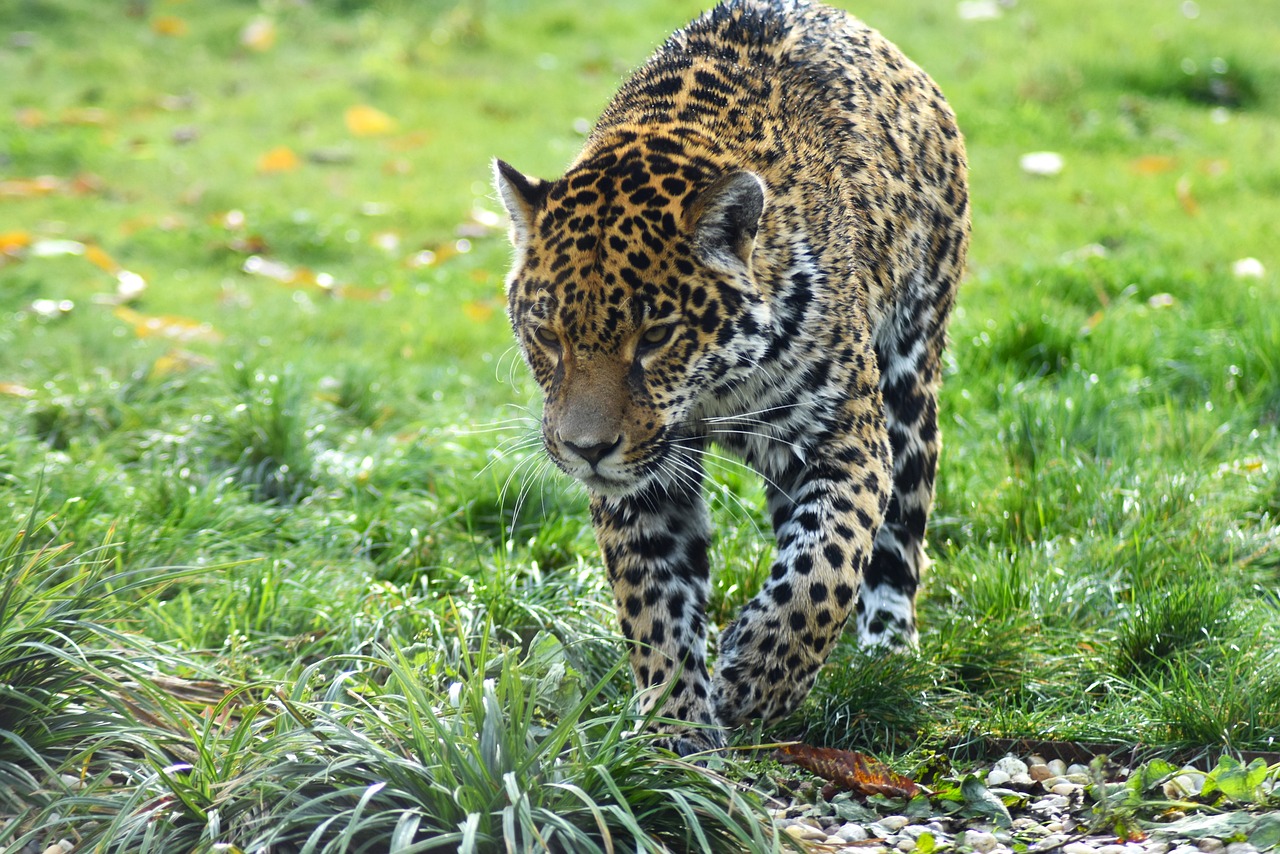
- 🐆 About one in ten of the world’s known species
The size is only half the story. The other half belongs to the people who wandered in, lost the path, and had to find their own way out.
Table of Contents
The Numbers, Taken Slowly
Two figures get confused in this subject, and the confusion has started more than one argument. The rainforest itself covers about 5.5 million square kilometres. The Amazon basin, the whole bowl of land that drains into the river, covers about seven million. The gap is land that never quite qualified as rainforest. Both figures are approximate, and they shift depending on what a source measures: dense forest, the wider rainforest ecosystem or the whole basin.
Other sources quote other totals. Britannica rounds the forest up to six million square kilometres, Nature describes a six-million-square-kilometre basin, and some pages go as high as 6.4 million. This is less a mystery than a definition problem: forests do not hold still for surveyors, and nobody has ever persuaded a tree to stay inside a line. The figures in this article are approximate and follow the sources listed at the end.
The safest summary:
- Rainforest: about 5.5 million km²
- River basin: about 7 million km²
- Shared by nine countries and territories: Brazil, Peru, Colombia, Venezuela, Ecuador, Bolivia, Guyana, Suriname and French Guiana (a French overseas territory)
- Brazil holds about 60% of the rainforest, Peru 13% and Colombia 10%
Measured Against Things People Already Know
India covers about 3.3 million square kilometres and has long been considered a substantial place. The Amazon rainforest could be laid over the whole of it, with enough left over to cover a country the size of Saudi Arabia. India would be the doormat. (A playful comparison, not a precise map overlay.)
The basin on its own is described by one geography reference as roughly the size of the 48 contiguous United States, and it takes up around 40 percent of South America. That is a great deal of continent to hand over to one river.
The handy comparisons:
- 🇮🇳 The rainforest is about 1.7 times the size of India
- 🇺🇸 The basin is roughly the size of the lower 48 US states
- 🌎 The basin covers around 40% of South America
None of these comparisons quite works, which is the whole point. Size on this scale always escapes the measuring tape.
Trees by the Billion, Creatures by the Million
The Amazon holds an estimated 390 billion trees, spread over some 16,000 species, according to a 2013 study led by Hans ter Steege. The count covers trees with trunks at least 10 centimetres across and was extrapolated from 1,170 forest plots. That works out at nearly fifty trees for every person alive, and the forest would not notice if everyone turned up to collect theirs.
The variety is the real trick. A 2004 study in the Journal of Ecology counted 1,104 distinct tree types, known as morphospecies, in a 25-hectare plot of Amazonian Ecuador, an area of about thirty-five football pitches. The count included every stem at least a centimetre thick. Few places keep their neighbours so varied, and fewer still manage it without an argument about the hedge.
And the residents:
- By a widely quoted estimate, about one in ten known species on Earth lives here
- More than 1,300 bird species and over 400 amphibian species
- Several million species in all, many still unrecorded by science
The River Doing the Heavy Lifting
Every forest this size needs plumbing, and the Amazon River is it. It begins as small streams in the Peruvian Andes and runs roughly 6,400 kilometres east to the Atlantic (published measurements vary), collecting more than a thousand tributaries on the way. At its mouth, the channels spread across about 270 kilometres.
Its flow is around 209,000 cubic metres of water every second, more than the next seven biggest rivers added together, by commonly cited estimates. Estimates put its share of all the river water reaching the oceans at somewhere between 17 and 20 percent. Near Manaus, a dark tributary meets the pale brown main river, and the two run side by side for a while like neighbours who are not speaking.
One oddity:
- NASA reports that about half of the Saharan dust reaching the Amazon, which replenishes minerals washed out of the soil by heavy rain, comes from a single valley: the Bodélé Depression in Chad
How a Forest Swallows a Sense of Direction
Getting lost in the Amazon is less a drama than a matter of arithmetic. Tall trees close over the sky, the undergrowth hides every landmark, and one patch of green looks remarkably like the next. Heavy rain, thick humidity and steady heat complete the picture, and the whole thing feels like one very long afternoon.
Experience does not always help. In 1925, British explorer Percy Fawcett ventured into the Amazon with his son Jack and Jack’s friend Raleigh Rimell, searching for a lost city he called Z. The three men disappeared, and despite decades of speculation, their fate remains unknown. The forest has never been in a hurry to give anyone back.
What makes it so hard:
- A dense canopy and thick undergrowth hide the sun and the landmarks
- Heat and humidity drain energy fast
- Clean water and safe food are harder to find than all that green suggests
The Teenager Who Fell Two Miles and Kept Walking
On Christmas Eve 1971, 17-year-old Juliane Koepcke boarded LANSA Flight 508 out of Lima, bound for Pucallpa, one day after her school graduation. The plane broke apart in a thunderstorm. She fell roughly two miles, still strapped to her row of seats, and landed in the rainforest as the only survivor. Her mother was among those who died.
Her parents were zoologists, and she had spent part of her childhood at their research station in the forest. Remembering their advice, she followed a stream in the hope of finding a larger river and, eventually, people. Injured and exhausted, she travelled for 11 days, with hunger and insect bites for company and a bag of sweets from the wreckage as her only food.
Eventually she reached a shelter used by local workers, who helped her get to safety. She later became a biologist specialising in bats, and has since revisited the crash site.
Four Children, Forty Days
On 1 May 2023, a small Cessna carrying four children and their mother sent a mayday over the Colombian Amazon, reporting engine failure, and then dropped off the radar. Searchers found the wreck on 16 May. The mother and the pilots had died. The children, aged 13, 9, 4 and 11 months, were not there.
Around 150 soldiers and search dogs went in after them. The children belonged to the Huitoto Indigenous community, and relatives hoped their knowledge of the forest would carry them through. According to AP and other reports, searchers found discarded fruit and shelters made from jungle plants, and an official said the children had taken cassava flour from the wreck.
On 9 June, 40 days after the crash, rescuers found all four children alive. Relatives and Indigenous community members described how the children drew on their knowledge of the forest, and salvaged cassava flour and fruit were reported to have helped them survive. The full details of their ordeal emerged gradually after the rescue.
Three Weeks Without a Map
In 1981, Yossi Ghinsberg, a young Israeli backpacker, went into the Bolivian Amazon chasing gold and adventure, with three companions: Swiss teacher Marcus Stamm, American photographer Kevin Gale and Karl Ruprechter. The plan was ambitious. The forest was not consulted.
Two weeks in, a raft ran into rapids near a waterfall. Gale made it to shore. Ghinsberg went over the falls and spent the next three weeks alone, without supplies. He lost about 35 pounds and, by his own account, survived a night-time meeting with a jaguar by setting fire to a can of insect repellent.
He was eventually found, with help from Gale and local tribesmen, and spent three months recovering in hospital. Stamm and Ruprechter never came out of the forest. His story became the book Lost in the Jungle, and later the film Jungle, starring Daniel Radcliffe. Many of the details come from his own account, so they are not independently verified.
What Survivors and Rescuers Agree On
Survival stories make dramatic reading, but no single survivor’s route is a formula. The best action depends on injuries, weather, equipment and how likely it is that anyone knows where the person is. Search teams generally advise stopping, staying calm and thinking before moving. If rescuers are likely to know the location, staying put makes a person easier to find.
Protection from rain, heat and injury comes next, along with ways to be seen and heard: a whistle, bright clothing in the open and a clear sign of position. Anyone who has to move because the spot is dangerous should do so carefully and leave signals behind. Safe water matters, but clear-looking water is not necessarily safe, so it should be filtered, purified or boiled. Unfamiliar plants, fungi and animals are best left uneaten.
Koepcke followed a stream because nobody knew where her plane had gone. That was her situation, not a rule for everyone. Worth packing:
- A whistle and a basic first-aid kit
- Water-treatment supplies and suitable shelter
- A reliable navigation device, and a route shared with someone at home
- A local guide for remote areas
A Forest Worth Keeping on the Map
The Amazon has never been empty. Many Indigenous peoples live there, and some live in voluntary isolation, the term used by WWF and the Inter-American Commission on Human Rights for peoples who avoid sustained contact with outsiders. Counts vary widely: WWF cites a UN estimate of around 60 isolated peoples in the Amazon, while recent Brazilian reports list more than 100 in Brazil alone. Isolation does not mean ignorance of the outside world, and many groups choose it after past violence.
The map is shrinking, though. According to Britannica, Brazil held about 4.1 million square kilometres of Amazon forest cover in 1970, and about 3.3 million by 2016, roughly 81 percent of the earlier figure, as land was cleared for timber, pasture and farms. Clearing has been uneven over the years, and Brazil’s space research institute, INPE, tracks it by satellite, so newer figures are best checked there.
So size matters in both directions. A forest this big can hide a lost traveller for weeks, and it can also lose a large slice of itself without anyone noticing at a glance. The forest has outlasted explorers, aeroplanes and a good many ambitious rafts. It would be nice if it outlasted the next century too.
FAQs
The rainforest covers about 5.5 million km², roughly 1.7 times India’s 3.3 million, though totals vary with the definition used. The wider river basin is closer to 7 million km².
Nine countries and territories: Brazil (about 60% of the rainforest), Peru (13%), Colombia (10%), plus Venezuela, Ecuador, Bolivia, Guyana, Suriname and French Guiana, a French overseas territory.
A 2013 study estimated around 390 billion trees thicker than 10 cm, from about 16,000 species. These are estimates. Many insects and plants are still unrecorded by science.
There is no fixed window. Juliane Koepcke managed 11 days, Yossi Ghinsberg about three weeks by his account, and four Colombian children 40 days. Injuries, weather, supplies and rescue odds all matter.
Stop, stay calm and think before moving. If rescuers know the location, staying put helps them find a person. Protect against rain and heat, signal with a whistle, and treat water before drinking.







 Login with Google