






















 Pin
Pin Photo Source: Various News Channels
Synopsis: On September 30, 2026, a morning flight bound for Tel Aviv left Dubai with 174 passengers aboard. Two hours later, the co-pilot allegedly attacked the captain with the cockpit’s emergency crash axe and reached for the controls. The jet plunged roughly 16,000 feet or more, with Reuters’ reconstruction putting the first drop at about 30 seconds. A bleeding captain, a handful of stubborn passengers, and a plumber who had never flown a plane brought it back. Here is how it unfolded, and what investigators still cannot tell us.
The morning of September 30 looked like any other at Dubai airport. Flight FZ1073 left the gate, took off at 7:05 a.m., and climbed to 34,000 feet with 174 passengers aboard, most of them Israeli. Trays came out. Children fidgeted. Somebody, no doubt, was asleep before the seatbelt sign went off.
That calm lasted a little over two hours. Then the Flydubai Plane Attack began behind a locked cockpit door, and a routine trip became one of the scariest mornings in recent aviation. The UAE says the co-pilot went after the captain with a crash axe and tried to seize the controls.
What follows is the story as it has been pieced together from passengers, officials, and flight-tracking data. Some details are firm. Others are still being sorted out, and this article will say so where that is the case.
- Flight: FZ1073, Dubai to Tel Aviv
- Date: Wednesday, September 30, 2026
- Passengers: 174, most of them Israeli
- Outcome: emergency landing in Tabuk, Saudi Arabia
Table of Contents
The Sky Gives Way
At about 05:21 GMT the jet began to fall. For a second, passenger Adam Polo took it for an ordinary air pocket, the kind that makes a coffee cup jump. Then the drop kept speeding up, and he knew better.
The lights, screens, and air conditioning went dead. Anyone not buckled in, in the aisle or on the way to the lavatory, hit the floor. Polo, traveling with his wife and two small children, called it the wildest roller coaster ever built, multiplied by a thousand.
Nobody aboard had bought a ticket for that ride, and the fare did not cover it. Flight-tracking data show the plane plunged roughly 16,000 to 17,000 feet. Reuters’ reconstruction of the flight data found a drop of about 16,000 feet in roughly 30 seconds, while other analyses give slightly larger figures over a longer span, so the exact rate and duration vary between reports. The plane then climbed and dropped again. Passengers later described screaming, loose bodies in the aisle, and one wave of turbulence after another.
- Altitude lost: roughly 16,000 to 17,000 feet, by different estimates
- Time: about 30 seconds per Reuters’ reconstruction; other estimates run longer
- Cabin: power, screens, and air conditioning went out
The Captain on the Floor
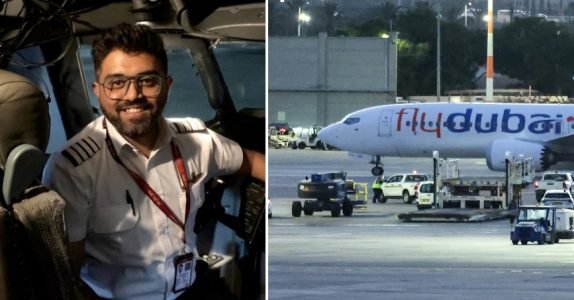
A cockpit door is built to keep trouble out. On this morning, it kept the trouble in. Captain Smit Machchhar, an Indian national with 17 years of flying behind him, was down on the floor, badly wounded, while the plane dived beneath him.
He felt the aircraft falling. He also knew the door was only a short reach away. Despite his injuries, he managed to reach the cockpit-door release and open the door from the inside.
Later, from a hospital bed, he told India’s prime minister that he was fighting for his own life but would not let others die. The door opened. Help, as it turned out, was standing just outside. The prime minister told him that his courage and quick thinking had saved many lives.
The Door Opens
Passenger Tzvika Manes later said his wife was taking their small daughter to the lavatory near the front when she heard screams and a struggle. She alerted a flight attendant. Then the cockpit door opened, and passengers saw the injured captain and the struggling co-pilot.
Manes pulled his daughter out of the lavatory and went toward the fight. Asaf Rajuan and Yaniv Hayun joined him. They found the injured captain by the door and the co-pilot between the seats, apparently pounding on the controls.
Hayun, a plumber by trade, got the co-pilot in a hold and dragged him out of the cockpit. It was not a plan. It was three strangers who decided, all at once, that sitting still was no longer an option, and a few seconds later the dentist and others were close behind.
A Plumber at the Stick
With the co-pilot out, Hayun went straight back in and took hold of the controls. He had never flown a plane. He told an Israeli TV interviewer that he watches the air-disaster series Mayday, which is not a flight school but is, evidently, better than nothing. For a few long minutes, the fate of the plane rested on a man who knew pipes and had watched a lot of television.
He pulled back, and the plane began to level out. Two off-duty flydubai pilots were also traveling as passengers. After the aircraft was stabilized, they helped take over the controls and guide it toward an emergency landing. U.S. President Donald Trump later praised Hayun, calling him a hero.
Meanwhile, a dentist named Dr. Shota Musayev provided first aid and helped care for the badly injured captain. Passengers tied up the co-pilot with corded headphones, and Musayev re-tied his hands and legs more than once.
Twelve Minutes by the Clock
Flight-tracking data give the whole business a skeleton. The broader emergency sequence, from the initial descent until the aircraft was stabilized, lasted roughly twelve minutes according to reconstructed flight data. The plunge itself was much quicker. In an airplane, twelve minutes can feel like a week, and it is easy to see why. Some of the exact times differ a little between reports, so treat the clock below as close, not gospel. It is reconstructed from flight-tracking data and media reports, and the official investigation has not yet published a complete minute-by-minute timeline.
The transponder, the little box that tells the world what the plane is up to, told a story of its own. It first showed a general emergency, then a code that means unlawful interference, then an emergency again.
- 05:21 GMT: steep descent begins
- 05:28 GMT: general emergency code (7700) near the Saudi-Jordan border
- 05:33 GMT: plane levels out near 15,000 feet
- 05:35 GMT: code 7500, meaning unlawful interference
- 05:44 GMT: distress call to controllers in Tabuk
- Shortly before 07:00 GMT: safe landing at Tabuk
Landing at Tabuk
Nearly four hours after takeoff, the jet touched down at Tabuk in northwestern Saudi Arabia. Medics and security officers were waiting on the tarmac. So were the passengers and crew, who had every reason to kiss the ground and probably did. Among them were the wounded captain, the man who had attacked him, and the plumber who had briefly run the show.
Saudi authorities said both pilots were taken to hospital. The injured captain was later transferred to Abu Dhabi for continued medical care, while the co-pilot was taken into custody. India’s embassy in the UAE said the captain was stable and then recovering well, and the prime ministers of India and Israel both hailed him as a hero.
Machchhar later said he was fighting for his own life but also knew he could not let everyone else die. Israel’s prime minister later met some of the passengers and praised what he called their heroism.
What the UAE Says
On Saturday, October 3, the UAE’s Attorney General, Hamad Saif Al Shamsi, gave the first official account. He said the co-pilot tried to carry out a terrorist act, began carrying out his plan during the flight, and attacked the captain with a crash axe while trying to take the flight controls.
A crash axe is an emergency tool kept in the cockpit so pilots can cut through the plane’s structure if they have to. Nobody expects it to become the center of a news story. The statement was also the first official confirmation of the weapon and of the attack itself.
The UAE is conducting the investigation, with authorities examining the circumstances, motive, possible links, and physical and digital evidence. Results will be announced when the procedures are done.
The Man in the Right Seat
UAE authorities have not publicly announced the co-pilot’s identity, but Reuters and other outlets have identified him as Hammam al-Hammami, an Omani national, citing sources familiar with the investigation. Those reports have not been officially confirmed, and he is accused, not convicted.
Several reports, including from the Wall Street Journal and ABC News, say he had previously been restricted or barred from flying in Oman amid concerns about alleged extremist views, though this has not been officially confirmed. It is not clear what those views were, or whether Oman passed its worry along to other countries or airlines.
That last point is the sore spot. The same reports say Flydubai hired him afterward. How much anyone knew, and who was supposed to tell whom, is now a question in plain view. Investigators have said they will look at the co-pilot’s whole history, and the answers may take some time.
Australian authorities have also begun examining al-Hammami’s links to the country, where he reportedly studied. The inquiry is part of a broader effort to reconstruct his background and determine whether anyone else was involved.
A Lone Wolf
Why did he do it? The honest answer is that nobody has said in public. A definitive motive has not been publicly established. A Gulf diplomat told AP that investigators are trying to learn whether he acted alone or had ties to extremist groups.
Multiple U.S. officials briefed on the case told NBC News that early indications point to a lone actor, though they stressed the inquiry is young and nothing has been ruled out. President Trump has said the matter could be linked to Iran, without giving details. No evidence for that has been made public.
As of October 5, flydubai’s Israel flights remained suspended while the investigation continued. Guessing is cheap. Evidence is not, and it takes longer. Until investigators establish the motive, claims about the co-pilot’s intentions or possible connections should be treated as unconfirmed.
What Comes Next for Flying
One irony stands out. Cockpit doors are locked on purpose, to keep attackers out. Here, the person inside the cockpit was the one who needed the door opened, and the captain’s last act was to open it.
The questions now on the table are practical ones: how airlines vet their pilots, and how a warning raised in one country reaches an airline in another. Those answers will come from investigators, not from news stories.
Meanwhile, as of October 5, the airline’s Israel flights remain suspended.
The part that needs no investigation is plain enough. A badly injured captain, several passengers, a plumber, a dentist, and off-duty pilots all played roles in preventing what could have been a catastrophe. More than 170 people are alive because of it.
- Open question: the co-pilot’s motive
- Open question: how the pilot was vetted before being hired
- Open question: whether anyone else was involved
FAQs
On September 30, 2026, the UAE says the co-pilot attacked the captain with a crash axe and tried to take control. Passengers and crew subdued him, and the jet landed safely in Tabuk, Saudi Arabia.
No motive has been made public. The UAE calls it an attempted terrorist act, and investigators are still checking his motives and any possible links to others.
Several passengers entered the cockpit, pulled the attacker out, and tied him up. One steadied the controls until off-duty pilots aboard took over, and a dentist gave the wounded captain first aid.
India’s embassy in the UAE said Captain Smit Machchhar was recovering well in Abu Dhabi after treatment in Saudi Arabia. He had been badly wounded but was able to open the cockpit door.
Not officially. Reuters and other outlets, citing sources familiar with the investigation, name him as Hammam al-Hammami, an Omani national, and several reports say he had been restricted from flying in Oman. UAE authorities have not confirmed this, and he is accused, not convicted.










 Login with Google