




















 Pin
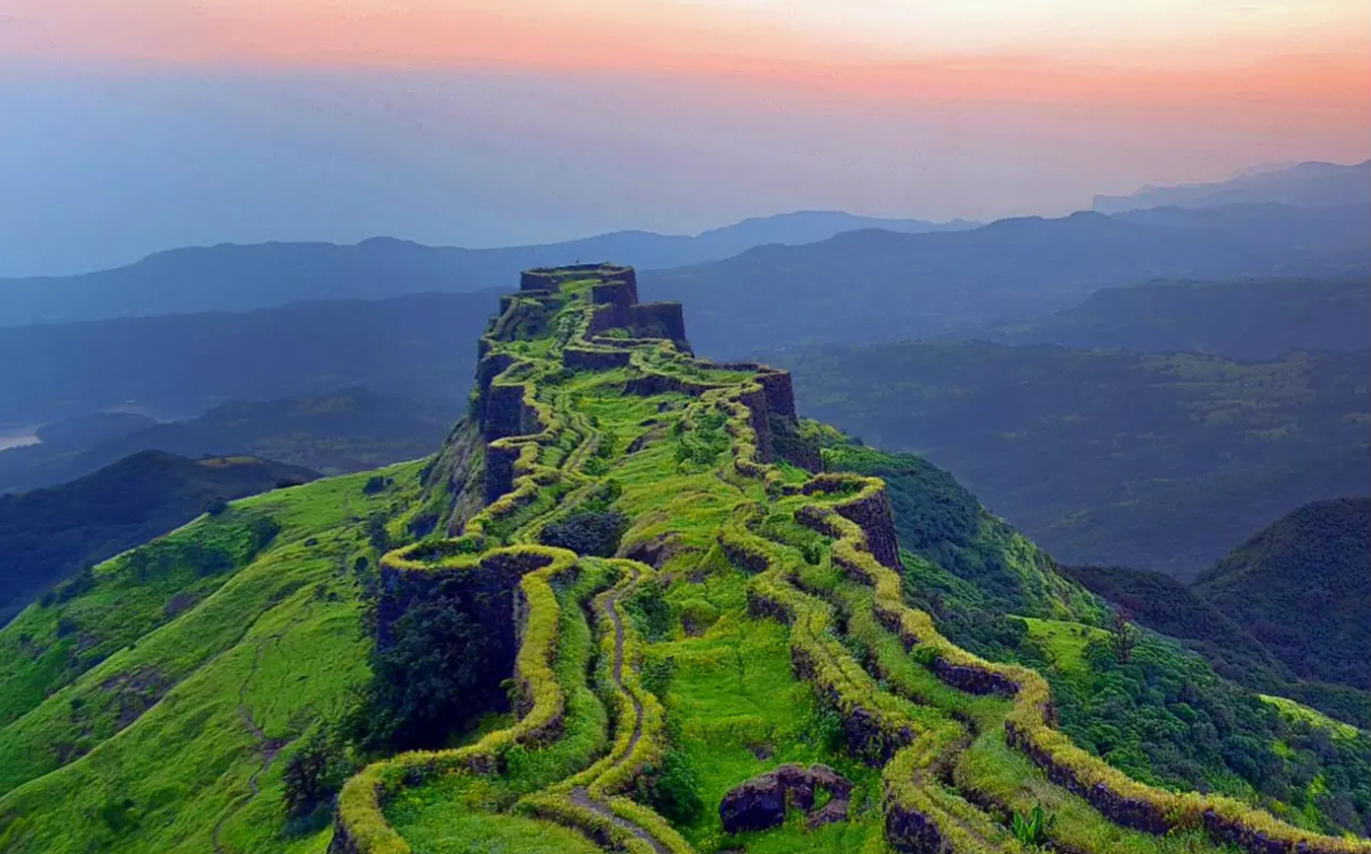
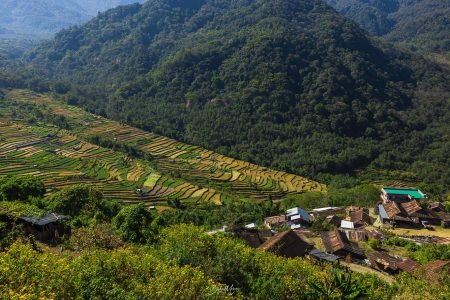
Pin Khonoma Village in Nagaland, Photo Courtesy of Susheel Marcus
Synopsis: Nagaland’s hills hide more than war-cry legends and Hornbill Festival colours. Scattered across ridges and river valleys, quiet villages in Nagaland still keep old stone gates, wooden morungs, and tribal customs that rarely make it into travel brochures. This piece walks through ten such villages, some a short drive from Kohima, others a bumpy jeep ride into Konyak or Angami country, where mist rolls over thatched roofs and grandmothers still weave the same patterns their mothers did. A quieter, realer side of the Northeast awaits.
Most visitors who fly into Nagaland head straight for Kohima or catch the Hornbill Festival in December, click a few photos, and move on. Fair enough, that is the postcard version of the state. But past the last mobile signal, where the road turns to red mud and the hills fold into each other like crumpled paper, sit settlements that seem to have quietly opted out of the rush.
These are not roadside attractions with ticket counters and souvenir stalls. A Konyak elder might still roll up his sleeve and explain what each old tattoo once meant, back when the ink was earned rather than admired. Morung houses, the traditional dormitories for young men, still stand carved with hornbill motifs and mithun horns. Smoked pork and rice beer drift out of bamboo kitchens as the evening cools.
This list is not ranked by fame. It is built for the traveler who does not mind a little dust on the boots and prefers a real conversation over a crowded viewpoint. A good pair of walking shoes helps, since some of these places barely register on a map app.
Table of Contents
1. Khonoma
 Pin
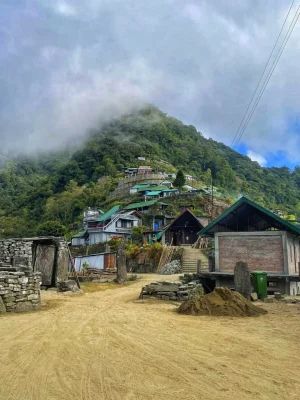
Pin Photo Courtesy of Nature’s Calling Trek
Perched on a ridge about twenty kilometres from Kohima, Khonoma belongs to the Angami tribe and carries the title of Asia’s first green village, a badge it earned the hard way. Decades ago, the villagers watched their prized Blyth’s tragopan pheasant vanish from the hillsides and did something rare for anyone anywhere: they banned hunting and logging on their own land, then stuck to it.
Walking the lanes today means passing stone gates carved generations ago, terraced paddy fields cut into the slopes like giant green staircases, and homes where the smoke from the kitchen fire still finds its way out through the thatch rather than a chimney.
Good to know:
- Entry fee around ₹50, local guide about ₹500 a day
- Best walked on foot, the alleys are narrow and easy to lose track of
- Combine with a short trek to nearby Dzuleke or the Dzukou Valley
2. Dzuleke
 Pin
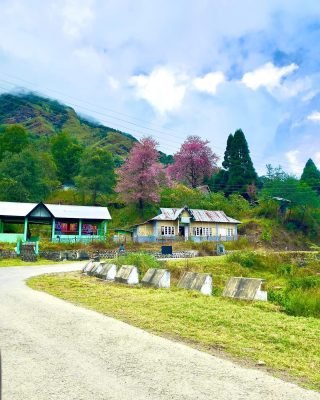
Pin Photo Courtesy of Northeast India Connect
Twenty kilometres past Khonoma, down a road that narrows with every bend, sits Dzuleke, a small Angami settlement named for the calm river running beside it. It rarely appears on the standard Nagaland itinerary, which is exactly its appeal.
The village runs a curious system of unmanned, shopkeeper-less stalls where visitors pick up local goods and leave payment on trust. Thick forest surrounds the hamlet, home to birdlife that draws serious birders with serious binoculars, while terraced fields show off farming methods that have barely changed in generations.
Homestays here are simple but warm, and Dzuleke works well as a quiet overnight stop before the climb toward Dzukou Valley, timed right for the seasonal bloom of wild lilies.
3. Longwa
 Pin
Pin Photo Courtesy of Northeast Travel Expert
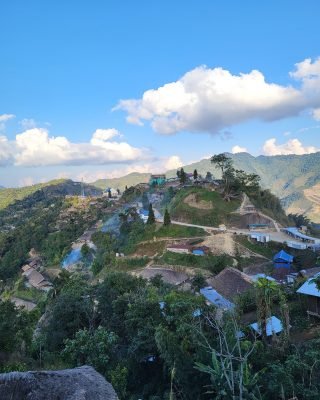
Up in Mon district, hard against the Myanmar border, Longwa pulls off a geographic party trick: the Angh’s house, home of the traditional Konyak chief, famously straddles the India-Myanmar border, with the international boundary running right through the residence itself.
The wider village is a community divided by that same border, its families and clan ties stretching across both sides of the line even as the two countries now keep tighter watch on movement than in years past. This is Konyak country, once known across the hills for headhunting, a practice long since given up though a handful of tattooed elders remain who lived through its final years and are happy to share the stories, tattoos and all, with visitors who ask respectfully.
Good to know:
- Indian citizens need an Inner Line Permit to enter Nagaland; it does not grant permission to cross into Myanmar
- Roads into Mon district are rough, plan extra travel time
- December, around the Hornbill Festival, sees the liveliest village atmosphere
4. Chizami
 Pin
Pin Photo Courtesy of Lele Chirhah
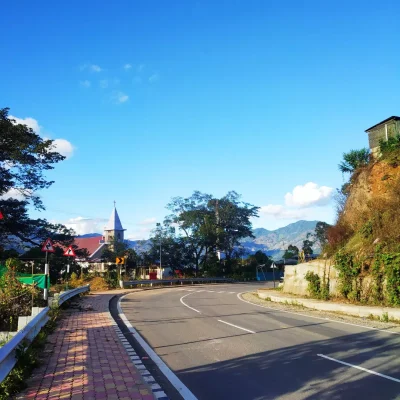
Chizami sits in Phek district and is closely associated with the Chakhesang Naga community, and has built a name for itself through community-run tourism rather than government brochures. Locals here host guests in their own homes, sharing meals and daily chores rather than a curated show.
The village is known for handwoven textiles and bamboo and cane craftwork, sold directly by the artisans who make them. A short walk out of the village centre leads to waterfalls and forest trails, good for a lazy afternoon.
Time a visit around the Tsükhenye festival, a major Chakhesang celebration observed in Chizami, for a stretch of traditional music, dance, and a table full of dishes that rarely show up on a restaurant menu anywhere else.
5. Touphema
 Pin
Pin Photo Courtesy of Nagaland Tourism
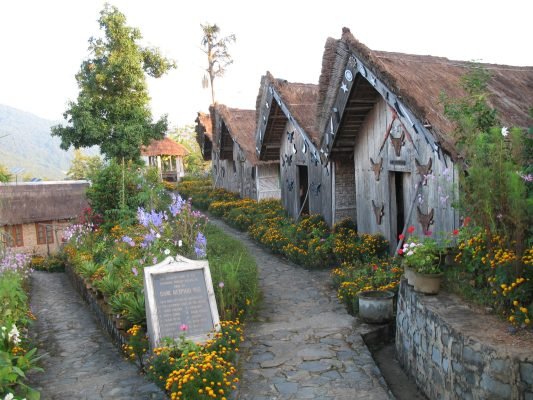
About forty kilometres from Kohima, Touphema was purpose-built by the state tourism board together with local Angami families as a recreated traditional heritage village, its cabins and rooms styled to look like the huts of old rather than a standard resort.
Guests sleep under corrugated roofs styled after traditional huts, eat Ghalo and bamboo-baked fish by a bonfire, and browse a small museum stocked with old textiles, jewellery, and wood carvings collected from around the region.
The Angami festival of Sekrenyi, held every February, fills the village with cleansing rituals, feasting, and rice beer poured a little too generously for comfort.
6. Benreu
 Pin
Pin Photo Courtesy of Alakesh Gogoi
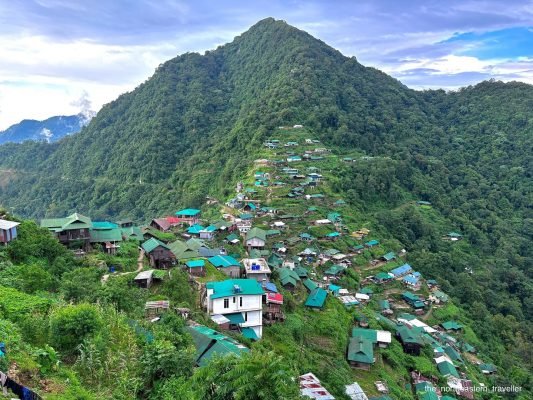
Benreu sits high in Peren district, with Mount Pauna, Nagaland’s third highest peak, rising about six kilometres from the village and standing watch over the whole valley. Houses climb the slope in stacked rows, giving the settlement a slightly tilted, storybook look.
The forest around Benreu is dense and largely undisturbed, and the trek up toward Pauna is the main draw for visitors who want a proper hike rather than a stroll between houses. Small-scale farming keeps the village ticking along on the surrounding ridges.
Getting here takes effort: it is about 115 kilometres from Dimapur, mostly on winding roads, which keeps the crowds away and the silence intact.
7. Shangnyu
 Pin
Pin Photo Courtesy of Sea Water Sports
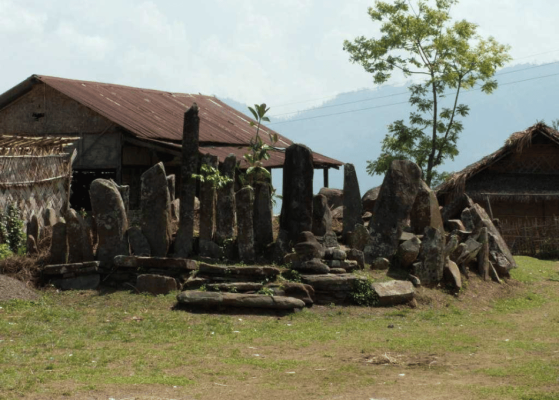
Shangnyu, another Konyak stronghold in Mon district, is a historic village centred around the Angh’s traditional residence, believed to stand more than five hundred years old, its wooden posts and doorframes carved with figures and patterns passed down through generations of craftsmen.
A large ceremonial skull structure and log drum sit at the heart of the village, tied to legends about the Angh’s ancestry that elders still recount to anyone willing to sit and listen for a while.
Shangnyu pairs naturally with a Longwa visit, since both lie within a short drive of each other inside the same Konyak heartland.
8. Chui Village
 Pin
Pin Photo Courtesy of Google Map
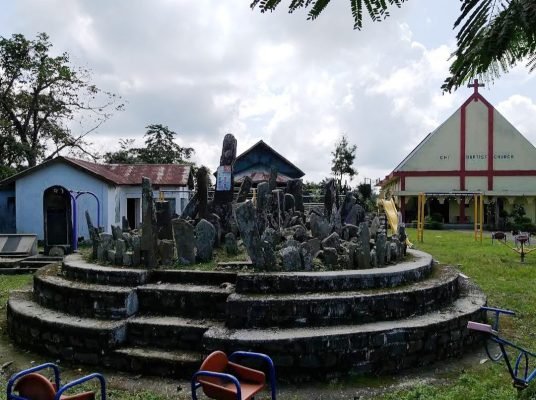
Not far from Mon town, Chui is another Konyak village where woodcraft traditions run deep, with local craftsmen still working on carved panels and ceremonial pieces using tools and techniques passed down rather than picked up from a manual.
Daily life here moves at an unhurried pace: women weaving on backstrap looms, children running between houses on stilts, and the occasional rooster staging a noisy protest against the afternoon quiet.
Most visitors fold Chui into a wider Mon district loop alongside Shangnyu and Longwa, making a single trip cover three very different flavours of Konyak culture.
9. Thanamir
 Pin
Pin Photo Courtesy of Eco Nagaland
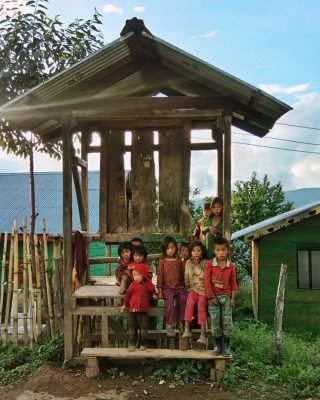
Tucked into Kiphire district’s Pungro sub-division, Thanamir has earned the nickname Apple Village for its orchards, an unusual sight in a state better known for rice terraces and jungle.
The cool climate here, thanks to the elevation, suits apples surprisingly well, and the village doubles as a base camp for trekkers heading toward Saramati, the highest peak in Nagaland straddling the border with Myanmar.
Few outside serious trekking circles have heard of Thanamir, which keeps the trails, and the orchard-lined paths through the village, refreshingly uncrowded.
10. Mimi and Salomi
Further into Kiphire district, the neighbouring villages of Mimi and Salomi are less a single stop than a paired destination, known chiefly for the unusual limestone formations and cave systems that riddle the hillsides around them, a rare sight anywhere in the Northeast.
Locals also point visitors to Lupong Khun, meaning hole of winds, a curious spot said to breathe out warm air from the ground, worth a look if time allows. Nearby, the Sangtam tribal village of Siphi, also called Sangphure, holds an old stone monolith named Ningthsalong, a quiet marker of history standing alone in the open.
Roads out here can be rough and the journey long, so this pairing suits travellers with time to spare and a genuine curiosity for geology as much as culture.
Before You Go, a Few Practical Notes
Indian citizens travelling from outside Nagaland need an Inner Line Permit, and the application process is now fully online through the state government’s official portal; it is worth applying well before departure rather than counting on getting one after landing.
Foreign travellers face rules that have shifted in recent years, with Protected Area Permit requirements reinstated, so it pays to confirm the latest visa and registration requirements with Indian authorities before booking flights. October through April generally brings the clearest skies and easiest roads, though the right month depends on the experience: December suits the Hornbill Festival, February lines up with Sekrenyi at Touphema, and September brings Thanamir’s Apple Festival. Monsoon months bring landslides on the hill roads, best avoided unless the itinerary is flexible.
Packing checklist:
- Sturdy walking shoes, most villages are best explored on foot
- Cash in small denominations, card machines are rare in remote areas
- A local guide, both for navigation and for context that a map cannot give
- An open mind about food, rice beer and fermented dishes are part of the welcome
FAQs
Generally welcoming, but conditions vary by location. For border areas, isolated villages, and unfamiliar trails, a local guide and a check on current road conditions is the safer route.
A tourist Inner Line Permit covers entry into Nagaland for its validity period; always check current conditions and destination rules, especially near the Myanmar border.
October to April suits general sightseeing; December fits the Hornbill Festival, February suits Sekrenyi at Touphema, and September lines up with Thanamir’s Apple Festival.
Most listed villages, especially Khonoma, Dzuleke, and Chizami, offer basic but comfortable community-run homestays with home-cooked meals.
Options exist but are limited; informing hosts in advance helps them prepare simple vegetable and rice dishes without meat.










 Login with Google