
















 Pin
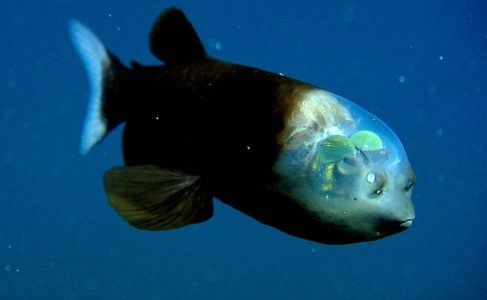
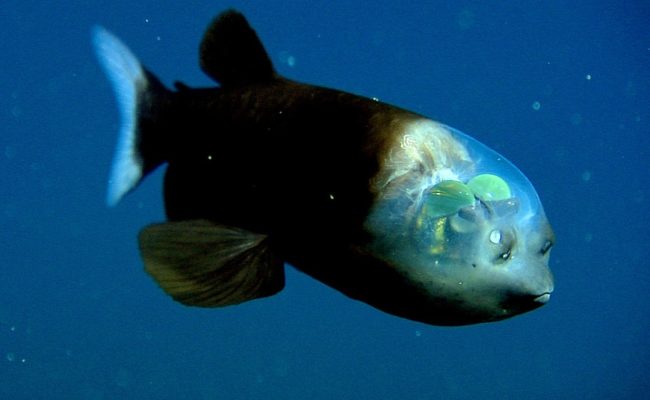
Pin Barreleye Fish / Photo courtesy MBARI
Synopsis: Our planet hosts creatures so bizarre they seem designed by extraterrestrials. From fish with see-through skulls to insects with transparent wings and alien heads, these animals defy reality. Some have bodies that glow neon colors in the dark. Others look like they’re made of glass or metal. Evolution created organisms that look like CGI characters escaped into the real world. These 15 real creatures prove that Earth might be the strangest planet in the universe. They’re living proof that nature designs better sci-fi than Hollywood.
Truth really is stranger than fiction. Fiction has to make sense. Reality doesn’t follow any rules.
Our planet isn’t just home to the animals you learned about in school. Hidden in deep oceans, remote jungles, and dark caves are creatures that look like concept art from a space movie. We’re talking about animals with transparent heads, bodies that glow electric blue, and shapes so bizarre they seem computer-generated.
These aren’t myths or extinct oddities. These 15 Real Creatures That Prove Earth Is Actually An Alien Planet are alive right now, swimming, crawling, and flying while you read this. Some look like living glass sculptures. Others appear wrapped in metallic armor or neon lights. A few seem like someone designed aliens and accidentally made them real. Ready to see Earth’s most otherworldly residents?
Table of Contents
1. The Barreleye Fish
 Pin
Pin Barreleye Fish / Photo courtesy MBARI
This fish has a completely see-through head. Not cloudy or semi-transparent—crystal clear. You can look straight through its skull and watch its brain and eyeballs floating inside like instruments in a spaceship cockpit.
The dome-shaped transparent head looks like a fighter pilot’s helmet made of living tissue. Those green glowing orbs inside? Those are its eyes, pointing straight up through the clear skull. The whole setup looks like something a special effects team would design for an underwater alien species.
Its body is dark and normal-looking, which makes that glass dome even more shocking. It’s like evolution said, “Let’s give this deep-sea fish a window in its head” and just went with it. The combination of that liquid-filled transparent dome and those tubular green eyes creates something that looks less like biology and more like advanced technology wrapped in flesh.
Key Features:
- Completely transparent, dome-shaped skull
- Green tubular eyes visible through the head
- Lives in pitch-black depths
- Fluid-filled head acts like a living helmet
2. Orchid Mantis
 Pin
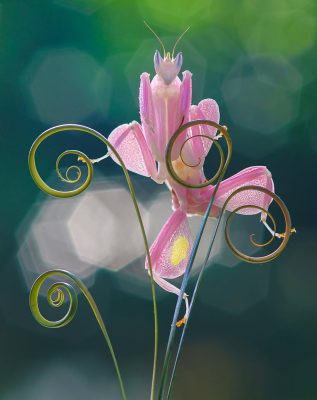
Pin Orchid Mantis / Photo courtesy Priyadi Andri
The orchid mantis doesn’t look like an insect. It looks like someone took a tropical flower, gave it legs, and watched it start walking around. Pink and white petals that move? That’s what your brain sees when you first spot one.
Its leg segments are flattened and petal-shaped, colored in vibrant pink or pure white with delicate shading. The body curves gracefully like flower petals arranged in a bouquet. When it sits still on actual flowers, even close inspection won’t help you spot it. The mimicry is so perfect it’s unsettling.
But here’s where it gets wild: the mantis isn’t just hiding among flowers. It looks MORE attractive to pollinators than real flowers do. Bees actually prefer landing on this insect-flower hybrid. Then those “petals” snap shut. It’s a living venus flytrap that evolved to out-design actual flowers. How is that possible?
Key Features:
- Flattened legs shaped exactly like flower petals
- Pink or white coloring with natural shading
- Body structure mimics orchid blooms
- More attractive to pollinators than real flowers
3. Glass Frog
 Pin
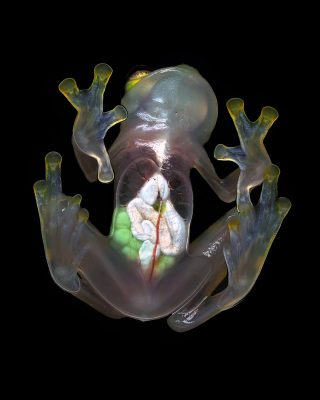
Pin Glass Frog / Photo courtesy Twins Wild Lens
Glass frogs look like anatomy textbook illustrations that came to life. Their bellies are completely transparent, revealing every internal organ in full color. You can watch their hearts beating, blood flowing through vessels, and even see developing eggs inside females.
The top of the frog is lime green and opaque, but flip it over and you’re looking at living biology with no skin barrier. Red blood vessels create delicate road maps. The white bones glow against the transparent tissue. It’s like someone forgot to finish designing the underside.
These tiny frogs sit on leaves with their guts on display, somehow surviving in rainforests despite having zero protection for their organs. The visual effect is deeply unsettling and completely mesmerizing at the same time. They look like medical demonstrations that evolved consciousness and hopped away.
Key Features:
- Transparent abdominal skin
- Visible heart, organs, and blood vessels
- Lime-green back with see-through belly
- Bones appear white through translucent tissue
4. Blue Dragon Sea Slug
 Pin
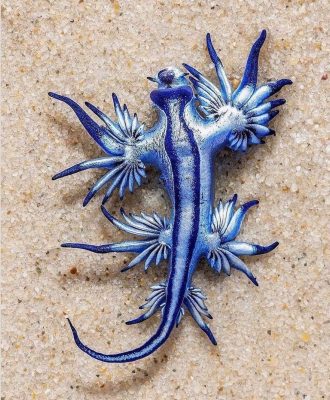
Pin Blue Dragon Sea Slug / Photo courtesy Kristian Laine
The blue dragon looks like a spacecraft that crash-landed in the ocean and kept swimming. Its body glows electric blue with silver striping that shimmers in the sunlight. Those wing-like appendages spreading from its sides? They look straight out of a spaceship design catalog.
This tiny creature—barely an inch long—floats upside-down on the ocean surface with its neon blue body on full display. The coloring is so vibrant it looks digitally enhanced. The silver-blue gradient creates patterns that shift as it moves, like liquid metal coating its body.
Those “wings” are arranged in triplets on each side, creating a symmetrical design that seems too perfect for nature. It doesn’t swim like other slugs. It glides on the water’s surface tension like a miniature alien craft surveying Earth’s oceans. The whole thing looks like concept art for a fantasy creature that somehow became real.
Key Features:
- Intense electric blue coloring
- Silver-blue gradient striping
- Six wing-like appendages
- Floats upside-down on water surface
5. Umbonia Spinosa
 Pin
Pin Umbonia Spinosa / Photo courtesy Gui Animaltv
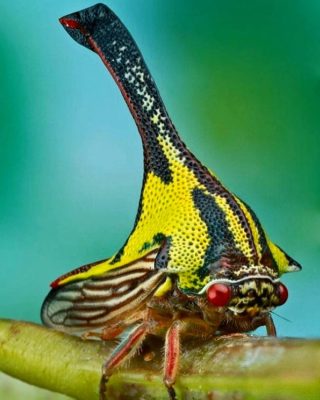
The umbonia spinosa looks like someone stuck a thorn on top of a regular insect and called it done. That massive spine jutting from its back is larger than its entire body—a curved, pointed horn that makes zero anatomical sense.
This treehopper’s body is bright green with yellow and red markings, but that bizarre spine is what grabs your attention. It curves backward like a scorpion’s tail made of hardened plant material. Some have spines with serrated edges. Others are smooth and curved like claws.
Groups of these insects cluster on plant stems, all those spines pointing in different directions like an alien defense system. They look like weaponized thorns that grew legs and started walking. The spine serves some camouflage purpose, supposedly, but mostly it just makes them look like evolution had a glitch day.
Key Features:
- Massive curved spine longer than body
- Bright green with colorful markings
- Spine resembles plant thorns
- Cluster in groups on stems
6. Goblin Shark
 Pin
Pin Goblin Shark / Photo courtesy Jaw Shark Sea Ceatures
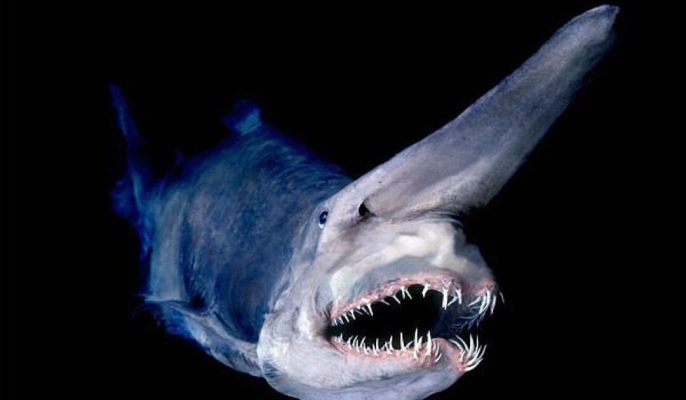
The goblin shark’s pink, semi-transparent skin makes it look like it’s been living in darkness so long it forgot what color means. That skin reveals blood vessels underneath, creating a ghostly appearance that’s deeply unsettling in the pitch-black depths.
Its most alien feature is that blade-like snout jutting from its face like a sword. That elongated rostrum is covered in electrical sensors and looks like someone grafted a saw blade onto a shark’s head. But wait—there’s more nightmare fuel.
The jaws. Those jaws shoot forward from the skull like a spring-loaded trap. The entire mouth mechanism extends several inches outward to snatch prey before snapping back. It’s like a biological horror effect that makes this already bizarre-looking shark even more alien. The pink ghost with a sword face that can launch its mouth at you—that’s the goblin shark.
Key Features:
- Pink, semi-transparent skin
- Blade-shaped snout (rostrum)
- Protrusible jaws that extend outward
- Visible blood vessels through skin
7. Peacock Mantis Shrimp
 Pin
Pin Peacock Mantis Shrimp / Photo courtesy Sylvian Corbel
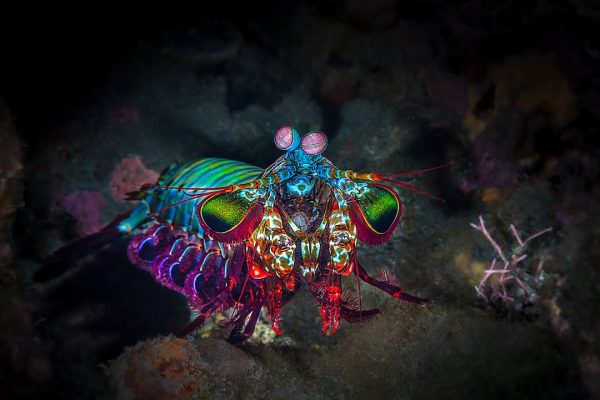
The peacock mantis shrimp looks like someone took a paint store and exploded it onto a crustacean. Electric blues, neon greens, fire-engine reds, sunset oranges—every color exists on this creature in psychedelic patterns.
The colors aren’t painted on. They shift and shimmer as the shrimp moves, creating iridescent displays that rival any tropical bird. The shell segments gleam with metallic finishes. Some sections glow fluorescent under certain light. It looks less like a living animal and more like an animated character rendered with too much color saturation.
Those modified front legs display the most intense coloring—bright reds and oranges that flash when it spreads them. The eyes sit on stalks and display multiple colors themselves. The whole package looks like what aliens would design if you asked them to make the most visually striking ocean creature possible. Then evolution said “hold my beer” and made it real.
Key Features:
- Fluorescent multi-colored exoskeleton
- Iridescent, color-shifting shell
- Metallic finish on body segments
- Bright orange and red modified front legs
8. Vampire Squid
 Pin
Pin Vampire Squid / Photo courtesy Science
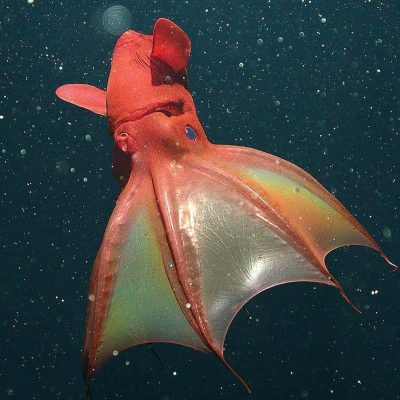
The vampire squid looks like someone designed a horror movie creature, wrapped it in a velvet cloak, and dropped it in the deep ocean. Those webbed arms create a cape-like appearance that can flip inside-out to reveal a spiky interior.
But the real sci-fi element is the bioluminescence. This squid produces glowing blue mucus that hangs in the water like ghostly smoke. Its body is covered in light-producing organs called photophores that flash in patterns across its dark red skin. It’s a living light show in the darkness.
The eyes are enormous relative to its body—huge blue orbs that look too big to be real. Combined with that flowing cape of webbed tentacles and those glowing organs, it looks like an underwater alien wearing a high-tech suit. The blood-red coloring (which appears black at depth) adds to the otherworldly appearance. This is what evolution creates when there’s no sunlight to work with.
Key Features:
- Webbed arms form cloak-like structure
- Bioluminescent photophores cover body
- Enormous blue eyes
- Dark red to black coloring
9. Atlas Moth
 Pin
Pin Atlas Moth / Photo courtesy Moth and Myth
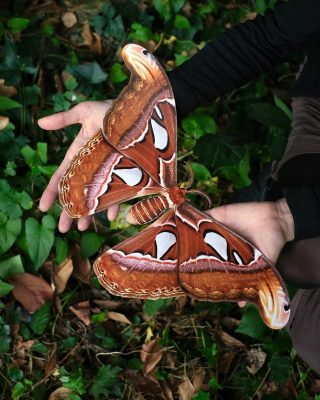
The atlas moth has wings that look like two cobra heads are painted on them. Not abstract patterns—actual snake heads complete with scales, eyes, and that distinctive cobra hood shape. The detail is so precise it’s creepy.
These are the largest moths in the world by wing area. When they spread those massive wings, each tip displays a perfect snake head illustration that seems designed to ward off predators. The coloring is rusty orange, brown, and cream—earth tones that make those cobra heads stand out even more.
The transparent sections in the wings create window-like patches that you can see straight through. Combined with those snake head patterns and the sheer size—they can have a wingspan over 10 inches—these moths look like they flew out of a fantasy illustration. The fact that evolution created cobra-face decorations on moth wings just to scare birds is wild enough. That it looks this good is next-level design work.
Key Features:
- Wing tips shaped like cobra heads
- Transparent window sections in wings
- Wingspan up to 10+ inches
- Rusty orange and brown earth tones
10. Leafy Sea Dragon
 Pin
Pin Leafy Sea Dragon / Photo courtesy Rowan Dear
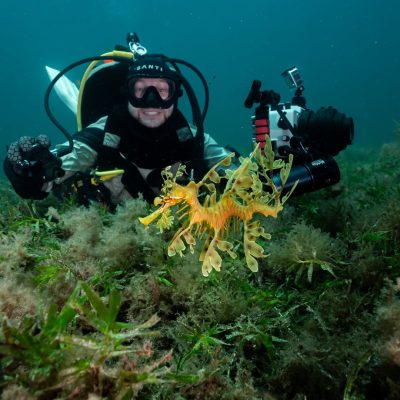
The leafy sea dragon looks like someone took kelp and seaweed, shaped it into a seahorse, and gave it consciousness. Every part of its body sprouts elaborate leaf-shaped appendages that sway with ocean currents.
These aren’t functional fins—they’re pure camouflage extensions that make the dragon look like drifting vegetation. The actual propulsion comes from tiny, nearly transparent fins that are almost impossible to see. It moves like it’s floating in zero gravity, drifting through kelp forests in slow motion.
The body displays colors that shift from yellow to purple to orange with green-blue accents. In certain light, those leaf-appendages shimmer like stained glass. The face has that classic seahorse snout, but everything else looks like a coral reef and a dragon had a baby that grew up underwater. It’s elegant, bizarre, and looks more like artwork than biology.
Key Features:
- Elaborate leaf-shaped appendages
- Yellow, purple, and orange coloring
- Nearly invisible propulsion fins
- Moves in slow, drifting motion
11. Pink See-Through Fantasia
 Pin
Pin Pink See-Through Fantasia / Photo courtesy Larry Madin
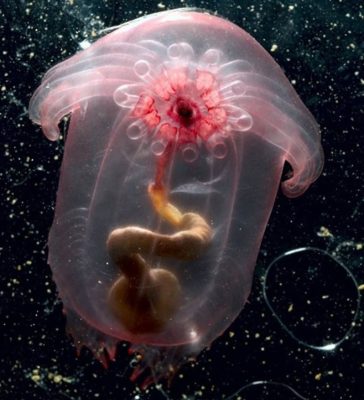
This sea cucumber looks like someone made an animal out of clear pink jelly and threw in some glowing internal parts. Its entire body is transparent with a pink tint, letting you see the digestive system and other organs moving inside.
The name “fantasia” fits perfectly because this creature looks like it belongs in an animated fantasy world. Its body is gelatinous and wobbles as it moves, displaying internal structures through the translucent skin. Bioluminescent areas glow within its body, creating an effect like built-in mood lighting.
Those feeding tentacles around its mouth look like delicate pink flowers or alien sensors. When it’s in motion, the whole thing resembles a living lava lamp crossed with a jellyfish—except it’s neither. It’s a sea cucumber that decided transparency was the way to go. The result is something that looks more like an art installation than an animal.
Key Features:
- Completely transparent body with pink tint
- Visible internal organs and digestive system
- Bioluminescent areas glow internally
- Flower-like feeding tentacles
12. Blue Parrotfish
 Pin
Pin Blue Parrotfish / Photo courtesy Dutch Divers
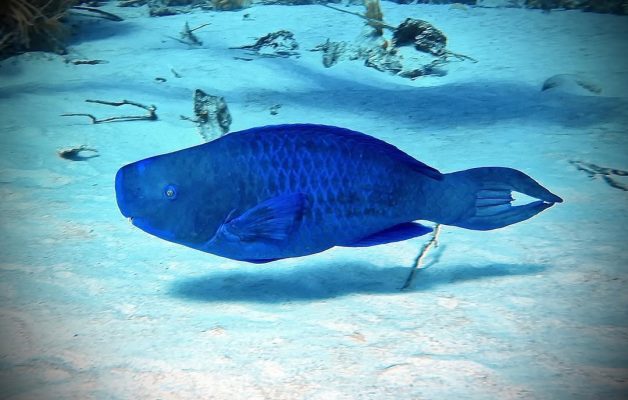
The blue parrotfish looks like someone carved a fish from turquoise gemstone and brought it to life. That electric blue coloring is so intense it almost hurts to look at—like someone turned the saturation up way too high on a photo.
The colors aren’t uniform either. Yellow patches create accent areas. Pink highlights appear around the fins. The scales shimmer with iridescent qualities that make the fish look like it’s glowing from within. That beak-like mouth (where the “parrot” name comes from) is bright yellow-green and looks like it was designed by someone who’d never seen a fish before.
When groups swim together, they look like animated characters that escaped from a Pixar movie. The coloring is too vibrant, too perfect to seem real. But they’re actual fish, munching on coral and pooping out sand. Nature made something that looks like a tropical drink got turned into a sea creature. And somehow it works.
Key Features:
- Intense electric blue body
- Iridescent scales that shimmer
- Bright yellow-green beak-like mouth
- Yellow and pink accent patches
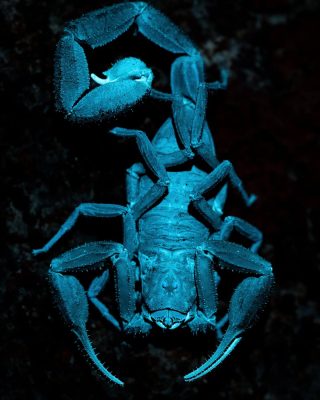
13. Scorpion That Glows Under UV Light
 Pin
Pin Amazonian Scorpion – Scorpion That Glows Under UV Light / Photo courtesy Fabian Muehlberger
Scorpions under normal light look dangerous but relatively ordinary. Hit them with UV light and they transform into neon blue-green glowing creatures that look radioactive. The entire exoskeleton lights up like a rave decoration.
That glow isn’t paint or a reflection—it’s caused by proteins in the exoskeleton that fluoresce under ultraviolet light. In the desert at night with a blacklight, scorpions appear as glowing blue creatures walking across the sand like aliens on patrol. The effect is so striking that researchers use UV lights specifically to find them.
The glow makes them look like living video game characters—blue-green outlines against black backgrounds. Their normal tan or brown coloring completely disappears, replaced by this electric blue emission. Why they evolved this trait is still debated, but the visual result is pure sci-fi. They look like something that wandered off a spaceship and decided to live in Earth’s deserts.
Key Features:
- Entire body glows neon blue-green under UV
- Fluorescent proteins in exoskeleton
- Normal coloring disappears under blacklight
- Found easily at night with UV flashlights
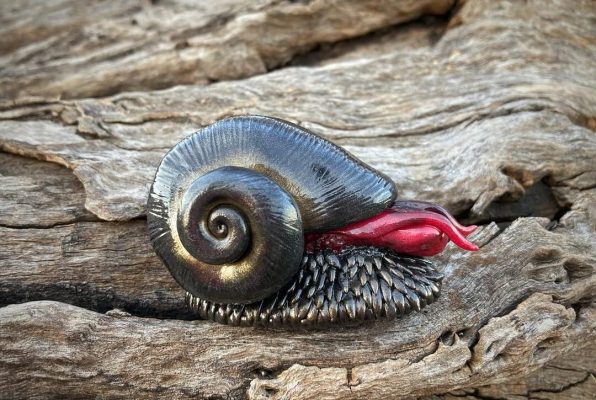
14. Chrysomallon Squamiferum
 Pin
Pin Chrysomallon Squamiferum / Photo courtesy Gabriele Joy
This deep-sea snail has a shell that contains actual iron. Not metaphorically—literal iron sulfide integrated into its armor. It’s the only known animal that incorporates metal into its skeleton. That makes it look less like a snail and more like a tiny tank.
The shell displays dark metallic coloring with an industrial appearance. Those overlapping scales on the foot? They’re reinforced with iron too. The whole creature looks like it was forged in a blacksmith’s shop rather than born from biology. It lives near hydrothermal vents where it harvests iron from the sulfide-rich environment.
The metallic sheen and scaled armor create an appearance straight out of fantasy RPG games—the kind of creature a blacksmith would design if they could make living things. It’s about the size of a golf ball but looks like it could survive being hit by a hammer. Evolution made a steampunk snail and stuck it at the bottom of the ocean.
Key Features:
- Shell contains actual iron sulfide
- Dark metallic coloring
- Iron-reinforced scales on foot
- Lives near hydrothermal vents
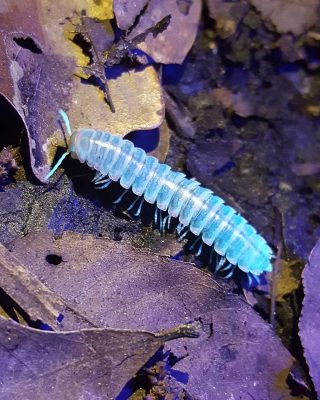
15. Glowing Millipede
 Pin
Pin Glowing Millipede / Photo courtesy Alex Abair
Some millipedes produce bioluminescent secretions that make them glow bright yellow-green in the dark. These aren’t subtle glows—we’re talking neon-sign brightness that lights up their entire segmented bodies like glow sticks.
The effect makes them look like illuminated trains moving through the forest floor. Each segment glows individually, creating a rippling light effect as they walk. In pitch darkness, you’d see a glowing neon creature crawling across leaves like a biological LED strip.
The glow serves as a warning—many of these millipedes are highly toxic. That bright coloring says “don’t eat me” in the most literal way possible. They look like someone took a regular millipede and filled it with highlighter fluid. The segmented body structure means the glow appears in repeating bands, creating a pattern that looks more like animated computer graphics than actual wildlife.
Key Features:
- Bioluminescent secretions coat body
- Bright yellow-green neon glow
- Segmented body creates banded light pattern
- Glow serves as toxicity warning
FAQs
The deep ocean has extreme conditions and no sunlight, so evolution went wild with different solutions. Bioluminescence, transparency, and weird body shapes all help survival in the dark.
Yes! Many of these animals have colors that seem digitally enhanced but are completely natural. The mantis shrimp and blue parrotfish really are that vibrant.
Most live in extreme environments that are impossible to recreate at home. The orchid mantis is sometimes kept by experienced insect keepers, but it’s very difficult.
Transparency is actually excellent camouflage in water. Predators look for outlines and shadows—transparent creatures provide neither and become nearly invisible.
Absolutely! New bizarre-looking species are found regularly, especially in deep oceans and remote rainforests. We’ve only explored about 5% of Earth’s oceans so far.