








 Pin
Pin Photo courtesy of Hashem Alghaili
Synopsis: The eastern emerald elysia sea slug has unlocked one of nature’s most remarkable survival strategies. By absorbing chloroplasts from the algae it consumes, this marine creature gains the ability to photosynthesize—converting sunlight directly into usable energy. Found in tidal pools and salt marshes along the U.S. East Coast, some individuals survive an entire year without eating, sustained purely by solar energy. This living solar panel challenges our understanding of what separates plants from animals.
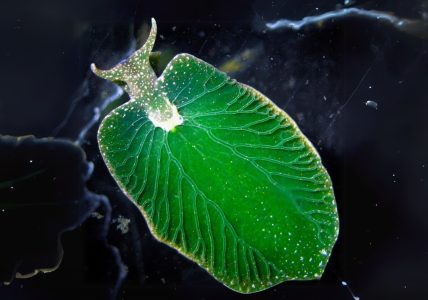
Along the eastern coastline of North America, a small marine creature is quietly rewriting the rulebook on how animals survive. The eastern emerald elysia measures about 60 millimeters in length and glows with an almost artificial-looking green color. That striking appearance isn’t just aesthetic—it’s functional proof of one of evolution’s most creative solutions to the energy problem.
Every living thing needs energy to survive. Plants solve this through photosynthesis, capturing sunlight and transforming it into chemical fuel. Animals, on the other hand, must eat other organisms to obtain energy. This fundamental division has defined biology for as long as complex life has existed. But this wildest thing solar powered slug has found a way to cross that boundary.
Elysia chlorotica doesn’t just mimic plant behavior—it actually performs photosynthesis. After consuming specific types of algae, the slug retains the chloroplasts (the cellular structures where photosynthesis happens) and integrates them into its own body. These stolen solar panels continue functioning inside the slug’s cells, generating energy from sunlight for months on end. Some individuals have gone an entire year without consuming food, living as true solar-powered organisms.
Table of Contents
The Chloroplast Heist
 Pin
Pin Photo courtesy of Lona Brak
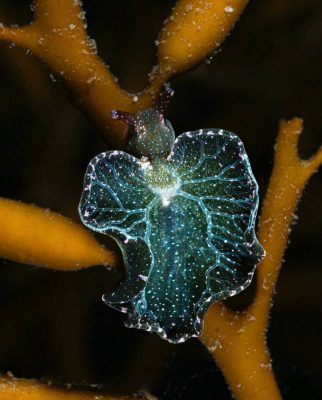
The process begins when young emerald elysia slugs feed on Vaucheria litorea, a species of yellow-green algae that grows in their coastal habitat. As the slug consumes the algae, something extraordinary happens inside its digestive system. Instead of breaking down every component of the algae for nutrients, the slug carefully extracts and preserves the chloroplasts—the tiny green factories where photosynthesis takes place.
These chloroplasts then migrate into the cells lining the slug’s digestive tract. Once embedded in the slug’s tissue, they continue performing their original function, capturing light energy and converting it into sugars. The slug essentially becomes a walking solar farm, with thousands of hijacked power plants distributed throughout its leaf-shaped body.
What makes this relationship even more remarkable is that chloroplasts are notoriously difficult to maintain outside their original plant cells. They require specific proteins and maintenance systems to keep functioning. Yet somehow, the emerald elysia has evolved the cellular machinery necessary to keep these stolen organelles alive and productive for extended periods. This level of biological integration between different organisms represents one of the most sophisticated examples of symbiosis in the natural world.
How Photosynthesis Actually Works Inside an Animal
 Pin
Pin Photo courtesy of Aquapricot
Understanding what makes this slug so special requires grasping how photosynthesis normally works. In plants and algae, chloroplasts contain chlorophyll, the pigment that gives them their green color and captures light energy. This energy splits water molecules and combines the resulting components with carbon dioxide to create glucose, a sugar that serves as fuel for the organism.
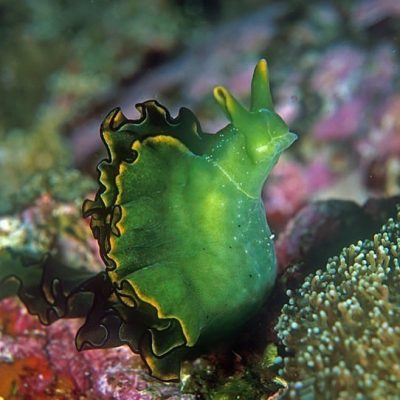
When the emerald elysia incorporates these chloroplasts into its own cells, they continue this same process. Sunlight penetrates the slug’s translucent body, reaching the embedded chloroplasts. The chloroplasts absorb the light and begin manufacturing sugars, which the slug’s cells can then use for energy. It’s the same chemical reaction that powers every plant on Earth, but now it’s happening inside an animal’s body.
The efficiency of this system is staggering. A well-fed slug that has consumed sufficient algae can go months without eating anything else. During this time, it simply needs to position itself in well-lit areas where sunlight is abundant. The tidal pools and shallow salt marshes where these slugs live provide ideal conditions, with plenty of sunlight penetrating the clear, shallow water.
The Genetic Mystery Behind the Magic
 Pin
Pin Photo courtesy of Meerdurstig
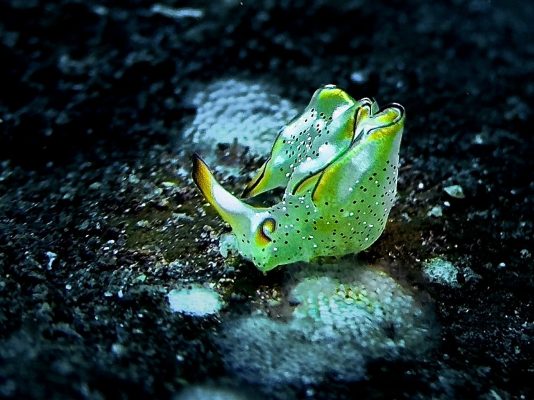
For years, scientists puzzled over how the slug maintained these chloroplasts so effectively. Chloroplasts can’t survive indefinitely on their own—they need specific proteins that are normally encoded by genes in the plant’s nucleus. These proteins help repair damage and keep the photosynthetic machinery running smoothly.
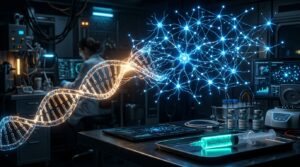
Research has revealed that Elysia chlorotica may have acquired some algal genes through a process called horizontal gene transfer. This means genetic material from the algae has been incorporated into the slug’s own DNA. These borrowed genes allow the slug to produce at least some of the proteins necessary to maintain the chloroplasts, though the complete mechanism remains an active area of scientific investigation.
This genetic exchange between such distantly related organisms challenges traditional views of evolution. Usually, genes pass vertically from parent to offspring within the same species. But horizontal gene transfer allows organisms to acquire entirely new capabilities from unrelated life forms. The emerald elysia represents a living example of how evolution can take shortcuts, borrowing successful strategies from completely different branches of the tree of life rather than developing them from scratch.
A Life Powered by Light
The daily life of a solar-powered slug looks remarkably different from that of its relatives. While most sea slugs spend considerable time and energy hunting for food, adult emerald elysias that have successfully integrated chloroplasts can adopt a much more leisurely lifestyle. They bask in sunny spots, their bodies spread out to maximize surface area exposed to light.
This energy strategy provides several advantages beyond just reducing the need to hunt. By not constantly moving in search of food, the slugs expend less energy overall. They also reduce their exposure to predators that might notice a moving target. Their bright green coloration, a direct result of the chloroplasts within their tissues, provides excellent camouflage among the algae and sea grasses of their habitat.
The amount of energy these slugs can generate through photosynthesis is genuinely impressive. Studies have documented individuals surviving for up to ten months without any food intake whatsoever, relying entirely on photosynthesis. During periods of abundant sunlight, the slugs can generate enough energy not just to maintain basic metabolic functions, but to grow and even reproduce. This makes them among the most energy-efficient animals in existence.
Where Solar Slugs Call Home
Elysia chlorotica inhabits a specific range along the eastern coast of North America, from Nova Scotia in Canada down to Florida. Within this range, the slugs favor particular microhabitats that provide optimal conditions for their unusual lifestyle. Tidal pools, salt marshes, and shallow coastal waters with abundant sunlight and healthy populations of their preferred algae species offer ideal living conditions.
These habitats experience dramatic daily changes as tides rise and fall. During low tide, the slugs may find themselves in isolated pools where sunlight penetrates directly through shallow water. During high tide, they navigate among underwater vegetation in slightly deeper waters. The slugs have adapted to handle varying levels of salinity, temperature fluctuations, and the physical stress of tidal currents.
The geographical distribution of these slugs closely follows the range of Vaucheria litorea, the specific algae species from which they acquire their chloroplasts. This dependence creates a fascinating relationship where the slug’s ability to photosynthesize actually makes it more dependent on finding the right algae species during its juvenile stage. Young slugs must successfully consume the correct algae and integrate its chloroplasts before they can transition to their solar-powered adult lifestyle.
The Evolutionary Journey to Solar Power
The emerald elysia belongs to a group of sea slugs called sacoglossans, sometimes nicknamed “sap-sucking slugs” because many species feed by piercing algae cells and sucking out the contents. This feeding strategy set the stage for the evolutionary innovation that makes Elysia chlorotica so special. By already having the behavior of consuming algae in a way that kept cellular structures relatively intact, these slugs had a foundation for eventually retaining functional chloroplasts.
Evolution doesn’t plan ahead, but it does build on existing structures and behaviors. The ancestors of the emerald elysia likely began by simply retaining chloroplasts temporarily, gaining a small energy boost before the organelles degraded. Over countless generations, individuals that could maintain chloroplasts slightly longer would have had survival advantages, especially during times when algae was scarce.
Natural selection gradually favored slugs with better cellular machinery for supporting chloroplasts and eventually those with helpful genes acquired from algae through horizontal transfer. The result is the remarkably efficient system seen in modern Elysia chlorotica. This evolutionary pathway demonstrates how complex adaptations can arise through incremental steps, each providing some advantage that increases an organism’s chances of survival and reproduction.
Why Scientists Can't Stop Studying This Slug
The emerald elysia has sparked genuine obsession among researchers because it does something that shouldn’t be possible—an animal successfully operating plant machinery inside its cells. This living contradiction challenges fundamental assumptions about how different kingdoms of life can interact, turning the slug into a convergence point for geneticists, cell biologists, and even engineers seeking inspiration from nature’s solutions.
What captivates scientists most is watching horizontal gene transfer and cross-kingdom symbiosis play out in real time. The slug doesn’t just borrow chloroplasts; it maintains them for months, suggesting its cells have cracked codes that could revolutionize synthetic biology. Understanding these mechanisms might one day allow us to engineer organisms with abilities borrowed from entirely different branches of the tree of life.
Beyond biotechnology dreams, this creature offers something more immediate—a masterclass in solving energy problems through radical adaptation. In an era obsessed with sustainability, the slug demonstrates that nature has already engineered elegant solutions to energy efficiency by essentially becoming a solar-powered animal. While we can’t copy this strategy directly, the principles behind such biological innovation continue to inspire new approaches to our own energy challenges.
The Limits of Solar Slug Life
Despite their remarkable abilities, emerald elysias face significant constraints. The chloroplasts they acquire do eventually degrade. While some slugs can survive for months or even up to a year on stored chloroplasts, they cannot maintain them indefinitely. Unlike plants that continuously produce new chloroplasts, the slugs can only acquire them by consuming algae. Once their chloroplast supply is exhausted, they must feed again or face starvation.
Environmental conditions also play a critical role in their success. The slugs require adequate sunlight to make photosynthesis worthwhile. In darker or deeper waters, or during extended periods of cloudy weather, the energy they can generate drops significantly. They must balance their need for sunlight against other survival needs, such as avoiding predators and maintaining proper body temperature and salinity levels.
The specificity of their relationship with Vaucheria litorea creates another vulnerability. If this particular algae species declines in their habitat due to pollution, temperature changes, or other environmental stresses, the slugs cannot simply switch to alternative species. This dependence makes them potentially sensitive indicators of coastal ecosystem health, but it also means they may be vulnerable to environmental changes that affect their algae partner.
Threats and Conservation Concerns
Like many coastal species, Elysia chlorotica faces growing challenges from human activities and environmental changes. Coastal development destroys the salt marshes and tidal pools that serve as prime habitat. Pollution from agricultural runoff, sewage, and industrial sources degrades water quality and can harm both the slugs and the algae they depend upon.
Climate change presents multiple threats. Rising water temperatures can stress both the slugs and their algae, potentially disrupting their carefully balanced relationship. Changes in ocean chemistry, including acidification, may affect the slugs’ ability to maintain their chloroplasts or impact the health of Vaucheria litorea populations. More frequent and severe storms can physically damage the shallow coastal habitats these creatures require.
Currently, Elysia chlorotica is not listed as endangered, but monitoring their populations remains important. As a species with relatively specialized habitat and dietary requirements, they serve as an indicator of coastal ecosystem health. Protecting them means preserving the coastal wetlands and maintaining water quality in these critical transition zones between land and sea. Conservation efforts focused on broader coastal protection benefit not just these remarkable slugs but entire communities of marine life.
Other Animals That Blur the Lines
The emerald elysia isn’t completely alone in its ability to steal and use parts from other organisms. Several other sacoglossan sea slugs also retain chloroplasts, though most can’t maintain them as long or as effectively as Elysia chlorotica. Species like Elysia crispata and Plakobranchus ocellatus show various degrees of chloroplast retention, suggesting this strategy has evolved multiple times within this group.
Corals represent another famous example of animals that harness photosynthetic organisms, though in a different way. They maintain symbiotic relationships with algae called zooxanthellae that live inside their tissues. Unlike the emerald elysia, which steals parts of algae cells, corals host entire living algae organisms. The algae photosynthesize and share the energy with their coral hosts, while the corals provide protection and nutrients to the algae.
Some species of marine flatworms also harbor photosynthetic algae, and certain types of single-celled organisms called ciliates contain chloroplasts. These various examples show that the boundary between plant and animal isn’t as rigid as it might seem. Life has repeatedly found ways to cross these categories when doing so provides survival advantages. Each instance offers unique insights into the flexibility and creativity of evolutionary processes.
What Happens When Nature Ignores Our Categories
The emerald elysia shatters our comfortable categories. We’ve organized life into tidy kingdoms—plants here, animals there—but this slug ignores those boundaries entirely. It photosynthesizes like a leaf while crawling, sensing, and mating like any other animal, forcing us to reckon with nature’s refusal to respect the neat classifications we’ve invented.
This creature also reveals evolution as the ultimate experimenter, constantly tinkering with solutions to survival’s central challenge: acquiring energy. Across millions of species, life has solved this problem in dazzling variety. The emerald elysia’s approach—stealing solar panels from its food—represents one elegant answer among countless innovations, yet its sheer audacity makes it unforgettable.
Most profoundly, this slug reminds us that mystery still saturates even familiar places. Scientists described this species long ago, but only recently confirmed its full photosynthetic powers. Even in well-mapped coastal waters, creatures with almost supernatural abilities have been quietly thriving, waiting to upend everything we thought we understood about biological possibility.
FAQs
Yes, some individuals have been documented surviving up to ten to twelve months without food, sustained entirely by photosynthesis from their stolen chloroplasts.
No, young slugs must first consume the correct species of algae to acquire chloroplasts. They’re born without this ability and gain it through feeding during their juvenile stage.
Not realistically with current or foreseeable technology. Animal cells, including human cells, lack the necessary cellular machinery and would require fundamental redesign at the genetic level.
The slug must feed on algae again to acquire fresh chloroplasts. If unable to find the right algae species, the slug will eventually starve once its chloroplasts degrade completely.
They’re not currently listed as endangered, but they inhabit specific coastal ecosystems that face pressure from development, pollution, and climate change, making habitat protection important.






 Login with Google