





















 Pin
Pin Synopsis: Reality often surpasses imagination when it comes to real life science facts. Tardigrades survive the vacuum of space, jellyfish reverse aging, and quantum information teleports between laboratories. Lightning transforms sand into glass, wood frogs freeze solid and revive, and spacecraft sail on sunlight alone. Venus flytraps count to two before snapping shut, metals remember their original shapes, and diamond rain falls on Neptune. These aren’t fantasies—they’re verified phenomena that reveal how extraordinary our universe truly is, challenging everything we thought possible about physics, biology, and the natural world.
You know what’s funny? We spend so much time arguing about what’s possible and what isn’t, and meanwhile nature is out there doing things that would get laughed out of a brainstorming session. Seriously—if someone pitched “immortal jellyfish” or “frogs that freeze solid and come back to life” in a meeting, they’d be politely shown the door. Yet here we are, living on a planet where these things just… happen.
The thing is, real life science facts don’t need our approval. A plant that counts to two before snapping shut doesn’t care if that sounds ridiculous. Diamonds raining on Neptune won’t stop just because it seems made up. And somewhere right now, a tardigrade is probably surviving something that would kill you, me, and everything we’ve ever loved—then waking up like it was no big deal. These aren’t maybes or theories. They’re just Tuesday for the universe.
Table of Contents
1. The Immortal Jellyfish
 Pin
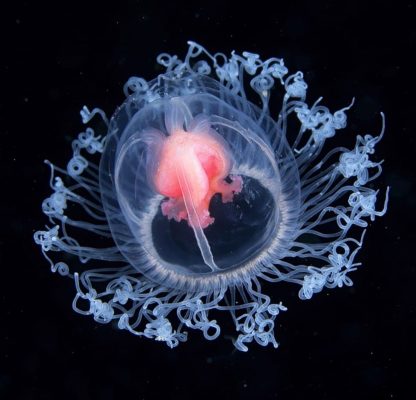
Pin Photo courtesy of Ryo Minemizu
Most creatures have the decency to age and expire on schedule. Not Turritopsis dohrnii. This peculiar jellyfish has discovered a loophole in mortality itself, and it exploits this trick with shameless regularity.
The process isn’t metaphorical or gradual. The adult jellyfish literally sinks to the ocean floor, reabsorbs its tentacles, and converts its cells into a younger state. Within days, it’s a polyp again, ready to grow up and repeat the cycle. Biologists have observed this transformation in laboratories dozens of times, and theoretically, barring predators or disease, these jellyfish could live forever.
Remarkable capabilities:
- Reverses aging at cellular level completely
- Can repeat the process indefinitely
- Transforms within 24-48 hours
- First discovered in the Mediterranean Sea in 1883
2. When Lightning Strikes Sand and Leaves Behind Glass Sculptures
 Pin
Pin Photo courtesy of Moore Than Rocks
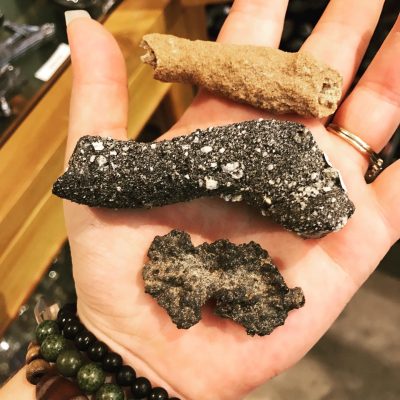
Lightning carries roughly 300 million volts and heats the air around it to 30,000 degrees Celsius—five times hotter than the sun’s surface. When this astronomical energy hits sandy beaches or deserts, something extraordinary happens beneath your feet.
Fulgurites are surprisingly common but often buried. Scientists have found them on every continent, and some date back thousands of years. The glass inside contains a record of the lightning strike’s temperature and intensity. Collectors prize them, and researchers study them to understand ancient climate patterns and lightning frequency throughout history.
Fulgurite facts:
- Can form in less than a second
- Interior is usually smooth glass
- Worth up to $100 per inch to collectors
- Also found on Mars and the Moon
3. The Frogs That Freeze Solid and Wake Up for Spring
 Pin
Pin Photo courtesy of Chris Helzer
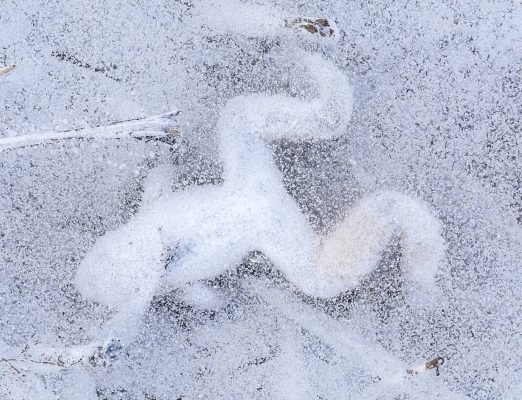
Wood frogs in Alaska and Canada face winters that would kill most vertebrates. Temperatures drop to -20°C, and ice crystals form everywhere. These frogs don’t hibernate in the traditional sense—they freeze absolutely solid, and their hearts stop beating entirely.
Up to 70% of the water in their bodies turns to ice. Their breathing stops. No blood flows. By every conventional measure, they’re dead. Yet when spring arrives and temperatures rise, these frogs thaw out and hop away as if nothing unusual happened.
The secret lies in their liver, which floods their bodies with glucose before freezing begins. This natural antifreeze protects their cells from rupturing when ice forms. Scientists have studied this mechanism for decades, hoping to apply it to organ preservation for transplants. The frogs themselves seem unbothered by the whole affair, repeating this death-and-resurrection routine every single year.
Survival statistics:
- Can survive up to 60% body water frozen
- Heart stops for weeks at a time
- Blood glucose increases 100-fold
- Survives temperatures down to -18°C
4. The Plant That Knows Basic Arithmetic Before Eating You
 Pin
Pin Photo courtesy of Peter’s Flytraps
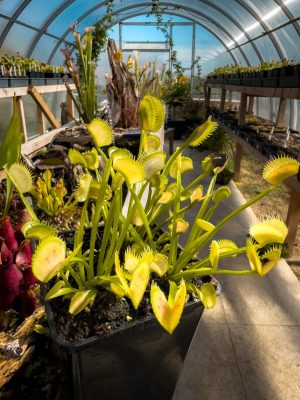
Venus flytraps don’t have brains, nerves, or anything resembling a thinking apparatus. Yet they count. When an insect brushes against the sensitive hairs inside their traps, the plant tallies each touch before deciding whether to snap shut.
One touch means nothing—could be a raindrop or debris. Two touches within 20 seconds? That’s dinner. The trap slams shut in one-tenth of a second, faster than you can blink. But the counting doesn’t stop there. The plant continues tracking stimulation to determine how much digestive enzyme to produce.
Researchers at the University of Würzburg discovered that the flytraps use electrical signals, similar to animal nerve impulses, to keep count. Each touch generates a charge, and once the threshold is reached, the trap activates. This prevents the plant from wasting energy on false alarms. It’s a remarkably sophisticated system for an organism without a single neuron.
Counting mechanics:
- Requires 2 touches within 20 seconds to close
- Counts up to 5 touches to start digestion
- More touches = more digestive enzymes
- Trap resets after 12 hours if nothing caught
5. Information That Travels Faster Than Einstein Said It Could
 Pin
Pin Photo courtesy of Science Direct
Quantum teleportation sounds like pure fantasy, the sort of thing serious physicists would dismiss with a wave of their hand. Except it’s real, it’s been done repeatedly, and it genuinely works—though not quite the way science fiction promised.
Scientists can’t teleport objects or people, but they can teleport information. In 2017, Chinese researchers teleported quantum information from Earth to a satellite 870 miles above. The data didn’t travel through the space between—it simply appeared at the destination, thanks to quantum entanglement.
When two particles become entangled, measuring one instantly affects the other, regardless of distance. Change the state of particle A in Beijing, and particle B in Vienna changes simultaneously. Einstein called this “spooky action at a distance” and didn’t much care for it. Unfortunately for Einstein’s comfort, experiments have proven it correct thousands of times over.
Quantum achievements:
- Record teleportation distance: 870 miles
- Works faster than light speed limitations
- Successfully done with photons and atoms
- China has a quantum satellite network operating now
6. The Microscopic Bears That Survived a Moon Crash
 Pin
Pin Photo courtesy of Wikimedia
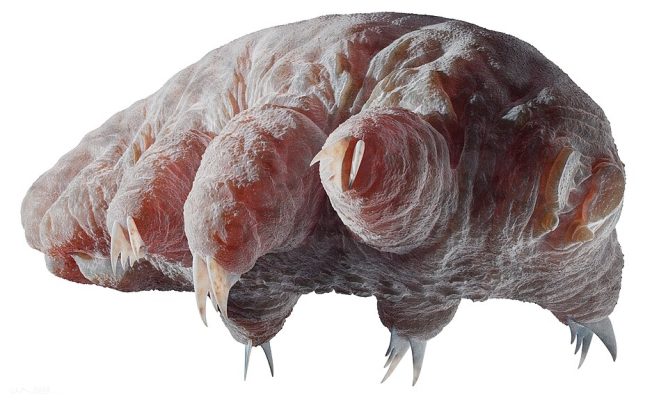
In 2019, an Israeli spacecraft called Beresheet crashed into the Moon at high speed. The mission failed, the craft shattered, and most of its cargo scattered across the lunar surface. Among that cargo were thousands of dehydrated tardigrades, those nearly indestructible water bears mentioned earlier.
Nobody knows if they survived the impact, but scientists suspect many did. These creatures have endured comparable forces in laboratory tests. They can withstand impacts up to 3,000 mph and pressures that would flatten most life forms into paste.
If they survived, they’re currently frozen on the Moon in suspended animation, waiting. They won’t wake up—the Moon has no water—but they won’t decompose either. In a few million years, when humans or something else discovers them, those tardigrades will still be viable. Add water, and they’ll spring back to life, completely unconcerned about their extended lunar vacation.
Tardigrade space achievements:
- First animals to survive space exposure (2007)
- Survived on outside of ISS for 10 days
- Possibly surviving on Moon right now
- Can survive 30,000 years frozen
7. Metals With Better Memories Than Most People
 Pin
Pin Photo courtesy of Alleima
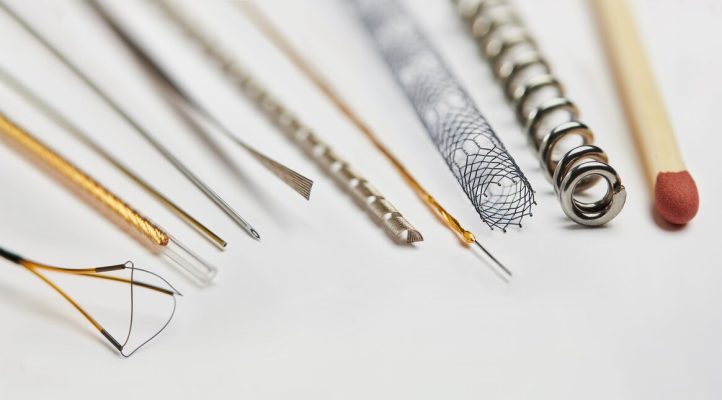
Nitinol is an alloy of nickel and titanium that behaves like it has a mind of its own. Bend it into a pretzel, heat it gently, and it springs back to its original shape. Crumple it completely, warm it with your hand, and it unfolds itself as if offended by the treatment.
This shape-memory effect occurs because the metal’s atomic structure changes with temperature. At low temperatures, it’s flexible and malleable. Heat it past a certain threshold, and the atoms snap back into their “remembered” configuration with surprising force.
Engineers use Nitinol in everything from eyeglass frames that won’t stay bent to medical stents that expand inside arteries. The military experimented with self-repairing aircraft panels. The metal doesn’t just remember one shape—it can be trained to remember multiple configurations depending on temperature. It’s metallurgy that borders on magic, except the magic is just crystallography being remarkably clever.
Shape-memory applications:
- Medical stents that expand with body heat
- Dental braces that maintain constant pressure
- Self-deploying space antennas
- Temperature-activated switches and actuators
8. Spacecraft That Sail on Sunlight Alone
 Pin
Pin Photo courtesy of Wikimedia
Solar sails sound implausible until you remember that light carries momentum. Photons have no mass, but they push when they hit something. Build a sail large enough—acres of ultra-thin reflective material—and sunlight provides enough pressure to accelerate a spacecraft to remarkable speeds.
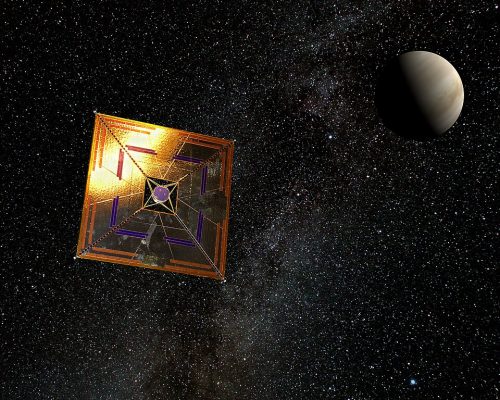
Japan’s IKAROS probe became the first spacecraft to successfully demonstrate solar sailing in 2010. It traveled to Venus using nothing but sunlight for propulsion. The Planetary Society’s LightSail 2, launched in 2019, has been orbiting Earth for years, raising its orbit purely through solar pressure.
The beauty of solar sails lies in their endless fuel supply. Conventional rockets burn fuel and coast. Solar sails accelerate continuously as long as light hits them. Given enough time, they can reach speeds that chemically-fueled rockets never could. NASA and other agencies are designing solar sails for deep space missions, where efficiency matters more than quick acceleration.
Solar sail advantages:
- No fuel required—ever
- Continuous acceleration over months or years
- LightSail 2 has raised orbit by 3.2 km using sunlight
- Could reach 10% light speed theoretically
9. Diamond Rain Falls on the Ice Giants
 Pin
Pin Photo courtesy of American Scientist
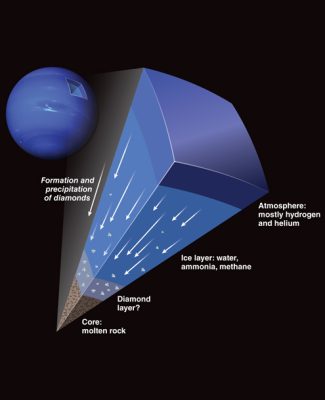
Neptune and Uranus aren’t made of rock or gas alone. Deep inside these ice giants, the pressure reaches millions of atmospheres and temperatures soar to thousands of degrees. Under these conditions, methane breaks apart, and carbon atoms compress into crystalline structures—diamonds.
Scientists estimate that thousands of tons of diamonds form in these planets’ interiors every year. They don’t stay put, either. The gems grow heavy and sink toward the core like hailstones falling through storm clouds, except these hailstones are worth more than small countries.
Researchers at Stanford recreated these conditions using powerful lasers and confirmed the process works exactly as predicted. They compressed polystyrene—a stand-in for methane—and watched diamonds form in nanoseconds. The experiment proved that diamond rain isn’t speculation; it’s atmospheric chemistry at extraordinary pressures. Sadly, there’s no practical way to harvest Neptune’s treasure, but knowing it exists makes the universe feel a bit more lavish.
Diamond rain facts:
- Occurs at depths of 5,000 miles below cloud tops
- Diamonds could be millions of carats in size
- Also happens on Jupiter and Saturn
- Laboratory confirmation achieved in 2017
10. The Bacteria That Eat Electricity and Exhale Pure Metal
 Pin
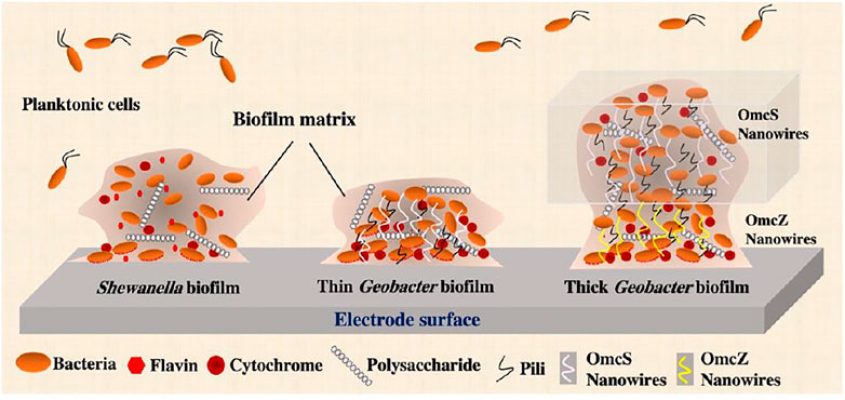
Pin Shewanella and Geobacter bacteria don’t just form biofilms—they build electrically conductive cities on electrode surfaces, complete with nanowire highways made of cytochromes and pili that shuttle electrons like tiny power grids. Geobacter’s biofilms grow thicker and more conductive thanks to their abundance of these biological wires, making them nature’s most efficient living batteries. / Photo courtesy of Frontiersin
Some bacteria don’t bother with sugar or sunlight. They consume electricity directly, pulling electrons from their environment as if sipping from a power outlet. Geobacter and Shewanella species grow nanowires—actual biological cables—that conduct electricity from rocks, sediments, or electrodes.
These bacteria have been found in ocean sediments, contaminated soils, and even inside corroded pipes. They don’t just use electricity; some species generate it, creating measurable electrical fields around themselves. Researchers have built microbial fuel cells using these organisms, generating power from wastewater and sediment.
The applications extend beyond energy. These bacteria can clean up toxic metals by converting them into less harmful forms. They pull uranium, chromium, and other pollutants from contaminated groundwater and deposit them as inert minerals. It’s bioremediation powered by organisms that treat electricity as a food group, and it’s already being deployed in environmental cleanup projects worldwide.
Electric bacteria capabilities:
- Grow conductive nanowires up to 20 micrometers long
- Generate measurable voltage between colonies
- Clean toxic metals from contaminated sites
- Microbial fuel cells produce power from mud
FAQs
Not forever—they need water eventually. But they can survive vacuum, radiation, and extreme temperatures for years in suspended animation before reviving.
Scientists are studying their cellular regeneration, but human aging is far more complex. We’d need to reprogram trillions of cells simultaneously without causing cancer.
Yes! They form under extreme pressure and likely sink toward the core. Some could be millions of carats, though we’ll never retrieve them.
They only digest what continues triggering their sensors. If nothing struggles after closing, the trap reopens within 12 hours to conserve energy.
They flood their bodies with glucose that acts as natural antifreeze, protecting cells from ice damage. Their organs shut down completely until thawing.









 Login with Google