








 Pin
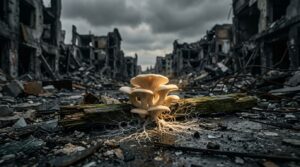
Pin Life After War / Photo courtesy of Horizon Dwellers
Synopsis: When disaster strikes — wildfires, nuclear meltdowns, asteroid impacts, or war — one kingdom of life consistently shows up first: fungi. Long dismissed as just mold or mushrooms, fungi are actually Earth’s most resilient rebuilders. They stabilize ash, break down radiation, decompose rubble, and prepare the ground for everything else to follow. This article unpacks the science, the history, and the raw wonder of how fungi have outlasted every catastrophe our planet has ever thrown at life itself.
There is a certain kind of stubbornness in the natural world that doesn’t announce itself loudly. It doesn’t march in with banners or write headlines. It simply shows up — quiet, pale, and unhurried — in the cracks of broken things. And of all the quiet survivors this planet has produced over a billion years of practice, none is quite as quietly extraordinary as fungi.
The surprising power of fungi in ruined cities isn’t a new discovery. It is, in fact, an ancient pattern that Earth has been running like a trusted program since long before humans arrived to make a mess of things. Every major catastrophe in the fossil record — every extinction, every firestorm, every impact — carries the same fingerprint in the sediment layers: a fungal spike. Life collapsed. Fungi got to work.
What makes this worth paying attention to is not just the biology, though the biology is remarkable enough. It’s the implication. Fungi are not scavengers hanging around the edges of disaster. They are the first responders. The cleanup crew. The construction foremen of ecological recovery. The rest of nature, it turns out, has been waiting on fungi to give the signal that it’s safe to come back.
Table of Contents
What Fungi Actually Are (And Why Most People Have It Wrong)
 Pin
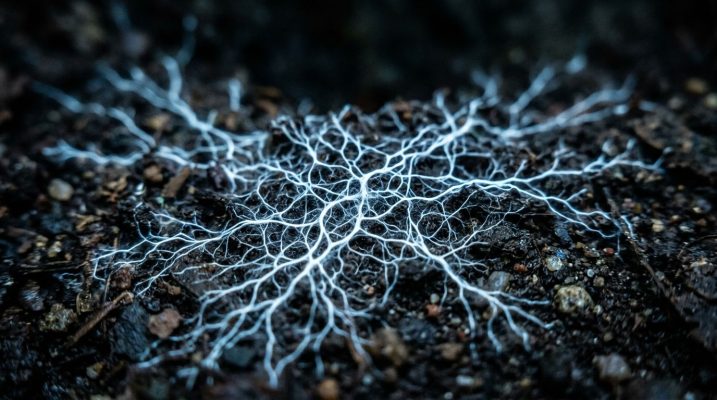
Pin Mycelium threads spreading on soil / Photo courtesy Horizon Dwellers
Most people, if asked about fungi, would picture a mushroom sitting quietly on a log. Maybe something from a fairy tale. Maybe something unsettling growing in a forgotten corner of the refrigerator. What they almost certainly would not picture is one of the most complex, ancient, and ecologically powerful life forms on the planet — and yet that is precisely what fungi are.
A mushroom is not the organism. It’s the fruit. The organism itself is a vast web of thread-like structures called mycelium, spreading through soil, wood, and debris like a living internet. A single teaspoon of healthy forest soil can contain miles of these threads. They communicate. They transport nutrients. They form partnerships with plant roots that are so intimate and mutually dependent that most forest trees could not survive without them.
Fungi are also, in a technical sense, more closely related to animals than to plants. They don’t photosynthesize. They digest their environment externally, releasing enzymes that break down whatever they’re growing on — wood, bone, concrete, radioactive graphite — and absorbing the nutrients that result. This makes them extraordinarily versatile. Where most life needs the right conditions to survive, fungi are often the ones creating those conditions for everyone else.
Fire Comes. Fungi Follow.
 Pin
Pin A burned forest / Photo courtesy Horizon Dwellers
When a wildfire tears through a forest, it leaves behind something that looks, to the human eye, like pure devastation. Blackened trunks. White ash. Silence. The kind of landscape that seems to declare, firmly, that nothing could possibly live here now. And then, within days, the morels appear.
Morel mushrooms — those honeycomb-capped, deeply strange-looking fungi — are pyrophilous, which is a fancy way of saying they love fire. They fruit prolifically in burned ground, sometimes producing up to 100,000 fruiting bodies per hectare in the season following a major fire. Scientists are still working out exactly why. The leading theories involve the heat triggering dormant spores, the elimination of competing organisms, or chemical signals in the ash itself. Probably all three. Fungi rarely do things for just one reason.
But the morels are just the visible part. Beneath the ash, an entire community of fungi is working. They stabilize the loose, nutrient-poor soil. They break down charcoal into forms that plants can use. They begin threading the ground with mycelium that will eventually connect the roots of the first returning seedlings to each other and to the wider nutrient network of the recovering forest. The fire cleared the stage. The fungi are building it back.
- Morels can appear within 1–2 weeks of a fire
- Pyrophilous fungi species number in the hundreds globally
- Fungal activity post-fire directly reduces soil erosion
- Mycelial networks accelerate seedling survival rates significantly
Chernobyl — Where Fungi Ate Radiation
 Pin
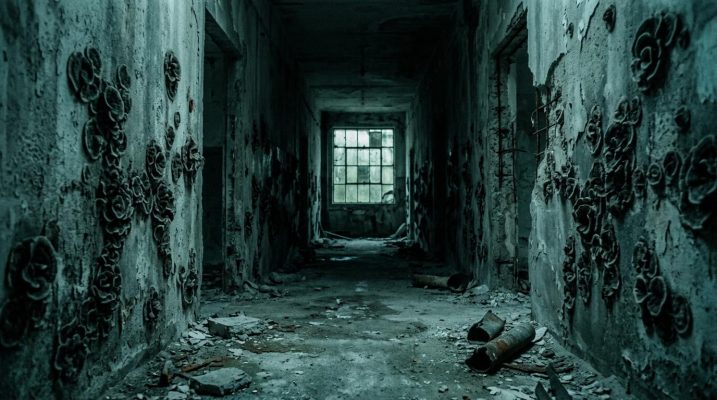
Pin A decayed concrete corridor / Photo courtesy Horizon Dwellers
In 1986, Reactor No. 4 at the Chernobyl Nuclear Power Plant exploded with a force that sent radioactive material across half of Europe. The surrounding area became one of the most contaminated places on Earth. Workers built a concrete sarcophagus over the ruins. Scientists fully expected the interior to be essentially lifeless — a dead zone defined by radiation levels that would destroy most living cells within hours.
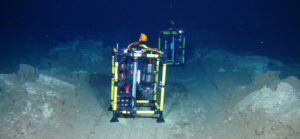
What they found instead, when they finally sent robots in to investigate, were fungi. Not just surviving. Growing. And not growing away from the radiation source, as any sensible organism might. Growing toward it. Dozens of species of melanin-rich fungi were found colonizing the walls of the reactor, their dark pigment apparently functioning similarly to how chlorophyll functions in plants — absorbing the gamma radiation and converting it into chemical energy. Scientists named this process radiosynthesis, and while the research is still ongoing, the implications are quietly staggering.
Over 200 species of fungi were eventually identified thriving inside the destroyed reactor. Some had concentrations of melanin far higher than the same species found in normal environments — suggesting the fungi were actively up-regulating their radiation-absorbing capabilities in response to their surroundings. The worst nuclear disaster in human history produced, among other things, a thriving fungal ecosystem that may have been using the radiation the way a sunflower uses sunlight.
The Dinosaurs Died. Fungi Inherited the Earth.
 Pin
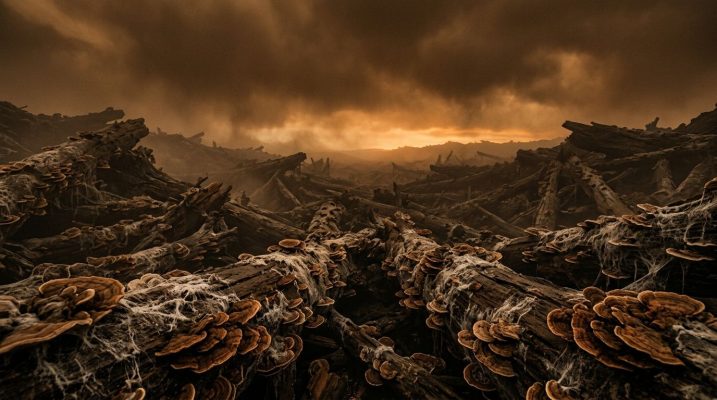
Pin Landscape buried under logs / Photo courtesy Horizon Dwellers
Sixty-six million years ago, a rock roughly ten kilometers wide hit what is now the Yucatán Peninsula at approximately 20 kilometers per second. The explosion was roughly a billion times more powerful than the atomic bomb dropped on Hiroshima. Within hours, the sky darkened. Within weeks, global temperatures plummeted. Within months, about 75% of all species on Earth were gone.
In the fossil record, the layer that marks this extinction event is called the K-Pg boundary — the line between the Cretaceous and the Paleogene. Directly above it, in sediments from multiple continents, paleontologists have documented what is now called the fungal spike. A sudden, dramatic surge in fungal spores. While the forests burned and the dinosaurs died and the oceans acidified, fungi spread across the darkened planet, feeding on the unprecedented abundance of dead organic matter — billions of tons of it.
For months, possibly years, fungi were the dominant life form on Earth. Not humans. Not dinosaurs. Not even insects. Fungi. They decomposed the dead. They recycled the nutrients locked inside the biomass of everything that had perished. And in doing so, they slowly rebuilt the chemical and biological conditions that would allow the surviving mammals, birds, and plants to eventually expand and evolve into the world that exists today. Every living thing on Earth is, in some sense, a descendant of what fungi made possible after the worst day in the planet’s history.
The Recovery Sequence — First Fungi, Then Ferns, Then Forests
 Pin
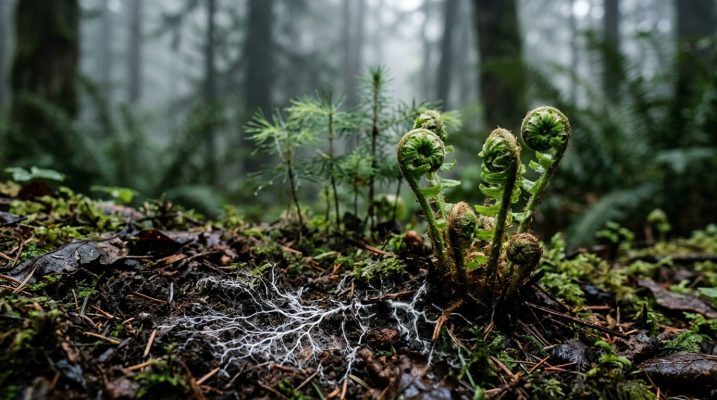
Pin Young ferns unfurling / Photo courtesy Horizon Dwellers
There is a pattern that shows up in the geological record so consistently, across so many extinction events and ecological collapses on so many continents, that scientists no longer treat it as coincidence. It is a sequence. A recipe, almost. And it begins the same way every single time: fungi first.
After any major disruption — asteroid impact, volcanic winter, mass wildfire, glaciation — the first macroscopic life to recolonize the damaged landscape is fungal. Then come the ferns. Ferns are uniquely good at colonizing bare, nutrient-poor ground because their spores are tiny, their requirements are modest, and they can grow in the thin, acidic soils that fungi begin to create. After the ferns come the conifers. Then flowering plants. Then insects. Then everything else.
This sequence has not meaningfully changed in 400 million years. It was running before the first land animals evolved. It ran after the Permian extinction, the most catastrophic in Earth’s history, which wiped out over 90% of all species. It ran after the K-Pg event. It ran after every major fire, flood, and collapse that has ever occurred on this planet. Fungi don’t just survive catastrophe. They are the engine that processes catastrophe and produces the conditions necessary for life to rebuild. Without that first step, the rest of the sequence doesn’t happen.
Bombs Fall. Fungi Return First.
 Pin
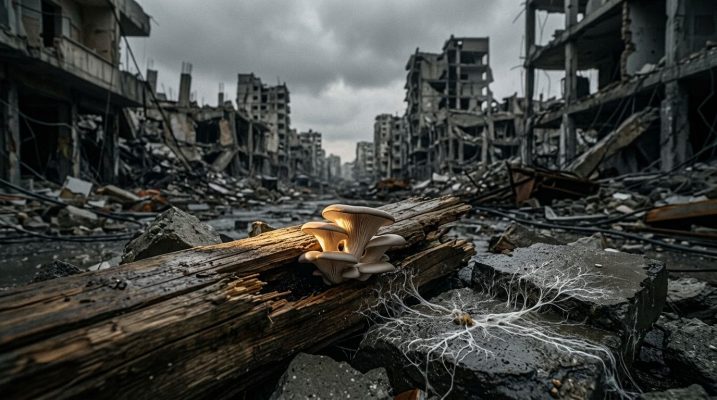
Pin Mushrooms growing from ruined city / Photo courtesy Horizon Dwellers
The ruins of human warfare tell the same story that the geological record has been telling for hundreds of millions of years. When cities are bombed, when concrete crumbles and buildings collapse and rubble fills the streets, the ecological recovery that eventually follows begins — reliably, stubbornly, every single time — with fungi.
Oyster mushrooms, in particular, have a remarkable ability to colonize wood debris in urban environments. They fruit from shattered timber, splintered furniture, and wooden structural elements exposed by collapse. Their mycelium threads through the rubble, beginning the slow process of breaking down the organic material within it. Other species colonize concrete cracks, wall surfaces, and soil exposed by the destruction. What looks like ruin to human eyes is, to a fungal spore, a landscape of opportunity.
This is not a metaphor. It is a measurable, documented biological process. Studies of post-conflict urban environments have consistently recorded rapid fungal colonization in the years following destruction — often preceding any deliberate human reforestation or ecological intervention. The fungi don’t wait for permission. They don’t wait for cleanup crews or government programs or international aid. They simply do what they have always done, on a schedule that predates human civilization by an almost incomprehensible margin.
The Wood Wide Web — How Fungi Connect Entire Forests
 Pin
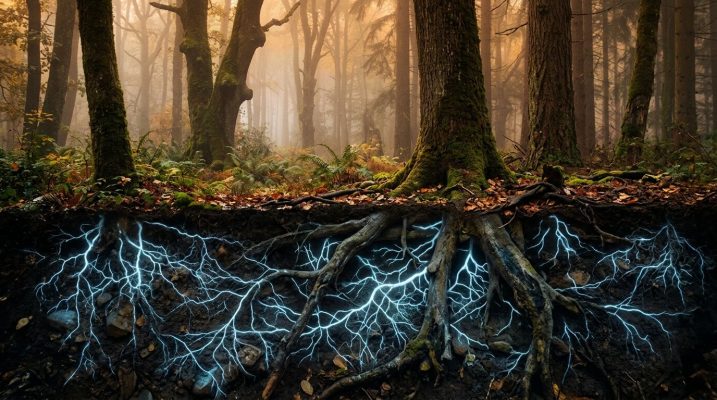
Pin Tree roots and mycelium web / Photo courtesy Horizon Dwellers
Beneath every old-growth forest, there is an infrastructure that took millions of years to build and that most people have never seen and never thought to look for. It is made of mycelium — the thread-like root structures of fungi — and it connects the roots of trees across entire ecosystems in a network so complex and so functionally efficient that researchers, somewhat helplessly, began calling it the Wood Wide Web.
Through this network, trees share nutrients. A large, established tree will send carbon sugars through fungal threads to a struggling seedling growing in deep shade. When one tree is stressed by drought or disease, chemical signals travel through the mycelial network to neighboring trees, which can respond by up-regulating their own defenses. Douglas firs have been documented sharing resources with paper birch trees through fungal intermediaries. The fungi, in exchange, receive sugars from the trees’ photosynthesis that they cannot produce themselves.
This is not a simple, passive exchange. Research by scientists like Suzanne Simard has demonstrated that the network has a structure — with older, larger “hub trees” serving as central nodes — and a kind of distributed intelligence that responds dynamically to the needs and stresses of the ecosystem. Remove the fungi, and the forest doesn’t just lose a decomposer. It loses its nervous system. Its supply chain. Its communication infrastructure. The trees that look so self-sufficient above ground are, below it, entirely dependent on a fungal partnership that most of them inherited from their evolutionary ancestors 450 million years ago.
Fungi and Human Health — The Medicine Cabinet Underground
 Pin
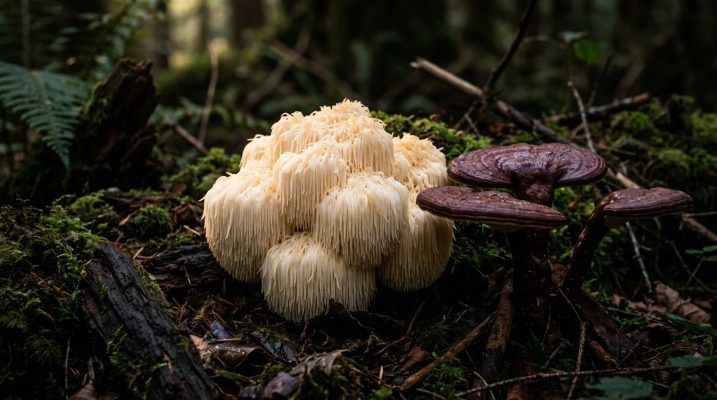
Pin Lions mane mushroom on floor / Photo courtesy Horizon Dwellers
Long before pharmaceutical companies existed, fungi were producing antibiotics. The discovery of penicillin in 1928 — famously derived from the mold Penicillium notatum — is often described as one of the most important medical advances in human history, and it is also, in retrospect, a rather obvious hint that fungi had been doing sophisticated biochemistry long before humans thought to look.
The list of medically significant fungal compounds is longer than most people realize. Statins, used by hundreds of millions of people to manage cholesterol, were originally derived from fungi. Cyclosporine, the immunosuppressant that made organ transplants viable, comes from a soil fungus. Several promising cancer treatments currently in clinical trials are derived from compounds found in mushroom species. Psilocybin, produced by certain mushroom species, is showing genuine clinical efficacy in treating depression, PTSD, and addiction in research settings across the world.
Traditional medicine systems in China, Japan, and many Indigenous cultures have been using fungal preparations for thousands of years — lion’s mane for cognitive function, reishi for immune support, turkey tail for gut health. Western medicine largely dismissed these practices for most of the 20th century. It is now, somewhat sheepishly, catching up. The pharmaceutical potential of the fungal kingdom remains largely unexplored, which is a remarkable thing to say about organisms that have been living on this planet, and producing complex biochemistry, for over a billion years.
What Fungi Are Teaching Scientists About the Future
 Pin
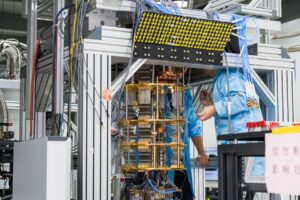
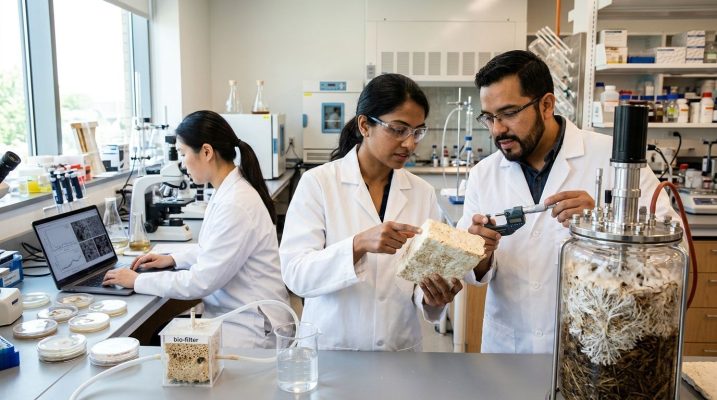
Pin Researchers working at the intersection of mycology / Photo courtesy Horizon Dwellers
Researchers working at the intersection of mycology, materials science, and environmental engineering are paying very close attention to fungi right now — and not just because of what fungi have done in the past, but because of what they might help humans do in the future.
Mycelium-based materials are already being manufactured commercially. Ecovative Design, based in New York, produces packaging and building insulation from mycelium grown on agricultural waste. The material is lightweight, fire-resistant, biodegradable, and can be grown into any shape. IKEA has used it as an alternative to polystyrene. NASA has funded research into using fungal mycelium to grow structures on other planets, using locally available organic material as a substrate. The idea of landing on Mars and growing a habitat from fungi is not, at this point, science fiction. It is an active research program.
Fungi are also being studied for mycoremediation — the use of fungal networks to clean up contaminated environments. Oyster mushrooms have demonstrated the ability to break down petroleum hydrocarbons, nerve agents, and certain heavy metals. Paul Stamets, one of the most prominent mycologists working today, has documented experiments where fungal-treated soil contaminated with diesel fuel became clean and was recolonized by plants within weeks. The same biological machinery that rebuilt ecosystems after asteroid impacts may turn out to be the most practical tool humans have for cleaning up their own industrial messes.
Destruction Is Not the End — It Never Has Been
 Pin
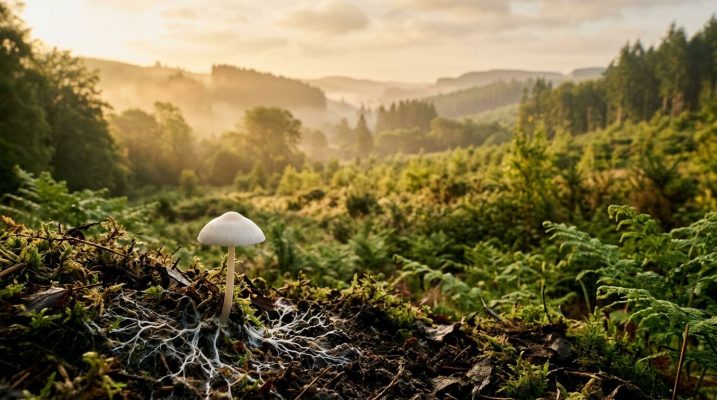
Pin Mushroom in recovering landscape / Photo courtesy Horizon Dwellers
There is something worth sitting with in all of this. Not a motivational poster sentiment, but a genuine, scientifically documented fact: this planet has been destroyed, repeatedly, on scales that make human warfare look minor, and it has rebuilt itself every single time. Not because of luck. Because of fungi.
The pattern is too consistent, too ancient, and too universal to be coincidental. Every mass extinction event in the fossil record is followed by a fungal spike. Every wildfire season ends with morels pushing through ash. Every bombed city eventually grows something soft and pale through its rubble. The biology is not metaphorical. It is literal, measurable, and reproducible. Fungi process destruction and produce the preconditions for new life. That is their ecological function, and they have been performing it without interruption for over a billion years.
What this means, practically, is that the idea of a permanently dead landscape — a place so damaged that nothing can ever return — is not really supported by the biological evidence. Chernobyl, the site of the worst nuclear disaster in history, now has one of the most biologically diverse wildlife populations in Europe. The forests around Mount St. Helens, which were obliterated in 1980, are lush and thriving. The fields of Verdun, where one of the most brutal battles in human history was fought, are forested now. Fungi started that work before any human intervention. They always do. Destruction, in the long accounting of this planet’s history, has always been temporary. The mycelium was already there, waiting underneath.
FAQs
Yes — melanin-rich fungi found inside Chernobyl’s reactor appeared to convert gamma radiation into energy, a process scientists call radiosynthesis. Over 200 species were found thriving there.
Pyrophilous fungi love fire-altered soil. Heat triggers dormant spores, eliminates competition, and ash provides nutrients — making burned ground surprisingly ideal for fungal growth.
It’s the mycelial network connecting tree roots underground. Trees use it to share nutrients, send stress signals, and support weaker neighbors — essentially a biological communication system.
Absolutely — penicillin, statins, and organ transplant drugs all came from fungi. Psilocybin is now in clinical trials for depression and PTSD with promising early results.
Yes — mycoremediation uses fungi to break down oil spills, heavy metals, and even nerve agents. Oyster mushrooms have turned diesel-contaminated soil clean in controlled experiments within weeks.








 Login with Google