
























 Pin
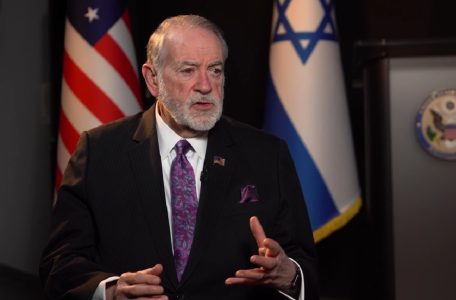
Pin Photo courtesy of Israel National Security Studies conference
Synopsis: Iran’s president, Masoud Pezeshkian, has declared that his country is in a “total war” with the United States, Israel and Europe — a phrase he used to describe what he sees as multifaceted pressure on Iran’s security, economy and sovereignty. His remarks come against the backdrop of renewed sanctions, stalled nuclear diplomacy and recent military clashes. Experts stress that this is political rhetoric, not a formal declaration under international law, but it underscores heightened global tensions.
Iran’s president spoke publicly over the weekend, describing the current state of relations with the U.S., Israel and European countries as a “total war.”
He argued that this isn’t just about bombs or tanks, but what he sees as simultaneous pressure on Iran’s economy, politics and culture — a campaign meant to weaken Iran’s independence and stability.
In saying this, Pezeshkian likened today’s conflict to the grueling Iran-Iraq war of the 1980s — though he claims the “war” now is even more complex.
This strong language has grabbed headlines around the world.
Table of Contents
What “total war” Means in This Context
Traditionally, “total war” describes a conflict where a nation mobilizes all of its society — economy, industry, culture — toward fighting a common enemy. In history, it often meant citizens and soldiers alike were fully engaged.
But in Pezeshkian’s use, it’s largely descriptive — he’s suggesting Iran feels besieged by political pressure, sanctions and diplomatic isolation as much as by bombings or military threats.
His framing reflects a broader sense in Tehran that external powers are attempting to keep Iran weak and divided.
This isn’t a legally binding war declaration in the formal sense (which involves clear international war declarations under law), but a powerful political message.
What Led to This Moment
The region has seen a cascade of tensions in 2025. In June, Iran and Israel fought a 12-day conflict after Israeli strikes hit Iranian military and nuclear-linked sites.
The United States joined that operation, targeting Iranian nuclear facilities, intensifying the clash and stalling diplomatic talks on Iran’s atomic program.
Later in the year, European countries such as France, Britain and Germany backed the reinstatement of United Nations sanctions aimed at restricting Iran’s nuclear ambitions.
Iran views all this as interconnected pressure, not isolated events — which helps explain Pezeshkian’s choice of words.
How Iran Describes Its Position
In interviews, Pezeshkian has said Western powers “don’t want our country to stand on its feet,” alleging that sanctions and diplomatic moves aim to cripple Iran’s economy and society.
He also expressed pride in Iran’s military strength, claiming it is more capable now than before recent conflicts, despite hardships.
That narrative is meant to reassure the Iranian public and signal resolve to external audiences, including allies and rivals.
It’s a mix of defiance and strategic messaging rather than a literal mobilization of all aspects of society for war.
What Others Are Saying About It
Across global news outlets, this language has sparked debate. Some see it as rhetorical escalation — a way for Tehran to signal strength and unity at home. Others worry it could further heighten tensions with powerful adversaries.
International reaction varies widely. European leaders and U.S. officials have tended to frame recent clashes in diplomatic and military terms but stop short of accepting a notion of full-blown war.
Analysts point out that political speech during crises often uses dramatic language to influence both domestic audiences and foreign policy discussions.
How This Changes (or Doesn’t Change) the Facts on the Ground
So does this declaration mean actual fighting is now unavoidable? Not necessarily. Political declarations and rhetoric can be part of negotiation — they don’t always translate into action.
Military engagements have taken place, yes, but a formal “war” — with official declarations and mobilization under international law — hasn’t been recorded.
Many experts view this more as a continuation of high diplomatic tension than a new conflict phase.
In other words, the risks may feel more intense, but the legal and military situation isn’t a clear-cut war in the traditional sense.
Why Iran Might Use This Language Now
Timing matters. Pezeshkian’s remarks arrived just before a planned meeting between Israeli Prime Minister Benjamin Netanyahu and U.S. President Donald Trump, where Iran’s situation is a key issue.
Using dramatic language can serve several purposes:
- Rally national unity at home
- Signal to allies and adversaries Iran’s resolve
- Influence negotiations on sanctions or nuclear talks
It’s about shaping perception as much as describing reality.
How the U.S. and Europe See It
The United States and European nations have maintained pressure on Tehran through sanctions and diplomatic conditions tied to Iran’s nuclear program.
From their perspective, this is part of longstanding strategic competition rather than a new war declaration.
Western leaders often distinguish between political pressure and military conflict in ways that don’t align with Tehran’s language.
What This Means for Regional Stability
Middle East politics have always been sensitive. Strong words like “total war” raise concerns about escalation, especially given past clashes and alliances across the region.
Observers say the rhetoric could harden positions, making compromise more difficult and increasing uncertainty for neighboring countries.
What It Means for Everyday People
For ordinary Iranians, Americans, Europeans or Israelis, “total war” might feel like a dramatic phrase. The real impact often shows up in economic conditions, travel advisories, global markets and diplomatic relations.
Public reactions vary — some feel threatened, others skeptical of political messaging. But uncertainty tends to rise when leaders use such charged language.
FAQs
No — the statement reflects political rhetoric and tension but isn’t a formal war declaration under international law.
To signal deep hostility and pressure from sanctions and diplomatic isolation as he sees it.
Past clashes happened, and military tensions remain, but no officially recognized full-scale war has begun.
Western nations treat it mostly as political rhetoric and continue diplomatic pressure.
Heated rhetoric can increase uncertainty and tension but doesn’t guarantee new fights.









 Login with Google