
















 Pin
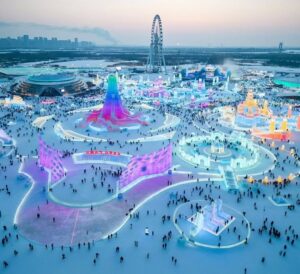
Pin Harbin Snow World / Photo courtesy of TRF Black N White
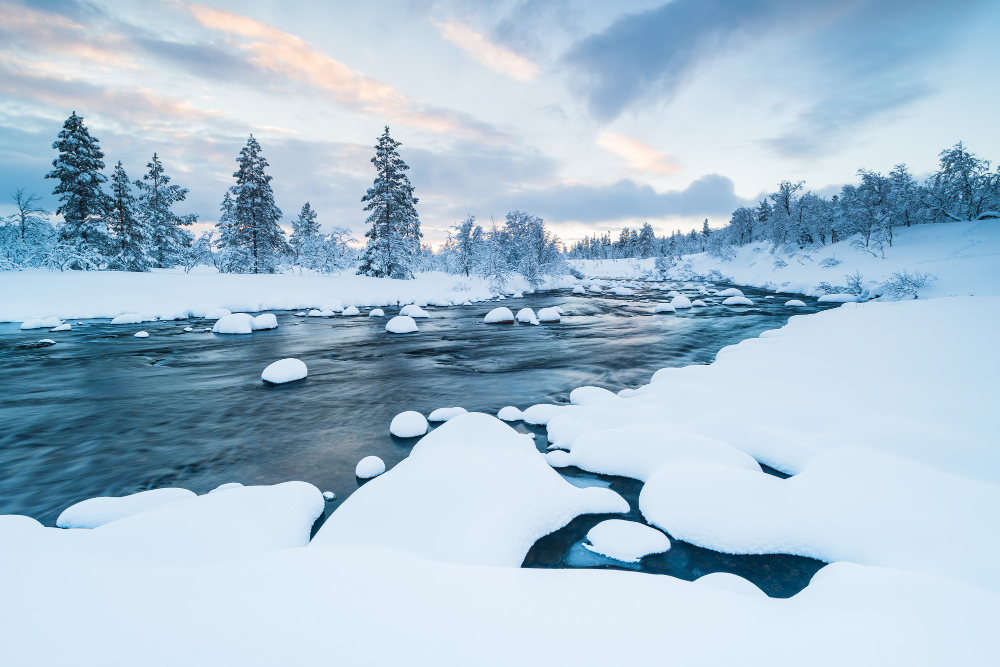
Synopsis: Harbin Ice and Snow World is China’s most spectacular winter festival, held every year in Heilongjiang province’s capital city. Spread across Sun Island and the frozen Songhua River, the park fills with palace-sized ice castles, towering snow sculptures, and thousands of colored lights that glow through the night. Every January, millions of visitors brave temperatures of minus 30°C to witness something that no photograph fully captures. This is what happens when an entire city decides that winter is not an enemy — it’s a canvas.
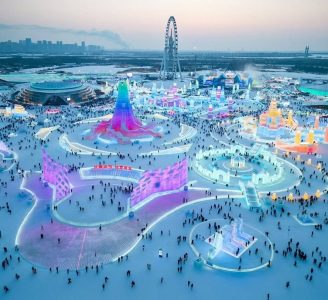
There are places in the world that earn their reputation quietly, over decades of word-of-mouth and dog-eared travel guides. And then there is Harbin Ice and Snow World — a place that earns it loudly, in neon light, carved from millions of tons of ice, standing six stories tall in the middle of a Chinese winter.
Located in Harbin, the capital of Heilongjiang province in northeastern China, this annual festival runs roughly from late December through February. The main venue sits along the frozen Songhua River, where harbin the ice city transforms its coldest months into its most visited season. The park sprawls across roughly 600,000 square meters — bigger than many small towns.
What makes it different from other winter festivals is scale. This is not a row of ice sculptures in a city square. This is an entire city built from ice — with streets, bridges, castles, and towers that visitors walk through, climb, and slide down. It is, without exaggeration, one of the most ambitious seasonal attractions on the planet.
Table of Contents
History and Origins of the Festival
 Pin
Pin Harbin Snow World / Photo courtesy of CGTN Europe
Harbin’s relationship with ice goes back further than the festival. The city sits at a latitude where winters are long, brutal, and inescapable. For much of its early history, locals used ice from the Songhua River practically — for storage, for trade, for survival. Ice was not art. It was necessity.
The first Ice Lantern Festival appeared in 1963, modest by today’s standards — simple ice blocks with candles frozen inside, glowing softly along the riverbank. It was beautiful in the way that practical things sometimes accidentally become beautiful. The Cultural Revolution interrupted the tradition, but it returned in 1985 with new ambition and a new name: the Harbin International Ice and Snow Festival.
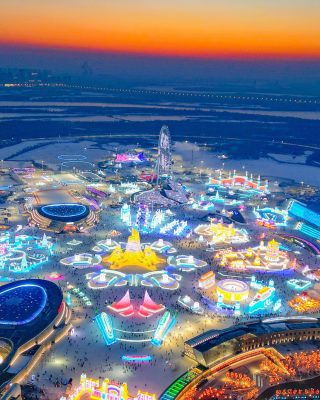
Ice and Snow World itself, the flagship venue of the festival, launched in 1999. Since then it has grown every single year — more sculptures, more lighting, more visitors, more ambition. What started as a local winter custom is now the world’s largest ice and snow festival, drawing over a million visitors annually and inspiring imitators across Japan, Canada, and Europe.
The Ice Sculptures and How They're Made
 Pin
Pin Harbin Snow World Sculpture / Photo courtesy of CGTN Europe
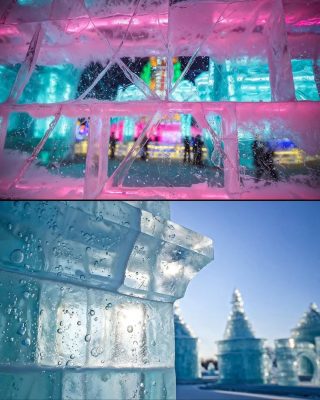
The ice doesn’t come from a factory. Every block used in Ice and Snow World is cut directly from the Songhua River, extracted in January when the ice reaches its maximum thickness — usually around 70 centimeters deep. Workers use chainsaws and hand tools to cut the blocks into standard sizes, then haul them to the festival site by truck.
From there, teams of sculptors — many of them trained architects and artists — spend weeks carving. The tools range from industrial equipment for rough shaping to dental picks and heated rods for fine detail work. A single large structure can require thousands of blocks and hundreds of man-hours. The sculptures are not just decorative. Some are fully structural buildings with interior staircases and viewing platforms.
What gives the finished structures their famous glow is surprisingly simple: LED lights are frozen directly into the ice during construction. At night, the entire park lights up from within — blues, reds, greens, and golds bleeding softly through walls of translucent ice. Standing inside one of those lit corridors at midnight, with the temperature somewhere around minus 25°C, is an experience that stays with a person for a long time.
The Snow Sculptures Zone
 Pin
Pin Harbin Snow World Sculpture / Photo courtesy of TRF Black N White
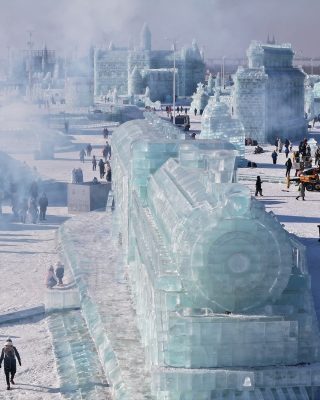
While the ice structures dominate the main park, the snow sculpture zone — primarily located on Sun Island — operates on an entirely different aesthetic. Where ice is precise and luminous, snow is textured, matte, and monumental. The sculptures here tend toward the grand and the classical: dragons mid-flight, ancient temples, figures from Chinese mythology, and occasionally international themes drawn from global folklore.
Snow sculpting is, in many ways, the harder craft. Ice is predictable. Snow is temperamental — its consistency changes with temperature and humidity, and a sculpture that holds perfectly at minus 20°C can begin to soften and slump if the mercury creeps up even a few degrees. The artists work fast, and they work early in the season while conditions are most stable.
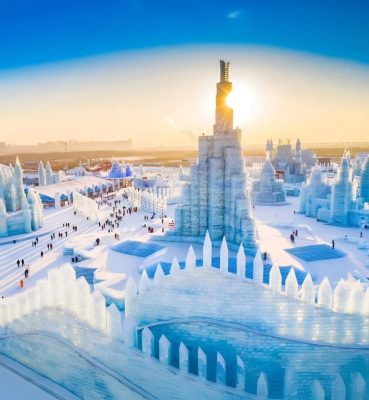
The Sun Island Snow Sculpture Art Expo runs parallel to Ice and Snow World and is technically a separate ticketed event, though most visitors combine both in a multi-day trip. The snow sculptures are best seen in daylight, ideally on a bright morning when the white catches the low winter sun and the shadows sharpen every carved edge into something almost photographic.
Nighttime at the Park — The Light Show
 Pin
Pin Harbin Snow World / Photo courtesy of TRF Black N White
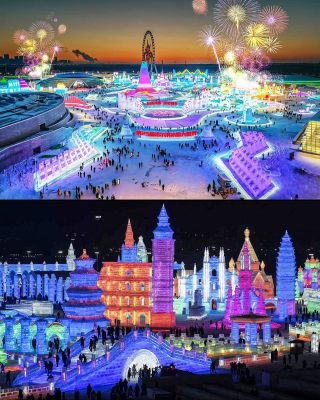
If daytime at Ice and Snow World is impressive, nighttime is something else entirely. The park opens in the afternoon and stays lit well into the evening, and most seasoned visitors will tell you the same thing: go at dusk. Stay until dark. That is when the park earns every superlative ever written about it.
As the sun sets — quickly, in Harbin’s winter, dropping below the horizon by four in the afternoon — the LED lights frozen inside the ice structures begin to dominate. The entire park shifts from a landscape of pale blue-white to something warmer and stranger. Towers glow amber. Archways pulse between purple and pink. Entire castle facades shift color in slow, programmed sequences that make the structures look almost alive.
The crowds thin slightly in the later evening, the cold becomes more serious, and the park takes on a quieter, more contemplative mood. Walk slowly through the lit corridors then. Stop in the middle of an illuminated bridge over a frozen canal. Look up. It is the kind of moment that is very difficult to describe to someone who hasn’t stood there — which is, of course, the best reason to go.
Best Time to Visit and Weather Reality
 Pin
Pin Harbin Snow World / Photo courtesy of TRF Black N White
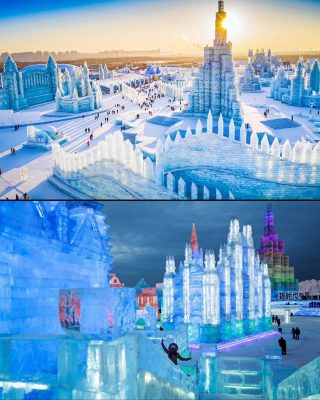
The festival officially opens in late December and runs through late February, but the sweet spot is January. By then, all the major structures are complete, the ice is at peak thickness and clarity, and the full program of events — ice skiing, sledding, performance shows — is running. Early December visitors sometimes find construction still underway. Late February risks warmer spells that soften the sculptures.
The cold is real and should not be romanticized into something manageable. Temperatures regularly sit between minus 20°C and minus 30°C, with wind chill pushing the felt temperature lower still. First-time visitors often underestimate this. The cold doesn’t feel dangerous at first — it feels crisp, almost refreshing. After forty minutes outdoors, it becomes something more serious.
The best strategy is to visit in two or three shorter sessions rather than one long endurance test. Warm up inside the heated rest stations scattered through the park, eat something hot, and go back out. Most of the park’s magic is in the wandering anyway — not the rushing.
Quick weather reference:
- December: −15°C to −25°C — construction phase, fewer crowds
- January: −20°C to −30°C — peak festival, best experience
- February: −10°C to −20°C — crowds thin, some melting possible
How to Get There and Entry Details
 Pin
Pin Harbin Snow World / Photo courtesy of TRF Black N White
Harbin is well connected. Harbin Taiping International Airport receives direct flights from Beijing, Shanghai, Guangzhou, and several international destinations including Tokyo and Seoul. From the airport to the city center takes about 30 to 40 minutes by taxi or airport shuttle. The Ice and Snow World venue sits on the north bank of the Songhua River, reachable by taxi, metro, or dedicated festival shuttle buses that run during peak season.
Entry tickets to Ice and Snow World are sold online through official channels and at the gate, though booking ahead is strongly recommended for January weekends when queues can stretch long. The Snow Sculpture Expo on Sun Island is a separate ticket. Many hotels in central Harbin offer festival packages that bundle accommodation, transport, and tickets together — worth considering for first-time visitors who don’t want to navigate logistics in extreme cold.
Getting around the city itself is straightforward. Taxis are cheap and plentiful. The metro is clean, warm, and easy to navigate even without Chinese. Most hotels catering to international visitors have English-speaking front desk staff who can arrange transport and tickets without fuss.
Useful basics:
- Main venue: Harbin Ice and Snow World, Songbei District
- Metro: Line 3 to Ice and Snow World Station
- Ticket price: approximately 300 RMB (adult, peak season)
- Opening hours: roughly 2:00 PM to 10:00 PM daily during festival
What to Wear and How to Handle the Cold
 Pin
Pin Harbin Snow World / Photo courtesy of TRF Black N White
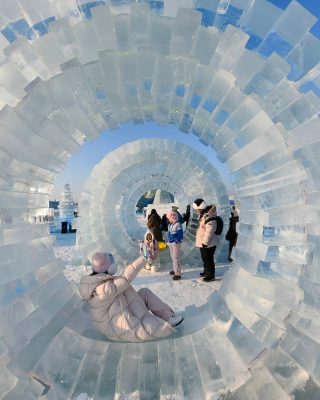
The single most common mistake visitors make at Harbin Ice and Snow World is underdressing. Not because they don’t know it’s cold — everyone knows it’s cold — but because they underestimate what sustained cold at minus 25°C actually feels like on the human body when you’re standing still, looking up at an ice tower, for twenty minutes at a stretch.
The layering system is everything. A thermal base layer against the skin, a mid-layer of fleece or down, and a windproof outer shell. Wool or synthetic-lined boots rated to at least minus 40°C. Hand warmers tucked into gloves. A balaclava or neck gaiter for the face. Regular gloves, no matter how thick, are not enough for extended outdoor exposure — mittens over liner gloves retain heat far more effectively.
Rental gear is available near the park entrance for visitors who didn’t pack adequately. It’s not glamorous, but it works. Local markets near the festival also sell affordable thermal wear, face masks, and boot covers — often better quality for the price than anything purchased abroad.
Cold-weather checklist:
- Thermal base layer — top and bottom
- Down or fleece mid-layer
- Windproof, waterproof outer jacket
- Boots rated to −40°C
- Wool socks — two pairs
- Balaclava or face covering
- Hand warmers — disposable, available locally
- Insulated mittens over liner gloves
Food and Culture Around the Festival
 Pin
Pin Food at Harbin / Photo courtesy of Hic
Harbin’s food culture is one of the most underrated parts of visiting the city. Sitting at the crossroads of Chinese, Russian, and northeastern regional traditions, the city’s cuisine is hearty, warming, and genuinely distinct. The most famous local dish is dongbei stew — a thick, slow-cooked pot of pork, cabbage, tofu, and glass noodles that arrives at the table still bubbling. After three hours in the cold, it tastes like the best thing ever cooked.
Street food near the festival grounds runs the range from sugar-coated hawthorn berries on skewers — tanghulu, bright red and crackling with frozen sugar glaze — to steamed buns, grilled lamb skewers, and the city’s beloved red sausage, a legacy of Russian influence that has been part of Harbin’s identity for over a century.
Inside the park, food stalls are heated and plentiful. Hot tea, instant noodles, and warming soups are available throughout. One particular local habit worth adopting: vendors sell small cups of hot sweet rice wine near the main entrance. It’s cheap, it’s warming, and it tastes exactly like winter should.
Activities to Do at Harbin Ice and Snow World
Harbin Ice and Snow World is not a walk-through exhibition. It is an active, physical, genuinely playful place — and the visitors who enjoy it most are the ones who treat it that way. The park is designed to be experienced with the body, not just the eyes. Put the camera down occasionally. Participate.
The ice slides are the headline act — multi-story runs carved into the sides of the largest structures, fast enough to be genuinely exciting and smooth enough to feel effortless. Beyond slides, the park offers ice skating on open rinks surrounded by glowing castle walls, snow tubing on dedicated slopes, and horse-drawn sleigh rides that loop around the outer perimeter of the park at a pace that lets you actually absorb the surroundings.
The evening cultural show is easy to miss because it’s not heavily advertised at the entrance — but it’s worth catching. Local performers do traditional dance, acrobatics, and music against the backdrop of the lit ice structures. It costs nothing extra and runs for about 45 minutes. On a cold clear night, it is a quietly memorable thing to stumble into.
Activities available at the park:
- Ice sledding — traditional wooden sleds on groomed tracks, great for all ages
- Ice skating — open rinks with skate rentals available on site
- Snow skiing and snowboarding — beginner slopes within or near the park
- Horse-drawn sleigh rides — scenic loops around the festival grounds
- Ice cycling — specialty bikes with spiked tires for riding on frozen surfaces
- Snow tubing — inflatable rings down packed snow slopes
- Guided sculpture tours — short walks explaining the craftsmanship behind key structures
- Cultural performances — traditional northeastern Chinese folk shows most evenings
The Kid and Family Experience
Harbin Ice and Snow World was not designed exclusively for adults standing around admiring architecture. A significant portion of the park is built for motion, for fun, and for the kind of shrieking delight that children produce when they discover an ice slide six stories tall and are told they can go down it.
The slides are perhaps the most purely joyful element of the festival. Carved directly into the sides of the large ice structures, they range from gentle beginner slopes for small children to steep, fast runs that send adults shooting across the frozen ground at speeds that feel considerably faster than they looked from the top. Rubber mats are provided. Dignity is optional.
Beyond the slides, the park offers ice skating areas, snow tubing, reindeer encounters, and costumed character appearances. Families with children under ten will find the experience completely manageable, especially if they visit on a slightly warmer January day — minus 15°C rather than minus 30°C — and stay for a focused two to three hour session rather than trying to see everything at once.
Is It Worth the Trip? An Honest Take
The honest answer is yes — but with conditions. Harbin Ice and Snow World is genuinely one of the most visually extraordinary places a person can visit in winter. The photographs do not lie. The scale, the light, the craftsmanship — it is all real, and it is all as impressive in person as it looks on a screen. For anyone with an interest in art, architecture, winter landscapes, or simply in seeing what human ambition looks like when it has a deadline and a temperature, this festival delivers completely.
The conditions attached are practical ones. The cold demands preparation and respect. The crowds in peak January require patience. The logistics of getting to northeastern China require planning. None of these are deal-breakers — they are simply the cost of entry to something that most of the world never bothers to see.
Mark Twain once wrote that travel is fatal to prejudice. Harbin in January is about as far from most people’s comfort zone as a destination can get — geographically, climatically, and culturally. That distance is precisely the point. The people who go tend to come back talking about it for years. The people who don’t tend to say they’ll go someday. Someday, in this case, is genuinely worth making into a date on the calendar.
FAQs
It typically opens late December and runs through late February. January is the best month — all structures are complete and the festival is in full swing.
Expect minus 20°C to minus 30°C. Wind chill can push it lower. Dress in proper thermal layers, rated boots, and bring hand warmers — no exceptions.
Absolutely. The park has ice slides, snow tubing, and family-friendly zones. Keep visits to 2–3 hours and dress children in proper winter gear.
Peak season tickets run around 300 RMB. Budget extra for Snow Island, food, transport, and gear rental if needed. Festival hotel packages can save money overall.
Basic signage is available in English, and most hotels near the festival cater to international tourists. A translation app handles the rest comfortably.








 Login with Google