
























 Pin
Pin Photo courtesy of AFP
Synopsis: Meta is taking a major step in its artificial intelligence journey by buying the AI startup Manus, a company known for building autonomous AI agents that can perform complex tasks with minimal guidance. Founded by Chinese entrepreneurs and now based in Singapore, Manus will stay operational while its technology is woven into Meta’s wider AI ecosystem — from Meta AI to features inside Instagram and WhatsApp. This deal not only boosts Meta’s technical strength but signals how AI assistants could evolve from tools you talk to into helpers that actually do work for you.
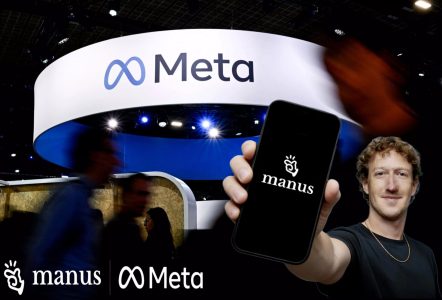
Late December brought one of the biggest AI headlines of the year: Meta confirmed it’s acquiring Manus, an AI startup making waves for building highly capable digital agents.
Manus’s agents aren’t like typical chat-based assistants. They can dig through data, automate research, run complex workflows, and even write parts of code without constant supervision. In early tests, these agents were reported to handle tasks that many AI models struggle with on their own.
This isn’t just another tech acquisition. For Meta, it’s about owning a piece of the future where artificial intelligence doesn’t just answer questions — it performs meaningful work for users and businesses.
Table of Contents
Who Manus Is — More Than Just Another Startup
Manus began its life under the name Butterfly Effect, founded by Chinese entrepreneurs and quickly grabbing attention with an AI agent capable of completing real-world tasks.
The company later moved its headquarters to Singapore, a strategic shift that let it scale globally and attract millions of users. Manus grew fast, reporting more than 147 trillion processed tokens and a thriving subscription service with strong revenue momentum.
Its agents handle multi-step workflows — like analyzing huge datasets, building research reports, or even drafting software — in ways many traditional tools simply can’t match. That blend of capability and accessibility made Manus attractive to Meta.
What Exactly Manus’s Agents Do
Most AI helpers today answer questions or summarize text. Manus’s agents go beyond that.
They work more like digital apprentices — tackling research projects, preparing analyses, automating routine processes, and even coordinating interconnected steps without needing exact instructions each time.
That’s why some early observers describe this type of AI as action-oriented rather than response-oriented: it doesn’t just chat, it executes.
In practical terms this could mean an agent that:
- researches trends and drafts a summary
- gathers and analyzes business data
- builds a basic tool or workflow
- handles steps that normally need human oversight
These are early days, but the promise of such autonomous assistance is huge — especially for people and teams juggling lots of repetitive or complex tasks.
What Users Can Expect Going Forward
If you’re a regular person using Meta’s apps, the changes might show up slowly.
Instead of just typing into a chatbot, you could someday tell your digital assistant to do something — like assemble a trip plan, draft content, or analyze an email thread — and get a finished result.
For people running small businesses or creative projects, this could be a game-changer. Tasks that eat up hours — market research, scheduling, data reviews — might soon be handled by smart automation sitting inside tools you already use.
It’s still early, and not every feature will launch tomorrow. But the direction is clear: Meta wants AI that acts, not just responds.
Meta’s Strategic Position in the Age of AI Agents
Meta’s Manus acquisition didn’t happen in a vacuum. The tech giant has been pouring billions into AI, including major investments and earlier partnerships with other AI firms.
While language models like OpenAI’s dominate headlines, the real competition now is around agents — AI that can take autonomous action at scale. Meta’s move signals it’s serious about being a leader in that arena.
With Manus already serving millions before the deal, Meta gains both a proven product and a talented team that can push its AI strategy forward faster than building similar tools internally.
What Manus Keeps — And What Changes
Even after becoming part of Meta, Manus isn’t dissolving. The startup will continue running its own services while its technology integrates into Meta’s ecosystem.
This dual path — keeping Manus as a standalone product while also embedding its tech into Meta AI, Instagram, WhatsApp and more — is strategic. It lets existing users keep their tools while expanding accessibility to hundreds of millions of Meta users.
The move also involves reorganizing some operations, including ending service in China and focusing on compliance with global data and privacy standards.
The Talent and Tech Boost Meta Gains
One of the biggest wins in deals like this isn’t just the technology — it’s the people. Manus’s engineers and AI specialists have spent months refining autonomous agent tech.
Their expertise now feeds directly into Meta’s broader AI labs, accelerating development across everything from consumer tools to enterprise applications.
That could mean improved AI performance inside your favorite apps, smarter automation, and more robust business features built with real agent capabilities at their core.
A Milestone in AI Competition
This acquisition is also about staying competitive. Big tech rivals like Google, Microsoft and OpenAI aren’t standing still — and the race for advanced AI tools has never been faster.
By bringing in Manus’s autonomous agents, Meta is betting on a future where AI is not just smart — it’s useful in everyday workflows and decisions.
That’s a shift from AI as a gadget to AI as a partner — a theme likely to define the next chapter of tech innovation.
What Analysts Are Saying
Experts see this deal as a signal Meta is chasing tangible, revenue-generating AI products. Manus already had strong subscription numbers, giving Meta access to a validated market.
Some analysts call it one of Meta’s largest acquisitions this decade, demonstrating how serious the company has become about AI leadership.
At the same time, some caution that integrating different technologies and cultures is never simple — and that success depends on execution as much as strategy.
What Users Might See Next
In the year ahead, you might notice AI enhancements that feel more active than reactive — assistants that help plan, build or tidy up tasks without you guiding every step.
Whether it’s a smart assistant that pre-emptively summarizes your day, generates tailored reports, or automates workflows inside your chats, these agent-powered experiences could reshape daily tech interactions.
Meta’s vision is clear: AI that works alongside you, not just talks with you.
FAQs
AI helpers that can autonomously plan and execute complex tasks with minimal human input.
Yes — it will run as its own product while also contributing tech to Meta’s ecosystem.
To accelerate AI integration and expand advanced automation capabilities across its platforms.
Meta hasn’t officially shared terms, though reports say it could be multiple billions.
Some features may appear gradually throughout 2026 as integrations roll out.










 Login with Google