

















 Pin
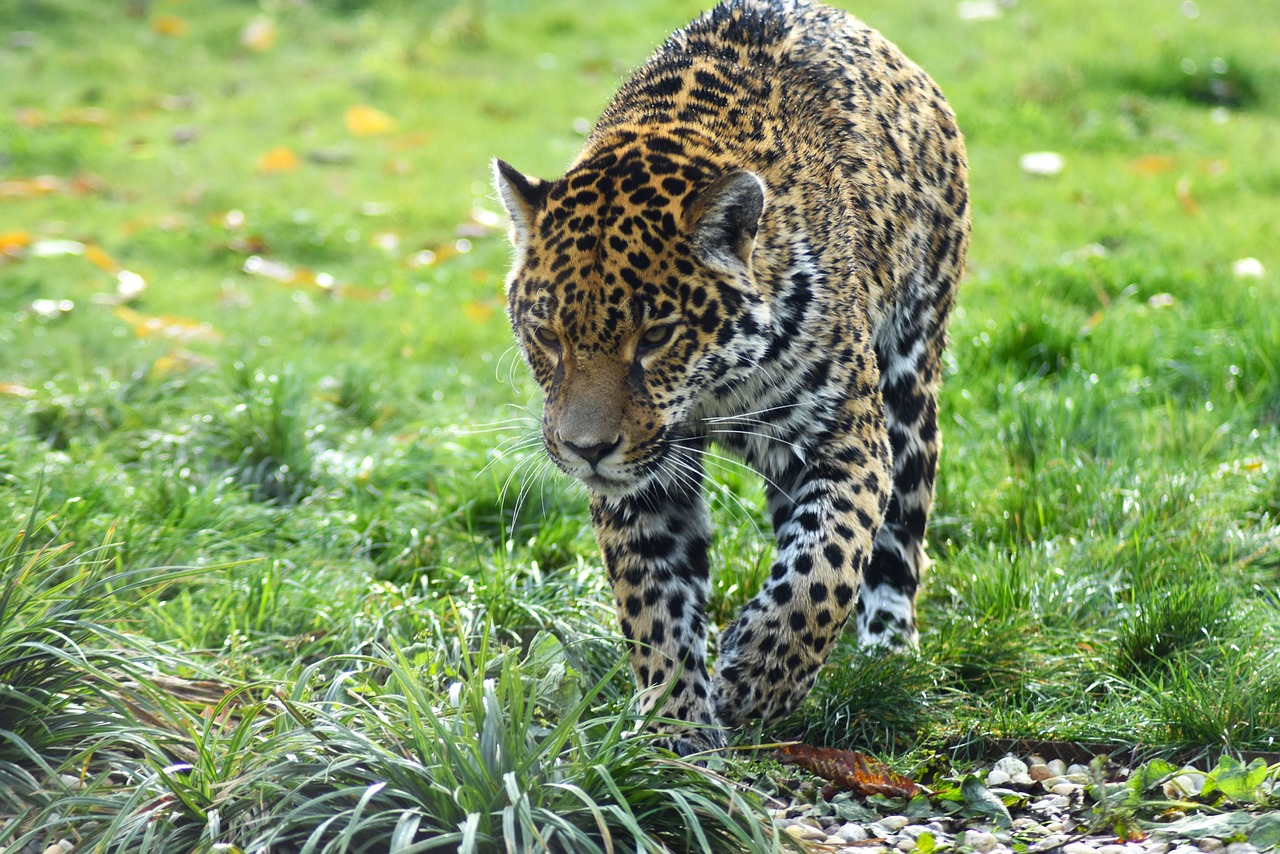
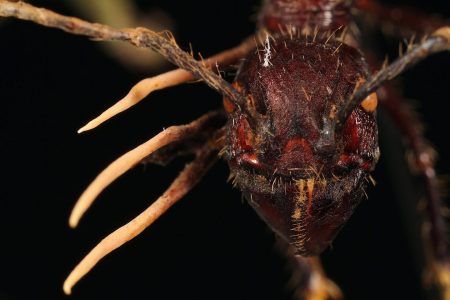
Pin Zombie Ant / Courtesy of Joao Araujo
Synopsis: Ants and fungi share an extraordinary bond that predates human agriculture by about 50 million years. Certain ant species, particularly leafcutter and fungus-growing ants, actively farm specific fungi as their primary food source. The ants carefully tend these fungal gardens in underground chambers, feeding them with fresh plant material and keeping them free from contamination. In return, the fungus provides nutrition that the ants cannot obtain from leaves alone. This symbiotic relationship represents one of the most sophisticated examples of agriculture in the animal kingdom, with both partners having evolved specialized adaptations that make them dependent on each other for survival.
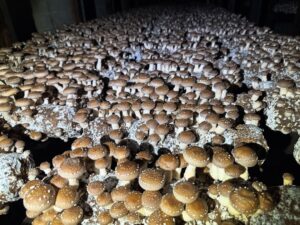
Deep beneath the tropical forest floor, something remarkable unfolds in total darkness. Vast underground chambers pulse with activity as millions of workers tend living gardens that glow with white, spongy growth. The air smells earthy and sweet, filled with the chemical signals of a civilization that rivals our own in complexity.
These aren’t human farmers—they’re ants, and they’ve been perfecting agriculture since before the first primates walked the earth. Their crops aren’t wheat or corn but specialized fungi that exist nowhere else in nature. The relationship is so ancient and so intertwined that neither species remembers how to live alone. The ants have forgotten how to digest regular food, and the fungus has lost the ability to reproduce without its caretakers.
What started as a simple transaction between two species has become something far more profound. This is a story of mutual dependence, chemical warfare, and evolutionary innovation that continues to surprise scientists who study it. The partnership has survived ice ages, continental drift, and countless competitors, making it one of nature’s greatest success stories.
Table of Contents
The Ancient Origins of Insect Agriculture
 Pin
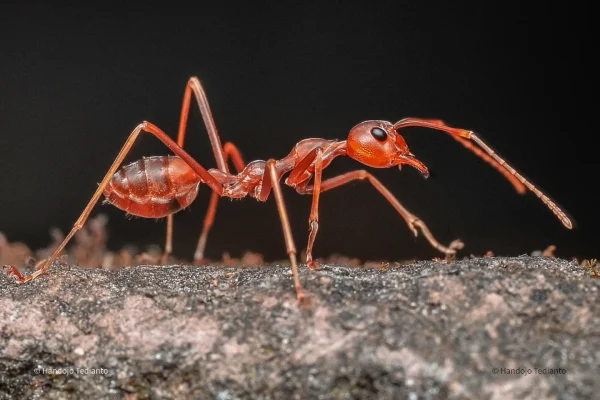
Pin Oecophylla smaragdina / Courtesy of Tedianto Handojo
The partnership between ants and fungi began somewhere between 45 and 65 million years ago, likely in the ancient forests of South America. At that time, the world looked vastly different—dinosaurs had recently vanished, and mammals were just beginning their rise. Some enterprising ants stumbled upon a brilliant survival strategy: instead of hunting or scavenging, why not grow their own food?
These early farmer ants probably started by bringing fungi into their nests accidentally, perhaps on bits of decaying plant matter. Over time, certain ant colonies noticed that some fungi were particularly nutritious and easy to maintain. The ants that invested more care into their fungal partners thrived, while those that didn’t fell behind. Generation by generation, the bond strengthened.
Eventually, the relationship became obligate, meaning neither partner could survive without the other. The fungi evolved to produce special nutrient-rich structures called gongylidia that exist solely to feed the ants. Meanwhile, the ants developed specialized behaviors and even bacterial partners to keep their gardens healthy. This wasn’t just cooperation anymore—it was co-evolution at its finest.
Meet the Fungus Farmers
 Pin
Pin Leaf-Cutter Ants and Fungus farming / Courtesy of Organic Ultura
Roughly 250 species of ants across the Americas practice fungus farming, but the leafcutter ants are the superstars. These reddish-brown workers march in endless columns, each carrying a piece of leaf several times their own size like a tiny green sail. They’re not eating the leaves, though—they’re bringing groceries home for their fungal crop.
The society inside a mature leafcutter colony is staggering in its complexity. A single nest can house eight million ants working in coordinated shifts. The smallest workers tend the fungus gardens, grooming them with their mouthparts and removing any contamination. Medium-sized workers process the leaf fragments, chewing them into pulp. The largest soldiers, with their massive heads and powerful jaws, defend the colony and cut through tough vegetation.
Each caste knows its role instinctively, responding to chemical signals released by the queen, the fungus, and their nestmates. The whole operation runs like a finely tuned factory, processing tons of fresh leaves every year. A large colony can strip an entire tree overnight, which makes them both fascinating to scientists and frustrating to farmers in tropical regions.
Inside the Underground Gardens
 Pin
Pin In 2012 an abandoned Leaf-Cutter Ant nest was excavated in Brazil, revealing the vast underground network of the former colony, previously living under our feet / Courtesy of Deiphi.vc
The fungal gardens themselves are architectural marvels. Worker ants excavate elaborate underground chambers, some as large as basketballs, connected by tunnels that regulate temperature and airflow. The conditions must be perfect—too dry and the fungus withers, too wet and competing molds move in. The ants constantly adjust ventilation by opening or closing entrance holes.
Inside each garden chamber, the fungus grows in spongy, greyish-white masses that look somewhat like cauliflower. The ants arrange fresh leaf pulp on the surface, and the fungus sends out threads called hyphae that digest the cellulose. Within days, specialized structures bloom on the surface—those gongylidia we mentioned earlier, swollen hyphal tips packed with proteins and nutrients that the ants harvest like fruit.
The gardens stay remarkably clean despite the constant activity. Worker ants patrol continuously, removing any sick or contaminated sections immediately. They carry the infected material far outside the nest, essentially practicing waste management and quarantine procedures. This vigilance keeps diseases at bay and ensures the fungus remains healthy and productive.
The Chemistry of Partnership
The relationship between ants and fungi operates on an intricate web of chemical communication. The fungus releases compounds that signal its nutritional needs, telling the ants when it requires more substrate or when conditions aren’t quite right. The ants respond by adjusting their foraging patterns or modifying the garden environment. It’s a conversation happening entirely through molecules in the air.
But there’s a third partner in this relationship that scientists discovered only recently. The ants host bacteria on their bodies—specifically, strains of Streptomyces that produce powerful antifungal compounds. These microbes act as living pesticides, protecting the gardens from a parasitic fungus called Escovopsis that specializes in attacking ant farms. The bacteria get food and shelter while providing security services.
This three-way symbiosis shows just how layered these relationships can become. The ants farm the fungus, the fungus feeds the ants, and the bacteria protect both while living on the ants’ exoskeletons. Each partner has evolved specialized traits that support the others. When researchers try to separate them, all three suffer. They’ve become so interdependent that they function almost as a single super-organism.
The Dark Side—Zombie Ant Fungus
 Pin
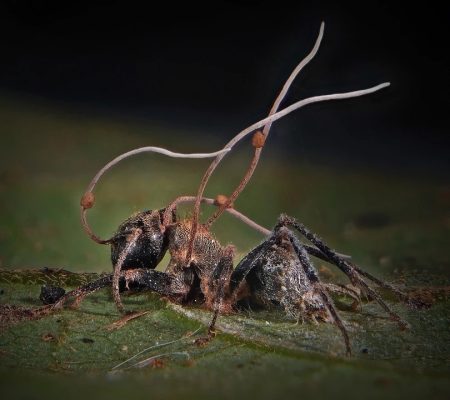
Pin Ophiocordyceps fungus on Ant / Courtesy of Ooi Bak Kheang
Not all fungal relationships with ants are beneficial. The Ophiocordyceps fungus represents the horror-movie version of ant-fungal interactions. This parasitic species infects carpenter ants in tropical forests, taking control of their nervous systems in what can only be described as biological mind control. The infected ant becomes a zombie, compelled to serve the fungus’s reproductive needs.
The process is disturbingly precise. Spores land on an ant and burrow through its exoskeleton, sending threads throughout the insect’s body. The fungus feeds on non-essential tissues at first, keeping the ant alive and functional. Then, roughly a week after infection, the chemicals reach the ant’s brain. The ant abandons its colony and climbs a plant stem to a specific height—usually about 25 centimeters above the forest floor, where temperature and humidity are perfect for fungal growth.
There, the ant clamps its jaws onto the underside of a leaf in a death grip and dies. Over the next few weeks, a stalk erupts from the back of the ant’s head, growing upward until it releases spores that rain down on the ant trails below, infecting new victims. The whole cycle is evolution’s efficiency at its most ruthless—the fungus uses the ant as both food and a launching platform for the next generation.
How Leafcutters Choose Their Crops
 Pin
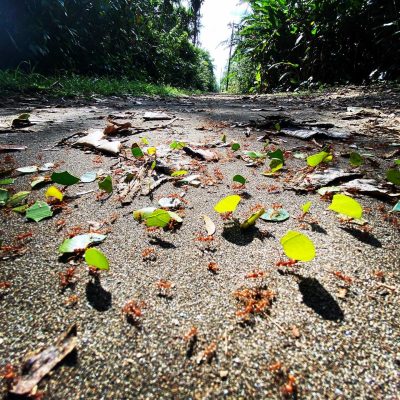
Pin Leaf-Cutter Ants / Courtesy of Bioblitz Club
Leafcutter ants are surprisingly picky about what they bring home. They don’t just cut any leaf—they sample the vegetation first, checking its chemical composition and nutritional value. Some plants contain toxins or defensive compounds that would poison the fungus, so the ants have learned to avoid them. This ability to discriminate between hundreds of plant species shows remarkable cognitive sophistication.
When a worker finds a promising plant, she takes a small sample back to the nest. Other workers test this sample by offering it to the fungus and watching how it responds. If the fungus grows vigorously on the new substrate, the scouts recruit more workers to that plant. If the fungus rejects it or grows poorly, the ants blacklist that plant species and avoid it in the future.
This system allows the colony to adapt to seasonal changes in plant availability and quality. During dry seasons, when some plants become toxic, the ants shift their attention to other species. They’re not following rigid instincts—they’re actively problem-solving based on feedback from their fungal partner. The fungus essentially “tells” the ants what it needs, and they respond accordingly.
The Queen's Crucial Role
 Pin
Pin Queen Ant’s Chamber / Courtesy of Ant Invasion
When a young queen leaves her birth colony for her mating flight, she carries something precious in a specialized pouch in her mouth—a small pellet of fungus from her mother’s garden. This fungal starter culture is essential for establishing a new colony. Without it, she has no way to feed her first generation of workers, and the colony fails before it begins.
After mating, the queen finds a suitable spot and digs a small chamber. She spits out the fungal pellet and begins tending it carefully, fertilizing it with her own feces until it grows large enough to sustain her first brood. She lays eggs and feeds the larvae with pieces of the fungus and her own unfertilized eggs. This founding stage is precarious—the queen must keep both herself and the fungus alive with no workers to help.
Once the first workers emerge, they take over garden maintenance and foraging, allowing the queen to focus solely on egg production. She’ll spend the rest of her life—potentially fifteen years or more—laying eggs in the safety of her underground palace. The fungus she brought with her will grow alongside the colony, spreading through new chambers as the population expands. That original pellet becomes the foundation of a garden that might eventually feed millions.
Fungal Agriculture Beyond Leafcutters
While leafcutters get most of the attention, they’re not the only fungus farmers in the ant world. Lower attine ants practice a more primitive form of agriculture, using insect droppings, dead plant material, and other detritus to cultivate their fungal partners. These species are probably closer to what the earliest fungus farmers looked like, giving scientists a window into how the relationship evolved.
Some attine ants maintain tiny gardens that fit in acorn-sized chambers, supporting colonies of just a few hundred individuals. Others have specialized on particular substrates—one species farms fungus exclusively on caterpillar droppings, while another uses flower petals. This diversity shows that fungus farming isn’t a single innovation but rather a flexible strategy that different ant lineages have adapted to various ecological niches.
Termites independently evolved fungus farming in Africa and Asia, creating a fascinating case of convergent evolution. Termite farmers cultivate different fungal species than ants do, but the basic principles are remarkably similar—the insects provide substrate and protection while the fungus breaks down plant material that the insects can’t digest alone. This parallel evolution suggests that fungus farming is such an advantageous strategy that it’s emerged multiple times across different insect groups.
Human Applications and Biotechnology
Scientists studying ant fungus agriculture have discovered compounds with tremendous potential for human use. The Streptomyces bacteria that ants use to protect their gardens produce novel antibiotics that pharmaceutical companies are now investigating. Some of these compounds are effective against drug-resistant bacteria, offering hope in the fight against superbugs.
The enzymes that ant fungi use to break down tough plant cellulose are also valuable. Researchers are exploring ways to use these enzymes in biofuel production, helping convert agricultural waste into ethanol more efficiently. The fungi have spent millions of years perfecting cellulose digestion—we’re just learning to harness their expertise.
Beyond chemistry, the ants themselves offer lessons in organization and efficiency. Computer scientists have developed algorithms based on ant foraging behavior to optimize everything from internet routing to warehouse logistics. The way ant colonies allocate workers to different tasks without central control has inspired new approaches to distributed computing and artificial intelligence. These tiny farmers are teaching us about both molecular biology and complex systems management.
Ecological Impact and Conservation
Fungus-growing ants play crucial roles in tropical ecosystems despite their reputation as pests. By processing vast amounts of leaf litter and plant material, they accelerate nutrient cycling and decomposition. Their excavations aerate soil and create habitat for other organisms. Some researchers estimate that leafcutter ants process more vegetation than any other animal group in the Neotropics except humans.
However, these ants face growing threats. Deforestation fragments their habitat, and climate change is altering temperature and rainfall patterns that their gardens depend on. Some species have narrow environmental tolerances—their fungi can’t survive above certain temperatures or below specific humidity levels. As conditions shift, colonies may struggle to maintain the precise conditions their crops require.
Conservation efforts rarely focus on ants, but protecting these fungus farmers means preserving an evolutionary achievement that took 50 million years to develop. The loss of any farming species would mean losing its unique fungal partner too, since these cultivated fungi don’t exist in the wild. We’re only beginning to understand the full complexity of these relationships, and there’s surely much more to learn if we can keep the systems intact.
Ant-Fungus Research
New technologies are revealing aspects of ant-fungus partnerships that earlier researchers could only guess at. Genetic sequencing shows exactly how the fungal genomes have changed during domestication, much like crop plants have changed under human cultivation. The fungi have lost genes for certain metabolic pathways, becoming dependent on nutrients the ants provide. In exchange, they’ve enhanced genes that produce the gongylidia structures ants harvest.
Researchers are also discovering that the chemical communication between ants and fungi is even more sophisticated than suspected. The fungus can apparently distinguish between different types of substrate and signal specific nutritional deficiencies to the ants. This level of communication approaches what we might see in a nervous system, except it’s distributed across two entirely different organisms.
Looking ahead, scientists are excited about applying these insights to human agriculture and biotechnology. Can we learn to cultivate some of these fungal species ourselves for their unique enzymes or nutritional properties? Could we breed crops that communicate their needs to automated systems the way ant fungi signal their caretakers? The answers might reshape how we think about farming, partnerships between species, and the nature of intelligence itself. These underground gardens still have secrets to share.
FAQs
A single garden can survive as long as the queen lives—potentially 15-20 years. The fungus grows continuously, maintained by generations of worker ants who replace the substrate daily.
No, the domesticated fungal species have lost the ability to reproduce sexually and can’t survive in the wild. They depend entirely on ants to propagate them through cloning and care.
Not usually. Leafcutters and zombie ant species target different ant types. Leafcutters have evolved strong immunities and social behaviors that prevent most fungal infections from spreading.
A mature colony can harvest up to 500 kilograms of fresh leaves per year. That’s about half a ton of vegetation annually, processed entirely to feed fungus gardens underground.
The fungi haven’t been widely tested for human consumption, but some researchers have tasted them. They’re reportedly bland and nutritious but not particularly appealing. More research is needed on safety.








 Login with Google