



















 Pin
Pin Courtesy of Suresh Babu Guddanti
Synopsis: Cacti represent one of nature’s most audacious experiments in survival engineering. These thick-skinned characters have spent millions of years learning to squeeze life from places where sensible plants wouldn’t dare set root. They store water like misers hoard gold, wear armor that’d make a porcupine jealous, and can outlive your great-grandchildren without breaking a sweat—mainly because they don’t sweat at all. Their story is one of stubborn persistence, clever adaptation, and the kind of resourcefulness that’d impress even the most hardened frontier settler.
Most folks figure a cactus for nothing more than a glorified pincushion with delusions of grandeur. They see the spines, give it a wide berth, and maybe water it twice a year if they remember. But that’s doing these remarkable creatures a considerable disservice.
The truth is, 20 fun facts about cacti reveal a collection of survival strategies so ingenious, so perfectly suited to their harsh circumstances, that you’d swear they’d hired themselves a consultant. These plants have mastered the art of thriving in places where other vegetation wouldn’t last a week, and they’ve done it with a flair that borders on showing off.
What follows here is a proper account of their most impressive accomplishments—the sort of details that’ll make you tip your hat to these thorny old-timers and maybe feel a touch inadequate about your own problem-solving abilities.
Table of Contents
1. Cacti Are Exclusive Americas Residents
Here’s something that might surprise you: every single cactus species on Earth originally hails from the Americas. That’s right—these spiny characters are as American as they come, stretching their range from Canada down through South America. You won’t find a naturally occurring cactus anywhere else on the planet, though humans have certainly spread them around in recent centuries.
This geographical quirk tells us something important about how evolution works. Cacti developed their unique characteristics in response to the specific conditions found in American deserts and dry regions. They had somewhere between 30 to 40 million years to perfect their craft in this particular neighborhood, adapting to everything from the Sonoran Desert’s brutal summers to the high-altitude cold of the Andes.
The one exception that proves the rule is a single species called *Rhipsalis baccifera*, which somehow made its way to Africa and Sri Lanka long ago. Scientists still argue about whether birds carried its seeds across the ocean or if it hitched a ride with human travelers centuries back. Either way, that wandering soul remains the odd one out in an otherwise exclusively New World family.
2. The Saguaro Can Live Two Centuries
 Pin
Pin Courtesy of keithenasmiles
The mighty saguaro cactus—that tall, arms-raised character you see in every desert movie—has the patience of a saint and the lifespan to match. These giants regularly live 150 to 200 years, with some exceptional individuals pushing past the two-century mark. That means a saguaro alive today might have started growing when your great-great-great-grandparents were young.
What makes this longevity even more impressive is how slowly they achieve it. A saguaro might take 10 years just to grow a single inch, and it won’t sprout its first arm until it’s somewhere between 50 and 70 years old. By human standards, that’s retirement age before you even start branching out. The oldest confirmed saguaro was about 300 years old when it finally gave up the ghost.
These cacti grow so slowly partly because they’re building something meant to last. Their internal structure is remarkably strong, with woody ribs that support tons of water weight. When you consider that a full-grown saguaro can weigh several tons and stand 40 feet tall, that careful, patient construction makes perfect sense. Rush the job and the whole thing comes tumbling down.
3. Cacti Breathe Backwards
Most plants conduct their business during daylight hours, opening up their pores to take in carbon dioxide and release oxygen while the sun shines. Cacti, being the contrarians they are, decided this approach was for amateurs. They keep their pores sealed tight during the day and only open them at night when temperatures drop and humidity rises.
This backwards breathing system is called CAM photosynthesis—short for Crassulacean Acid Metabolism, if you want to get technical about it. The genius of this arrangement becomes clear when you consider desert conditions. Opening your pores during a scorching day means losing precious water to evaporation, which is roughly equivalent to opening your windows during a sandstorm. Cacti store the carbon dioxide they collect at night and process it during the day when the sun provides energy for photosynthesis.
It’s the botanical equivalent of working the night shift to avoid rush hour traffic. Sure, it’s a bit unconventional, but when you’re living on razor-thin water margins, every drop you save counts. This adaptation alone explains how cacti can thrive in places where annual rainfall measures in inches rather than feet.
4. Spines Are Modified Leaves
Those thousands of spines covering a cactus aren’t just decoration or defensive weapons—they’re actually highly modified leaves that gave up their original job description for something more practical. Regular leaves are wonderful for plants living in normal climates, but in the desert, they’re about as useful as a screen door on a submarine. They lose too much water through transpiration.
Cacti took the radical approach of eliminating traditional leaves entirely and converting them into spines. This transformation happened gradually over millions of years as cacti evolved from normal leafy plants into their current prickly forms. The thick, fleshy stem took over the photosynthesis duties that leaves normally handle, while the spines specialized in protection and climate control.
Those spines do more than just discourage hungry animals, though that’s certainly part of their job. They create a thin layer of still air around the cactus surface, reducing water loss from wind. Some species have such dense spine coverage that they provide shade to the plant’s skin, keeping it cooler during peak sun hours. It’s multitasking at its finest—defense, climate control, and water conservation all wrapped up in one sharp package.
5. A Single Cactus Can Store 200 Gallons
When rain finally arrives in the desert, cacti respond like frugal homeowners during a sale—they grab absolutely everything they can. The saguaro cactus, that towering symbol of the American Southwest, can absorb up to 200 gallons of water in a single rainstorm. That’s roughly equivalent to filling three or four bathtubs, all stored within the plant’s expandable tissues.
This impressive storage capacity is possible because cacti have accordion-like pleats in their stems that expand dramatically when water becomes available. A saguaro can visibly swell and gain several tons of weight during a good soaking rain. The plant’s outer skin is surprisingly flexible, stretching to accommodate all that liquid cargo without splitting or bursting. It’s engineering that would make a water tower designer jealous.
That stored water has to last through months or even years of drought, so cacti are incredibly stingy about spending it. They’ve developed tissue that releases moisture very slowly and efficiently, rationing their reserves like survivors on a lifeboat. A well-hydrated large cactus might survive two full years without a single drop of rain, living entirely off its savings account. Try getting that kind of performance from your average houseplant.
6. Cactus Roots Spread Wide, Not Deep
You might expect a tall cactus to have deep roots anchoring it like a ship’s anchor, but cacti had other ideas about foundation design. Most species spread their roots in a shallow network that extends far from the base—sometimes twice as wide as the plant is tall. A 20-foot saguaro might have roots reaching 40 feet in every direction, but rarely deeper than a foot or two below the surface.
This shallow, sprawling root system makes perfect sense when you understand desert rain patterns. Desert storms tend to dump water quickly without much penetration into the soil. Deep roots would miss most of that moisture entirely, while shallow roots can quickly slurp up surface water before it evaporates or runs off. It’s the difference between fishing in a puddle versus drilling for water in a well.
These roots also grow and respond remarkably fast. Within hours of a rainstorm, cacti can sprout thousands of tiny temporary rootlets that maximize water absorption. Once the soil dries out again, these temporary roots wither away until the next rain triggers another growth spurt. This on-demand root system is yet another example of cacti’s refusal to waste resources on permanent structures they don’t constantly need.
7. The Smallest Cactus Fits on Your Fingertip
 Pin
Pin Courtesy of Wikimedia Commons
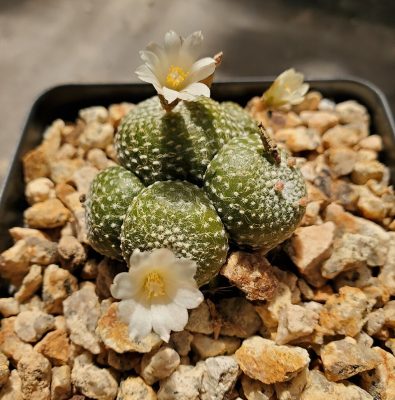
While saguaros and other giant species get most of the attention, the smallest cacti are just as remarkable in their own miniature way. Blossfeldia liliputana holds the record as the world’s tiniest cactus species, with mature plants measuring barely half an inch across. You could line up a dozen of them on a playing card and still have room left over.
These diminutive plants grow in the high-altitude regions of Bolivia and Argentina, wedged into rock crevices where they’re protected from the harsh elements. Despite their small stature, they possess all the same survival adaptations as their larger cousins—water storage, spine coverage, and CAM photosynthesis. They’ve simply packaged everything into an extremely compact form, proving that good things really do come in small packages.
The tiny size actually offers advantages in their particular environment. Small plants lose less water to wind, heat up and cool down more slowly than exposed surfaces, and can tuck themselves into protective spots that larger species couldn’t access. They’re the special forces operatives of the cactus world—small, efficient, and perfectly adapted to operate in extremely tight quarters where others fear to grow.
8. Cacti Flowers Are Pollination Powerhouses
When a cactus finally decides to bloom, it doesn’t mess around with half measures. These flowers are often outrageously large, brilliantly colored, and loaded with nectar—the botanical equivalent of throwing a party with all the stops pulled out. Some species produce flowers bigger than your hand, which seems excessive until you consider the competition for pollinators in the sparse desert environment.
Many cacti bloom at night, releasing powerful fragrances that attract moths, bats, and other nocturnal creatures. The famous night-blooming cereus opens its spectacular white flowers only after dark, filling the air with a perfume that carries for yards. Each flower typically lasts just one night, putting everything into that single chance at reproduction. It’s dramatic, fleeting, and remarkably effective.
The timing of cactus blooms is often precisely calibrated to match pollinator activity and favorable weather conditions. Some species can trigger flowering within days of a good rain, while others follow strict seasonal schedules. The saguaro’s creamy white flowers appear in late spring, perfectly timed for the arrival of migrating bats and the emergence of native bees. This synchronization between plant and pollinator represents millions of years of coevolution, with each species depending on the other for survival.
9. Some Cacti Jump at You (Sort Of)
The cholla cactus has earned itself a reputation as one of the desert’s most aggressive plants, though that reputation isn’t entirely fair. These cacti don’t actually leap through the air at passersby, despite the common name “jumping cholla.” What they do is almost as impressive—their segments are so loosely attached and their spines so effective at grabbing onto things that the slightest brush sends chunks of the plant hitchhiking on whatever touched them.
Those detached segments aren’t accidents or defensive measures so much as a clever reproductive strategy. Each piece that breaks off and gets carried away by an animal can potentially root in a new location and grow into a new plant. The spines have backward-pointing barbs that make them incredibly difficult to remove, ensuring the segment stays attached long enough to travel a good distance. It’s vegetative reproduction with an aggressive marketing strategy.
Anyone who’s tried to remove cholla segments from their skin or clothing can attest to the effectiveness of this system. The barbed spines grip like fishhooks, and pulling straight out usually just drives them deeper. The trick is to use a comb or stick to lever them off at an angle, but by then you’ve learned your lesson about giving jumping cholla a wide berth. The plant doesn’t need to actually jump when its hitchhiking game is this strong.
10. Cacti Survived the Dinosaur Extinction
Cacti were already well-established residents of the Americas when the asteroid struck 66 million years ago and ended the dinosaurs’ reign. While three-quarters of Earth’s species went extinct during that catastrophic event, cacti weathered the storm with their characteristic stubbornness. Their ability to survive extended droughts and store resources internally gave them a crucial advantage during the dark, cold years that followed the impact.
The fossil record for cacti is frustratingly sparse because their soft tissues don’t preserve well, but the evidence we have suggests they were already experimenting with their water-storage lifestyle well before the extinction event. When the dust settled and surviving species began rebuilding ecosystems, cacti were positioned to take advantage of the new opportunities. Many flowering plants diversified rapidly in the extinction’s aftermath, and cacti were right there in the mix.
This long evolutionary history explains why cacti seem so perfectly adapted to harsh conditions. They’ve had tens of millions of years to refine their survival strategies, testing different approaches and keeping what worked. The cacti we see today represent the successful experiments, the ones that made it through multiple climate shifts, extinction events, and changing landscapes. They’re the survivors of survivors, with credentials that stretch back to when T. rex still walked the Earth.
11. Cactus Fruits Are Surprisingly Delicious
Most folks walk past cacti without ever realizing these prickly characters are secretly fruit producers, and good ones at that. The prickly pear cactus generates oval fruits called tunas that come in colors ranging from sunshine yellow to deep purple when they’re ready to eat. Crack one open and you’ll find flesh that tastes like a cross between watermelon and bubblegum, sweet and refreshing in a way that seems almost unfair for a plant that survives on next to nothing. Indigenous communities throughout the Americas have been harvesting these fruits for thousands of years, and you can still find them sold fresh in markets across Mexico and the American Southwest.
Then there’s the dragon fruit, which has become something of a grocery store celebrity in recent years. Those vibrant pink and yellow fruits with the dramatic spiky leaves come from climbing cactus species in the genus Hylocereus. The flesh inside—either pure white or shocking magenta, dotted with tiny black seeds—has a mild, refreshing sweetness and a texture that falls somewhere between a kiwi and a perfectly ripe pear. It’s loaded with vitamins and antioxidants, though honestly, most people buy it first for the Instagram-worthy appearance and discover the health benefits as a pleasant bonus.
Even the towering saguaro gets in on the fruit-producing business. These giants produce ruby-red fruits at the tops of their arms each summer, and the Tohono O’odham people have harvested them for so many generations that the harvest traditionally marked their new year. The fruits can be eaten fresh right off the plant, dried and stored for leaner months, or fermented into a ceremonial wine. Cacti don’t just tough it out in the desert—when conditions allow, they share their bounty generously with any creature smart enough to appreciate what they’re offering.
12. Cacti Can Clone Themselves Without Seeds
Most plants rely on flowers, pollination, and seeds to reproduce, but cacti have a backup plan that’s considerably more straightforward. Many species can propagate vegetatively, meaning a piece that breaks off can grow roots and become an entirely new plant. This is cloning in its most practical form—no fancy laboratory required, just a chunk of cactus and some patience.
The prickly pear is particularly talented at this trick. A single pad that falls or gets knocked off can lie on the ground, sprout roots from its base, and establish itself as an independent plant within weeks. This ability has made prickly pear somewhat of an invasive pest in places like Australia, where it spread so aggressively that it covered millions of acres before biological controls were introduced.
This vegetative reproduction offers cacti a significant advantage in harsh environments where flowering and seed production require enormous energy investments. If conditions aren’t right for flowering, a cactus can still expand its presence through these detached pieces. It’s a belt-and-suspenders approach to survival—use seeds when possible, but keep the cloning option available as insurance. The strategy has served them well enough to colonize some of the planet’s most inhospitable real estate.
13. The Tallest Cactus Reached 78 Feet High
The record for the tallest cactus ever measured goes to a saguaro that stood in Maricopa County, Arizona, reaching an astounding 78 feet into the sky. That’s roughly the height of an eight-story building, which seems impossible for a plant with such a relatively thin base. This giant was destroyed in a windstorm back in 1986, but it held its record for decades before its demise.
The current tallest living saguaro stands about 45 feet tall in Saguaro National Park, still impressively tall but well short of that historical champion. These heights are achieved over lifespans measured in centuries, with growth happening so gradually that you’d never notice the change from one year to the next. The oldest and tallest specimens are treasured landmarks, with some receiving unofficial names and regular monitoring by park rangers and cactus enthusiasts.
What makes these heights even more remarkable is the structural challenge they represent. A 40-foot saguaro filled with water can weigh upwards of six tons, all supported by that relatively narrow base and internal woody ribs. The engineering required to keep such a structure standing through desert windstorms and the occasional earthquake is considerable. These towering specimens represent the absolute pinnacle of what cactus architecture can achieve.
14. Cacti Have Natural Sunscreen
The desert sun is no joke—it delivers UV radiation that would scorch most plants into crispy remnants within days. Cacti handle this challenge by producing specialized compounds that function essentially as botanical sunscreen. These chemicals, including betalains and other pigments, absorb harmful UV rays before they can damage the plant’s cells and DNA.
You can often see this protection system at work in the coloration of cacti. Many species have a waxy, bluish-white coating on their skin called a cuticle, which reflects light and reduces heat absorption. Others produce reddish or purplish pigments, especially when stressed, that provide additional UV protection. The same compounds that protect the plant also give many cacti their distinctive colors—it’s sunscreen and decoration rolled into one package.
This chemical defense system is so effective that scientists have studied cactus compounds for potential use in human sunscreen products. The betalain pigments that give prickly pear fruits their deep red color are powerful antioxidants that neutralize free radicals caused by UV exposure. Nature figured out sun protection millions of years before humans started worrying about SPF ratings, and cacti have been using this knowledge to survive the world’s sunniest locations ever since.
15. Some Cacti Are Parasites
Not all cacti play by the standard rules of photosynthesis and self-sufficiency. A few species have gone rogue and adopted a parasitic lifestyle, latching onto other plants and stealing their resources. The most notable example is *Tristerix aphyllus*, a mistletoe-like cactus found in Chile that grows exclusively on another cactus species. It has given up making its own food almost entirely, instead tapping into its host’s water and nutrient supply.
This parasitic cactus has evolved to look nothing like its spiny cousins. It lacks the green color of photosynthesizing plants and has no spines to speak of. Instead, it produces bright red tubular flowers that attract hummingbirds for pollination. The entire plant consists of modified stems that penetrate the host cactus and siphon off resources, plus those showy flowers designed to ensure reproduction.
The existence of parasitic cacti challenges our assumptions about what makes a cactus a cactus. These oddball species prove that evolution doesn’t follow straight lines or respect our tidy categories. When an opportunity presents itself—in this case, the chance to exploit another cactus as a host—plants will sometimes abandon millions of years of successful strategy for an entirely new approach. It’s botanical opportunism at its finest, even if it does seem like cheating.
16. Cactus Wood Was Used for Construction
When a saguaro finally dies and its flesh rots away, what remains is a skeletal structure of woody ribs that can last for decades or even centuries. These ribs are remarkably strong and lightweight, and indigenous peoples across the Southwest discovered they made excellent building materials. The Tohono O’odham and other groups used saguaro ribs for roof beams, fencing, furniture, and even as poles for harvesting the cactus fruits from tall specimens.
The ribs have a distinctive appearance, with parallel lines running their length where they supported the cactus’s accordion-like folds. They’re naturally resistant to rot and insects, making them surprisingly durable for desert construction. Even today, you’ll find saguaro ribs incorporated into southwestern architecture and rustic furniture, though harvesting them from living or recently dead cacti is now illegal in most areas.
Other cactus species provided materials too. The woody core of the organ pipe cactus was used similarly, while the fibrous tissue of barrel cacti could be processed into rope or woven into baskets. Cacti weren’t just surviving in the desert—they were providing resources for the human communities that learned to live alongside them. It’s a relationship that stretched back thousands of years, with both species finding ways to coexist in an unforgiving environment.
17. Cacti Are Surprisingly Fast Growers (Sometimes)
While saguaros and other large species grow at a pace that makes glaciers look speedy, not all cacti subscribe to the slow-and-steady philosophy. Some species, particularly those from tropical regions with more reliable rainfall, can grow astonishingly fast when given adequate water and nutrients. The San Pedro cactus can shoot up a foot or more in a single growing season under ideal conditions.
This growth rate variation depends largely on where a cactus evolved and what survival strategy it adopted. Desert species that might go years without rain have no choice but to grow slowly and conservatively, building thick, durable tissues that can survive extended drought. Tropical species that receive regular moisture can afford to grow faster, competing for light and space more aggressively than their desert cousins.
Young cacti of almost any species grow faster than mature ones, relatively speaking. A baby saguaro might take ten years to reach one inch tall, but it’s also building the foundation for centuries of growth to come. Once established with a solid root system and adequate stored reserves, growth accelerates—at least by cactus standards. That first decade or two of apparent dormancy is actually a massive investment in infrastructure that pays dividends for the next hundred years.
18. Cacti Have Built-In Thermometers
Cacti possess a remarkable ability to regulate their internal temperature through a combination of physical and chemical adaptations. Their thick outer layer provides insulation that slows heat transfer, while their internal water stores act as thermal mass that resists rapid temperature changes. This system keeps the cactus’s core temperature relatively stable even when outside air temperatures swing wildly between scorching days and freezing nights.
The spines play a temperature-regulation role beyond just providing shade. Dense spine coverage traps a layer of still air around the cactus’s surface, creating an insulating buffer zone. This dead air space keeps the plant slightly cooler during the day and slightly warmer at night. Some species have evolved white or light-colored spines specifically because they reflect more sunlight, reducing the total heat load the plant must manage.
Perhaps most impressively, cacti can adjust their temperature management strategy based on conditions. When water is plentiful, they’ll open their pores slightly during daytime to allow some cooling through evaporation, similar to how sweating cools humans. When water is scarce, they seal up tight and rely entirely on passive insulation and thermal mass. This flexible approach to temperature control lets them optimize between conserving water and maintaining comfortable operating temperatures depending on what resources are available.
19. Ancient Cacti Appear in Cave Paintings
Human fascination with cacti stretches back thousands of years, evidenced by their appearance in ancient rock art and cave paintings throughout the Americas. Indigenous peoples in what’s now Mexico and the southwestern United States created images of cacti on rock walls dating back over 3,000 years, suggesting these plants held cultural and possibly spiritual significance long before recorded history.
The San Pedro cactus appears prominently in ancient Peruvian art and archaeological sites, indicating it played an important role in ceremonial practices. Stone carvings at the Chavín de Huántar temple complex, dating to around 1500 BCE, show clear depictions of this cactus. The plant contains psychoactive compounds and was used in shamanic rituals, a practice that continues in some traditional communities today.
These artistic depictions tell us that ancient peoples didn’t just tolerate cacti as part of their environment—they actively incorporated them into their cultural and spiritual lives. The plants provided food, water, building materials, and medicine, earning them a respected place in indigenous traditions. Modern archaeologists study these ancient images to understand how human societies adapted to desert life and which plant species were most valued by the people who learned to thrive in some of Earth’s harshest landscapes.
20. Cacti Are Master Water Chemists
The water stored inside a cactus isn’t just sitting there in liquid form waiting to be used—it’s part of a sophisticated chemical management system. Cacti store water in specialized cells that are packed with mucilage, a thick, gel-like substance that prevents the water from sloshing around and helps keep it from evaporating or freezing. This mucilage is the same sticky substance you’ll encounter if you ever break open a cactus pad.
The chemistry gets even more interesting when you consider how cacti prevent bacterial and fungal growth in all that stored moisture. They maintain slightly acidic conditions inside their tissues and produce antimicrobial compounds that keep their water supply clean over months or years of storage. It’s the botanical equivalent of a water treatment plant, operating continuously to ensure the stored reserves remain usable.
Cacti also manage the mineral content of their stored water carefully, balancing salts and other dissolved substances to maintain proper osmotic pressure in their cells. Too much salt concentration and the cells would shrivel; too little and they’d burst. The plants actively pump ions in and out of storage tissues to maintain this delicate balance, adjusting their internal chemistry as they absorb water or draw it down during drought. This level of chemical control rivals anything you’d find in an industrial process, all accomplished through evolutionary refinement over millions of years without a single engineer or chemist involved.
FAQs
Large species like saguaros can survive up to two years without rain by relying on stored water. Smaller cacti typically need water more frequently, but many can last six months to a year between drinks.
Cactus spines have microscopic barbs and rough surfaces that grab tissue like fishhooks. Some species also have tiny glochids—hair-like spines that break off and embed themselves in skin, causing irritation.
Not at all! Some cacti live in rainforests as climbing epiphytes, while others thrive in cold mountain regions. A few species can survive freezing temperatures and even light snowfall.
Saguaro cacti typically wait 50 to 70 years before growing their first arm. Some never grow arms at all, remaining single-stemmed throughout their entire lives—no one knows exactly why.
Most cactus spines are not poisonous, but they can introduce bacteria into puncture wounds. The main danger is mechanical—those barbed spines cause pain and can be difficult to remove completely.










 Login with Google