






















 Pin
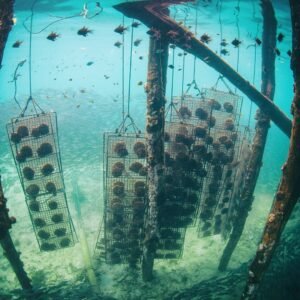
Pearl Farming / Photo Courtesy of Atlas Pearl
Synopsis: Farms are changing faster than most people notice. Saffron now blooms indoors in Kashmir, oyster mushrooms grow on coffee waste, and pearls grow in ponds in China. Drones spray rice paddies in Japan, lasers zap weeds in the United States, and robots pick fruit in Israel. This article walks through ten real tools used by real farmers across the world, with names, numbers and honest limits, so you can see what each one costs, what it grows, and where it can go wrong.
In Shaar-i-Shalli, a village in Kashmir, a farmer named Abdul Majeed Wani grows saffron flowers inside his own house. A few weeks before harvest he lifts the crocus corms out of the soil and sets them in trays on racks in a room with no direct sunlight, safely out of reach of rain, frost and the weather’s general bad temper. Farming has always been a long argument with the sky, and the sky has never once kept its side of the bargain.
Wani’s saffron room is the first stop on a tour of 10 Mind-Blowing Farming Technologies, and the tour goes a long way past Kashmir. It takes in rotating vegetable towers in Singapore, mushrooms in Tanzania, pearls in Chinese ponds, and robots that pick fruit in Israel and Japan. Some of these are old ideas that finally found their moment. Others are so new that the instruction manuals are still being written.
Nobody here is selling a miracle. Farming rarely produces those, and when it does, they usually need watering.
Table of Contents
1. Indoor Saffron Farming: How the World’s Costliest Spice Moved Into Rooms and Towers
 Pin
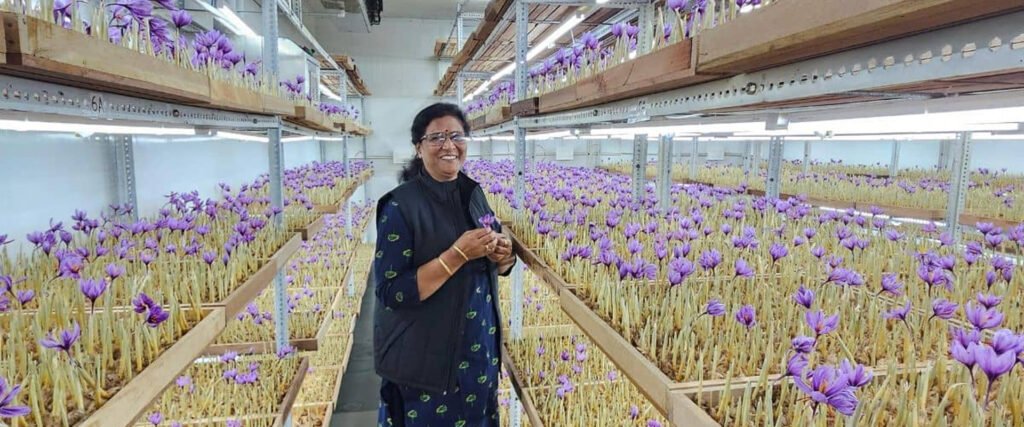
Indoor Saffron Farming by Shubha Bhatnagar, a 63-year-old / Photo Courtesy of NITI
Saffron is the spice that makes accountants nervous. At the top end, a kilogram has been reported at up to $4,000, partly because it takes roughly 150,000 flowers to make that much. Iran grows nearly 90 per cent of the world’s supply, though Kashmir’s crop is praised for its deep colour and flavour.
Then climate change brought warmer weather and erratic rain, and Kashmiri scientists brought the flowering indoors. The method is a hybrid. The corms bloom in trays inside a room, the flowers are picked, and the corms go back into the soil outdoors for a chilling period of more than 1,000 hours. Only the flowering moves inside. A fully indoor system exists in Sharjah, where the company Veggitech grew about 150,000 Dutch crocus bulbs in a 165-square-metre vertical farm under LED light, expecting around 5.5 kilograms of saffron from its first harvest.
It is no free lunch. Indoor crocus wants big corms, and one Kashmiri farmer, Javaid Ahmed, says about 80 per cent of those on sale are too small. Mongabay India reported in 2024 that indoor yields still trail traditional methods, and some scientists call the approach experimental.
- Where: Kashmir, India (flowering indoors, corms replanted outdoors) and Sharjah, UAE (a fully indoor vertical farm)
- Needs: large corms, controlled light and temperature, and a winter chill for the corms
- Reported cost: siblings in Ludhiana, India, reportedly spent about Rs 55 lakh in 2024 and harvested 1.3 kg in their first crop, according to Kashmir Life, citing The Tribune
2. Vertical Farming in Singapore: Growing Vegetables on Rotating Towers
 Pin
Vertical Farming in Singapore / Photo Courtesy of FCS2Science
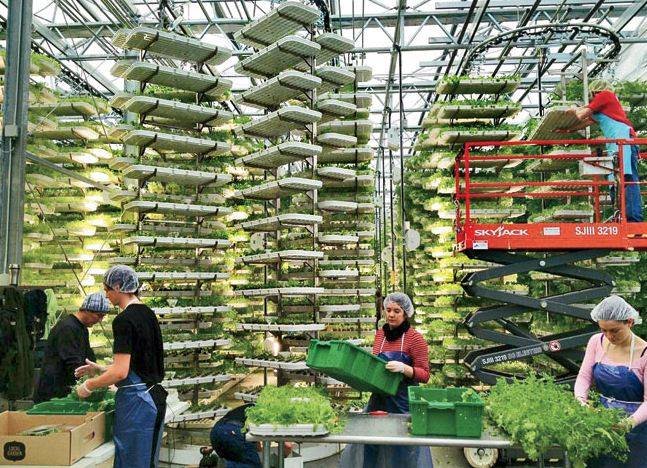
Singapore has money and very little land, which is an awkward mix for anyone who wants cabbage. Sky Greens, which opened in 2012 in Lim Chu Kang, was one of the early commercial attempts to solve it, and it decided that if it could not spread out, it would stand up.
Its aluminium towers rise as high as nine metres, and troughs of vegetables slowly rotate so each plant takes its turn in the sun. Water power does the turning, and the water is recycled to irrigate the greens. At its 2012 opening the farm had 120 towers and was reported to produce about 500 kilograms a day, with a harvest roughly every 28 days. The opening report said greens reached shelves about three hours after harvest, against three days to three weeks for imports.
The story has a harder second half. In May 2024 The Straits Times reported that Sky Greens was scaling down, and a visit to its five-hectare site found many greenhouses torn down. The paper’s financial checks found that several Singapore farms, Sky Greens among them, struggled to turn a profit. Even at launch a 200-gram packet cost 1.25 dollars against 80 cents for 250 grams from a traditional farm, and the chairman admitted this type of farm needs more capital than a field.
- Tower height: up to 9 m
- Opening capacity: about 500 kg a day, as reported in 2012; this is not verified current output
- Company claim: 5 to 10 times the yield per area of conventional leafy-vegetable farms in Singapore
- Status: scaling down reported in May 2024
3. Oyster Mushroom Farming: Turning Coffee Grounds and Farm Waste Into Food
 Pin
Oyster Mushroom Farming / Photo Courtesy of Gachwala
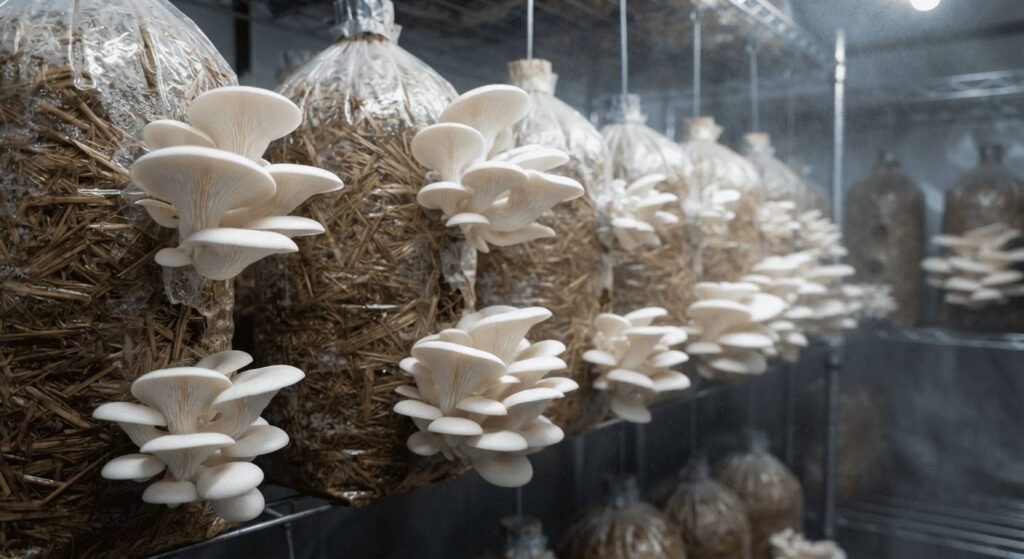
Mushrooms do not photosynthesise, so they have no use for sunlight as food, although light still shapes how they fruit. Oyster mushrooms can grow on straw, sawdust, crop residues and properly prepared coffee grounds, which makes them an interesting option for small-scale farming.
In Tanzania, the charity Farm Africa had trained more than 700 farmers around the Nou Forest by 2016, so they depend less on crops, livestock and cutting trees. One grower there uses residues from sorghum, millet, beans, rice and maize. Magdalena Gwasuma keeps her mushrooms in a mud-walled shack and has customers as far away as Arusha. One farmer in the programme reports an extra 480,000 Tanzanian shillings, about £167, a year, and calls it her biggest single source of income.
Coffee grounds are a separate story and a different method. By 2011, two Berkeley students were collecting around ten tons a week from Peet’s cafes, seeding them with oyster mushroom mycelium and selling grow-at-home kits. In Egypt, the startup CUP also grows mushrooms on spent coffee.
Tanzanian farmers say they still need better storage and more markets.
- Tanzania: farm waste such as crop residues
- California and Egypt: used coffee grounds
- Needs: a simple shed, good spawn for the local climate, and buyers
4. Freshwater Pearl Farming: How Ponds in China and India Produce Gems
 Pin
Mathachan’s backyard pond, Fresh Water Pearl Farming / Photo Courtesy of thebetterindia.com
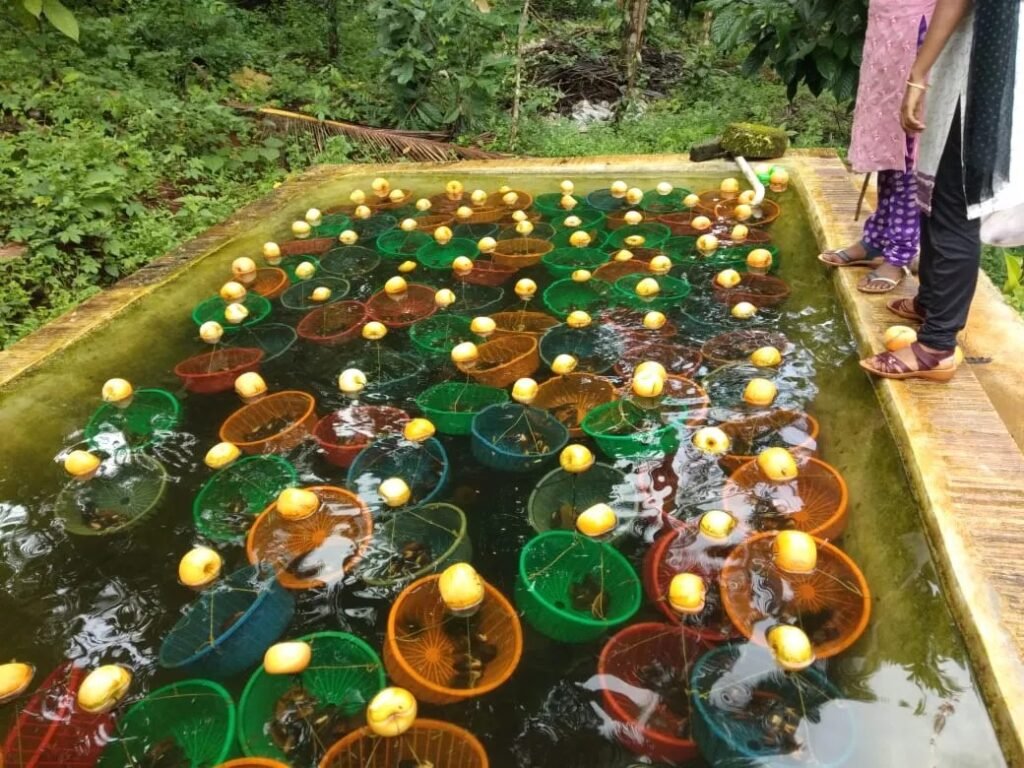
A pearl is a mussel’s answer to a bit of irritation, and pearl farmers have turned that answer into a business. The steps run in order: collect mussels, condition them, perform a small surgery, give careful aftercare, grow them in a pond, and harvest. The surgery is the delicate part, which is why training matters.
China leads by a distance. A research chapter analysing FAO data for 2005 to 2014 found that China produced more than 98 per cent of the world’s cultured pearls by volume, almost all of them freshwater, though it also calls the industry high-yield and low-value. Zhuji, the birthplace of pearl production in China, sits in Zhejiang province, ponds in Zhejiang and Hubei cover hundreds of square kilometres, and some farms now use sensor-monitored ponds and AI grading.
India is catching up in smaller ponds. Ashok Manwani and Kuljana Dubey Manwani have taught pearl farming across 12 states, and The Better India reported a set-up cost of around Rs 25 lakh for their home-made pond. That is one reported investment, not the price of starting any pearl farm. Meanwhile, stricter clean-water rules have forced closures among Chinese pearl farms.
- Main mussels: Hyriopsis cumingii in China, Lamellidens marginalis in India
- Catch in China: water pollution rules are closing ponds
- Catch in India: few freshwater pearl farmers and no organised sector yet
5. Aeroponic Potato Seed in Kenya: Growing Roots in Mist
 Pin
Aeroponic Potato Farming in Kenya / Photo Courtesy of Noal Farm
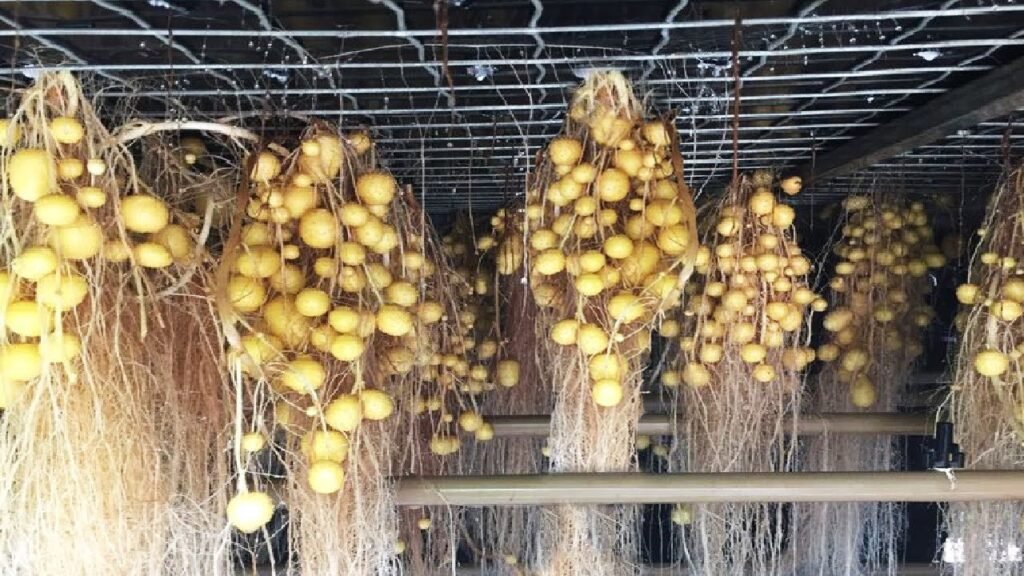
The potato does its best work underground, which makes it hard to supervise. Aeroponics solves this by hanging the roots in the air and feeding them with a fine mist of water and nutrients. No soil is involved at all.
The International Potato Center introduced the method to partners in Bolivia, Colombia, Peru, Ecuador, Ethiopia, Kenya, Uganda and Malawi. In Kenya, over 800,000 farmers grow potatoes, yet few can get clean seed, so most plant tubers saved from the last crop, which often carry disease.
Aeroponic units can multiply clean plantlets 50 to 100 times, but the mini tubers they produce must break dormancy before planting, so cold storage matters.
Rooted apical cuttings are a different technique, not aeroponics. CIP developed them with a Vietnamese research centre, and they helped a farmer named Nduru in Meru, Kenya, make her own seed. Demand outran supply, and in 2019 she limited sales to 50 kilograms per customer.
- Aeroponics: produces mini tubers; dormancy and cold storage are the weak spot
- Rooted cuttings: improved potato yields in southern Vietnam, according to CIP
- Kenya: more than 265,000 rooted cuttings were sold in 2018
6. Agricultural Drones in Japan: How Aerial Spraying Helps Ageing Rice Farmers
 Pin
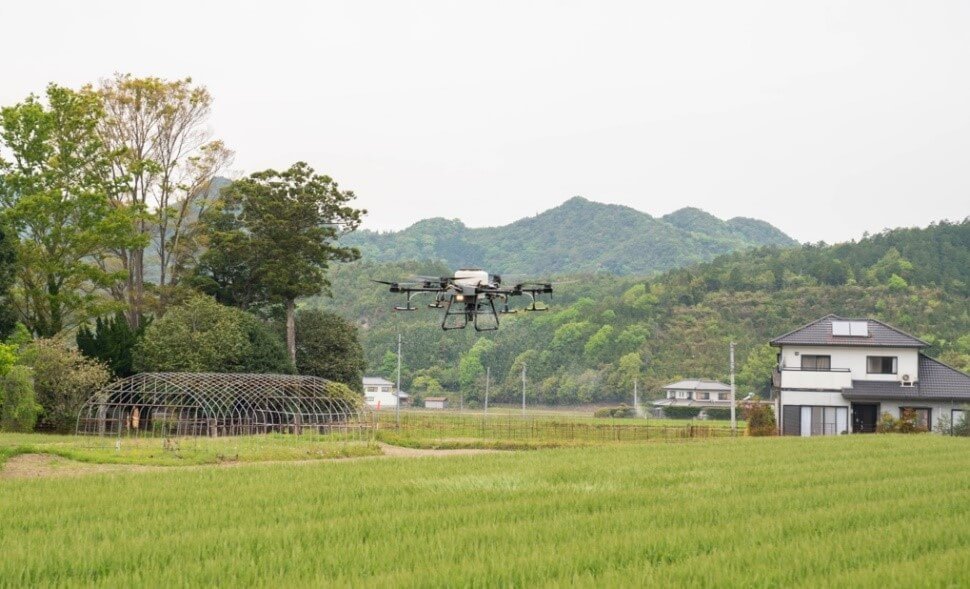
Agricultural Drones in Japan / Photo Courtesy of DJI
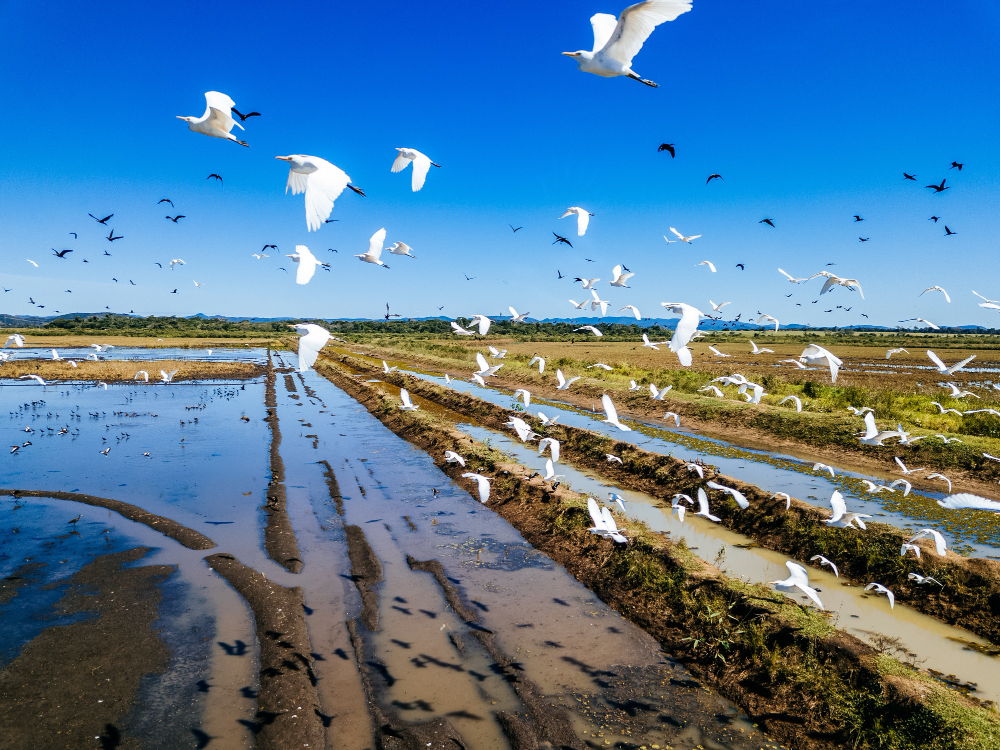
Japan’s rice farmers are getting older, and the young have mostly gone to the cities. Japan answered by teaching helicopters to do the job with nobody aboard. Yamaha began developing unmanned helicopters in 1983 at the farm ministry’s request, and the first model was finished in 1987.
Today unmanned helicopters treat about 40 per cent of Japan’s rice fields, and Yamaha says one helicopter can cover a hectare of paddy in roughly five minutes. That figure belongs to the helicopters, not to every drone. Smaller multirotor drones are the newer arrivals: a study reported 684 hectares sprayed by drones in 2016 and 31,020 in 2018, a 45-fold jump. In 2018, a 69-year-old farmer named Isamu Sakakibara, in the Tome area, was among those testing a four-million-yen Nileworks drone.
Brazil has joined in. Yamaha invested in ARPAC, a drone-spraying service founded in Porto Alegre in 2014. The limits are practical: spray drones carry 8 to 10 litres, so big fields mean many flights.
- Rice paddy dose: about 10 litres of pesticide per hectare
- Helicopters versus drones: helicopters cover about 40 per cent of rice fields; multirotor drones are a smaller but fast-growing share
- Regulations: mandatory registration of unmanned aircraft weighing 100 grams or more began in Japan on 20 June 2022
7. Drip Irrigation: The Israeli Idea That Saves Water Drop by Drop
 Pin
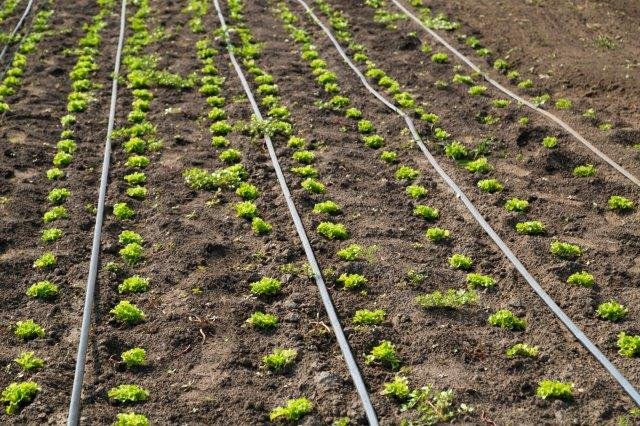
Drip Irrigation in Israel / Photo Courtesy of israelagri.com
In the 1930s, a farmer showed the Israeli water engineer Simcha Blass a big tree that seemed to grow with almost no water. Tiny drops were seeping into the soil at its roots. Blass spent years turning that sight into a device, and his first experimental system followed in 1959.
According to accounts of the technology’s development, most kibbutzim turned him down. Kibbutz Hatzerim, in the Negev desert, had little water and poor soil, and said yes. The deal was signed on 10 August 1965, and the company, Netafim (Hebrew for droplets), began production in 1966.
Early on, farmers were doubtful and there were technical headaches.
Netafim was reported in 2020 to sell in 110 countries, a very long way from a desert kibbutz that first wanted work for fourteen of its members. Smallholders in India are among its customers.
- Inventor: Simcha Blass
- Maker: Netafim, founded in 1965 at Kibbutz Hatzerim
- Reach: reported 110 countries in 2020
8. Laser Weeding Robots: Killing Weeds Without Chemicals
 Pin
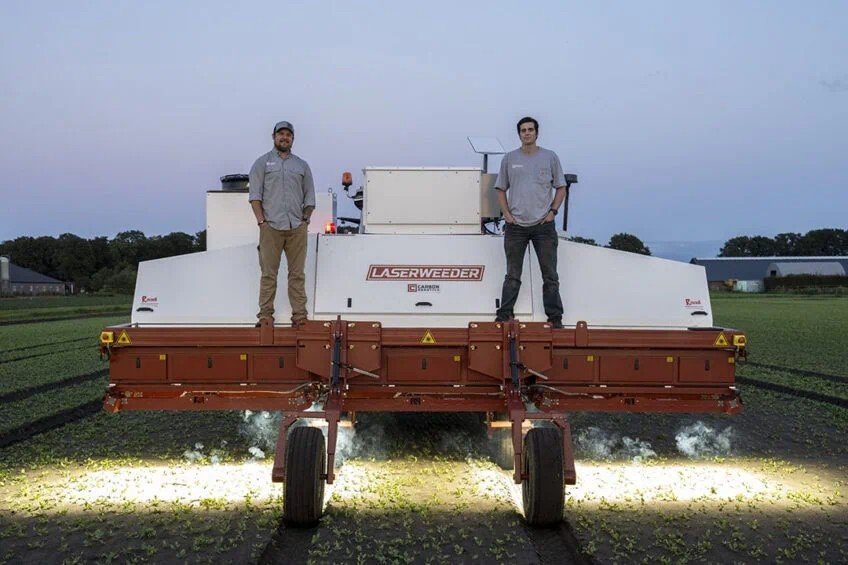
Laser Weeding Robots / Photo Courtesy of Future Farming
Weeding is the job nobody applauds. In Idaho and Oregon, onion grower Shay Myers used to hire around 30 people for a day to weed 30 acres of organic onions, and some of them used pocket knives.
He became an early user of an autonomous weeder built by Carbon Robotics of Seattle. That 2021 machine, a field-demo unit not sold commercially, had 12 cameras and eight CO2 lasers, and the company said it killed around 100,000 weeds an hour and cleared 15 to 20 acres a day. Myers estimates a labourer weeds about one acre of his onions in a day.
The company’s current pull-behind LaserWeeder is a different machine, with 30 lasers, 42 cameras and a published performance of 0.5 to 1.5 acres an hour. It claims savings of up to 80 per cent in weed-management costs, which are its own figures. Farmworker advocates worry about automation and jobs. And since weed seeds can live in soil for seven years, lasers reduce weeding work rather than end it.
- Current LaserWeeder: 30 lasers, more than 5,000 weeds a minute, 0.5 to 1.5 acres an hour (manufacturer specifications)
- Company figure: over 250,000 acres weeded across 100+ crops, reported in early 2025
- Soil: lasers leave it undisturbed, the company says
9. Solar Sharing (Agrivoltaics): Growing Crops Under Solar Panels
 Pin
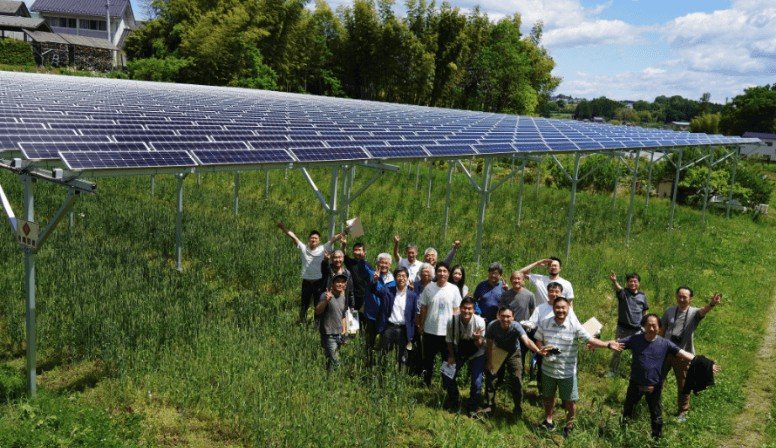
Solar Sharing / Photo Courtesy of solar-sharing.farm
Plants can only use so much sunlight. A retired Japanese machinery engineer named Akira Nagashima studied this “light saturation point” and developed the solar-sharing idea in the early 2000s, with a first pilot farm in Chiba in 2004: panels raised above crops so the extra light could make electricity.
At Takeshi Magami’s farm in Chiba, 2,826 solar panels sit above potatoes, ginger and eggplants. In Germany, the Fraunhofer Institute set up a plant at Heggelbach on Lake Constance with panels five metres up, so farm machines could pass beneath, over clover, celery, potatoes and winter wheat. Fraunhofer’s research treats 80 per cent of normal yield as a target for such systems, not a universal rule.
Results depend on panel height, spacing, crop choice and the light each crop needs. Magami calculates that panels over about five per cent of Japan’s farmland could supply 20 per cent of its electricity. Yet many elderly Japanese farmers hesitate over a heavy investment that can take decades to pay off, and some dislike how it looks.
- Japan: 1,054 solar-sharing projects were reported between 2013 and 2018 (Fraunhofer ISE, 2020 presentation)
- Germany: the Heggelbach plant has 194 kWp of capacity
- Yield target: at least 80 per cent of unshaded plots, as a project guideline
10. Harvesting Robots and Flying Fruit Pickers: Fixing the Farm Labour Gap
 Pin
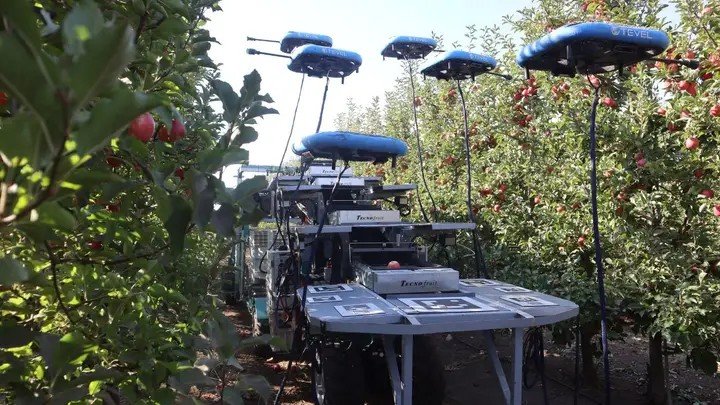
Harvesting Robots and Flying Fruit Pickers / Photo Courtesy of Fox News
Crops ripen on their own schedule, which is rarely convenient. Fruitnet’s report on Tevel cited an FAO estimate that the availability of orchard workers fell by 50 per cent over two decades while fruit output doubled. Tevel itself says harvesting can eat half of an orchard’s operating costs, which is the company’s estimate, not an industry average.
Japan’s Inaho has a robot already in farmers’ hands. It began leasing an asparagus harvester in 2019, and Kotaro Ando in Saga became its first customer. An infrared sensor spots ripe spears, a single stalk takes about 12 seconds, and one battery charge lasts ten hours, so the robot can work at night. Inaho serves only farmers within a 30-minute drive of its office, so repairs arrive quickly.
Israel’s Tevel Aerobotics is at an earlier stage. Its flying robots use AI and a mechanical claw to pick fruit, and Japan’s Kubota invested 20 million dollars in the company. The claims that the robots pick only ripe fruit and can work around the clock come from Tevel, not from independent testing.
- Inaho robot: infrared sensor, 10-hour battery, leased to farmers since 2019
- Tevel: four or eight flying robots tethered to a mobile platform; performance claims are the company’s own
- Funding: $20 million from Kubota
FAQs
Partly, yes. In Kashmir the flowers bloom indoors in trays, then the corms go back into the soil for their winter chill. A farm in Sharjah grows saffron fully indoors under LED light. Large bulbs, hand picking and electricity remain the catches.
Oyster mushrooms. Farm Africa’s Tanzanian growers use simple sheds and farm waste. Pearls, vertical towers and robots need far more money and training.
Makers say they fill gaps. Japan’s farmers are ageing, and an FAO estimate cited by Fruitnet says orchard workers halved in two decades. Some farmworker advocates still worry about lost jobs.
Not usually. Sky Greens in Singapore sold cabbage at a premium, and The Straits Times reported it scaling down in 2024. Vertical farms save land, but power, capital and labour costs can be high.
Israeli engineer Simcha Blass, working with Kibbutz Hatzerim, whose company Netafim started in 1965. It was reported to sell in 110 countries in 2020, including smallholders in India.
References
Indoor
saffron
•
Mongabay India: Indoor saffron farming
offers hope amidst declining saffron production
•
Christian Science Monitor: Crocus blooms
in the living room? Kashmir’s saffron farmers get creative
•
AP: Farmers in Kashmir try growing
saffron indoors
•
The Wire: Kashmir saffron farmers and
indoor farming
•
The National: ‘Red gold’ saffron grows
in Sharjah desert
•
Kashmir Life: Ludhiana siblings grow
saffron indoors
Vertical
farming in Singapore
•
Eco-Business: First vertical farm to
boost supply of local greens (2012)
•
UNU Our World: Farming in the sky in
Singapore
•
EcoWatch: Hydraulic-driven vertical farm
(price comparison)
•
Vertical Farm Daily, citing The Straits
Times: Sky Greens downsizes (May 2024)
Oyster
mushrooms
•
Christian Science Monitor: Taste for
mushrooms helps Tanzanian farmers protect forest (2016)
•
Anadolu Agency: Mushroom helps Tanzania
farmers fight climate change
•
SF Public Press: New roots for green
businesses (2011)
•
Scene Eats: This Egyptian startup grows
mushrooms from used coffee grounds
Pearls
•
Springer: Production of Pearls (chapter,
FAO data 2005 to 2014)
•
Dialogue Earth: Pearl farmers hit by
water pollution clean-up
•
The Better India: Couple teaches farmers
to grow pearls in home-made ponds
Potato
seed
•
International Potato Center: Catalyzing
potato value chains in Kenya
•
International Potato Center: “Today, I
am a professor of potatoes!”
•
Potato Research (2025): Multiplication
techniques for early generation seed potato in Kenya
Drones
•
Highlighting Japan: Unmanned helicopters
•
Sustainability (MDPI), Seo and Umeda
2021: Pest-control sprayers in Japanese rice farming
•
Yamaha Motor: unmanned helicopters for
rice cultivation
•
The Drive: Drones are helping Japan’s
aging farmers fertilize crops
•
Dempa: Yamaha Motor and ARPAC in Brazil
Drip
irrigation
•
MIT Sloan Management Review: Netafim
interview
Laser
weeding
•
Carbon Robotics: LaserWeeder
specifications
•
The Packer: Carbon Robotics unveils
LaserWeeder with 30 lasers (2022)
•
The Columbian: Seattle startup sends
laser-equipped robots to zap weeds (2021)
•
Freethink: Farming robot kills 200,000
weeds per hour with lasers
•
GeekWire: Carbon Robotics releases new
line of laser weed zappers (2025)
Solar
sharing
•
Fraunhofer ISE: Agrivoltaics performance
indices (2020 workshop slides)
•
CleanTechnica: Solar power and farming
in Japan (2022)
•
The National: Japanese start-up
electrifies farms using solar power (2022)
Harvesting
robots
•
Farm Automation Today: Inaho asparagus
robot
•
Fruitnet: Tevel raises US$20m for
harvest solution
•
NoCamels: AI devices ease the labor
crisis for fruit farmers










 Login with Google