














 Pin
Pin Courtesy of Time Lapse Dreamer
Synopsis: As artificial light steadily dims the night sky across much of the world, truly dark places are becoming increasingly rare. In India, however, geography still offers refuge. High-altitude deserts, remote Himalayan valleys, isolated islands, and sparsely populated plains continue to provide remarkable conditions for observing the stars.
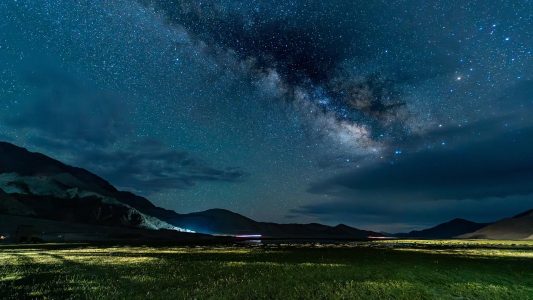
On a clear night far from city lights, the universe reveals itself slowly. Stars emerge not all at once, but in layers—first the brightest, then the constellations, and finally the faint haze of the Milky Way. In modern India, such skies are becoming increasingly rare. Yet they still exist, scattered across deserts, mountains, forests, and islands.
Table of Contents
The Disappearing Night Sky
For most of human history, the night sky was a shared inheritance. Farmers tracked seasons by the stars. Sailors navigated by constellations. Stories, myths, and calendars were written into the heavens.
Today, artificial lighting has altered that relationship. According to global studies on light pollution, more than one-third of humanity can no longer see the Milky Way from where they live. In India’s major cities, even familiar constellations are often lost behind a permanent glow.
Astronomers call this phenomenon skyglow. Its impact is not limited to science. Excessive artificial light affects human sleep cycles, migratory birds, nocturnal animals, and entire ecosystems. Dark skies, once taken for granted, are now considered a natural resource worth protecting.
India’s vast and varied geography, however, still offers pockets of darkness—places where the night sky remains largely untouched. These locations are increasingly attracting astronomers, photographers, researchers, and travellers seeking something quieter and older than modern life.
What Makes a Place Ideal for Stargazing
Not all remote locations offer good night skies. Several factors determine stargazing quality:
- Low light pollution
- High altitude, which reduces atmospheric interference
- Dry air, especially in deserts and cold regions
- Clear weather patterns
- Wide horizons, free from obstructions
India’s unique landscapes meet these conditions in different ways, making it one of the world’s most diverse stargazing destinations.
1. Hanle, Ladakh
 Pin
Pin Courtesy of Tales by Sarang
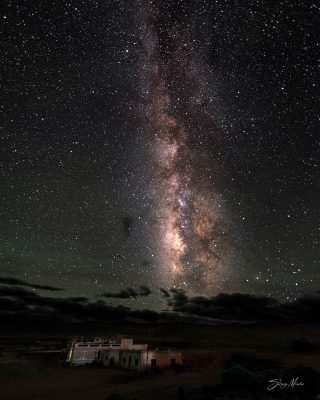
High on the Changthang plateau, near the border with China, lies Hanle—a quiet village that has become synonymous with Indian astronomy. At over 4,500 metres above sea level, it hosts the Indian Astronomical Observatory, one of the highest observatories in the world.
The reasons are scientific as much as scenic. Hanle experiences more than 250 clear nights a year. The air is thin, dry, and largely free of dust. Light pollution is almost nonexistent.
On moonless nights, the Milky Way stretches across the sky with startling clarity. Even faint nebulae and distant galaxies become visible through amateur telescopes.
- Best season: May to September
- Challenges: Altitude sickness, limited infrastructure
- Why it matters: Benchmark site for Indian astronomical research
2. Spiti Valley, Himachal Pradesh
 Pin
Pin Courtesy of Wonderlust Trips
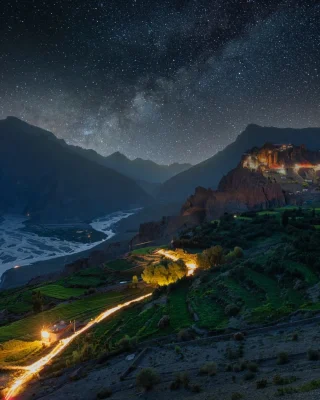
Spiti Valley is often described as barren, but its emptiness is precisely what makes it extraordinary at night. Situated between Tibet and Himachal Pradesh, Spiti’s cold desert climate results in dry air and minimal cloud cover for much of the year.
Villages such as Langza, Dhankar, and Kaza are sparsely populated, with little artificial lighting after sunset. As temperatures drop, the sky sharpens.
Meteor showers are particularly striking here. The Perseids and Geminids are often visible without optical aid, appearing as sudden streaks against a sky dense with stars.
- Best season: June to October
- Sky features: Milky Way core, planetary alignments
- Ideal for: Long-exposure astrophotography
3. Nubra Valley, Ladakh
 Pin
Pin Courtesy of Fakrul Jamil
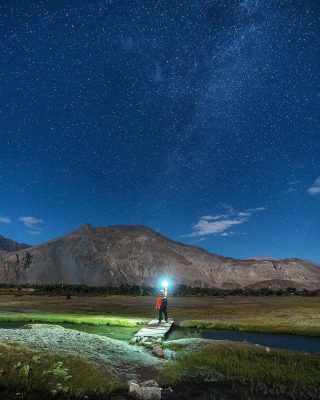
North of Leh, Nubra Valley presents an unusual combination: high-altitude desert landscapes framed by glaciers. During the day, sand dunes and double-humped camels dominate the scene. At night, the sky takes over.
Nubra’s wide horizons allow uninterrupted views of the celestial sphere. In winter, when tourist numbers fall sharply, the skies become even darker.
The contrast—icy peaks under star-filled skies—creates one of the most visually striking stargazing environments in India.
- Best season: April to October
- Notable experience: Stargazing from desert camps
- Conditions: Cold nights even in summer
4. The Rann of Kutch, Gujarat
 Pin
Pin Courtesy of Take a Break
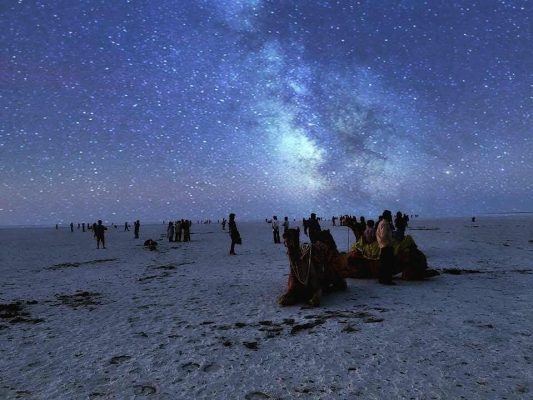
The Great Rann of Kutch is a vast salt marsh that transforms dramatically with the seasons. In winter, when the land dries and the sky clears, it becomes one of India’s most unusual stargazing locations.
The flat, reflective salt surface creates the illusion of stars both above and below. With no hills or buildings to obstruct the view, the horizon stretches endlessly.
During new moon nights, the effect is particularly pronounced. Astronomers and photographers often describe it as standing inside the night sky rather than beneath it.
- Best season: November to February
- Ideal for: Wide-angle night photography
- Limitation: Weather-dependent visibility
5. Coorg, Karnataka
 Pin
Pin Courtesy of Parth Pujara
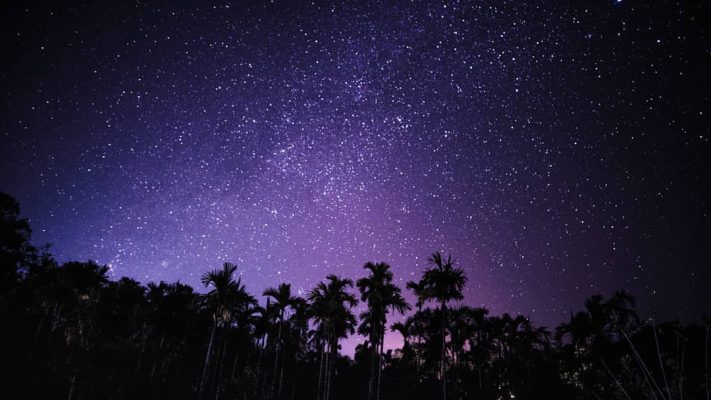
Better known for coffee plantations and misty hills, Coorg also offers pockets of dark sky—particularly away from tourist centres.
Its southern latitude allows clearer views of constellations not easily visible in northern India. On dry winter nights, Orion dominates the sky, while parts of the Southern Cross appear briefly near the horizon.
Humidity can be a challenge, but when skies clear, the reward is a softer, slower stargazing experience surrounded by forest silence.
- Best season: October to March
- Sky highlight: Southern celestial objects
- Best spots: Remote homestays, forest clearings
6. Neil Island, Andaman & Nicobar
 Pin
Pin Courtesy of Vikas Chandera
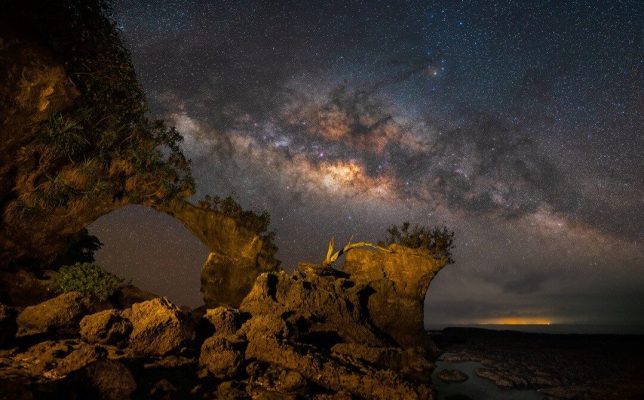
Island stargazing differs fundamentally from land-based observation. With minimal artificial lighting and open horizons, islands offer uninterrupted views of the night sky meeting the ocean.
Neil Island, quieter than its neighbour Havelock, provides particularly good conditions. On calm nights, stars reflect on the water, creating a seamless blend of sky and sea.
Occasionally, bioluminescent plankton adds a faint glow along the shore, turning the experience into something almost otherworldly.
- Best season: December to April
- Unique advantage: Ocean horizon visibility
- Challenge: Cloud cover during monsoon
7. Mawlynnong, Meghalaya
 Pin
Pin Courtesy of The Travel Wanderlustt
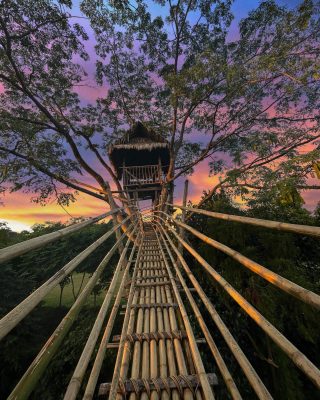
Meghalaya is famous for rain, but it is the brief windows after rainfall that make Mawlynnong interesting for stargazing. When clouds part, the sky appears remarkably clean.
The village’s emphasis on sustainability and low light usage also helps preserve night visibility. While stargazing here requires patience, the sudden clarity after days of overcast skies can be dramatic.
- Best season: October to February
- Atmosphere: Moist, fresh, unpredictable
- Best suited for: Casual observation rather than long sessions
8. Jaisalmer Desert, Rajasthan
 Pin
Pin Courtesy of Yadu Krishnna
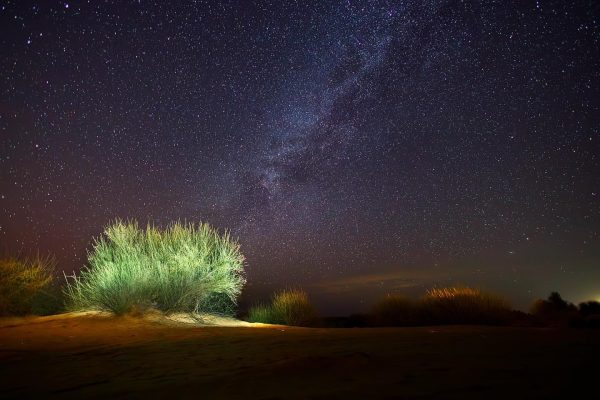
The Thar Desert has been watched under starlight for centuries by traders, nomads, and caravans. Today, far from the city of Jaisalmer, desert camps still experience relatively dark skies.
Winter nights bring clear air and stable weather. Constellations appear sharp, and planets shine brightly against the darkness.
While not as pristine as Ladakh, the Thar offers accessibility and comfort alongside its skies.
- Best season: November to March
- Sky features: Winter constellations, visible planets
- Ideal for: Beginners and first-time stargazers
9. Munsiyari, Uttarakhand
 Pin
Pin Courtesy of Umesh Gogna
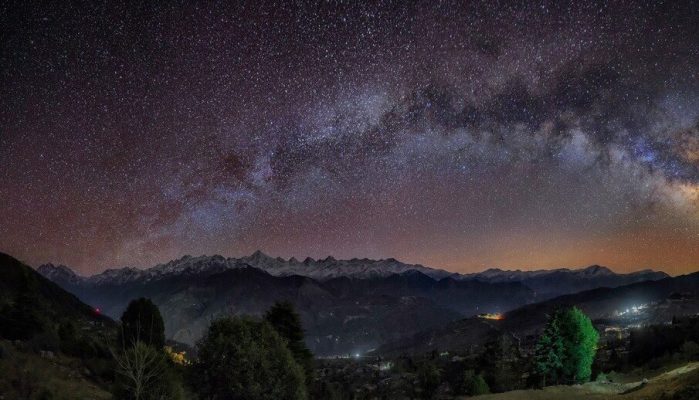
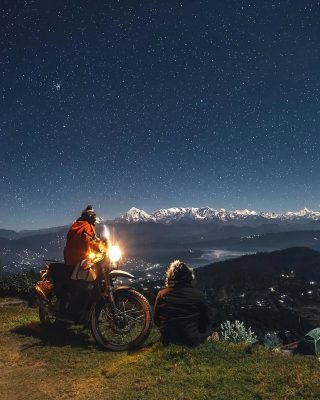
Situated near the Indo-Nepal border, Munsiyari offers a dramatic stargazing backdrop. Snow-covered peaks reflect faint starlight, while the sky above remains strikingly dark.
At higher altitudes around the town, light pollution drops significantly. The thin mountain air improves clarity, though weather conditions can change quickly.
On clear nights, the Milky Way arches above the Panchachuli peaks, creating a scene that blends astronomy with alpine beauty.
- Best season: March to June
- Best for: Mountain astrophotography
- Limitation: Cold, unpredictable weather
10. Kausani, Uttarakhand
 Pin
Pin Courtesy of Rohan Shahi
Kausani offers a quieter alternative to more extreme Himalayan locations. Its accessibility and moderate altitude make it suitable for those new to stargazing.
The town’s distance from major urban centres helps preserve relatively dark skies. On clear nights, star clusters and bright planets are easily visible to the naked eye.
- Best season: October to April
- Best suited for: Beginners, families
- Sky conditions: Stable but less extreme
11. Sandakphu, West Bengal
 Pin
Pin Courtesy of Sumit
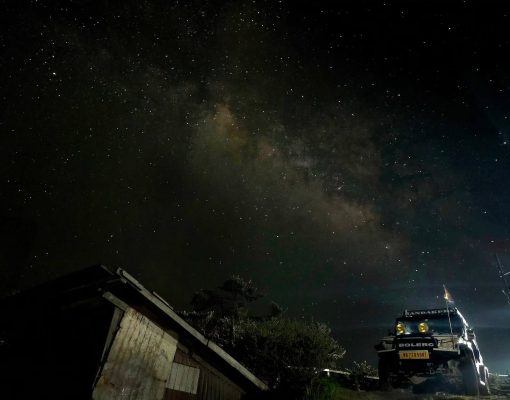
Perched on the Singalila Ridge, Sandakphu offers panoramic views across India, Nepal, Bhutan, and Tibet by day. By night, its isolation reveals a sky rarely disturbed by artificial light.
Clear nights are rare but memorable. When conditions align, stars appear densely packed, stretching across the horizon above the eastern Himalayas.
- Best season: April to May, October to November
- Unique appeal: Eastern Himalayan night skies
- Challenge: Weather variability
FAQs
Hanle in Ladakh is widely regarded as the best stargazing location in India due to its high altitude, dry climate, and extremely low light pollution. It is also home to one of the world’s highest astronomical observatories.
The best time for stargazing in most parts of India is between October and March, when skies are clearer and humidity is lower. In high-altitude regions like Ladakh and Spiti, May to September offers better accessibility.
No. Many of India’s dark-sky locations allow excellent naked-eye viewing of constellations, planets, and the Milky Way. A basic binocular or beginner telescope can enhance the experience but is not essential.
Yes, provided basic precautions are taken. Travelling with local guides, staying at established accommodations, and being mindful of weather and altitude conditions ensures a safe stargazing experience.
Light pollution is excessive or poorly directed artificial lighting that brightens the night sky. It reduces visibility of stars, disrupts ecosystems, affects human sleep cycles, and threatens astronomical research.






 Login with Google