























 Pin
Pin Photo courtesy of Ariana News
Synopsis: In a high-profile Florida meeting with Israeli Prime Minister Benjamin Netanyahu, U.S. President Donald Trump issued a direct message: Tehran could face a possible strike if it revives nuclear or missile programs. He also challenged Hamas to lay down its weapons to progress the Gaza ceasefire deal. The encounter touches on fragile peace efforts, deep regional anxieties, and Washington’s evolving strategy in the Middle East.
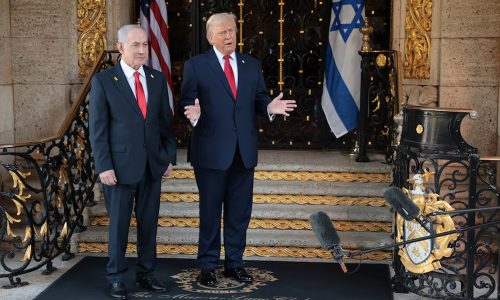
At the elegant Mar-a-Lago estate in Palm Beach, the Florida sun was dipping low when Donald Trump and Benjamin Netanyahu stood before reporters. The mood was serious, but the backdrop — a blend of luxury and high stakes diplomacy — made the moment feel almost surreal. This wasn’t a routine briefing but a snapshot of global tension in real time.
Trump delivered a clear line: if Iran begins to rebuild its nuclear or ballistic missile programs, the United States — with Israel nearby — could support a possible strike to stop it. This was a warning delivered with calibrated certainty, not dramatic flare.
Netanyahu, known for his firm stance on Iran’s weapons ambitions, nodded alongside Trump, underscoring that the two leaders were aligned on the big picture: deterrence, vigilance, and pressure toward de-escalation, even as tensions simmer.
Table of Contents
Why Iran Is Central to the Message
Iran’s nuclear ambitions have been a global flashpoint for years. Once damaged by strikes earlier in 2025, some U.S. officials and allies believe Tehran may be trying to revive aspects of its weapons programs — a worry Trump referenced in his remarks.
This concern isn’t abstract. Long-range missiles and enriched nuclear material change the strategic math in the Middle East. For Israel, even the hint of revival triggers alarm; for the U.S., it’s a test of how hard Washington is willing to push back.
Iran publicly denies pursuing nuclear weapons and insists its program is peaceful. Still, Trump’s comments signal real impatience — and the possibility that diplomatic channels might take a backseat if Iran accelerates its activities again.
The Gaza Ceasefire in the Balance
While Iran was the headline, another major thread tied through the duo’s discussion: Gaza. Trump and Netanyahu are pressing forward with a U.S.-brokered ceasefire that has mostly held but has stalled over its more difficult parts.
For the next phase to begin — envisioned as deploying international peacekeepers and rebuilding Gaza after years of war — one thing must happen first. Trump said Hamas must disarm. That’s a tall order, given the group’s insistence on maintaining armed resistance as long as it sees occupation.
Trump’s message to Hamas wasn’t gentle. He warned that the consequences of refusing to disarm “would be severe,” framing it as a make-or-break moment for the ceasefire process.
What Trump Said — And Didn’t Say
Trump’s remarks were blunt, even if not fully detailed. He said he believed Iran might be rebuilding capabilities and that if that was true, the U.S. would act. He even mentioned the long flight path of a B-2 bomber as part of that deterrent calculus.
But he didn’t unveil fresh intelligence or new sanctions. Nor did he outline exact steps that would trigger military action. This ambiguity means the warning is as much diplomatic as it is strategic — a signal sent equally to Tehran, regional capitals, and global markets.
Netanyahu’s Role in the Moment
For Netanyahu, this meeting was a reaffirmation of alliance — and a chance to keep global attention on Iran’s ambitions. He praised Trump’s stance and underscored Israel’s own security concerns, particularly around long-range missiles that could threaten Israeli cities.
Their bond on this issue doesn’t erase all differences — there remain nuanced debates about how far to push militarily versus diplomatically — but at this moment, they projected unity over deterrence and vigilance.
Tehran’s Reaction and Regional Ripples
Iran didn’t sit quietly. Its military warned of “costly retaliation” if its national security was threatened, even as Tehran insists its nuclear work is peaceful.
Across the region, other capitals watched closely. Gulf states, Arab neighbors, and global powers are all trying to assess where the U.S. stands, and whether diplomacy is still the goal or deterrence edges closer to conflict.
The U.S. Balancing Act
Trump’s message carries dual threads: toughness and negotiation. While threatening action, he also noted the possibility of a deal with Iran — a tug-of-war between military pressure and diplomatic engagement.
This balancing act reflects a larger debate in Washington: how much force is too much, and how much diplomacy is too little. There’s no simple answer, and the world’s watching closely.
Hamas and the Hard Reality of Disarmament
Hamas has held weapons as part of its identity and leverage for decades. Asking it to disarm isn’t just a political demand — it’s asking a group to give up a key source of power.
Trump framed this as essential to move forward with Gaza’s rebuilding and peace plans. But it’s a steep hill. For Gaza’s civilians, the walls of political strategy can feel distant from daily life.
Diplomacy, Pressure, and Uncertainty
Both sides — Washington and Jerusalem — say they want progress. The next steps involve more diplomacy, more quiet negotiations, and perhaps pressure on Iran from multiple fronts.
Yet if Iran accelerates its capabilities or Hamas holds firm, the path could be rockier than it appears. It’s a moment of cautious watchfulness on a stage that has seen too many surprises.
Global Stakes and the Ripple Effect
A U.S. warning of a possible strike on a major Middle Eastern power isn’t everyday news. It ripples out into global markets, alliances, and public opinion. Nations calculate risk and strategy — and ordinary people try to make sense of it all.
In a region that has known too much conflict, every word from Washington or Tehran carries weight. This moment is one such ripple — small by some measures, profound in its stakes.
A Watchful Pause in a Volatile Standoff
The Florida meeting reminded the world that debates over war and peace are never sealed. They are ongoing, fragile, and influenced by personalities as much as policy.
Whether Iran steps back from rebuilding, whether Hamas opts for disarmament, or whether negotiations yield breakthroughs — all are open questions. For now, the message was stern, clear, and watched closely around the globe.
FAQs
He said Washington could support a possible strike if Tehran rebuilds nuclear or ballistic missile programs.
Disarming was framed as a key condition to move forward with the next phase of the Gaza ceasefire deal.
Iran’s military warned of costly retaliation if its security is threatened.
Leaders want to stabilize the Gaza ceasefire while managing Iran’s military ambitions.
It could, but much depends on diplomacy, compliance, and a shift in on-the-ground realities.










 Login with Google