
























 Pin
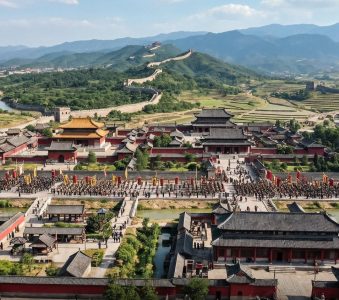
Pin Chinese Imperial Era / Photo courtesy Luxury Society
Synopsis: Power, it seems, runs in the blood. Across continents and centuries, a handful of royal families clung to their thrones with remarkable tenacity—some for hundreds of years, others for more than a millennium. The top 18 longest ruling dynasties in the world weren’t just lucky; they were strategic, ruthless, and occasionally brilliant. From the sun-baked banks of the Nile to the mist-covered hills of Ethiopia, these families built empires, survived wars, and left marks so deep that history still can’t shake them off.
History has a habit of forgetting most people, but it never forgets a good dynasty. These weren’t just families—they were institutions, brands, and sometimes entire civilizations wrapped up in a bloodline. The top 18 longest ruling dynasties in the world proved that staying in power required more than luck or a sharp sword. It demanded cunning, adaptability, and an iron grip on loyalty.
Some ruled from glittering palaces along great rivers. Others governed from fortresses carved into desert cliffs or mountain peaks. A few managed to survive invasions, plagues, and internal coups that would have toppled lesser families in a single generation. What they all shared was an uncanny ability to bend with the times without breaking—or at least, not breaking completely.
The dynasties on this list span continents and cultures, but they share common threads: ambition, resilience, and the stubborn refusal to let go of the throne. Their reigns weren’t always peaceful, and their legacies weren’t always pretty. But they lasted. And in the brutal arithmetic of history, longevity counts for something.
Table of Contents
1. Pharaonic Egypt – The Original Dynasty Playbook (3100 BCE–332 BCE)
 Pin
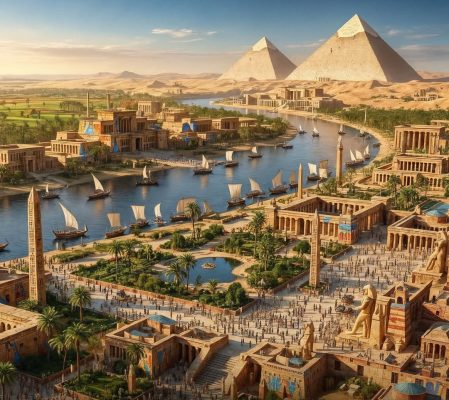
Pin Pharaonic Egypt / Photo courtesy Luxury Society
Ancient Egypt didn’t just have kings—it had pharaohs, god-kings who ruled for nearly three thousand years across multiple dynasties. No other civilization managed to maintain such continuity of royal power. The secret wasn’t just divine endorsement; it was geography, agriculture, and a bureaucracy that could outlast any single ruler.
The Nile flooded on schedule, which meant predictable harvests and a stable economy. Pharaohs leveraged this wealth to build monuments so massive they still dominate the landscape today. Pyramids weren’t just tombs—they were advertisements of permanence, statements carved in stone that said, “We were here, and we’re not going anywhere.”
Of course, dynasties rose and fell within this long arc. Foreign invaders occasionally seized control, and civil wars fractured the kingdom more than once. But the institution of pharaonic rule endured, adapting to new challenges while clinging to ancient traditions. Even when Alexander the Great finally conquered Egypt, he didn’t dismantle the system—he simply became pharaoh himself.
Key Features:
- 🏛️ Unified Upper and Lower Egypt under a single crown
- 📜 Developed one of the world’s first writing systems (hieroglyphics)
- ⚱️ Built enduring monuments like the Pyramids and Sphinx
- 🌾 Controlled the Nile’s agricultural wealth for millennia
2. Chinese Imperial Era – The Mandate That Never Quite Expired (221 BCE–1912 CE)
 Pin
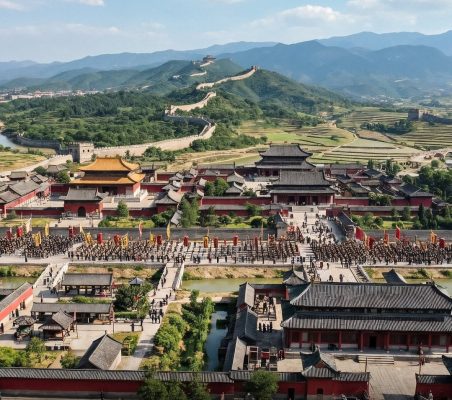
Pin Chinese Imperial Era / Photo courtesy Luxury Society
China’s imperial dynasties ran the longest continuous civilization game in human history. For over two millennia, emperors ruled under the “Mandate of Heaven,” a clever bit of political theology that said heaven blessed good rulers and cursed bad ones. It was a system that justified both loyalty and rebellion, depending on which way the wind blew.
Dynasties came and went—Qin, Han, Tang, Song, Ming, Qing—but the imperial structure remained remarkably consistent. Each dynasty claimed legitimacy by overthrowing a “corrupt” predecessor, then promptly adopted the same bureaucratic machinery. The civil service exams, Confucian values, and centralized administration created continuity even when the ruling family changed.
The Qing Dynasty, the last imperial house, fell in 1912 after ruling since 1644. But even that collapse didn’t erase the imperial legacy. China’s political culture, social hierarchies, and territorial ambitions were all shaped by centuries of dynastic rule. The emperors are gone, but their shadow remains long.
Key Features:
- 📚 Established civil service examinations for bureaucratic positions
- 🏯 Built the Great Wall and Grand Canal
- 🎨 Created lasting contributions to art, philosophy, and technology
- 👑 Ruled through the concept of the Mandate of Heaven
3. Roman Empire – The Republic That Became a Dynasty (27 BCE–1453 CE)
 Pin
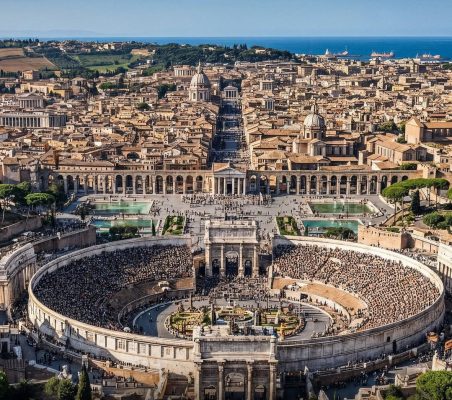
Pin Roman Empire / Photo courtesy Luxury Society
Rome started as a republic that despised kings, then spent the next fifteen centuries ruled by emperors who were kings in all but name. Augustus, the first emperor, was smart enough not to call himself king—Romans had bad memories of tyrants. But he laid the foundation for a dynastic system that would outlast almost everything else in the ancient world.
The Western Roman Empire collapsed in 476 CE, brought down by barbarian invasions and internal decay. But the Eastern Roman Empire, better known as Byzantium, carried the torch for another thousand years. Constantinople became the new Rome, a glittering capital that preserved Roman law, Greek culture, and Christian orthodoxy through the Middle Ages.
When the Ottomans finally conquered Constantinople in 1453, they weren’t just toppling a city—they were closing the book on an institution that had defined Western civilization. The Roman Empire’s legal codes, architectural styles, and political concepts influenced every European nation that followed. Dynasties throughout Europe claimed to be Rome’s legitimate heirs, even centuries after the last emperor fell.
Key Features:
- ⚔️ Transitioned from republic to empire under Augustus
- 🏛️ Developed Roman law, which influenced modern legal systems
- 🛡️ Split into Western and Eastern (Byzantine) halves
- 📖 Preserved classical knowledge through the Byzantine period
4. Champa – The Maritime Power That Sailed for Centuries (192–1832)
 Pin
Pin Champa Empire / Photo courtesy Luxury Society
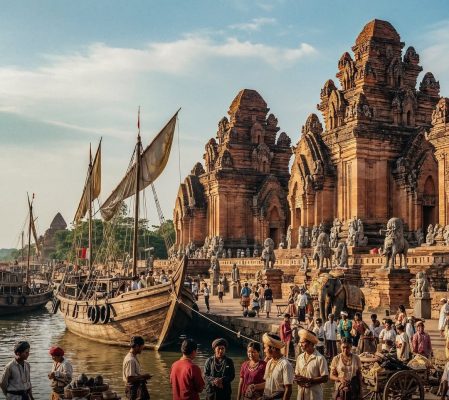
Champa isn’t a household name today, but for sixteen centuries it was a major player in Southeast Asian politics. Located in what’s now central and southern Vietnam, the Cham kingdoms controlled crucial maritime trade routes between India and China. Their ports bustled with merchants from across Asia, and their temples rivaled anything built in neighboring empires.
The Cham were master sailors and fierce warriors. They raided Angkor, the Khmer capital, more than once, and held their own against Chinese invasions for centuries. But geography was both blessing and curse—being on the coast meant access to trade, but it also meant exposure to powerful neighbors with expansionist ambitions.
Vietnam gradually absorbed Champa over several centuries, conquering territories bit by bit. By 1832, the last Cham kingdom had disappeared from the map. What remains today are stunning temple ruins and a small Cham minority population that preserves fragments of the old culture. The dynasty lasted longer than most empires, but it couldn’t outlast Vietnamese southward expansion.
Key Features:
- 🚢 Dominated maritime trade routes in Southeast Asia
- 🕌 Built distinctive Hindu and Buddhist temples
- ⚔️ Conducted successful raids against Angkor
- 🌊 Strategically located along coastal trading networks
5. Kingdom of Kush – The Pharaohs Nobody Expected (1070 BCE–350 CE)
 Pin
Pin Kingdom of Kush / Photo courtesy Luxury Society
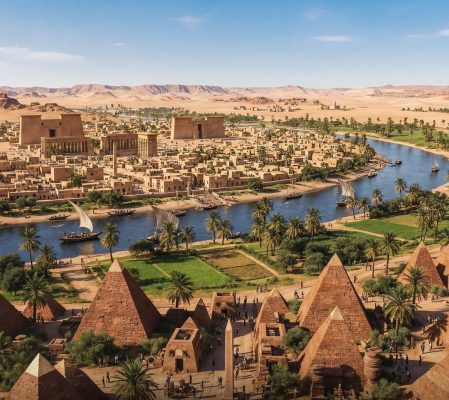
Kush had the audacity to not only survive next to Egypt but occasionally conquer it. Located in what’s now Sudan, the Kingdom of Kush spent fourteen centuries as a major African power, building pyramids, trading gold and ivory, and occasionally making the pharaohs nervous. For a brief period, Kushite kings even ruled Egypt as the 25th Dynasty.
The Kushites learned from their powerful northern neighbor but weren’t content to be copycats. They developed their own writing system (Meroitic script), built steeper pyramids, and created a distinct cultural identity that blended Egyptian, African, and Mediterranean influences. Their capital, Meroe, became a center of iron production and trade.
The kingdom eventually fell to the rising Kingdom of Axum in the 4th century CE, but not before leaving an impressive archaeological legacy. The Kushite pyramids at Meroe still stand—over two hundred of them—outnumbering the pyramids in Egypt. For a civilization that lasted nearly a millennium and a half, Kush remains surprisingly underappreciated in popular history.
Key Features:
- 👑 Briefly ruled Egypt as the 25th Dynasty
- ⛏️ Developed significant iron smelting industry
- 🔺 Built over 200 pyramids (more than Egypt)
- 📝 Created their own Meroitic writing system
6. Republic of Venice – The Merchant Dynasty (697–1797)
 Pin
Pin Republic of Venice / Photo courtesy Luxury Society
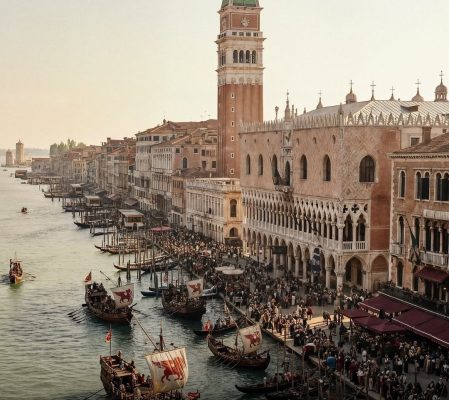
Venice wasn’t ruled by emperors or kings—it was governed by doges, elected nobles who served for life. But don’t let the word “republic” fool anyone. Venice was an oligarchy where the same wealthy merchant families controlled politics for eleven centuries. The system was different, but the result was the same: dynastic power passed down through generations of connected families.
The Venetians built their fortune on trade, controlling Mediterranean commerce with a ruthless efficiency that would make modern corporations jealous. Their merchant fleet was unmatched, their banking system sophisticated, and their intelligence network legendary. Venice played European powers against each other while quietly amassing wealth and territory.
Napoleon finally ended the Venetian Republic in 1797, and by then it had already declined from its medieval peak. But eleven centuries is an impressive run for any political system, especially one that survived by brains rather than brute force. The palaces along the Grand Canal still testify to the wealth and power that merchant families accumulated over generations.
Key Features:
- 🏛️ Elected doges for life from noble families
- 🚢 Dominated Mediterranean trade for centuries
- 💰 Developed advanced banking and financial systems
- 🎭 Created lasting cultural and artistic traditions
7. Anuradhapura Kingdom – The Buddhist Empire (377 BCE–1017 CE)
 Pin
Pin Anuradhapura Kingdom / Photo courtesy Luxury Society
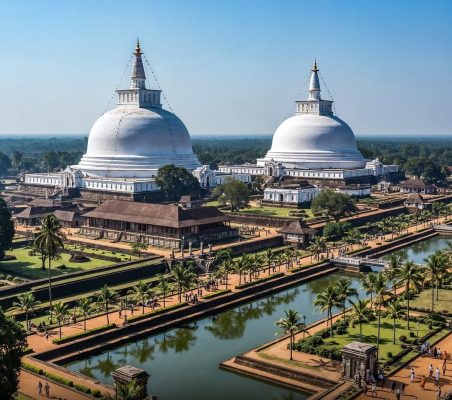
Sri Lanka’s Anuradhapura Kingdom lasted nearly fourteen centuries, making it one of the longest-lived Buddhist states in history. The city of Anuradhapura became a pilgrimage center and political capital, home to massive stupas, monasteries, and sophisticated irrigation systems that supported a thriving agricultural economy.
Buddhism shaped every aspect of Anuradhapura politics and culture. Kings claimed legitimacy through their protection of the faith, and the presence of sacred relics—like the Buddha’s tooth—gave the kingdom immense spiritual authority. Monasteries accumulated land and wealth, becoming powerful political actors in their own right.
South Indian invasions eventually led to the kingdom’s collapse in the 11th century, and the capital shifted to Polonnaruwa. But Anuradhapura’s ruins remain some of the most impressive in South Asia. The ancient reservoirs still hold water, and the sacred Bodhi tree, said to be grown from a cutting of the tree under which Buddha achieved enlightenment, still attracts pilgrims after more than two millennia.
Key Features:
- 🕉️ Established Buddhism as state religion and cultural foundation
- 💧 Built advanced irrigation systems including massive reservoirs
- 🏛️ Constructed enormous stupas and monasteries
- 🌳 Protected sacred religious relics and the ancient Bodhi tree
8. Kanem-Bornu Empire – The Saharan Power (700–1893)
 Pin
Pin Kanem-Bornu Empire / Photo courtesy Luxury Society
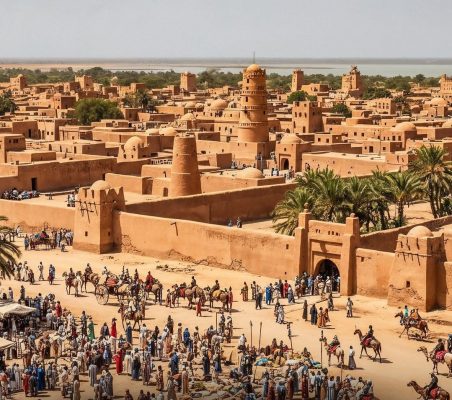
While European medieval kingdoms rose and fell, the Kanem-Bornu Empire quietly dominated the region around Lake Chad for over a millennium. This wasn’t accidental—the empire controlled crucial trans-Saharan trade routes, taxing caravans carrying gold, salt, slaves, and exotic goods between West Africa and the Mediterranean.
The Sayfawa dynasty ruled Kanem-Bornu for the entire duration, making it one of the longest-lasting royal lineages in African history. They converted to Islam in the 11th century, which gave them diplomatic connections across the Muslim world and legitimacy in the eyes of North African trading partners. Royal chronicles meticulously recorded the succession of kings, establishing clear lines of authority.
The empire eventually fragmented under pressure from neighboring states and European colonial encroachment. By 1893, the Sayfawa dynasty’s long reign had ended, though descendants still hold traditional authority in parts of modern Nigeria and Chad. The empire’s longevity demonstrated that African states could maintain complex political institutions for centuries, contrary to colonial-era stereotypes.
Key Features:
- 🐪 Controlled profitable trans-Saharan trade routes
- 👑 Ruled by the Sayfawa dynasty for over 1,000 years
- ☪️ Adopted Islam, enhancing diplomatic connections
- 📚 Maintained detailed royal chronicles documenting succession
9. Nri Kingdom – The Priest-Kings of West Africa (1043–1911)
 Pin
Pin Nri Kingdom / Photo courtesy Luxury Society
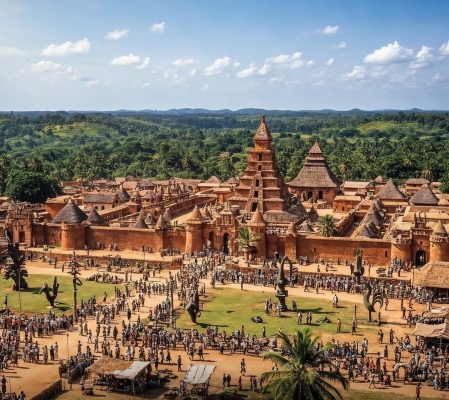
The Nri Kingdom operated on a completely different model than most dynasties on this list. The Eze Nri wasn’t a military conqueror—he was a priest-king whose authority came from spiritual and moral influence rather than armies. For nearly nine centuries, this system worked remarkably well in what’s now southeastern Nigeria.
Nri influence spread through networks of titled chiefs and ritual specialists who carried the kingdom’s authority to surrounding communities. The Eze Nri performed religious ceremonies, mediated disputes, and cleansed abominations. People came to Nri voluntarily, seeking legitimacy and spiritual protection. Military force was almost irrelevant.
British colonization eventually disrupted this system. Colonial authorities didn’t understand or respect the Nri’s spiritual authority, and they imposed new administrative structures that marginalized traditional institutions. The last powerful Eze Nri ruled in the early 20th century, ending a dynasty that had survived for 868 years without building a single army.
Key Features:
- 🕊️ Ruled through spiritual authority rather than military force
- 👤 Eze Nri served as priest-king and moral arbiter
- ⚖️ Mediated disputes and performed purification rituals
- 🌾 Influenced surrounding communities through ritual networks
10. Byzantine Empire – Rome's Stubborn Eastern Half (330–1453)
 Pin
Pin Byzantine Empire / Photo courtesy Luxury Society
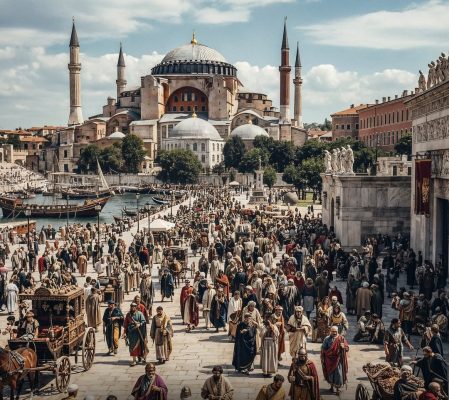
The Byzantine Empire never called itself “Byzantine”—that’s a name historians invented later. To the people living there, it was simply the Roman Empire, and Constantinople was the new Rome. For over a thousand years, Byzantine emperors maintained this claim, preserving Roman law, Greek learning, and Christian orthodoxy through invasions, plagues, and constant warfare.
Constantinople’s location was both strategic genius and constant headache. The city controlled trade routes between Europe and Asia, generating enormous wealth. But it also attracted every ambitious conqueror in the region. Persians, Arabs, Bulgars, and eventually Ottoman Turks all besieged the city multiple times. The famous walls of Constantinople held for centuries, but walls can only do so much.
The empire shrank gradually over time, losing territories to Muslim conquests, Crusader betrayals, and internal civil wars. By 1453, “empire” was a generous term for what remained—essentially just the city itself. When the Ottoman Sultan Mehmed II finally breached the walls, the last Byzantine emperor died fighting, and a thousand-year dynasty ended with him.
Key Features:
- 🏛️ Preserved Roman legal traditions and Greek classical knowledge
- ⛪ Served as center of Eastern Orthodox Christianity
- 🛡️ Defended Europe against multiple invasions for centuries
- 🎨 Created distinctive Byzantine art and architecture
11. Silla – Korea's Unifying Dynasty (57 BCE–935 CE)
 Pin
Pin Silla / Photo courtesy Luxury Society
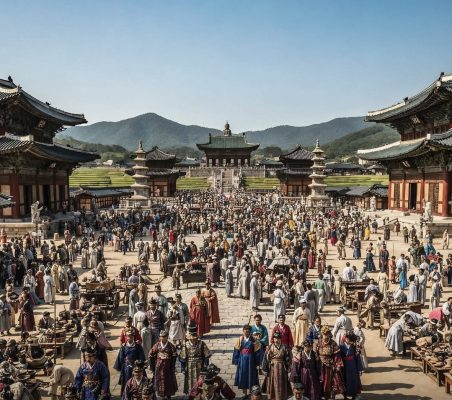
Silla started as one of three kingdoms competing for control of the Korean Peninsula. It ended up absorbing the others and ruling a unified Korea for nearly a thousand years. The secret to Silla’s success was patience, strategic alliances, and the willingness to adopt the best ideas from neighbors—particularly China’s administrative systems.
The Silla court embraced Buddhism and Confucianism, built magnificent temples, and established a sophisticated bone-rank system that structured society from peasants to royalty. The capital, Gyeongju, became one of the world’s largest cities during the height of Silla power, filled with palaces, temples, and tombs that reflected the kingdom’s wealth and cultural achievements.
Internal conflicts eventually weakened Silla, and the kingdom fractured into regional powers competing for supremacy. By 935 CE, a new dynasty (Goryeo) had emerged to unify the peninsula. But Silla’s cultural legacy endured—Korean art, religion, and political thought were all shaped by centuries of Silla rule. The tombs around Gyeongju still attract visitors fascinated by this long-lost kingdom.
Key Features:
- 🇰🇷 Unified the Korean Peninsula under single rule
- 🏯 Developed sophisticated bone-rank social system
- 🛕 Built magnificent Buddhist temples and monuments
- 📚 Adopted and adapted Chinese administrative models
12. Aksumite Empire – Christianity's African Stronghold (100–940)
 Pin
Pin Aksumite Empire / Photo courtesy Luxury Society
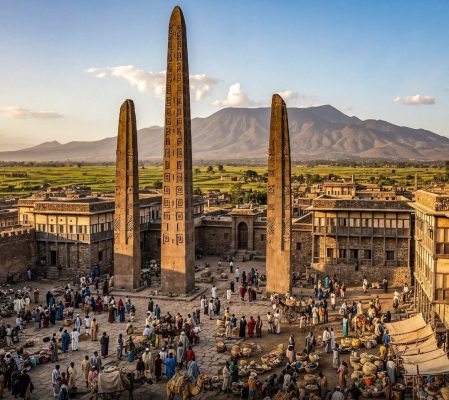
The Aksumite Empire doesn’t get enough credit for being one of the ancient world’s great powers. Located in what’s now Ethiopia and Eritrea, Aksum controlled Red Sea trade routes and minted its own coinage—a privilege usually reserved for major empires. Roman sources mentioned Aksum alongside Rome, Persia, and China as one of the world’s four great kingdoms.
Aksum converted to Christianity in the 4th century, making it one of the first Christian kingdoms in the world. This wasn’t just a spiritual decision—it was a strategic alignment with the Roman Empire and a way to distinguish Aksumite identity from rival powers. The famous rock-hewn churches and towering stelae still testify to the kingdom’s engineering prowess.
Climate change and shifting trade routes gradually undermined Aksumite power. By the 10th century, the empire had fragmented, and political power moved southward into the Ethiopian highlands. But the Aksumite legacy lived on through Ethiopian Christianity and the claim by later Ethiopian emperors to descend from Solomon and Sheba—a genealogical myth rooted in Aksumite history.
Key Features:
- 💰 Minted its own coinage, demonstrating economic sophistication
- ✝️ Adopted Christianity in the 4th century
- ⛵ Controlled strategic Red Sea trade routes
- 🗿 Built massive stone stelae (obelisks) and monuments
13. Kingdom of Makuria – The Christian Buffer State (580–1312)
 Pin
Pin Kingdom of Makuria / Photo courtesy Luxury Society
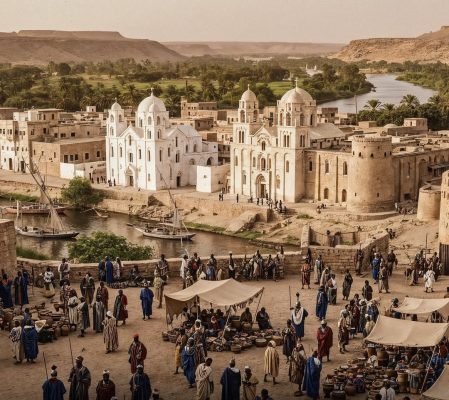
While Islam spread across North Africa and the Middle East, the Kingdom of Makuria held firm as a Christian stronghold along the Nile in what’s now Sudan. For over seven centuries, Makuria resisted multiple invasions, signed treaties with Muslim Egypt, and maintained its distinct Christian culture. The kingdom proved that African states could resist even the most powerful neighbors.
Makurian diplomacy was remarkably sophisticated. Rather than fight endless wars with Muslim Egypt, they negotiated the Baqt, a treaty that established peace in exchange for an annual exchange of goods. This arrangement lasted for centuries—one of the longest-lasting treaties in medieval history. Makuria could focus on internal development rather than constant warfare.
The kingdom eventually fell to a combination of internal instability, Mamluk interference, and the gradual decline of Nile trade routes. By the early 14th century, a Muslim dynasty had replaced the Christian kings, and Makuria’s churches slowly crumbled. But the ruins of painted churches along the Nile still showcase the artistic achievements of this forgotten Christian kingdom.
Key Features:
- ⛪ Maintained Christianity despite Islamic expansion
- 📜 Negotiated the Baqt treaty with Muslim Egypt (lasting centuries)
- 🎨 Created distinctive Nubian Christian art and architecture
- 🛡️ Successfully resisted multiple Arab invasions
14. Holy Roman Empire – The Empire That Wasn't Quite (962–1806)
 Pin
Pin Holy Roman Empire / Photo courtesy Luxury Society
Voltaire famously quipped that the Holy Roman Empire was “neither holy, nor Roman, nor an empire.” He had a point. This sprawling collection of German territories, principalities, and city-states was more like a dysfunctional family reunion than a unified empire. But it lasted 844 years, which counts for something.
The empire’s structure was bizarre by modern standards. Emperors were elected by prince-electors, not born into the position, though certain families (like the Habsburgs) dominated the process. The emperor had authority on paper but little real power over the various German states, which operated almost independently. Wars, diplomacy, and marriage alliances kept the whole contraption wobbling forward.
Napoleon finally put the empire out of its misery in 1806, forcing the last emperor to abdicate. By then, the Holy Roman Empire had already become a historical curiosity—a medieval institution surviving into the age of nationalism and modern states. Still, it shaped Central European politics for eight centuries, and its territorial divisions influenced Germany’s fragmented political development.
Key Features:
- 👑 Emperors elected rather than hereditary succession
- 🏰 Comprised hundreds of semi-independent German states
- ⚔️ Dominated by Habsburg family in later centuries
- 📜 Maintained medieval political structures into modern era
15. Ethiopian Empire – The Dynasty That Claimed Solomon (1270–1974)
 Pin
Pin Ethiopian Empire / Photo courtesy Luxury Society
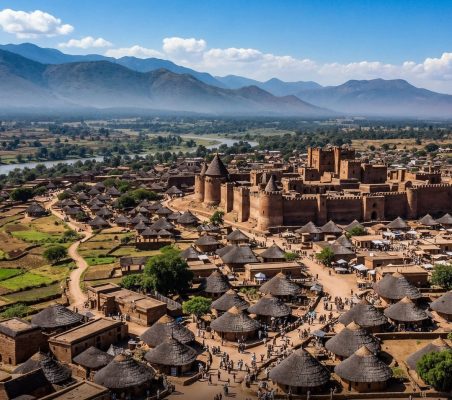
Ethiopian emperors traced their lineage back to Solomon and the Queen of Sheba—a genealogical claim that gave the Solomonic Dynasty enormous legitimacy. Whether the bloodline was real or mythological didn’t matter much; what mattered was that Ethiopians believed it. For seven centuries, this belief sustained imperial authority through wars, famines, and European colonialism.
Ethiopia remained independent when almost all of Africa fell under European control. Emperor Menelik II defeated an Italian invasion at the Battle of Adwa in 1896, preserving Ethiopian sovereignty and earning international respect. The country became a symbol of African resistance and pride, the only major African nation never colonized (aside from a brief Italian occupation in the 1930s).
Emperor Haile Selassie, the last Solomonic ruler, was overthrown in 1974 by a Marxist military coup. The dynasty’s 704-year reign ended not with foreign conquest but internal revolution. Yet the imperial legacy remains powerful in Ethiopian culture and identity. The Lion of Judah, the symbol of Solomonic authority, still appears on flags, churches, and national emblems.
Key Features:
- 👑 Claimed descent from King Solomon and Queen of Sheba
- 🦁 Used the Lion of Judah as imperial symbol
- 🛡️ Defeated Italian invasion at Battle of Adwa (1896)
- ⛪ Preserved ancient Christian traditions and Ethiopian Orthodox Church
16. Khmer Empire – The Builders of Angkor (802–1431)
 Pin
Pin Khmer Empire / Photo courtesy Luxury Society
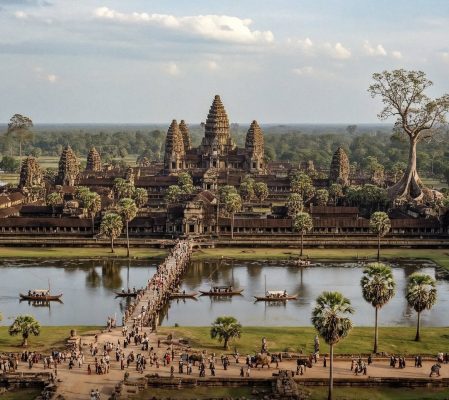
The Khmer Empire left behind one of the world’s most spectacular archaeological sites: Angkor Wat. For six centuries, Khmer kings ruled much of Southeast Asia from their capital near modern Siem Reap, Cambodia. The empire’s wealth came from rice cultivation, which fed a large population and funded the massive temple complexes that still amaze visitors today.
Khmer kings weren’t modest. They built temples designed to represent Mount Meru, the center of the universe in Hindu and Buddhist cosmology. Angkor Wat, the largest religious monument in the world, was just one of hundreds of temples constructed during the empire’s peak. These weren’t just spiritual centers—they were statements of royal power carved in sandstone.
Thai invasions and environmental stress eventually brought down the empire. Angkor was abandoned as a capital in the 15th century, and the jungle slowly reclaimed the temples. But the Khmer legacy lived on through the survival of Cambodian culture and language. Modern Cambodia still sees itself as heir to the Angkorian golden age, and the temples remain a source of national pride.
Key Features:
- 🛕 Built Angkor Wat, the world’s largest religious monument
- 🌾 Developed sophisticated irrigation and rice cultivation systems
- 👑 Ruled much of Southeast Asia at empire’s peak
- 🎨 Created distinctive Khmer art and architectural styles
17. Srivijaya – The Invisible Maritime Empire (650–1377)
 Pin
Pin Srivijaya / Photo courtesy Luxury Society
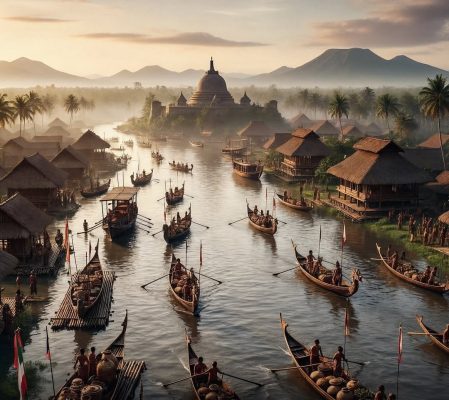
Srivijaya is one of history’s great mysteries. For over seven centuries, this maritime empire dominated the Strait of Malacca, controlling trade between India and China. Yet it left behind almost no monumental architecture and barely appears in indigenous historical records. Most of what we know comes from Chinese chronicles and scattered archaeological finds.
The empire’s power came from geography and naval strength. By controlling the strait, Srivijaya could tax shipping and eliminate piracy, making the route attractive to merchants. The capital (probably located on Sumatra) became a center of Buddhist learning, attracting monks and scholars from across Asia. Chinese pilgrims stopped there to study before continuing to India.
Srivijaya’s decline was gradual. Rival powers chipped away at its control of trade routes, and the Majapahit Empire eventually absorbed much of its territory. By the late 14th century, the empire had fragmented into smaller kingdoms. But for 727 years, Srivijaya proved that empires didn’t need pyramids or palaces to wield enormous power—sometimes control of trade routes was enough.
Key Features:
- 🚢 Controlled the strategic Strait of Malacca
- 📚 Became major center of Buddhist scholarship
- 💰 Taxed maritime trade between India and China
- 🏝️ Based power on naval strength rather than territorial conquest
18. Ottoman Empire – The Dynasty That Bridged Continents (1299–1922)
 Pin
Pin Ottoman Empire / Photo courtesy Luxury Society
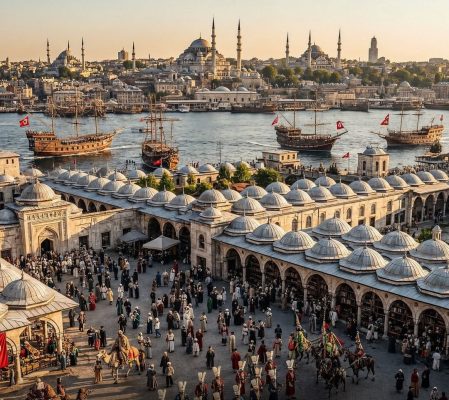
The Ottoman Empire lasted 623 years and at its peak controlled territories on three continents. From the Balkans to North Africa to the Arabian Peninsula, Ottoman sultans ruled one of history’s most diverse empires. The dynasty wasn’t perfect—succession often involved fratricide, and the empire’s decline was long and painful—but it left an undeniable mark on world history.
The Ottomans succeeded through pragmatism. They recruited talented administrators regardless of ethnicity, allowed religious minorities to govern themselves through the millet system, and adopted military innovations like gunpowder artillery. Istanbul (formerly Constantinople) became one of the world’s great cities, a cosmopolitan center of trade, learning, and political power.
World War I finished off the empire. The Young Turks had tried to modernize the state, but defeat in war led to territorial dismemberment. Mustafa Kemal Atatürk abolished the sultanate in 1922, ending the Ottoman dynasty and establishing the Republic of Turkey. The last sultan left Istanbul on a British warship, closing a chapter that had shaped European, Middle Eastern, and North African history for six centuries.
Key Features:
- 🕌 Controlled territories spanning Europe, Asia, and Africa
- 🏛️ Established sophisticated administrative system
- ⚔️ Adopted gunpowder weapons and modern military tactics
- 🌍 Created diverse, multi-ethnic empire lasting six centuries
FAQs
Pharaonic Egypt holds the record, ruling continuously for nearly 3,000 years across multiple dynasties from 3100 BCE to 332 BCE.
Through strategic marriages, strong bureaucracies, control of trade routes, religious legitimacy, and the ability to adapt to changing political circumstances.
Not quite—Venice was a republic controlled by merchant families, and some African kingdoms ruled through spiritual authority rather than military force.
Foreign invasions, internal rebellions, environmental changes, shifting trade routes, and European colonialism all played roles in bringing down long-lasting dynasties.
Some Ethiopian noble families trace ancestry to the Solomonic Dynasty, and Ottoman descendants maintain cultural influence, though they no longer hold political power.








 Login with Google