












 Pin
Pin Great Challenge, France / Photo courtesy Wealth
Synopsis: The world’s most astonishing sculptures go far beyond marble and bronze. Some rest beneath ocean waves, becoming living reefs. Others tower hundreds of feet tall, housing museums inside their frames. A few emerge from canals to warn about climate change, while ancient colossi hide secret grottoes within their stone bodies. These aren’t your average park monuments—they’re engineering marvels that double as ecological habitats, cultural landmarks, and architectural wonders. Each tells a story about human ambition, spirituality, or our relationship with nature. Ready to meet the sculptures that make people say “wait, that’s real?”
You’ve probably walked past dozens of statues in your lifetime without a second glance. A general on a horse. A poet on a pedestal. Maybe a fountain with some dolphins.
But the top 10 most incredible statues made by humans aren’t those forgettable park fixtures. These are the sculptures that make you stop scrolling, book a flight, or question what’s physically possible. We’re talking about artworks you can scuba dive to visit, monuments taller than the Statue of Liberty, and pieces that literally evolve over time as nature claims them.
What makes a statue truly incredible? Size helps, sure. But the best ones combine jaw-dropping scale with genuine artistic vision, cultural significance, or environmental purpose. They transform landscapes, tell ancient stories, or make urgent statements about our planet’s future. Let’s explore the sculptures that prove humans are capable of creating absolute wonders
Table of Contents
1. Christ of the Abyss - Italy's Underwater Marvel
 Pin
Pin Christ of the Abyss / Photo courtesy Wealth
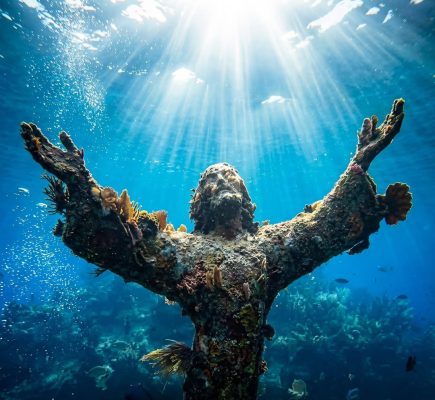
Off the Italian Riviera near Portofino, a bronze Jesus stands 56 feet below the Mediterranean surface. His arms reach upward through shimmering blue water, palms open toward the light filtering down from above.
Sculptor Guido Galletti created this 8-foot masterpiece in 1954 as a memorial to divers who died at sea. But it became something more profound. Over decades, the statue transformed into a living artwork as barnacles, coral, and sea anemones colonized its surface. The bronze Christ now wears a coat of marine life, his features softened by nature’s patient touch.
Divers from around the world descend to meet him. The experience feels spiritual even for non-believers—floating weightless before this silent guardian of the deep. The statue also serves an ecological purpose, functioning as an artificial reef that supports fish populations and underwater biodiversity. Art, memorial, and habitat rolled into one breathtaking piece.
Key Features:
- Depth: 56 feet (17 meters)
- Material: Bronze
- Created: 1954
- Doubles as artificial reef
2. Ocean Atlas - The Bahamas' Heavyweight Champion
 Pin
Pin Ocean Atlas / Photo courtesy Wealth
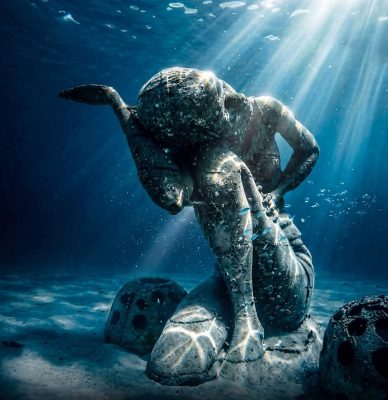
Just off Nassau in the Bahamas sits the largest underwater sculpture on Earth. A young woman kneels on the ocean floor, her hands pressed against the water above as if holding up the entire sea.
British sculptor Jason deCaires Taylor installed this 60-ton behemoth in 2014. Standing 18 feet tall, Ocean Atlas reimagines the Greek myth—instead of carrying the sky, she supports the ocean. The symbolism cuts deep: we all bear responsibility for the health of our seas.
Like its Italian cousin, this sculpture becomes more spectacular with time. Algae blooms across its surface. Small fish dart between the figure’s massive fingers. Larger species use it as a landmark for navigation. Taylor specifically designed the pH-neutral materials to encourage marine growth, turning public art into ecosystem engineering. Snorkeling here feels like visiting an ancient temple that Atlantis forgot.
Impressive Stats:
- Weight: 60 tons
- Height: 18 feet
- World’s largest underwater sculpture
- Made from pH-neutral materials
3. The Kiss of Death - Spain's Beautiful Nightmare
 Pin
Pin The Kiss of Death / Photo courtesy Wealth
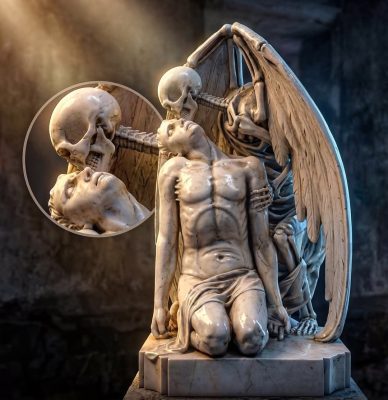
In Barcelona’s Poblenou Cemetery stands a sculpture that stops visitors cold. A skeletal figure with massive bat wings bends down to kiss a young man carved in perfect anatomical detail.
Jaume Barba created this 1930 masterpiece for the tomb of Josep Llaudet Soler. The contrast hits you immediately—smooth, idealized youth meeting death’s bony embrace. Yet there’s tenderness in the skeleton’s posture, almost romantic. Death doesn’t attack or threaten. It seduces.
The wings add gothic drama, but the real power comes from that kiss. It captures something most funeral art ignores: death as intimate, personal, inevitable. Not something to fear from a distance but an encounter every human faces. Photographers love the piece, but standing before it in person creates a strange mix of beauty and dread that photos can’t quite capture. The weathered stone adds gravitas that newer sculptures lack.
Notable Details:
- Location: Poblenou Cemetery, Barcelona
- Created: 1930
- Artist: Jaume Barba
- Theme: Death as seduction, not horror
4. Jatayu Earth's Center - India's Colossal Bird
 Pin
Pin Jatayu Earth’s Center / Photo courtesy Wealth
Rising from a hilltop in Kerala, India, a massive eagle appears mid-battle. This is Jatayu, the mythical bird from the Ramayana epic, captured in his moment of heroic sacrifice as he fought the demon king Ravana.
At 200 feet long, 150 feet wide, and 70 feet tall, it holds the record as the world’s largest bird sculpture. Took sculptor Rajiv Anchal a decade to complete this concrete and steel giant. But here’s the clever part: you can walk inside it. The sculpture houses a museum, theater, and observation deck within its body.
Jatayu represents more than myth. In Hindu tradition, this vulture tried to save Sita from abduction, fighting despite knowing he’d lose. That courage resonates. Visitors climb through the bird’s interior, emerging on its back to panoramic mountain views. It’s part art installation, part theme park, part cultural education—and it works on all three levels.
Mind-Blowing Specs:
- Length: 200 feet
- Width: 150 feet
- Height: 70 feet
- Contains museum and theater inside
- Construction time: 10 years
5. Giant Hands (Support) - Venice's Climate Warning
 Pin
Pin Giant Hands (Support) / Photo courtesy Wealth
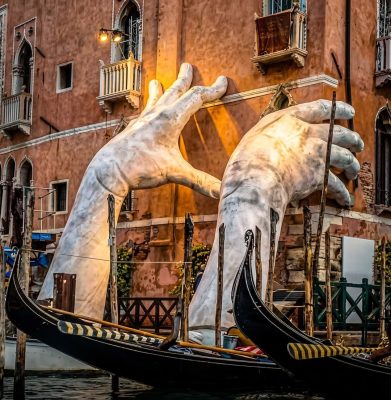
Two massive hands emerge from Venice’s Grand Canal, appearing to support the historic Ca’ Sagredo Hotel. They look strong enough to hold the building—but also like they’re pushing it over.
Lorenzo Quinn installed “Support” during the 2017 Venice Biennale, and the timing couldn’t have been sharper. Venice floods regularly now. Climate change threatens to swallow the entire city within decades. These hands ask a question with quiet urgency: will we support our heritage, or watch it sink?
The sculpture’s duality makes it brilliant. Those hands could be rescuing or destroying, depending on your perspective. They’re beautiful and unsettling at once. Quinn modeled them after his own sons’ hands, adding personal stakes to a global crisis. After the exhibition ended, the city considered making them permanent—the piece had become part of Venice’s conversation with itself about survival.
Symbolic Elements:
- Artist: Lorenzo Quinn
- Installed: 2017 Venice Biennale
- Theme: Climate change and rising waters
- Each hand weighs several tons
- Modeled after the artist’s sons’ hands
6. Apennine Colossus - The Renaissance's Hidden Giant
 Pin
Pin Apennine Colossus / Photo courtesy Wealth
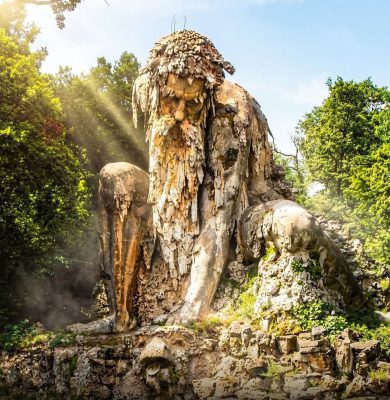
North of Florence, a bearded giant emerges from a hillside in the Villa di Pratolino gardens. One hand rests on a monster’s head, water pouring from its mouth into a pond below. This is the Apennine Colossus, and it’s been hiding secrets since 1580.
Sculptor Giambologna built this 35-foot mountain god from brick and stone, but the real genius lies inside. The colossus contains rooms, grottos, and chambers. Visitors could enter through hidden doors and climb interior staircases. The head alone functioned as a small chamber where guests could peek out through the eyes.
Renaissance architects loved this blend of sculpture and architecture. The giant represents the Apennine mountain range personified, but also shows off engineering skill that rivaled anything in its era. Weather has worn the stone for centuries, giving the colossus a weathered, ancient appearance that makes it look far older than it actually is. Nature and art merged seamlessly.
Renaissance Engineering:
- Height: 35 feet
- Built: 1580
- Artist: Giambologna
- Contains walkable interior rooms
- Functions as building and sculpture
7. Guan Yu Statue - China's Bronze Warrior
 Pin
Pin Guan Yu Statue / Photo courtesy Wealth
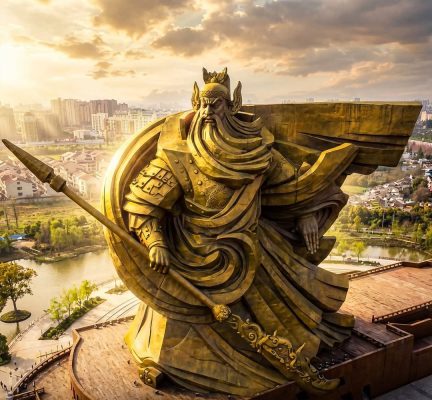
In Jingzhou, China, a 190-foot statue of Guan Yu dominates the skyline. The ancient warrior stands in full armor, his massive guandao blade held ready, robes flowing as if caught in an eternal wind.
This bronze and copper monument weighs over 1,000 tons. Completed in 2016, it required 4,000 strips of bronze to create the layered armor and fabric effects. Guan Yu represents loyalty and righteousness in Chinese culture—a general from the Three Kingdoms period who became deified after death.
The craftsmanship at this scale is staggering. Every detail of the ornate armor, the flowing beard, the intricate weapon—all rendered in metal at sizes that make the Statue of Liberty look modest. The statue contains an interior museum spread across multiple floors, accessed by elevators. At night, dramatic lighting turns the bronze warrior into a glowing sentinel visible for miles.
Warrior Stats:
- Height: 190 feet (58 meters)
- Weight: 1,000+ tons
- Materials: Bronze and copper
- Completed: 2016
- Contains multi-floor museum
8. King Arthur Statue - England's Legendary Guardian
 Pin
Pin King Arthur Statue / Photo courtesy Wealth
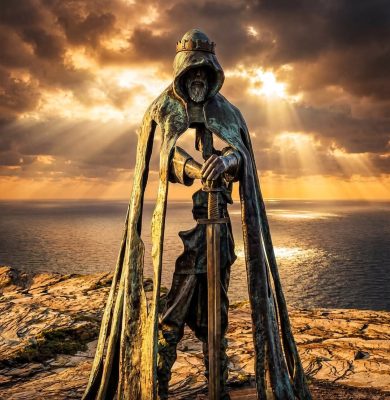
On the dramatic Cornish coast at Tintagel, where legend says King Arthur was born, a cloaked figure stands at the cliff’s edge. Sword drawn, crowned, gazing toward the sea and the kingdom he supposedly ruled.
Sculptor Rubin Eynon created this 8-foot bronze in 2016 after the site underwent archaeological work. The location matters enormously here. Tintagel’s windswept ruins, crashing waves, and medieval atmosphere give the statue context that a museum never could. The weathered bronze already looks ancient against the stone.
Arthur may or may not have existed, but the statue captures something real about British mythology and identity. The sword isn’t Excalibur flashy—it’s battle-worn, practical. The king looks thoughtful rather than triumphant. It’s a quieter interpretation than most Arthurian art, which makes it more effective. Tourists scramble over the ruins, and there’s Arthur, keeping watch over the coast like he’s been there for centuries.
Legendary Details:
- Height: 8 feet
- Material: Bronze
- Location: Tintagel Castle, Cornwall
- Created: 2016
- Depicts King Arthur’s birthplace legend
9. The Caring Hand - Switzerland's Gentle Giant
 Pin
Pin The Caring Hand / Photo courtesy Wealth
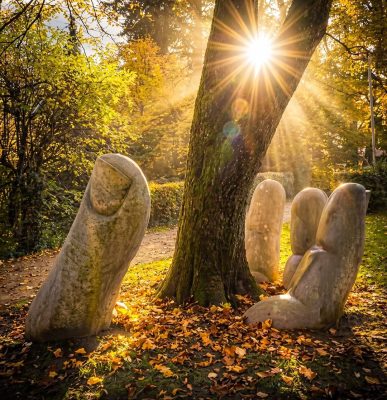
In a Swiss park, two weathered stone hands rest on the ground, palms up, fingers slightly curled. Autumn leaves gather in the curves. Sunlight filters through the trees behind them.
This sculpture takes a gentler approach than the others on this list. No drama, no mythology, no engineering excess. Just hands—universal symbols of care, offering, and human connection. The stone shows age and weathering, cracks running through the fingers like life lines.
The piece works because of its simplicity. In an era of mega-sculptures and spectacle art, these quiet hands remind us that scale isn’t everything. They invite contemplation rather than awe. People sit nearby for lunch, kids climb on them, and the hands just…exist. Present but not demanding. The seasonal changes around them—spring flowers, summer grass, autumn leaves, winter snow—become part of the artwork’s story.
Contemplative Features:
- Material: Weathered stone
- Setting: Natural park environment
- Theme: Care and human connection
- Size: Human-scale, accessible
- Integrates with seasonal changes
10. Great Challenge - France's Anatomical Wonder
 Pin
Pin Great Challenge, France / Photo courtesy Wealth
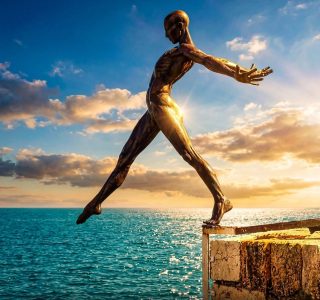
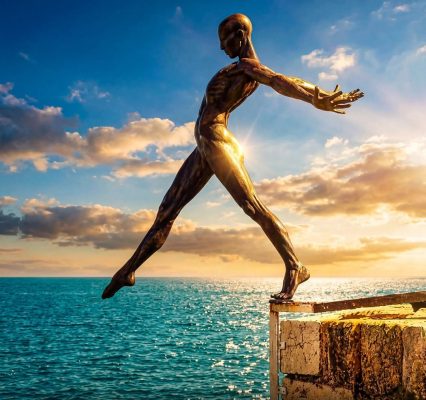
Standing on a weathered pedestal by the sea, a golden anatomical figure strikes a dramatic pose. Muscles, tendons, and skeletal structure visible under translucent skin that catches the sunset light.
This écorché statue (showing the body’s internal structure) represents human achievement and physical excellence. The pose suggests motion frozen mid-stride, arms extended, every fiber of anatomy rendered in precise detail. It’s part Renaissance medical illustration, part modern sports monument.
The technical execution impresses, but the piece doesn’t quite transcend its demonstration of skill. It shows you exactly what it is—a masterful anatomy lesson in bronze. Compared to sculptures that evolve underwater or hide rooms inside mountain gods, this one plays it straighter. Still, watching the golden muscles shimmer in changing light creates an undeniable visual impact. Medical students and athletes alike appreciate the celebration of human form at its peak.
Anatomical Achievement:
- Style: Écorché (exposed musculature)
- Material: Bronze/gold finish
- Theme: Human physical excellence
- Setting: Coastal location
- Technical precision in anatomical detail
What Makes These Statues Truly Incredible?
Size alone doesn’t cut it. Plenty of big sculptures bore us to tears. The best pieces on this list share certain qualities that elevate them beyond mere monuments.
First, they serve multiple purposes. The underwater sculptures function as marine habitats. Jatayu houses a museum. The Venice hands spark crucial conversations about climate change. Second, they evolve—either literally through marine growth and weathering, or conceptually as our understanding of their symbolism deepens over time.
Third, location matters enormously. Christ of the Abyss wouldn’t work on land. King Arthur needs those Tintagel cliffs. The context completes the artwork in ways that museums never could. These sculptures transform their environments while being transformed by them. That dialogue between art and setting creates experiences that photos barely capture—you really need to visit them.
FAQs
The Statue of Unity in India holds that record at 597 feet, depicting Sardar Vallabhbhai Patel. However, Jatayu is the world’s largest bird sculpture specifically.
Yes! Christ of the Abyss and Ocean Atlas are accessible to certified scuba divers and snorkelers. Guided tours are available at both locations for safe visits.
It varies by material and environment. Bronze can last thousands of years. Underwater sculptures transform as marine life colonizes them but remain structurally sound for centuries.
Most are. The Apennine Colossus is a protected historic monument. Modern pieces like the Venice hands spark preservation debates. Underwater sculptures have special maritime protections.
The Statue of Unity cost approximately $430 million. However, ancient sculptures like the Colossus of Rhodes (now destroyed) would cost billions in today’s money to recreate.









 Login with Google