


















 Pin
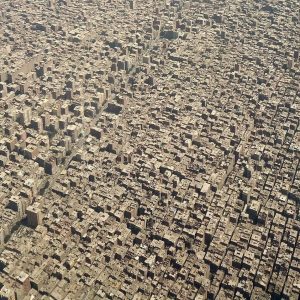
Pin Cairo, Egypt / Photo courtesy Urban Hell Reddit
Synopsis: Cities around the world have transformed into environments that prioritize density, vehicles, and efficiency over human wellbeing. From Chongqing’s towering apartment blocks to Cairo’s endless sprawl, these spaces reveal what happens when urban planning loses sight of the people it’s meant to serve. The term Urban Hell captures these moments when design choices create hostile, overwhelming environments that trap millions in daily routines defined by concrete, crowds, and a disturbing lack of nature or breathing room.
Every morning, around seven million people in Chongqing wake up and look out their windows at someone else’s wall. The distance between buildings in parts of this Chinese megacity measures barely wider than a car. Sunlight arrives as a rumor. Fresh air stays theoretical. Yet this arrangement wasn’t forced by geography or catastrophe—someone with authority planned it this way, approved it, built it, and sold it as progress.
Cities were supposed to solve problems. They gathered people together for trade, protection, culture, and opportunity. Somewhere along the timeline of human civilization, though, a different philosophy took root. Cities stopped being places where humans could flourish and became machines for housing the maximum number of people in the minimum amount of space. The calculation changed from “how can we make life better” to “how many units can we fit per hectare.
The consequences play out in photographs that circle the globe online, shared by residents who’ve finally found words for what felt wrong about their daily surroundings. These aren’t images of war zones or natural disasters. They’re pictures of normal Tuesday afternoons in places where millions live, work, raise children, and grow old. The horror isn’t dramatic—it’s mundane. It’s the slow realization that the city itself has become the cage, and the bars are made of apartment buildings that all look exactly the same, stretching further than eyes can see.
Table of Contents
1. Chongqing, China
 Pin
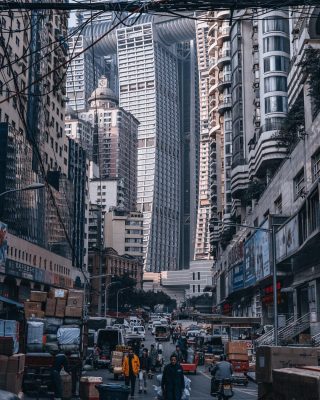
Pin Chongqing, China / Photo courtesy Urban Hell Reddit
Chongqing presents a peculiar achievement in urban density. The city has managed to build upward and inward simultaneously, creating corridors of skyscrapers so tightly packed that residents on opposite sides could theoretically share breakfast without raising their voices. The older architecture, low-rise structures with character and history, sits dwarfed beneath towers of steel and glass that reflect nothing but each other.
Walking these streets offers a masterclass in what happens when vertical growth receives no horizontal boundaries. The eye searches for sky and finds only more buildings. The mind seeks variety and encounters repetition on a soul-crushing scale. Traffic crawls below while exhaust fumes settle in the narrow spaces between structures, creating a perpetual haze that residents learn to ignore because acknowledging it makes breathing feel harder.
This design didn’t emerge by accident. City planners faced genuine challenges—mountainous terrain, a massive population, limited buildable land. Their solution prioritized solving the housing equation while apparently forgetting that humans need more than four walls and a roof. They need light. They need air. They need the occasional reminder that nature exists somewhere beyond the concrete.
2. Guangzhou, China
 Pin
Pin Guangzhou, China / Photo courtesy Urban Hell Reddit
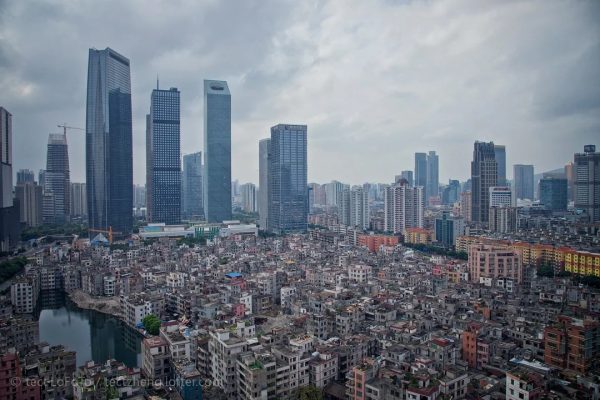
Guangzhou showcases what happens when capitalism and rapid urbanization meet without adult supervision. In neighborhoods throughout the city, traditional housing gives way to commercial development with ruthless efficiency. A McDonald’s stands illuminated in brilliant red and gold, architecturally jarring against the gray apartment blocks that surround it like disappointed relatives at a wedding.
The aerial view reveals the strategy clearly. Older residential buildings, cramped and aging, cluster together in organic patterns that speak to human habitation over generations. Then corporate infrastructure drops into the middle of these communities like a boulder into a pond, disrupting everything with its presence. The message reads clear: commerce matters more than continuity, brand recognition trumps neighborhood character, and if residents don’t appreciate the convenience of fast food delivered to their doorstep, well, nobody asked them.
What makes this arrangement particularly noteworthy isn’t the presence of international chains in Chinese cities. That ship sailed decades ago. It’s the visual metaphor of watching community spaces get consumed by entities that exist to extract money rather than build relationships. The McDonald’s isn’t there to improve the neighborhood. It’s there because the neighborhood represents consumers, and consumers represent profit, and profit justifies any aesthetic crime.
3. Pyongyang, North Korea
 Pin
Pin Pyongyang, North Korea / Photo courtesy Urban Hell Reddit
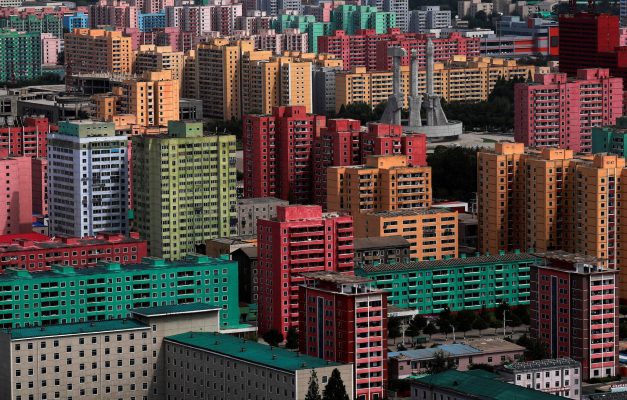
Pyongyang offers perhaps the purest expression of cities designed to serve ideas rather than inhabitants. Row upon row of identical apartment blocks stretch across the landscape in formations so precise they could have been stamped from a mold. Which, in a philosophical sense, they were. The buildings embody an ideology that values conformity, control, and the visual representation of equality even when actual equality remains absent.
From above, the city resembles a circuit board more than a human settlement. Everything follows the grid. Everything matches the pattern. Deviation doesn’t exist because deviation wasn’t part of the plan, and in Pyongyang, the plan matters more than the people following it. The pastel colors—pinks, greens, yellows—attempt to soften the brutalism, but they succeed only in making the repetition more obvious. It’s like watching someone try to disguise a prison by painting the cells in cheerful shades.
Residents of these blocks live lives dictated by architectural determinism. Their homes look identical to their neighbors’ homes, which look identical to the homes across the street, which look identical to the homes across the city. Privacy exists only indoors, and even that’s questionable. The design strips away individuality at the most fundamental level—the place you return to at the end of each day reminds you that you’re interchangeable, replaceable, and fundamentally no different from anyone else occupying these concrete boxes.
4. Vladivostok, Russia
 Pin
Pin Vladivostok, Russia / Photo courtesy Urban Hell Reddit
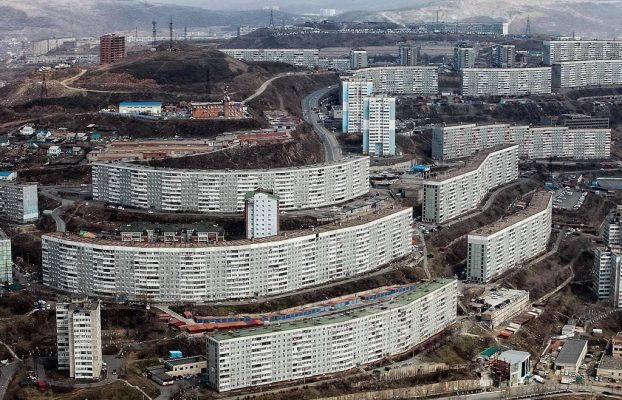
Vladivostok’s residential complexes demonstrate what happens when architects discover curves and then forget to stop using them. These wave-like apartment buildings snake across hillsides in patterns that might look interesting from a helicopter but create living conditions that border on dystopian. The structures seem to go on forever, undulating across the landscape like concrete serpents digesting a city.
The curve serves no practical purpose that benefits residents. It doesn’t improve light exposure, enhance views, or create communal spaces. Instead, it appears to exist purely as an architectural statement, a designer’s signature scrawled across the landscape in reinforced concrete and human housing. Thousands of families organize their lives around this design choice, their daily routines shaped by someone’s aesthetic vision from decades past.
Living in these complexes means existing in a constant state of sameness. Every floor looks like the floor above and below. Every apartment resembles its neighbors. The curved design, which might have seemed innovative on paper, translates to a lived experience of being trapped in a structure that serves the architect’s ego rather than the residents’ needs. The hills around Vladivostok could have supported housing that worked with the natural terrain, creating variety and visual interest. Instead, they got monuments to the idea that bigger and weirder automatically means better.
5. Sydney, Australia
 Pin
Pin Sydney, Australia / Photo courtesy Urban Hell Reddit
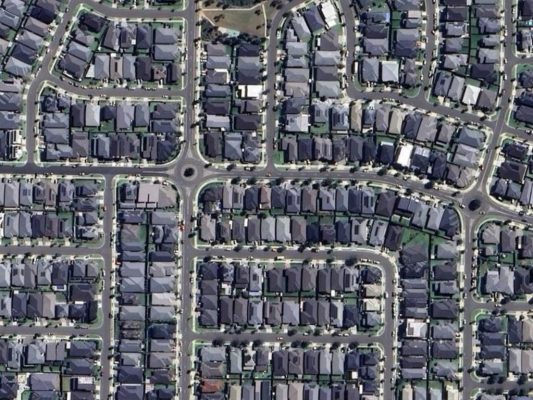
Sydney’s suburban developments reveal that democracies can create their own versions of residential nightmares, just with better marketing. These housing estates sprawl across former farmland in patterns so geometric they could serve as math textbooks. Identical houses with identical rooflines sit on identical lots with identical spacing, creating neighborhoods where getting lost in your own community becomes a legitimate possibility.
The design philosophy here differs from the high-rise approach seen in Asian cities, but the underlying problem remains the same—treating humans as units to be housed rather than individuals to be accommodated. Each home comes with a driveway, a small yard, and the crushing knowledge that three hundred other families own the exact same model. The developers call this “master-planned community.” The residents call it home because they’ve invested everything they have into mortgages that will take thirty years to pay off.
What makes this particularly insidious is the pretense of choice. Buyers receive options for facade colors, maybe some interior variations, the illusion of personalization within a system designed to produce maximum units at minimum cost. The result creates neighborhoods that photograph like abstract art—beautiful patterns from above, soul-crushing conformity from ground level. Children growing up here learn early that individuality happens inside your head, because the physical environment offers no support for the concept.
6. Arizona, USA
 Pin
Pin Arizona, USA / Photo courtesy Urban Hell Reddit
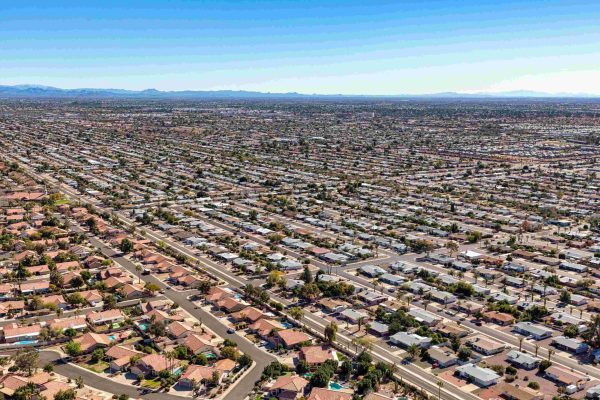
Arizona’s residential developments take the suburban concept and multiply it until the landscape disappears entirely beneath a carpet of beige houses. The desert, which once defined this region with its stark beauty and unforgiving character, now serves merely as the dirt underneath someone’s investment property. Subdivisions spread in every direction, consuming land with the efficiency of locusts and approximately the same regard for what existed before.
The homes sit low and spread wide, honoring neither the desert’s traditional architecture nor any principle of sustainable development. Instead, they represent pure real estate mathematics—buy land cheap, build houses fast, sell at market rate, repeat until the money stops flowing. The fact that this happens in one of the driest regions in North America, where water scarcity threatens long-term habitability, apparently factors into planning decisions not at all.
Residents of these developments face a particular form of isolation. The density is too low to support walking to destinations, too high to provide actual privacy or space. They’re too far from city centers to enjoy urban amenities, too removed from nature to enjoy rural benefits. They exist in a middle ground that offers the disadvantages of both urban and rural living while providing the advantages of neither. The dream of homeownership becomes the reality of car dependency, climate control costs, and the nagging suspicion that something about this arrangement doesn’t quite work.
7. Port-au-Prince, Haiti
 Pin
Pin Port-au-Prince, Haiti / Photo courtesy Urban Hell Reddit
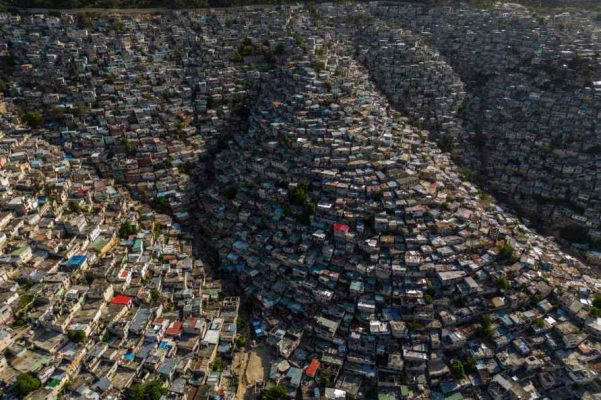
Port-au-Prince shows what happens when urban density emerges not from planning but from necessity. Homes stack against each other on hillsides in patterns that follow no grid, obey no regulations, and answer to no authority beyond the desperate human need for shelter. The structures seem to defy physics, holding together through some combination of prayer, stubbornness, and the mutual support that comes from everything leaning on everything else.
This isn’t the result of architects making bad choices or governments prioritizing ideology over wellbeing. This is poverty expressing itself in physical form. When people need housing and possess neither money nor options, they build what they can, where they can, with whatever materials come to hand. The result creates communities that function through networks of informal cooperation that formal cities often lack, but at the cost of safety, sanitation, and any buffer against natural disasters.
The photographs of Port-au-Prince’s dense neighborhoods challenge comfortable assumptions about urban planning. They reveal that sometimes the hellish aspects of city living stem not from malice or incompetence but from the simple arithmetic of too many people and too few resources. The residents of these hillside communities aren’t there because someone designed it this way. They’re there because this represents the best option available, which says something devastating about all the other options.
8. Tyumen, Russia
 Pin
Pin Tyumen, Russia / Photo courtesy Urban Hell Reddit
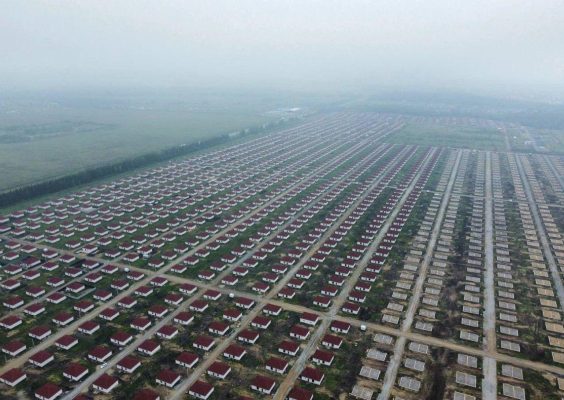
Tyumen’s residential complexes demonstrate the enduring influence of Soviet-era planning, where housing was treated as a problem to be solved through industrial-scale solutions. The apartment blocks stretch across empty fields in formations that suggest military precision, which makes sense given that many Soviet planners viewed urban development as a kind of peaceful warfare against homelessness and bourgeois individualism.
The structures themselves prioritize function over every other consideration. They’re designed to house people, nothing more. No architectural flourishes, no aesthetic considerations, no concessions to the idea that where humans live should inspire something beyond resignation. The spacing between buildings creates open areas that serve no recreational purpose, too large to feel intimate, too empty to attract community gathering. They exist as negative space, the void between one concrete block and the next.
What’s remarkable about these developments is their complete disregard for the natural environment. Tyumen sits in a region of considerable natural beauty, but the residential complexes could exist anywhere—northern Russia, central Asia, Eastern Europe. The design acknowledges neither climate nor landscape, culture nor tradition. It’s architecture as pure ideology, the built manifestation of a philosophy that believed standardization could solve human complexity. Decades after the Soviet Union’s collapse, millions still wake up in these monuments to that failed experiment.
9. England, UK
 Pin
Pin England, UK / Photo courtesy Urban Hell Reddit
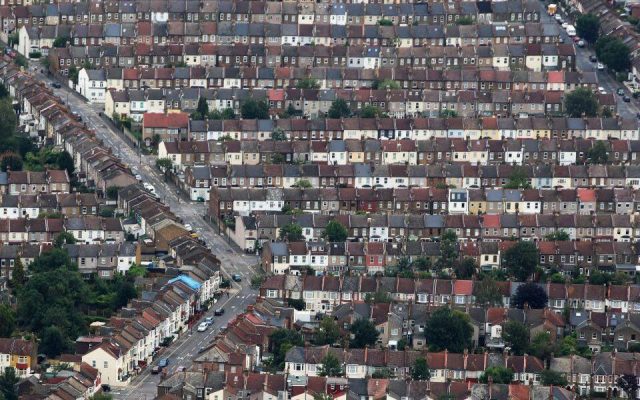
England’s modern housing estates present a different kind of problem, one that emerges from trying to maximize land use while maintaining the British obsession with privacy. The result produces homes that sit so close together that neighbors can hear each other’s conversations, packed behind fences so tall they block most natural light. It’s simultaneously claustrophobic and isolating, achieving the worst of both crowding and loneliness.
The fencing reveals the core issue. Each property gets walled off from its neighbors with wooden barriers that create narrow corridors between homes, passages that feel vaguely threatening despite being perfectly legal and completely planned. The message is clear—you should stay on your property, everyone else should stay on theirs, and if anyone needs to interact with neighbors, it should happen through formal channels, not casual encounters in shared spaces.
This design philosophy creates communities in name only. Residents live meters apart but might go months without meaningful interaction. The children playing in one postage-stamp backyard can’t see or easily access the children in the next yard over, despite the properties sharing a fence line. The density that could support community instead produces isolation, as if the planners asked themselves how to house the maximum number of people while facilitating the minimum amount of human connection.
10. Cairo, Egypt
 Pin
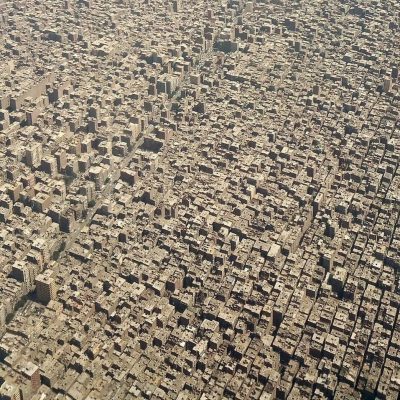
Pin Cairo, Egypt / Photo courtesy Urban Hell Reddit
Cairo from above looks less like a city and more like a mathematical problem that’s been solved incorrectly. Buildings spread in every direction without apparent plan or limit, covering the desert in a crust of concrete and rebar that extends to the horizon. The density isn’t the result of careful planning maximizing limited space—it’s the consequence of millions of individual decisions made without coordination, oversight, or concern for collective outcomes.
The architectural style, if it can be called that, favors unfinished buildings with exposed rebar jutting from rooftops like the city’s raising its hands in surrender. This isn’t aesthetic choice but economic reality—leaving buildings technically incomplete avoids certain taxes and regulations. So Cairo grows as a city of permanent incompletion, where “finished” is a relative term and every building looks like construction stopped mid-process.
What makes Cairo’s situation particularly fascinating is how it represents the opposite extreme from Pyongyang’s rigid control. Where North Korea imposes order to a suffocating degree, Cairo demonstrates what happens when order barely exists at all. Neither extreme serves human flourishing well. One crushes through control, the other overwhelms through chaos. Both create environments where people adapt and survive because humans are remarkably resilient, but resilience shouldn’t be confused with thriving.
The Pattern That Connects Them All
Looking at these cities together reveals an uncomfortable truth—whether in capitalist democracies or communist dictatorships, whether driven by poverty or profit, the tendency to treat human housing as a purely mechanical problem spans all political systems and economic models. The specifics vary, but the core failure remains consistent: cities designed without adequate consideration for the humans who will spend their lives within them.
The photographs that document these places serve a purpose beyond aesthetic criticism. They provide evidence that how we build our cities isn’t inevitable or natural. It’s the result of specific choices made by specific people with specific priorities. When those priorities place efficiency above wellbeing, profit above community, or ideology above individual needs, the results manifest in concrete and steel that will outlast the people who made those decisions.
The residents of these environments aren’t helpless victims, and many would bristle at being characterized that way. They’ve built lives, raised families, and created meaning within these spaces. Human adaptability is remarkable. But the fact that people can adapt to almost anything shouldn’t excuse the creation of environments that require such adaptation in the first place. Cities can be better. They should be better. The first step toward improvement is recognizing what’s wrong with what currently exists, and these photographs do exactly that with uncomfortable clarity.
FAQs
Because they prioritize the same things—maximizing housing density, minimizing costs, and treating homes as commodities rather than communities. The political system changes, but the logic stays remarkably similar.
Many can be improved through retrofitting—adding green spaces, improving public transit, creating community areas. It’s harder and more expensive than building correctly initially, but not impossible if there’s political will.
Many don’t, because they’ve never experienced alternatives. Others complain constantly but lack options to move. The absence of protests doesn’t indicate satisfaction—sometimes it just indicates resignation.
Research suggests isolation combined with density (like some suburban and British examples) creates particular problems. At least high-density urban areas offer community possibilities. Suburban isolation often provides neither privacy nor connection.
They’re bad in different ways. Authoritarian cities often control through uniformity. Democratic cities often fail through prioritizing property values over people. Neither approach consistently produces environments where humans genuinely flourish.










 Login with Google