























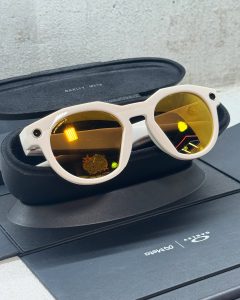
 Pin
Pin Photo courtesy of Meta
Synopsis: Meta smart glasses combine Ray-Ban and Oakley designs with advanced technology, starting at $329. These glasses feature a 12MP camera, 32GB storage, Wi-Fi 6, and Meta AI voice assistant powered by LLAMA 4. Ray-Ban models capture 1080p video with four-hour battery life, while Oakley HSTN records 3K Ultra HD with eight hours of use. All models support prescription lenses and include charging cases providing up to 48 hours total battery. The premium Display model at $799 adds an in-lens screen with gesture control. Available globally through Meta and retail partners for content creators and professionals.
Smart glasses used to feel like something out of a futuristic lab—clunky, awkward, and not quite ready for everyday life. But that’s changing fast. Meta has jumped into the wearable tech game with glasses that actually look good while packing some seriously clever features inside those frames.
These aren’t just cameras strapped to your head. We’re talking about partnerships between Meta and iconic eyewear brands Ray-Ban and Oakley that bring together style and substance in ways earlier attempts never managed. Snap photos, take calls, listen to music, and even chat with an AI assistant—all while looking like you’re wearing regular sunglasses.
So what’s the real story behind these high-tech specs? Let’s break down everything you need to know about the meta ai glasses review price, features and model options available right now. Consider this your complete guide to figuring out if they’re worth your money.
Table of Contents
What Makes These Smart Glasses Different
 Pin
Pin Photo courtesy of Meta
The eyewear market is crowded with smart glasses that promise a lot but deliver little, but Meta’s smart glasses have become market leaders with millions of units sold since launch. Meta’s approach stands out because they didn’t try to reinvent the wheel—they improved it. By partnering with Ray-Ban and Oakley, brands people already trust for quality eyewear, Meta solved the biggest problem plaguing smart glasses: they actually look normal.
These glasses come with built-in cameras, speakers, and microphones that work surprisingly well, featuring an ultra-wide 12MP camera and improved audio with enhanced bass and five-microphone array. The designs stay true to each brand’s signature styles, which means they can be worn to a coffee shop or a business meeting without drawing strange looks.
The real game-changer is the Meta AI integration powered by the LLAMA 4 AI model, which offers a seamless discussion experience that you can prompt by simply saying “Hey Meta.” Ask questions, get directions, or have the glasses identify objects in view—all through voice commands without unlocking your phone.
The Ray-Ban and Oakley Models You Can Choose From
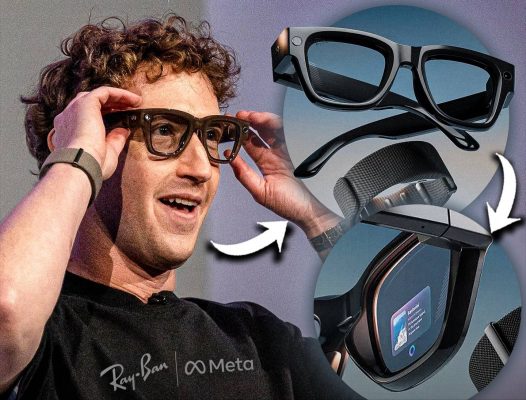 Pin
Pin Photo courtesy of Meta
Meta offers three distinct Ray-Ban frame styles: Wayfarer, Headliner, and Skyler, each catering to different face shapes and personal tastes. The Wayfarer is the iconic square frame that’s been a Ray-Ban staple since the 1950s—bold, confident, and suited for most face types. It’s the most recognizable option and tends to work well if you prefer a classic, statement-making look that commands attention.
The Headliner brings a rounder, softer vibe that leans more vintage, while the Skyler skews more modern with its cat-eye shape. Think of the Headliner as the gentler cousin of the Wayfarer, perfect for those who find angular frames too harsh. The Skyler appeals to those who want something fashion-forward and a bit more playful. All three Ray-Ban models pack the same tech inside.
For the sports-focused crowd, Oakley Meta HSTN (pronounced HOW-stuhn) represents Meta’s expansion into performance eyewear, starting at \$399 with improved battery life up to 8 hours and 3K Ultra HD video recording. The HSTN combines Oakley’s bold athletic design with Meta’s technology and includes IPX4 water resistance for outdoor activities. You can customize each model with various lens options including clear, sun, transitions, polarized, and even prescription lenses.
Complete Specifications and Pricing Breakdown
| Category | Ray-Ban Models (Wayfarer/Headliner/Skyler) | Oakley HSTN |
|---|---|---|
| Base Price | $329 (Wayfarer/Headliner), $379 (Skyler) | $399 |
| Prescription Lenses | Add $100-$150 for prescription, transitions, or polarized options | Add $100-$150 for prescription, transitions, or polarized options |
| Camera | 12MP ultra-wide lens, 1080p video (1440x1920 pixels) | 12MP ultra-wide lens, 3K Ultra HD video recording |
| Storage | 32GB internal storage (hundreds of photos and videos) | 32GB internal storage |
| Audio | Open-ear speakers with enhanced bass, five-microphone array for calls and voice commands, directional audio technology | Open-ear speakers with enhanced bass, five-microphone array, improved noise reduction |
| Meta AI Features | Voice-activated assistant (LLAMA 4 powered), real-time visual recognition, language translation, object identification, hands-free search | Same AI features as Ray-Ban models |
| Battery Life | Up to 4 hours moderate use per charge | Up to 8 hours moderate use per charge |
| Charging Case | USB-C charging, provides up to 36 hours total battery with multiple charges | USB-C charging, provides up to 48 hours total battery with multiple charges |
| Connectivity | Wi-Fi 6, Bluetooth 5.2/5.3, pairs with iOS and Android via Meta View app | Wi-Fi 6, Bluetooth 5.2/5.3, pairs with iOS and Android via Meta View app |
| Water Resistance | IPX4 rating (splash and sweat resistant) | IPX4 rating (splash and sweat resistant) |
| Weight | Approximately 50 grams depending on frame style and lens type | Approximately 52 grams |
| Frame Colors | 27+ combinations including matte black, shiny black, tortoise, transparent, and limited editions | Multiple color options with sports-focused designs |
| Lens Options | Clear, sun tinted, transitions (photochromic), polarized, prescription-ready | Clear, sun tinted, transitions, polarized, prescription-ready |
| LED Indicator | Hardwired white LED on front of frame, illuminates during all recording activities | Hardwired white LED indicator for privacy compliance |
| Social Integration | Direct livestreaming to Instagram and Facebook, one-tap sharing to Meta platforms | Direct livestreaming to Instagram and Facebook |
| Software Updates | Regular over-the-air updates via Meta View app | Regular over-the-air updates via Meta View app |
| Warranty | One-year limited warranty, Ray-Ban quality guarantee | One-year limited warranty, Oakley quality guarantee |
| Compatible Devices | iPhone (iOS 14 or later), Android (Android 10 or later) | iPhone (iOS 14 or later), Android (Android 10 or later) |
Breaking Down the Price Points
The standard Meta Ray-Ban smart glasses start at $329 for the Wayfarer and Headliner models with standard lenses. This gets you all the core features—camera, speakers, microphones, and Meta AI access—in whichever frame style you prefer. It’s positioned as a premium product, but not outrageously so when you consider you’re getting both quality eyewear and functional tech in one package.
The Ray-Ban Skyler starts at $379, while if you need prescription lenses or want upgrades like transitions or polarized options, expect to add $100 to $150 to any base price. These customizations make the glasses genuinely practical for people who actually need corrective lenses, rather than forcing them to choose between seeing clearly and using smart features. That flexibility matters more than it might seem at first glance.
The Oakley Meta HSTN sits at the higher end at \$399 but justifies the premium with longer battery life and superior video quality. There’s also a limited edition transparent frame version that runs slightly higher, appealing to those who want something visually distinctive. The pricing sits in an interesting middle ground—less expensive than a high-end smartphone, but definitely more than regular designer sunglasses. For many people, the question becomes whether the hands-free convenience justifies spending this much on eyewear.
Camera Quality and What You Can Actually Capture
The built-in 12MP ultra-wide camera captures high-resolution photos at 3024×4032 pixels and records video in 1080p at 30fps on Ray-Ban models, while the Oakley HSTN records in 3K Ultra HD for even better quality. The camera sits discreetly on the frame’s corner, and there’s a small LED light that turns on when you’re recording. This is a privacy feature, letting people around you know when the camera is active.
The image quality won’t rival your smartphone’s main camera, but it’s surprisingly decent for a lens this tiny. Think of it as good enough for social media sharing, not professional photography. The glasses include 32GB of internal storage, which holds hundreds of photos and videos before you need to sync them to your phone. This means you can go through an entire day of capturing memories without worrying about running out of space.
One standout feature is the ability to livestream directly to Instagram or Facebook without pulling out your phone. This gives you a true point-of-view perspective that feels more immersive than holding up a device. Content creators have embraced this for walking tours, cooking demos, or any situation where you want both hands free while showing your audience exactly what you’re seeing. The combination of hands-free recording and decent quality makes these glasses genuinely useful for everyday documentation.
Audio Features That Actually Work
The glasses include open-ear speakers with enhanced bass built into the temples that deliver surprisingly clear sound without blocking your ears. This design choice matters more than you might think at first. Unlike earbuds that seal off your ear canal, these speakers let you stay aware of your surroundings while listening to music, podcasts, or taking calls. You can hear traffic, conversations, or your name being called, which makes them safer and more socially appropriate in many situations.
The audio quality is solid for what it is—crisp enough for phone calls and enjoyable for casual music listening. You won’t get the deep bass or noise isolation of premium headphones, but that’s not really the point here. The sound stays fairly private too, though people standing very close might catch faint audio. Most users report that the volume gets loud enough for city streets without becoming uncomfortable.
The built-in five-microphone array handles voice commands for Meta AI and phone calls with decent clarity and effective noise reduction. You can ask questions, set reminders, or make calls just by speaking naturally. Wind noise can be an issue outdoors, but indoors or in calm weather, the voice pickup works well enough that you don’t need to repeat yourself constantly. It’s genuinely convenient when your hands are full with groceries or you’re walking the dog.
Meta AI Assistant and What It Can Do
The Meta AI integration, powered by the LLAMA 4 AI model, transforms these glasses into a hands-free assistant you activate by saying “Hey Meta.” This isn’t just a gimmick—it’s surprisingly useful in real-world situations. You can ask it to identify landmarks while sightseeing, translate text you’re looking at in real time, or get recipe instructions while cooking without touching your phone with messy hands.
The AI can analyze what the camera sees and answer questions about your surroundings. Point at a plant and ask what species it is, look at a restaurant menu in another language and get instant translations, or scan ingredients in your pantry and get meal suggestions. The responses come through the speakers, keeping the interaction natural and conversational. It feels less like talking to a robot and more like having a knowledgeable friend along for the ride.
There are limitations though. The AI needs an internet connection through your paired phone to work via Wi-Fi 6 and Bluetooth connectivity, so it’s not functional offline. Processing visual information takes a few seconds, which means there’s a slight delay between asking and getting answers. Some advanced features are still rolling out regionally, so availability varies depending on where you live. Still, when it works, it genuinely feels like a glimpse of how we’ll interact with technology in the coming years.
Battery Life and Charging Realities
The Ray-Ban models offer up to 4 hours of moderate use on a single charge, which includes a mix of listening to music, taking photos, and occasional voice commands, while the Oakley HSTN extends this to up to 8 hours. That number drops if you’re constantly recording videos or livestreaming, which are the most battery-hungry activities. For most people’s daily routines—commuting, running errands, maybe capturing a few moments—the battery holds up reasonably well throughout the day.
The charging case is where things get interesting, providing up to 36 hours of total battery life for Ray-Ban models and 48 hours for the Oakley HSTN with multiple recharges. It’s compact enough to slip into a pocket or purse, and even if the frames die, you can pop them in the case for a quick top-up and be back in action within minutes. The case itself charges via USB-C, which has become the standard for most devices, so you likely already have compatible cables lying around.
Here’s the honest truth though—if you forget to charge the case overnight, you might find yourself with dead glasses by afternoon the next day. They’re not the kind of device you can ignore for days and expect them to work. Building a charging routine matters, much like you would with wireless earbuds or a smartwatch. The upside is that charging is relatively quick, so even a short power boost during lunch can extend your usability significantly.
Privacy Concerns and the LED Indicator
Privacy sits at the heart of every conversation about smart glasses with cameras. Meta addressed this head-on by including a visible LED light on the front of the frames that illuminates whenever the camera is recording. This isn’t optional or something you can disable—it’s hardwired into the device. The idea is simple: people around you should know when they’re being filmed, giving them the chance to object or move away if they’re uncomfortable.
The LED is bright enough to be noticeable in most lighting conditions, though some critics argue it could be more obvious. In bright sunlight, it might be harder to spot, which has sparked debates about whether the indicator goes far enough. Meta stores your recordings in the app on your phone with automatic syncing to the Meta View app, and you control what gets uploaded to social media and what stays private. This gives users more agency over their content than previous smart glasses attempts.
Still, the broader question lingers: just because you can record discreetly doesn’t mean you should. Many public spaces, workplaces, and private businesses have policies about recording that apply to these glasses just as they would to phones. The technology itself is neutral, but how people use it matters tremendously. Being thoughtful about when and where you record isn’t just polite—it’s essential for these devices to gain wider social acceptance without creating friction in everyday interactions.
Connectivity and App Requirements
The glasses don’t work independently—they need to pair with your smartphone through the Meta View app via Wi-Fi 6 and Bluetooth 5.2/5.3, which is available for both iOS and Android devices. This app acts as the control center where you manage settings, view captured photos and videos, and access advanced features like editing or sharing content directly to social media. The pairing process is straightforward, similar to connecting Bluetooth headphones, and once linked, the connection stays stable throughout normal use.
The app also handles software updates that regularly add new features and improve existing ones. Meta has been actively rolling out enhancements since launch, which means the glasses you buy today will likely gain capabilities over time rather than becoming outdated quickly. This approach keeps the product feeling fresh and shows that Meta is committed to long-term support rather than abandoning the hardware after the initial sale excitement fades.
One practical consideration: the glasses rely on your phone’s internet connection for AI features, cloud uploads, and livestreaming. If your phone has a weak signal or you’re in airplane mode, many of the smart features won’t function. The camera and audio playback still work offline, but you lose the AI assistant and real-time sharing capabilities. This dependency on your phone means the glasses enhance your mobile experience rather than replacing it, which is probably the right approach for wearable tech at this stage of development.
The Premium Display Model and Neural Band
Meta has introduced the Ray-Ban Display glasses at $799, which represents a significant leap forward in smart eyewear technology with an integrated full-color, high-resolution 600×600 display in the right lens. This isn’t just a notification screen—it’s a genuine visual interface that can show AI responses, navigation directions, and even enable live video calling right in your field of vision. Think of it as Meta’s first attempt at true augmented reality in a consumer-friendly package.
What makes the Display model particularly interesting is the companion Meta Neural Band wristband that interprets subtle hand gestures for control. Instead of voice commands or tapping the frames, you can control the interface with natural hand movements that feel intuitive once you get used to them. The band reads the electrical signals your muscles generate when you move your fingers, translating them into commands without requiring large, obvious gestures.
This premium tier clearly targets early adopters and tech enthusiasts who want to be at the forefront of wearable computing. The price jump is substantial, and the technology is still in its early stages, but it offers a glimpse into where Meta sees this product line heading. For most people, the standard models will be more practical and affordable. But for those who want visual AR capabilities today rather than waiting years for the technology to mature, the Display model represents the cutting edge of what’s currently possible.
Who Should Actually Buy These Glasses
These glasses aren’t for everyone, and that’s perfectly fine. They shine brightest for content creators who want point-of-view footage without constantly holding up a phone or wearing bulky action cameras. If you’re making cooking videos, travel vlogs, or behind-the-scenes content, the hands-free recording opens up creative possibilities that feel genuinely different. The livestreaming capability particularly appeals to people building audiences on Instagram or Facebook who want more authentic, immersive ways to connect with followers.
Parents with young kids have found surprising value here too. When you’re chasing a toddler at the park or helping with homework, having both hands free while still being able to capture spontaneous moments makes a real difference. The same goes for people who spend a lot of time on calls for work—being able to take a conference call while walking the dog or doing dishes transforms dead time into productive time. The open-ear design means you stay present in your environment rather than isolated behind earbuds.
On the flip side, if you rarely take photos, don’t care about voice assistants, and mainly use sunglasses for their original purpose of blocking sun, spending several hundred dollars probably doesn’t make sense. These glasses ask you to embrace a new way of interacting with technology, and that shift isn’t valuable to everyone. The sweet spot seems to be people who already live their lives through their phone cameras and would genuinely benefit from going hands-free rather than those looking for a gadget just because it’s new and interesting.
The Verdict on Value and Future Potential
Meta Ray-Ban smart glasses have sold millions of units and established themselves as the leading AI-powered eyewear on the market. That success suggests they’ve hit a sweet spot that earlier attempts missed—they look good, work reliably, and solve real problems rather than creating solutions searching for problems. The $329 starting price positions them as a premium purchase, but one that’s accessible to tech enthusiasts and professionals who see genuine utility in hands-free functionality.
The technology inside these frames will only get better as software updates arrive and AI capabilities expand. What you’re really buying isn’t just the current feature set, but Meta’s commitment to improving the experience over time. The partnerships with Ray-Ban and Oakley add credibility and staying power that fly-by-night tech gadgets lack. These glasses feel like a product with legs, not a flash-in-the-pan experiment that’ll be discontinued next year.
Are they worth it? That depends entirely on your lifestyle and how you use technology daily. If you find yourself constantly pulling out your phone to capture moments, take calls, or look things up, these glasses genuinely simplify those interactions. They won’t replace your smartphone, but they can reduce how often you need to reach for it. For the right person, that convenience alone justifies the investment. For others, they remain an intriguing glimpse of where wearable tech is headed, even if now isn’t quite the right time to jump in.
FAQs
Yes! All models from both Ray-Ban and Oakley support prescription lenses, transitions, and polarized options for an additional $100-$150, making them practical for daily wear.
Ray-Ban models last around 4 hours with mixed use, while Oakley HSTN extends to 8 hours. The charging cases provide 36-48 hours total with multiple recharges.
Camera and audio playback work offline, but AI features, livestreaming, and cloud uploads require your phone’s internet connection via Wi-Fi 6 and Bluetooth.
A hardwired LED light on the front illuminates during recording. It’s visible in most conditions, though less obvious in very bright sunlight.
Oakley HSTN offers longer battery life (8 vs 4 hours) and 3K Ultra HD video versus 1080p on Ray-Ban models, with a sports-focused design at $399.










 Login with Google