





















 Pin
Pin Courtesy of Wikimedia Commons
Synopsis: When Howard Carter unsealed the tomb in 1922, he found the most complete royal burial Egypt had ever revealed. Tutankhamun’s resting place contained roughly 5,398 objects, with gold woven throughout nearly every item. The young king’s mummy wore approximately 110 kilograms of pure gold, while his famous death mask alone weighed 10.23 kilograms. From gilded chariots to jeweled daggers, the tomb demonstrated ancient Egypt’s reverence for gold as divine material. Fifteen extraordinary golden artifacts stood out among this glittering treasury of a civilization’s beliefs.
The Valley of the Kings held its secrets beneath layers of sand and stone for over three thousand years. In November 1922, a British archaeologist named Howard Carter stood before a sealed doorway, his candle flickering in the darkness. When asked what he could see, he whispered words that would echo through history: “wonderful things.” Behind that ancient barrier lay the untouched burial chamber of Tutankhamun, a pharaoh who had ruled Egypt during its golden age and died mysteriously at nineteen.
The tomb wasn’t the largest ever discovered, but it was the most intact. Grave robbers had missed it, leaving behind a time capsule of Egypt’s 18th Dynasty. Gold gleamed from every corner, not just as decoration but as sacred material. The ancient Egyptians believed gold was the flesh of their gods, imperishable and eternal. They wrapped their young king in it, ensuring his journey to the afterlife would be divine.
What Carter found inside wasn’t just treasure. It was a complete royal burial, preserved exactly as the priests had left it 3,200 years earlier. The four small rooms contained approximately 5,398 objects, and gold featured prominently in hundreds of them. The sheer quantity was staggering, but fifteen items stood out as masterpieces of craftsmanship and spiritual significance.
Table of Contents
1. The Golden Death Mask
 Pin
Pin Courtesy of Wikimedia Commons
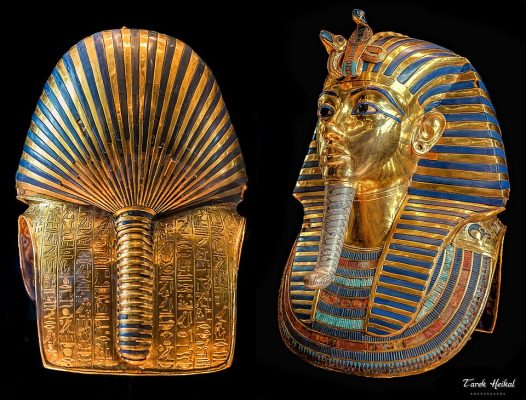
The most iconic object from Tutankhamun’s tomb is undoubtedly his death mask. This masterpiece weighs 10.23 kilograms of solid gold, inlaid with lapis lazuli, carnelian, and colored glass. It covered the pharaoh’s head and shoulders, ensuring his face would be recognized in the afterlife. The craftsmanship required months of work by Egypt’s finest goldsmiths.
The mask shows the young king wearing the traditional false beard and the nemes headdress, symbols of divine kingship. The eyes are made of obsidian and quartz, giving them an almost lifelike quality that still captivates visitors at the Egyptian Museum in Cairo. Every detail carries meaning, from the protective goddesses on his forehead to the intricate collar design.
This wasn’t just art. It was theology shaped in metal. How much gold was found in King Tut’s tomb becomes clearer when you realize this single mask represents just a fraction of the total. The ancient artisans believed they were creating a vessel for immortality, not simply a burial ornament.
2. The Inner Coffin
 Pin
Pin Courtesy of Egyptian Museum, Cairo
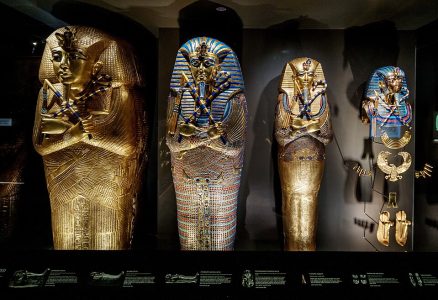
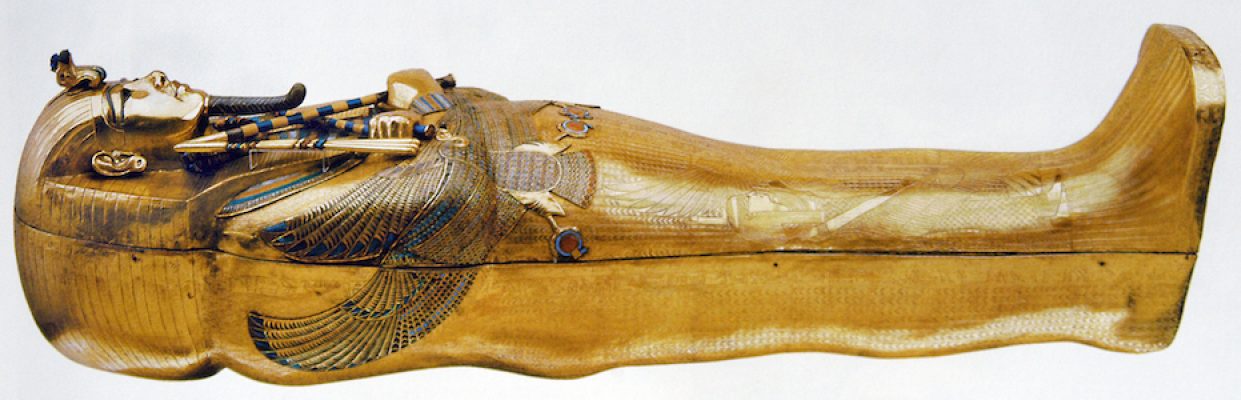
Tutankhamun rested inside three nested coffins, but the innermost one was entirely made of gold. This coffin alone weighs 110.4 kilograms, making it one of the heaviest single gold objects ever discovered in ancient Egypt. The sheer amount of precious metal used demonstrates the wealth and devotion poured into the young pharaoh’s burial.
The coffin’s surface is covered with intricate feather patterns called rishi decoration, meant to represent the protective wings of goddesses. Inlays of colored glass and semi-precious stones create a rainbow effect against the golden surface. The pharaoh’s face on the coffin lid mirrors the death mask, ensuring continuity of identity.
Inside this golden shell, the mummy was wrapped in linen strips, with amulets and jewelry placed between each layer. The coffin wasn’t just a container but a sacred cocoon, designed to transform the mortal king into an immortal god. Its weight alone speaks volumes about the resources ancient Egypt dedicated to royal burials.
3. The Golden Throne
 Pin
Pin Courtesy of Egyptian Museum, Cairo
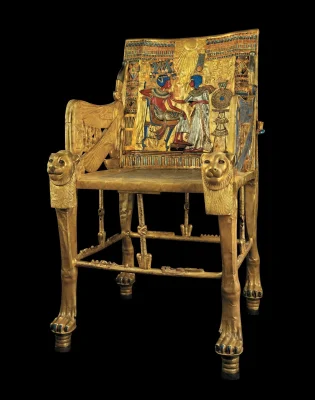
Among the furniture found in the antechamber, one piece stood out for its beauty and craftsmanship: the golden throne. Covered in sheet gold and decorated with silver, glass, and semi-precious stones, this ceremonial seat shows Tutankhamun with his wife Ankhesenamun in an intimate domestic scene. The artistry is breathtaking, with every detail preserved perfectly after millennia.
The backrest depicts the queen anointing the king with perfumed oil, their figures rendered in the naturalistic Amarna style. Sunlight streams down on them in golden rays, each ray ending in a tiny hand holding the ankh symbol of life. The scene captures a tender moment of royal life rarely shown in Egyptian art.
The throne legs are shaped like lion paws, a symbol of power and royalty. The armrests feature winged serpents wearing the crowns of Upper and Lower Egypt, protecting the pharaoh on both sides. This wasn’t just furniture but a statement of divine authority wrapped in gold.
4. The Golden Shrines
 Pin
Pin Courtesy of Egyptian Museum, Cairo
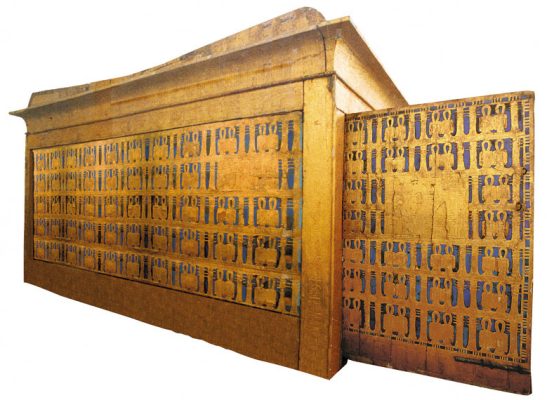
The burial chamber contained four massive gilded wooden shrines, nested like Russian dolls around the stone sarcophagus. These shrines were covered in sheet gold and stood nearly five meters high when assembled. Each one had to be carefully dismantled by Carter’s team, revealing intricate religious texts and protective spells inscribed on their surfaces.
The outermost shrine filled almost the entire burial chamber, leaving barely enough room for priests to perform the final rituals. The walls were decorated with scenes showing the pharaoh’s journey through the underworld, meeting various gods and passing through the twelve hours of night. Every panel told part of the story of resurrection and eternal life.
The gold covering these massive structures added significant weight to the tomb’s total gold content. The shrines served as protective barriers, each layer adding another level of divine security around the king’s mummy. They transformed the burial chamber into a golden sanctuary, a holy of holies where the pharaoh would sleep until awakening in paradise.
5. The Ceremonial Daggers
 Pin
Pin Courtesy of Egyptian Museum, Cairo
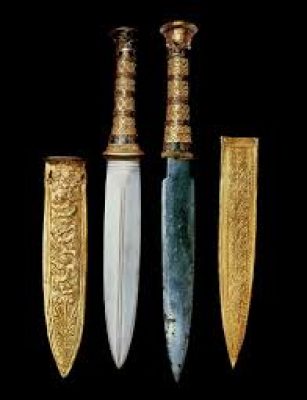
Two daggers were found tucked into the wrappings of Tutankhamun’s mummy, positioned at his waist. One had a blade of iron, incredibly rare in the Bronze Age, possibly forged from a meteorite. The other featured a blade of solid gold with a crystal pommel. Both handles were decorated with intricate goldwork and precious stones.
The iron dagger has fascinated scientists for decades. Recent analysis confirmed the blade’s meteoric origin, meaning ancient Egyptians valued “metal from the sky” as a gift from the gods. The golden sheath protecting this blade shows hunting scenes with animals rendered in minute detail. The craftsmanship suggests these weren’t weapons but sacred objects.
The gold-bladed dagger served a purely ceremonial purpose, too soft for actual combat. Its presence in the burial wrappings suggests it had magical properties, perhaps meant to protect the pharaoh’s spirit on his journey. The crystal pommel catches light beautifully, turning the weapon into a jewel as much as a blade.
6. The Golden Sandals
 Pin
Pin Courtesy of Egyptian Museum, Cairo
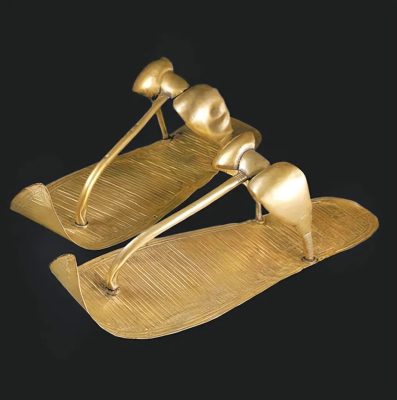
On the pharaoh’s feet, Carter discovered a pair of golden sandals, perfectly molded to fit Tutankhamun’s dimensions. These weren’t ordinary footwear but sacred objects meant to carry the king’s spirit across the celestial realms. Made from thin sheets of gold hammered into shape, they weigh very little but represent enormous symbolic value.
The sandals show remarkable detail, including individual toes and the straps that would have held them in place. Ancient Egyptians believed the deceased needed proper footwear to walk the paths of the afterlife. Gold sandals ensured the pharaoh would stride like a god, his feet never touching the impure ground of the mortal world.
Other sandals in the tomb were made from more practical materials like leather and woven reeds, suggesting the golden pair served exclusively for the afterlife journey. The priests placed them on the mummy after wrapping, making them among the last items added before sealing the coffins. They represent the final steps of preparation for immortality.
7. The Canopic Coffinette
 Pin
Pin Courtesy of Egyptian Museum, Cairo
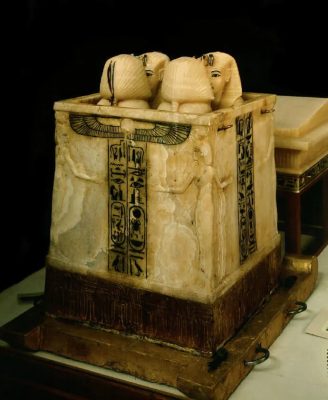
Tutankhamun’s internal organs were removed during mummification and stored in four miniature golden coffins called canopic coffinettes. Each one is a scaled-down version of the pharaoh’s anthropoid coffins, complete with the royal insignia and protective goddesses. Together, they contained the liver, lungs, stomach, and intestines, each guarded by a different deity.
These tiny coffins are masterpieces of goldsmithing, standing only about 40 centimeters tall but featuring the same level of detail as their full-sized counterparts. The faces show the young king in idealized form, his features serene and eternal. Inlays of colored glass create the illusion of elaborate jewelry and ceremonial regalia.
The coffinettes were housed inside an alabaster chest, which itself sat inside a gilded wooden shrine. This multiple-layered protection demonstrates how seriously ancient Egyptians took the preservation of every part of the body. The organs needed to be intact in the afterlife, so they received their own golden vessels fit for a king.
8. The Fan Handles
 Pin
Pin Courtesy of Egyptian Museum, Cairo
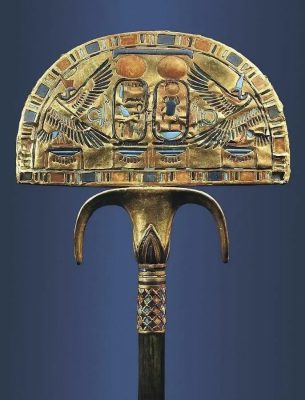
Among the more unusual golden items were several ceremonial fan handles, designed to hold ostrich feathers that have long since disintegrated. These weren’t practical cooling devices but symbols of royal authority and divine protection. The handles were covered in sheet gold and decorated with scenes of the pharaoh hunting ostriches, creating a thematic connection between the object and its materials.
One fan handle shows Tutankhamun in his chariot, drawing his bow to shoot at fleeing ostriches. The scene is rendered in exquisite detail, with individual feathers visible on the birds and muscle definition clear on the horses. An inscription notes that the feathers came from ostriches the king hunted himself, making the fan both trophy and tool.
The gold catches light from every angle, making these handles shimmer when moved. In royal processions, servants would have waved these fans behind the pharaoh, the ostrich plumes creating a breeze while the golden handles announced his divine status. In death, they continued their service, fanning the king’s spirit through eternity.
9. The Pectoral Ornaments
 Pin
Pin Courtesy of Kenneth Garrett via Egyptian Museum, Cairo
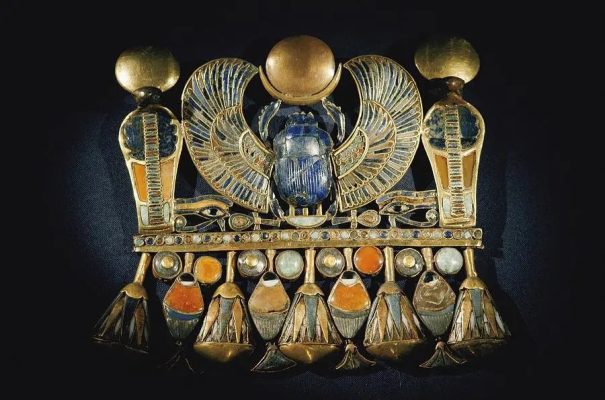
Carter discovered numerous pectoral ornaments in the tomb, elaborate chest pieces worn during life and included for the afterlife. Many featured solid gold frameworks holding intricate designs of scarabs, falcons, and sacred symbols. One particularly stunning example shows a winged scarab beetle pushing the sun across the sky, representing the daily cycle of death and rebirth.
These pectorals weren’t simply jewelry but portable theology. Each element carried specific meaning, combining protective deities, sacred animals, and hieroglyphic spells into wearable art. The scarab beetle, called kheper in ancient Egyptian, symbolized transformation and resurrection. By wearing it, the pharaoh aligned himself with the sun god’s eternal cycle.
The craftsmanship involved in creating these pieces is staggering. Goldsmiths had to cut and shape the precious metal, then carefully inlay semi-precious stones like turquoise, lapis lazuli, and carnelian into precise patterns. Some pectorals contain hundreds of individual pieces, all fitted together without modern tools or adhesives. The result is art that has survived millennia without losing its brilliance.
10. The Golden Chariots
 Pin
Pin Courtesy of Reddit User r/OutoftheTombs
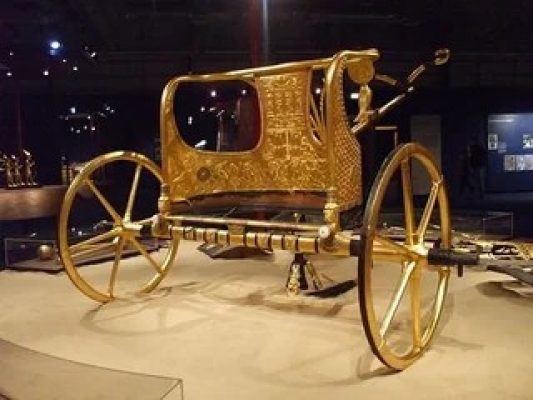
Two full-sized chariots were found dismantled in the antechamber, their wooden frames covered in sheet gold. These weren’t crude vehicles but sophisticated machines, lightweight yet strong enough to carry the pharaoh into battle or on ceremonial processions. The gold covering made them shine like the sun itself, announcing the king’s divine presence.
The chariot bodies feature detailed relief work showing bound captives, protective deities, and victory scenes. The craftsmanship extends even to functional parts like the wheel hubs and axle caps, which received their own golden decoration. Ancient Egyptian chariots were technological marvels, combining the speed of Mesopotamian designs with Egyptian artistic sensibilities.
These chariots likely never saw actual battle, given Tutankhamun’s young age and the peaceful nature of his reign. Instead, they served in religious festivals and state ceremonies, carrying the living god through the streets of Thebes. In death, they would carry his spirit through the sky, racing alongside Ra’s solar barque on its eternal journey.
11. The Golden Fingerstalls and Toe Covers
 Pin
Pin Courtesy of Wikimedia Commons
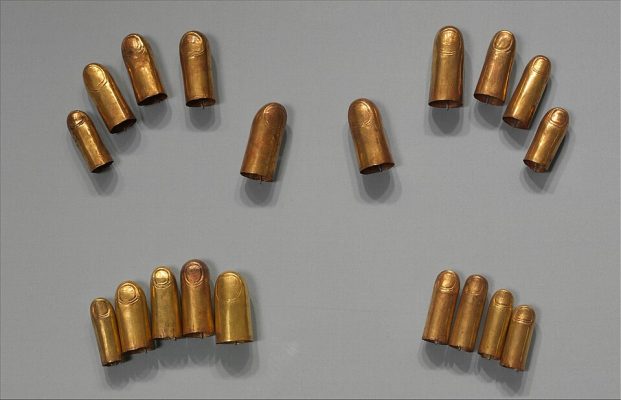
Among the most intimate golden objects were the finger stalls and toe covers placed on Tutankhamun’s mummy. Each finger and toe received its own golden sheath, perfectly fitted to protect these vulnerable extremities on the journey to the afterlife. Made from thin gold sheet, they total twenty covers for the fingers and twenty for the toes, each one a tiny masterpiece.
These sheaths served multiple purposes in ancient Egyptian belief. They protected the body’s extremities from decay and ensured the pharaoh would arrive whole in the afterlife. They also represented the divine nature of the royal body, transforming even the smallest parts into golden, god-like appendages. The priests fitted each one carefully during the mummification process, a task requiring hours of meticulous work.
The total weight of gold just on the mummy’s fingers and toes adds up considerably. Combined with the sandals, daggers, pectorals, and countless amulets placed within the linen wrappings, the mummy wore approximately 110 kilograms of gold in total. This staggering amount represents just the gold directly on the body, not counting the coffins, mask, or other treasures surrounding it in the burial chamber.
12. The Golden Ritual Beds
 Pin
Pin Courtesy of Reddit User r/OutoftheTombs
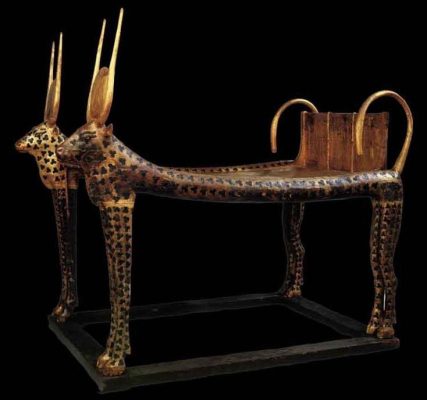
Three elaborate ceremonial beds were found in the antechamber, each with gilded frames shaped like sacred animals. One bed featured the heads of cows representing the goddess Hathor, another showed lionesses symbolizing the goddess Sekhmet, and the third displayed hippos representing the goddess Taweret. These weren’t ordinary sleeping furniture but ritual objects used in resurrection ceremonies.
The wooden frames were covered entirely in gold leaf, with glass inlays for the eyes that seemed to watch over the deceased pharaoh. Each animal held specific protective powers in Egyptian mythology. Hathor guided souls to the afterlife, Sekhmet provided fierce protection, and Taweret safeguarded mothers and children. Together, they formed a trinity of divine guardians surrounding the king.
These beds likely played a role in the mummification process itself. Ancient texts describe placing the body on sacred beds during various stages of preservation and ritual. The golden covering ensured these beds retained their purity and divine nature. When Carter found them, they still bore the weight of objects stacked on top, suggesting the tomb was sealed in some haste after the young pharaoh’s sudden death.
13. The Golden Statuettes of the King
 Pin
Pin Courtesy of Biltmore Estate
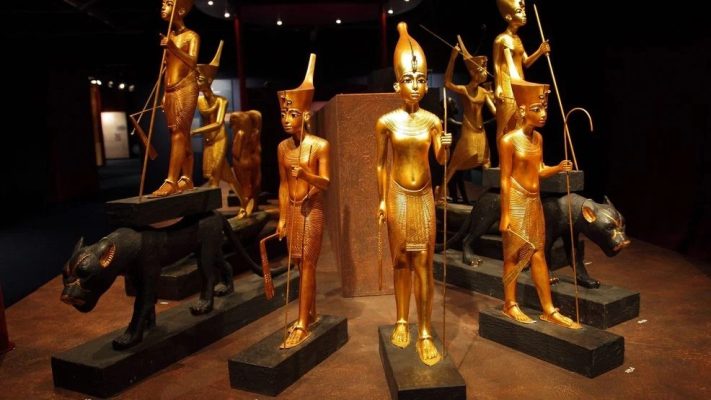
Scattered throughout the tomb were numerous small statuettes of Tutankhamun himself, many covered in gold or made entirely from solid gold. These figures showed the king in various poses: standing with a staff, harpooning, or riding on the back of a leopard. Each statue served a different magical purpose, allowing the pharaoh’s spirit to perform necessary actions in the afterlife.
One particularly striking statuette shows the king emerging from a lotus flower, symbolizing rebirth and resurrection. The figure is made of wood covered in gesso and gold leaf, with details picked out in black paint. The lotus was sacred to Ra, the sun god, who was reborn each morning. By depicting himself this way, Tutankhamun claimed his place in the cycle of eternal renewal.
Another golden statuette depicts the king wearing the crown of Upper Egypt, holding the crook and flail of kingship. These weren’t representations meant for human eyes but magical vessels that housed aspects of the pharaoh’s ka, or life force. Having multiple golden bodies ensured his spirit could never be destroyed or lost, no matter what dangers the underworld presented.
14. The Golden Uraeus and Vulture Diadem
 Pin
Pin Courtesy of Egyptian Museum, Cairo
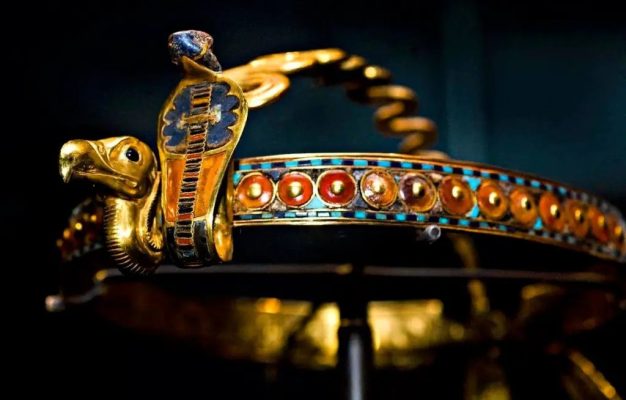
On the pharaoh’s head, beneath the famous death mask, rested a golden diadem featuring the uraeus cobra and the vulture goddess Nekhbet. This crown wasn’t merely decorative but represented the unification of Upper and Lower Egypt under one divine ruler. The cobra protected Lower Egypt while the vulture guarded Upper Egypt, and together they formed the complete symbol of pharaonic power.
The uraeus cobra is depicted with its hood spread, ready to strike at enemies with divine fire. Ancient Egyptians believed this serpent could spit flames to defend the king against any threat, mortal or supernatural. The craftsmanship is extraordinary, with individual scales visible on the cobra’s body and delicate feather patterns on the vulture’s wings, all rendered in gold so thin it’s almost translucent.
This diadem was one of several crowns and headdresses found in the tomb, but its placement directly on the mummy’s head made it especially significant. It was the last crown the king would wear, the one that would identify him as pharaoh for eternity. The gold ensured these protective goddesses would never fade or weaken, maintaining their vigilance throughout the endless ages of the afterlife.
15. The Golden Amulets and Jewelry
 Pin
Pin Courtesy of Egyptian Museum, Cairo
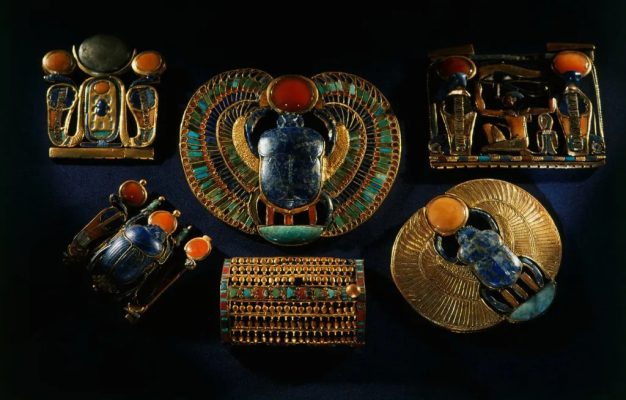
Between the layers of linen wrapping Tutankhamun’s mummy, Carter discovered 143 golden amulets and pieces of jewelry. These included rings, bracelets, collars, and pendants, each one placed at a specific location on the body according to religious texts. The variety was stunning: scarabs for protection, djed pillars for stability, ankhs for life, and wedjat eyes for healing and wholeness.
Some amulets were purely functional in the magical sense, simple golden shapes inscribed with protective spells. Others were elaborate pieces of jewelry that the king might have worn in life. One bracelet features a massive scarab beetle carved from lapis lazuli, set in gold and inscribed with the king’s throne name. The scarab alone weighs several ounces, and the gold setting adds considerably more.
The sheer number of these objects speaks to the complexity of ancient Egyptian funerary beliefs. Each amulet addressed a specific danger or need in the afterlife. The heart scarab prevented the heart from testifying against the deceased during judgment. The djed pillar ensured the backbone remained strong for resurrection. Together, these 143 golden objects formed a complete magical defense system, armor for the soul rather than the body.
FAQs
All artifacts remain Egypt’s property and most are displayed in the Egyptian Museum in Cairo. The treasures have never been sold and are considered national heritage, protected by law.
Probably not. His tomb was relatively small and he died young. Other pharaohs like Ramses II or Seti I likely had far more treasure, but their tombs were completely looted in ancient times.
Egypt controlled gold mines in Nubia (modern Sudan) and the Eastern Desert. Gold was relatively abundant for royal use, though commoners rarely saw it. The mines produced tons annually during the New Kingdom.
The tomb was fully excavated and documented. However, some egyptologists believe hidden chambers might exist beyond the burial chamber walls, potentially holding more treasures. Recent scans have been inconclusive.
Egyptians believed gold was the flesh of the gods, imperishable and eternal. It never tarnishes or decays, making it the perfect material for eternal life. The sun god Ra had golden skin in their mythology.









 Login with Google