





















 Pin
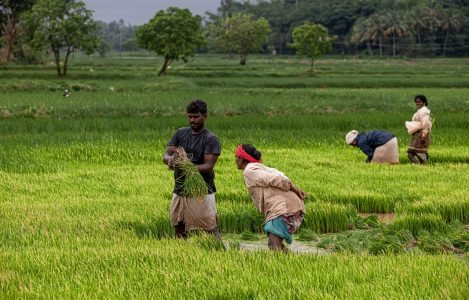
Pin Photo courtesy of Renjith Tomy Pkm
Synopsis: India has surged ahead as the world’s top rice producer and exporter, with shipments exceeding 20 million metric tons in the latest fiscal year. Yet beneath this success lies a growing environmental challenge. In regions like Haryana and Punjab, thirsty rice fields are draining groundwater at an unsustainable pace, forcing farmers to dig ever-deeper borewells and shoulder rising costs. Critics argue that export-driven rice farming, fueled by subsidies, risks undermining water security for millions.
India’s rice boom isn’t just a local success story — it’s reshaping global markets. Over the last decade, India has nearly doubled the amount of rice it sends abroad, emerging as the top exporter and supplying roughly 40 % of the world’s rice trade. This surge has helped bridge food gaps in Africa, the Middle East, and Asia while bolstering farm incomes and trade revenues.
This achievement reflects years of policy support, modern irrigation, and intensive cultivation. Rice is deeply woven into India’s agricultural identity, feeding millions and generating hard currency through exports.
But there’s another side to this harvest that doesn’t make it into export statistics — a strain on the very water that sustains rice paddies. Groundwater reserves that once stood near the surface are dropping fast, especially in fertile plains where rice reigns supreme.
Table of Contents
Groundwater Tables Are Falling Fast
In rice-producing states such as Haryana and Punjab, farmers once tapped groundwater at depths of about 30 feet. Today that water lies far below the surface — in many places between 80 feet and 200 feet deep. Borewells must be deeper and pumps stronger, and each year brings higher costs for farmers trying to irrigate thirsty rice fields.
Rice is a water-hungry crop. Producing a single kilogram can require around 3,000 – 4,000 litres of water — often more than the global average. Combined with over-extraction, this has left aquifers in Haryana and Punjab classified as “over-exploited” or at “critical” levels.
The result? A hidden cost on India’s agricultural success — one that shows up in falling water tables, rising pump bills, and long-term worries about sustainability.
Subsidies Fuel the Rice-Water Loop
Part of the reason rice fields dominate is policy. Government support — like guaranteed minimum prices and subsidised power for irrigation — rewards farmers who stick with rice even when alternatives might conserve water. These incentives were created in an era when feeding a growing population was the top priority, but today they make it harder for farmers to shift toward less water-intensive crops.
Experts say this creates a cycle: farmers grow more rice because of stable price support, pay less for water use thanks to cheap electricity, and then push groundwater levels lower. Breaking that cycle requires policy shifts that don’t undercut farmers’ livelihoods while easing pressure on aquifers.
Farmers Feel the Impact — Especially Smallholders
For large landholders experienced in managing costs and navigating subsidies, deepening borewells and bigger pumps remain manageable — at least for now. But for small farmers who rely on modest plots, rising water extraction costs eat into already slim profits.
Many farmers describe the grind of rising expenses — more powerful pumps, longer pipes, extra fuel or electricity — just to keep rice crops alive. As the water table sinks, investments that once made sense begin to feel like a gamble.
This growing economic strain paints a human picture behind the statistics — families balancing tradition, survival, and environmental limits.
The Water Crisis Has Global Ripples
India’s role as the top rice exporter means its agricultural choices matter far beyond its borders. Roughly 40 % of rice shipped globally comes from Indian farms. That means water use in India influences global food security and even how major importing countries plan their food supplies.
If India sees groundwater continue to fall, global markets could feel it. Reduced production or rising prices elsewhere might follow, affecting food prices and trade patterns worldwide.
The water crisis isn’t a remote environmental issue — it’s tied to global hunger, trade balances, and economic stability.
Attempts at Crop Diversification
Some efforts aim to break rice’s grip on water resources. In Haryana, for example, officials introduced a one-time subsidy to encourage cultivation of millets — a group of crops that need far less water.
Millets are valued for their drought tolerance and nutrient profile, and they’re gaining a bit of urban culinary fame as healthy alternatives. But growers haven’t rushed in. Experts argue that a single season of incentives isn’t enough to change long-standing farming habits.
Farmers need stable, long-term support — including reliable markets — to consider shifts away from rice. Otherwise, old patterns persist, and so does the pressure on water.
Climate Variability Adds More Stress
While monsoon rains have been strong in recent years, they aren’t enough to refill depleted aquifers quickly. Aquifers recharge slowly, and intense extraction overrides rain’s benefit.
Climate change adds unpredictability — delayed rains, intense dry spells, and shifting weather patterns. For farmers dependent on underground water, this means planning becomes harder and risk grows.
India’s water challenges are not just about volume — they’re about timing and reliability too, which make irrigation increasingly complex.
Policy Challenges and Farmer Protests
In the recent past, attempts to reform agricultural policy — including moves that might have changed rice production incentives — triggered massive farmer protests. This shows how sensitive the issue is: food security, pricing policies, and rural livelihoods are deeply entwined.
Any major policy overhaul must address these complexities. Simply cutting support for rice could leave farmers exposed unless alternatives and protections are in place.
It’s a political and economic balancing act with high stakes for rural communities.
What Experts Recommend
Agricultural economists suggest redirecting subsidies toward water-efficient crops and supporting farmers through transition periods. One idea is shifting financial support from costly power and fertilizer subsidies for rice to incentives for millets and other dryland crops.
Such moves could ease groundwater pressure while keeping farmers financially secure. But experts stress that this needs time — at least five years — to take effect and build farmer trust.
Balancing Exports and Environment
India’s success in rice exports is a story of agricultural achievement, but it comes with difficult trade-offs. Managing water scarcity while feeding a population of over 1.4 billion people and meeting export demand is no simple task.
The challenge ahead lies in balancing economic benefits with sustainable practices that protect water resources for future generations.
What’s Next for India’s Water and Rice Future?
If current trends continue, water tables may fall further, and small farmers could struggle more. Solutions will need cooperation between farmers, policymakers, and scientists — blending traditional wisdom with new technologies and incentives.
Time will tell if India can rewrite its agricultural script in a way that preserves water without losing its hard-earned leadership in the rice market.
FAQs
Because rice needs a lot of water, and expanding exports drives farmers to extract more groundwater, draining aquifers in key states like Haryana and Punjab.
Farmers report needing to drill between 80 – 200 feet today, compared with around 30 feet a decade ago.
Yes. Guaranteed prices and cheap irrigation power encourage rice planting, discouraging shifts to water-efficient crops.
Millets and other dryland crops use much less water, but require stable incentives and market support.
Beyond farm incomes, falling water tables could affect food supply, global rice prices, and rural sustainability.









 Login with Google