




















 Pin
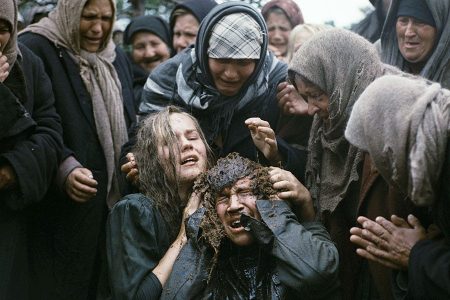
Pin Photo courtesy of “Come and See” (1985)
Synopsis: Some films don’t just entertain—they weigh on your soul. The heaviest movies challenge viewers with raw emotion, difficult themes, and stories that linger long after the credits roll. These aren’t your typical weekend watches. They demand attention, provoke thought, and often leave audiences emotionally drained yet profoundly moved. From war’s brutality to humanity’s darkest moments, these cinematic experiences transform how we see the world. They’re masterpieces that combine artistic brilliance with unflinching honesty, creating viewing experiences you’ll never forget—even when part of you wishes you could.
Cinema has the power to transport us, but some films do something more intense—they anchor us in uncomfortable truths. The heaviest films ever made don’t shy away from humanity’s most painful chapters. They force us to confront war, genocide, abuse, and loss with unflinching clarity.
These aren’t easy watches. You won’t reach for popcorn or settle in for a relaxing evening. Instead, you’ll find yourself gripping the armrest, holding your breath, or wiping away tears. The 10 heaviest movies of all time represent filmmaking at its most courageous and affecting.
What makes a movie “heavy”? It’s not just sad endings or tragic characters. These films carry emotional weight that presses down on your chest. They show us humanity at its worst—and sometimes, its most resilient. Ready to explore cinema’s most intense experiences? Let’s begin.
Table of Contents
1. Schindler's List (1993)
 Pin
Pin Courtesy of Allstar/Cinetext/Universal
Steven Spielberg’s masterpiece doesn’t just tell the story of the Holocaust—it makes you feel its horror in your bones. Shot in stark black and white, the film follows Oskar Schindler, a German businessman who saved over a thousand Jewish lives during World War II. But this isn’t a feel-good hero story. It’s three hours of unflinching brutality that shows exactly what hatred can do.
The film’s power lies in its refusal to look away. Spielberg captures the arbitrary cruelty of the Nazi regime with scenes that haunt you forever. You watch families torn apart on train platforms. You see the Krakow ghetto liquidation unfold with stomach-churning realism. Each frame reminds you that these events actually happened to real people.
What makes it truly heavy is the helplessness you feel. Even as Schindler saves lives, thousands more perish. The famous girl in the red coat becomes a symbol of innocence lost. John Williams’ mournful violin score wraps around your heart and squeezes. This isn’t just cinema—it’s a memorial carved in celluloid, demanding we never forget.
2. Come and See (1985)
 Pin
Pin Courtesy of Janus Films
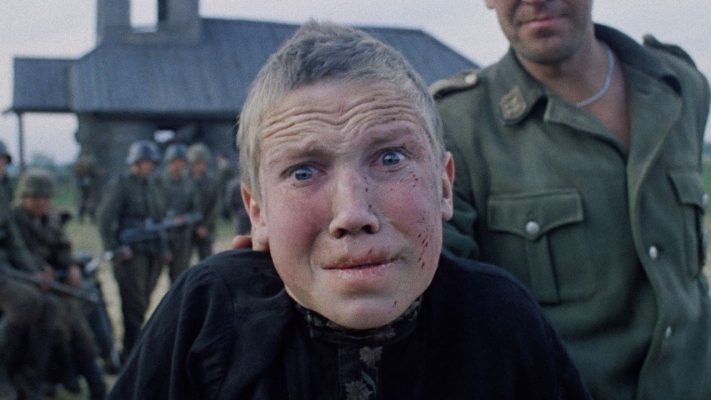
Soviet director Elem Klimov created something that barely qualifies as entertainment. This Belarusian film follows a young boy named Flyora who joins the partisan resistance during World War II, only to witness the absolute destruction of his world. What starts as youthful adventure descends into a nightmare that transforms his face from innocent child to hollowed-out old man in just two hours.
The film assaults your senses in ways few movies dare. Klimov uses distorted sound design that makes you feel like you’re inside Flyora’s ringing, shell-shocked ears. The camera stays uncomfortably close to faces contorted in terror and desperation. You watch as entire villages burn with people still inside them. The Nazis appear less like movie villains and more like casual executioners, joking and drinking while committing atrocities.
Come and See doesn’t give you emotional breaks or moments to breathe. The horror builds relentlessly until the final act, which depicts the Khatyn massacre with such brutal honesty that many viewers can’t finish it. This isn’t war as noble sacrifice or strategic chess game. It’s war as apocalypse, stripping away every shred of humanity and leaving only trauma behind. The boy’s aging face tells you everything about what war really costs.
3. Dancer in the Dark (2000)
 Pin
Pin Courtesy of Zentropa Entertainments
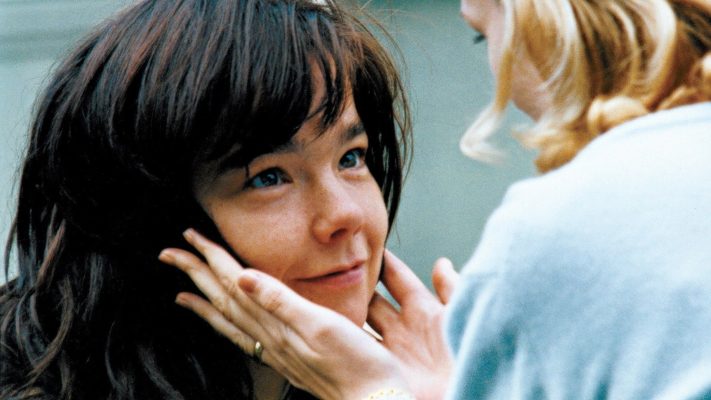
Lars von Trier took the most joyful film genre and twisted it into something devastating. Björk stars as Selma, a Czech immigrant in 1960s America who’s slowly going blind. She works grueling factory shifts to save money for her son’s eye surgery, escaping her grim reality through elaborate musical fantasies. The contrast between her vibrant inner world and her crushing outer circumstances creates an emotional whiplash that leaves you reeling.
The film plays a cruel trick on viewers. Just when Selma breaks into song and dance, pulling you into her hopeful imagination, reality comes crashing back twice as hard. Von Trier shoots the musical numbers in warm, saturated colors, then returns to handheld cameras and washed-out tones for real life. You feel the safety of fantasy yanked away each time, leaving you as exposed and vulnerable as Selma herself.
The final act is nearly unwatchable in its cruelty. Selma’s kindness and sacrifice lead only to betrayal and injustice. She faces the death penalty while still clinging to her dreams of saving her son. Björk’s raw performance feels less like acting and more like watching someone genuinely suffer. The film offers no redemption, no last-minute rescue, just the senseless destruction of a pure soul. You don’t just watch tragedy unfold, you’re forced to participate in it.
4. Angst (1983)
 Pin
Pin Courtesy of Angst (1983)
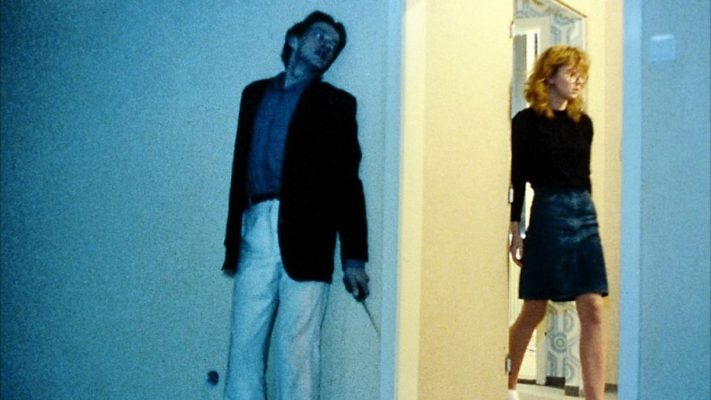
Austrian director Gerald Kargl did something most filmmakers avoid—he put the camera inside the head of a psychopath. This disturbing film follows a nameless killer during his first hours after prison release, leading to a home invasion that unfolds with documentary-like precision. What makes it unbearable isn’t just the violence, but how intimately we experience his twisted thought process through constant voiceover narration.
The film is based on a real Austrian murderer, and Kargl refuses to soften anything. We hear the killer’s rambling justifications, his complete lack of empathy, his bizarre logic that makes murder seem almost mundane to him. The camera work is revolutionary and nauseating—it spins, tilts, and rushes through spaces as if possessed. You’re not watching a crime from safe distance. You’re trapped inside the perpetrator’s fractured consciousness, and it feels violating.
There’s no moral framework here, no detective to root for, no justice served. The victims are ordinary people going about their day before terror arrives at their doorstep. The violence is neither glorified nor censored, just presented with clinical detachment that somehow makes it worse. Angst leaves you feeling dirty, as if you’ve witnessed something you shouldn’t have. The film understands that sometimes the heaviest burden is unwanted knowledge about what humans are capable of becoming.
5. An Elephant Sitting Still (2018)
 Pin
Pin Courtesy of Berlinale
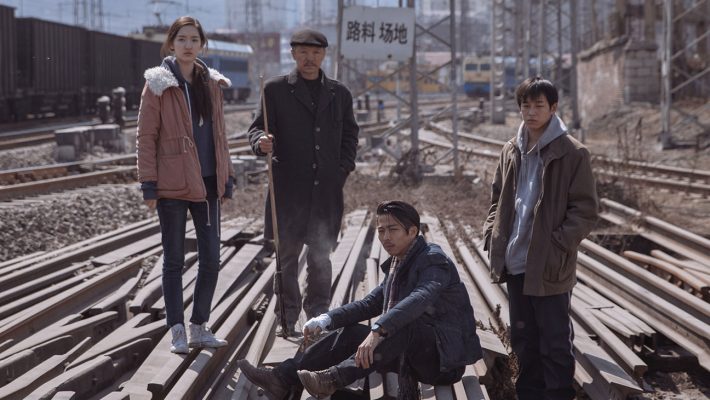
Chinese director Hu Bo created a four-hour meditation on hopelessness that doubles as his suicide note. He took his own life shortly after finishing this film, and knowing that context makes every frame heavier. The movie follows four people in a decaying industrial city over the course of one bleak day, each trapped by circumstances that seem impossible to escape. They all hear about an elephant in a distant city that simply sits and ignores the world, and that image becomes their only fragile hope.
The film moves at a glacial pace, forcing you to sit with these characters in their suffocating reality. There’s the teenager who accidentally causes a classmate’s death, the old man being shipped off to a nursing home against his will, the woman trapped in a dead-end affair, and the young man whose friend jumped from a building. Hu Bo’s camera rarely moves, just watches as these lives slowly collapse under the weight of poverty, corruption, and emotional abandonment. Every scene feels like waiting for something that never comes.
What crushes you is the absence of melodrama. Nobody screams or breaks down in theatrical ways. They just endure, moment after moment, carrying pain that never quite explodes but never fades either. The gray industrial landscape mirrors their internal emptiness. By the time they finally board a bus toward that mythical elephant, you understand that no animal, no journey, can save them. The film is a farewell letter from a director who saw no exit, and his despair seeps through every minute of runtime.
6. Requiem for a Dream (2000)
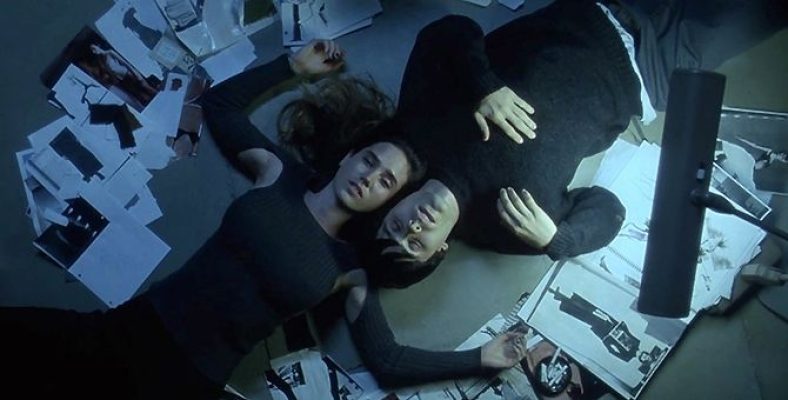 Pin
Pin Courtesy of Artisan Entertainment
Darren Aronofsky assembled a visual nightmare about how addiction destroys everything it touches. The film tracks four people in Brooklyn—a young couple chasing drug dealer dreams, the guy’s best friend, and his mother who gets hooked on diet pills. What starts as misguided ambition accelerates into full-blown horror as each character spirals toward their own personal hell. The editing gets faster, the music more frantic, and reality itself seems to fracture as their addictions tighten their grip.
The film doesn’t treat drug use as a moral failure or a cool rebellion. It shows addiction as a predator that methodically strips away dignity, health, sanity, and hope. Aronofsky uses rapid-fire montages of pupils dilating, pills popping, and needles piercing skin until these acts become mechanical and joyless. Ellen Burstyn plays the mother with such vulnerability that watching her descent into amphetamine psychosis feels like witnessing a loved one disappear before your eyes. Her refrigerator hallucinations still haunt viewers years later.
The final act delivers gut punch after gut punch with no relief. Each character ends up somewhere worse than you imagined possible—amputation, prostitution, electroshock therapy, prison. The dream of a better life curdles completely. Clint Mansell’s string quartet score builds to an overwhelming crescendo that mirrors the characters’ complete unraveling. You leave the theater grateful for your own reality, no matter how imperfect, because you’ve just witnessed four cautionary tales that feel less like fiction and more like prophecy.
7. Grave of the Fireflies (1988)
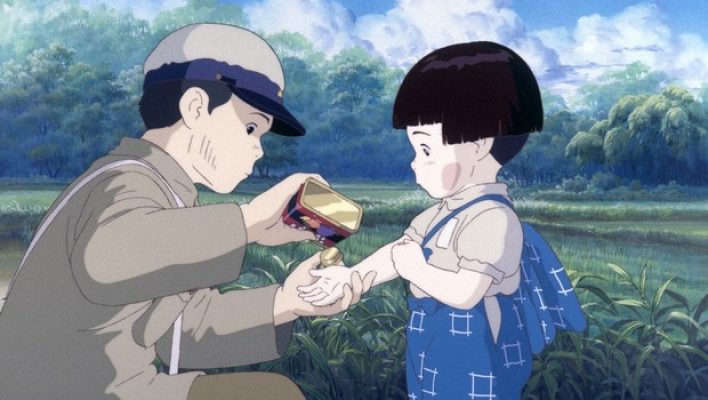 Pin
Pin Courtesy of Studio Ghibli
Studio Ghibli is known for whimsical fantasies, but Isao Takahata created something that shatters that expectation completely. This animated film follows two siblings, Seita and Setsuko, trying to survive in Japan during the final months of World War II after their mother dies in a firebombing. The animation style is beautifully detailed, which makes the tragedy hit even harder. You watch these delicate, carefully drawn children slowly starve to death in a world that has no room left for compassion.
The film opens by telling you exactly how it ends, which somehow makes the journey more painful. You know from the first scene that young Seita dies alone in a train station, so every moment of hope that follows becomes laced with dread. Takahata shows how war doesn’t just kill soldiers but devours the innocent and vulnerable. The children find temporary shelter in an abandoned bomb shelter, catching fireflies to light their darkness, but even these small joys turn bitter when the insects die by morning, their glow extinguished just like the children’s future.
What makes this film unbearably heavy is watching Setsuko deteriorate. She’s too young to understand why she’s always hungry, why her skin develops sores, why adults turn them away. Her brother does everything he can, but love and determination can’t defeat starvation. The fireflies that gave the film its title become a metaphor for brief, beautiful lives snuffed out too soon. This isn’t entertainment, it’s an elegy rendered in watercolors and heartbreak, proving that animation can cut deeper than any live-action film when wielded with such devastating honesty.
8. The Road (2009)
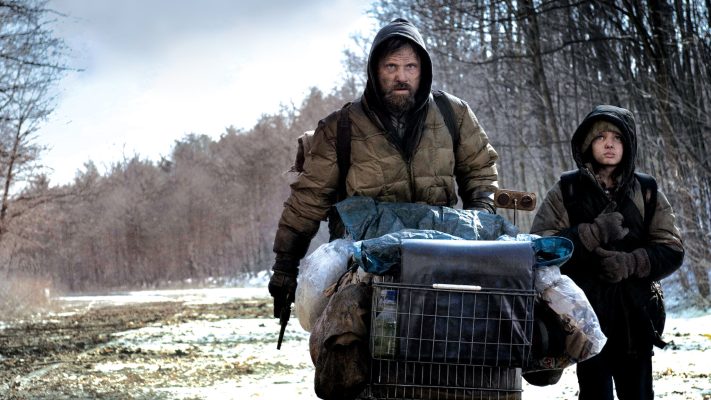 Pin
Pin Courtesy of Netflix
John Hillcoat adapted Cormac McCarthy’s post-apocalyptic novel into something that feels less like science fiction and more like a prolonged meditation on parenthood in the face of extinction. Viggo Mortensen plays a father guiding his young son through an America that’s been reduced to ash and cannibalism. The world has died, the sun barely penetrates the gray sky, and the few survivors left have mostly abandoned their humanity. Yet the father keeps pushing forward, trying to protect his son’s innocence in a place where innocence is a fatal luxury.
The film’s bleakness is relentless and physical. You can almost feel the cold seeping through the screen, taste the dust in every breath. They scavenge through abandoned homes and hide from roving gangs who’ve turned to eating other humans. The father is dying slowly, coughing blood, knowing he won’t be able to protect his boy much longer. Every interaction carries the weight of possible violence or betrayal. Trust has become the rarest commodity, and the father’s paranoia feels completely justified when we see what desperation has done to others.
What destroys you emotionally is the father’s determination to keep his son “carrying the fire,” to remain one of the good guys even when being good seems pointless. He tells stories about a world his son never knew, tries to shield him from horrors that are everywhere, and faces the unbearable question of whether survival is even worth it anymore. The love between them is the only warmth in a frozen world, and you watch that bond sustain them even as everything else crumbles. The ending offers the faintest glimmer of hope, but you’re too emotionally battered by then to fully embrace it.
9. Irreversible (2002)
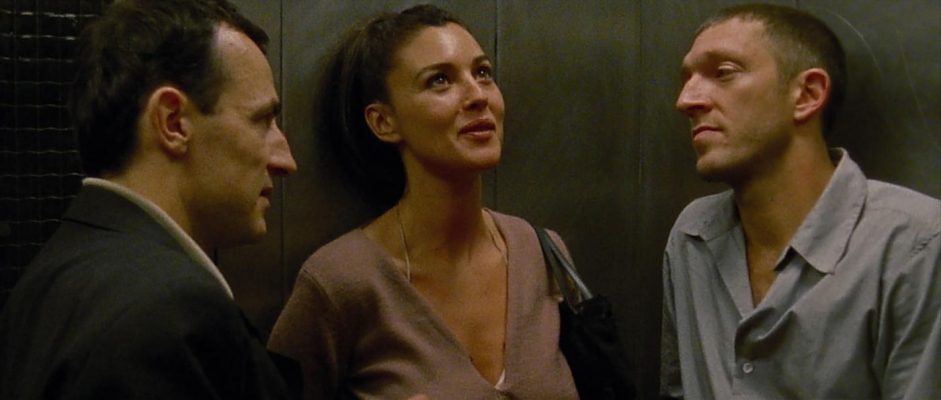 Pin
Pin Courtesy of Nord-Ouest Productions / StudioCanal
French director Gaspar Noé structured his film backwards, starting with brutal revenge and ending with innocent romance, forcing viewers to experience tragedy in reverse. The tagline “time destroys everything” appears early, setting the tone for what becomes one of cinema’s most punishing experiences. We watch two men hunt down and kill the person they believe raped and beat their friend Alex, then the film rewinds through the night to show us the actual assault, and finally takes us back to an earlier afternoon when Alex was happy and in love. This reverse chronology makes everything feel predestined and unavoidable.
The film contains a single-take assault scene lasting nearly ten minutes that most viewers find impossible to watch. Noé refuses to cut away or soften the horror, keeping his camera static as violence unfolds in real time. It’s not gratuitous in the exploitative sense, but it is punishing and deliberate. He wants you to feel the weight of this act, to understand why the revenge that opened the film happened, even as you recognize that revenge solved nothing. The whole structure becomes a meditation on how violence echoes through time, destroying futures before they can unfold.
What makes Irreversible truly heavy is how the final scenes show Alex radiantly happy, lying in a park, reading a book, caressing her pregnant belly. We’ve already seen her future stolen from her, so watching her exist in this moment of pure contentment becomes almost unbearable. Noé uses low-frequency sound waves in early scenes that literally make audiences feel nauseous, but the real sickness comes from knowing what’s coming for these innocent people. The film proves that sometimes knowing the ending first doesn’t prepare you for the journey, it just makes the journey more painful.
10. Threads (1984)
 Pin
Pin Courtesy of BBC
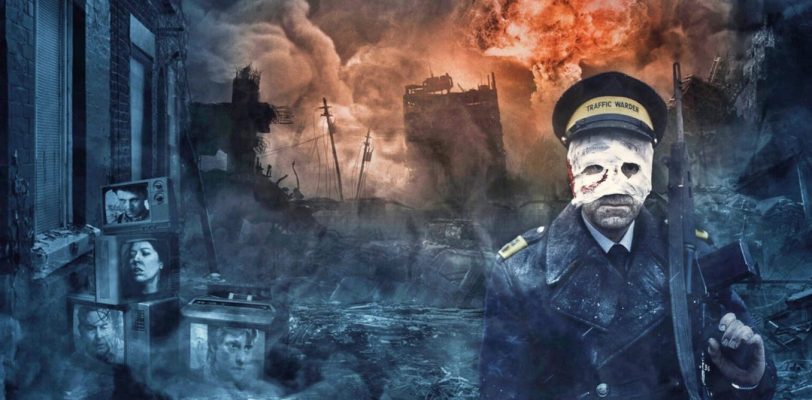
British television produced something in 1984 that governments didn’t want audiences to see. Director Mick Jackson created a docudrama showing what would actually happen if nuclear war broke out, focusing on the city of Sheffield as bombs fall and society collapses completely. There are no heroes here, no dramatic music swells, no last-minute salvation. Just ordinary people going about their lives until the missiles launch, and then the systematic destruction of everything that makes civilization possible. The film treats nuclear holocaust not as action spectacle but as documentary fact.
The bombs drop about halfway through, and what follows is harder to watch than the initial destruction. Jackson shows the weeks and months after, when radiation sickness sets in, when food runs out, when the government’s emergency plans prove laughably inadequate. People fight over scraps in the ruins. Martial law leads to public executions for minor theft. The narrator calmly explains how crop failures will cause mass starvation, how the ozone layer damage will make sunlight dangerous, how society will regress centuries within a single generation. The film uses genuine civil defense footage and scientific projections to make its nightmare feel entirely plausible.
What haunts you most is the final section, set years later, where we see children born after the war who’ve never known the old world. They can barely speak, their brains damaged by malnutrition and radiation. They live in medieval conditions, scratching out subsistence in the radioactive dirt. A young woman gives birth in squalor and screams when she sees her deformed baby. The film cuts to black on that scream, offering no comfort or closure. Threads succeeds in making nuclear war feel real rather than abstract, stripping away every Hollywood comfort and leaving only the cold mathematics of extinction.
FAQs
They’re intense and emotionally draining, but each offers something valuable. If you’re sensitive to violence or dark themes, research specific content warnings first. Many viewers find them profoundly moving despite—or because of—their difficulty.
These movies expand our empathy and understanding of human experience. They challenge us, provoke important conversations, and remind us of our shared humanity. Sometimes confronting darkness helps us appreciate light.
Schindler’s List or Grave of the Fireflies are emotionally devastating but beautifully crafted entry points. Avoid starting with Irreversible or Angst unless you’re prepared for extreme content. Build up gradually.
Yes, because it’s terrifyingly realistic. Horror films offer fantasy scares, but Threads shows exactly what scientists predicted would happen in nuclear war. The BBC film was so disturbing that it influenced Cold War policy discussions.
Absolutely. Grave of the Fireflies proves animation can devastate just as powerfully. The medium doesn’t diminish emotional impact—sometimes the contrast between beautiful art and brutal story makes it hit even harder.










 Login with Google