






















 Pin
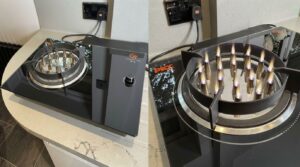
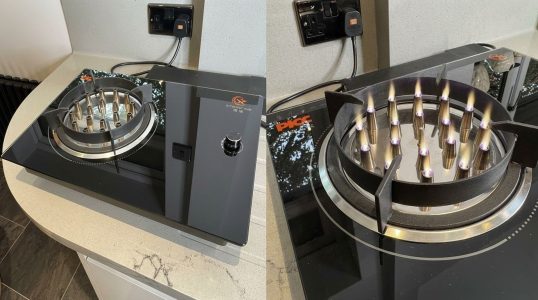
Pin Plasma Stove / Photo courtesy of AERO ENGINEERING ENTERPRISES
Synopsis: A plasma stove uses electricity to ionize air, creating a superheated plasma flame that cooks food faster than gas — with zero fuel. No LPG. No PNG. No open flames. It works with all cookware, reaches temperatures up to 1,300°C, and delivers up to 98% thermal efficiency. Brands like Terra Maestro, APAPL, and Smithcucina have already commercialized it globally. This article breaks down exactly how it works, what’s inside it, how safe it is, and where the technology is headed.
You’ve probably never thought twice about your stove. You turn the knob, the flame appears, you cook. Simple. Reliable. Done the same way for generations.
But quietly, in kitchens across China, India, and Europe, something is changing. A new kind of stove has started showing up — one with no gas cylinder behind it, no LPG pipe running to it, and no combustion happening inside it. Yet it produces a real, visible, powerful flame. Hot enough to stir-fry, sear, make roti, and boil water in under two minutes.
It runs entirely on electricity. And it does something genuinely fascinating — it turns air itself into fire. This isn’t a concept product sitting in a university lab. Real brands are manufacturing and selling it. Real chefs are cooking on it. A culinary director at a commercial kitchen chain noted it delivered the authentic “Wok Hei” flavor his guests love — all without a gas line in sight.
This is the plasma stove. And once you understand what’s happening inside it, you’ll never look at your kitchen the same way again.
Table of Contents
What Is a Plasma Stove?
A plasma stove is an electric cooking appliance that generates heat by converting electricity into plasma — the fourth state of matter. Instead of burning gas or using magnetic fields like induction, a plasma stove ionizes air inside a specialized chamber and produces a visible, flame-like heat source. No fuel. No combustion. Just electricity and physics doing something remarkable.
The result looks surprisingly familiar. You see a real flame — or at least something that behaves exactly like one. It heats any cookware, responds to knob adjustments almost instantly, and reaches cooking temperatures faster than a traditional gas burner. That’s the thing about plasma stoves: they feel like gas stoves to cook on, but they’re something else entirely under the hood.
The market has already moved well beyond prototype stage. Brands like Terra Maestro (China), APAPL (India), Smithcucina (India), and GoAi (China) are manufacturing and selling commercial units today. The global plasma stove market was valued at $1.8 billion in 2023, and analysts project a compound annual growth rate of 12.3% through 2030. This is not a coming technology — it has arrived.
The 4th State of Matter — Made Simple
Most of us learned three states of matter in school: solid, liquid, and gas. But there’s a fourth — plasma — and it’s actually the most common state of matter in the universe. The sun is plasma. Lightning is plasma. The Northern Lights are plasma. Stars, nebulae, and most of the cosmos exist in this state. We just don’t encounter it much in everyday life.
Here’s what plasma actually is: when you heat a gas to an extreme temperature — or zap it with a powerful electric field — the electrons get knocked loose from their atoms. What you’re left with is a supercharged mix of free electrons and positive ions. This ionized gas conducts electricity, emits intense heat and light, and behaves unlike any ordinary gas. That’s plasma.
In a plasma stove, this process is engineered deliberately and precisely. Electricity creates the conditions for ionization, the air becomes plasma, and that plasma releases heat directly toward your cookware. It’s the same fundamental force that lights up the aurora borealis — just tamed, focused, and put to work boiling your pasta water.
Inside the Machine — All the Parts Explained
Open up a plasma stove and you’ll find an elegant but purpose-built set of components, each with a specific role in turning household electricity into a cooking flame. Here’s what’s inside:
- Discharge Electrodes: These are the heart of the stove. High-voltage electricity passes through them, creating the arc that ionizes the surrounding air into plasma. In metal cookware setups, the pan itself acts as the negative electrode, completing the circuit. For ceramic cookware, a separate negative electrode is installed inside the stove head.
- Voltage Transformation Unit (VTU): Standard household current (220V) isn’t nearly enough to create plasma. The VTU steps voltage up to the kilovolt range needed to trigger ionization. It sits beneath the stove head, separated by a heat-insulating plate to prevent thermal damage to the electronics.
- Plasma-Ionization Nozzle: This directs and shapes the plasma arc — controlling where the heat goes and how it spreads across the cookware base. Terra Maestro’s 2025 models use a detachable Removable Plasma-Ionization Nozzle made from 310S austenitic stainless steel, chosen for its extreme heat resistance and long service life.
- High-Temperature Insulating Plate: Sits between the stove head and the electronics below. Made from advanced ceramic or composite materials, it prevents the intense heat generated above from damaging the circuit boards beneath.
- Electronic Control Unit (ECU): The brain of the operation. It manages power delivery, monitors temperature sensors, controls the plasma intensity, and triggers automatic shutdowns if anything goes wrong. Modern ECUs also handle IoT connectivity, timer functions, and error code display.
- Tempered Glass Cooktop Surface: The outer surface the pan sits on. Designed to withstand thermal shock while remaining cool to the touch during cooking, since heat is directed into the pan rather than the surface.
Together, these components form a tightly engineered system that converts wall electricity into a precise, controllable cooking flame in milliseconds.
How It Actually Generates Plasma — Step by Step
The process of turning electricity into a cooking flame happens fast — far faster than you can perceive — but the physics behind it is beautifully logical. Here’s the step-by-step journey from wall socket to cooking flame:
- Step 1 — Power conversion: Standard 220V AC current enters the stove and passes through the Voltage Transformation Unit, which ramps it up to high-voltage DC — typically in the kilovolt range.
- Step 2 — Arc generation: This high voltage is applied across the discharge electrodes. The intense electric field between them begins accelerating free electrons already present in the air gap.
- Step 3 — Electron avalanche: Those accelerated electrons collide with air molecules, knocking loose more electrons. Those electrons hit more molecules. The chain reaction — technically called a Townsend discharge — multiplies exponentially within microseconds.
- Step 4 — Ionization: Once enough electrons have been freed, the air in the electrode gap becomes electrically conductive. The gas is now fully ionized — it is plasma.
- Step 5 — Arc stabilization: The plasma forms a stable arc between the electrodes. The ECU continuously monitors and modulates power to keep this arc steady and at the correct intensity for the selected cooking level.
- Step 6 — Heat transfer: The plasma arc radiates intense thermal energy upward. The ionization nozzle shapes and directs this heat toward the base of the cookware sitting above, transferring energy with up to 98% efficiency.
What makes modern plasma stoves genuinely impressive is the precision of Step 5. Terra Maestro’s Plasma Precision Control system, showcased at AWE 2025, maintains temperature stability within 0.1°C — a level of precision that surpasses both gas and induction cooktops.
How a Plasma Stove Actually Cooks Your Food
Here’s the part that surprises most people: cooking on a plasma stove feels remarkably like cooking on gas. You see a real flame-like glow. The wok responds instantly when you turn the knob. The heat is direct, powerful, and visible — not the invisible warmth radiating up from an induction surface.
This matters enormously for certain cooking styles. The “Wok Hei” effect — that smoky, charred depth of flavor prized in Chinese stir-fry — requires extremely high, direct flame heat applied rapidly to the base and sides of a wok. Induction can’t replicate this. Plasma can, because it produces a direct thermal flame rather than an electromagnetic field. Commercial chefs in restaurant kitchens have confirmed this, with documented cases of plasma stoves delivering authentic wok flavor without a single gas connection.
The plasma flame also triggers the Maillard reaction — the browning of proteins and sugars that gives seared meat, charred vegetables, and toasted bread their flavor and color — more efficiently than conventional electric cooking. Because the heat source is visible and direct, cooks can also use visual cues just like on a gas stove, making the transition intuitive. Terra Maestro specifically describes their E2F (Electric-to-Flame) technology as “perfectly replicating traditional flame cooking effects while retaining ingredients’ natural flavors and juices.”
Is It Really Safe? All Safety Features Explained
This is the question everyone asks — and fairly so. Plasma involves extreme temperatures and high-voltage electricity. The short answer is: yes, modern plasma stoves are engineered to be very safe. Here’s how:
- No gas, no explosion risk: By eliminating LPG and PNG entirely, plasma stoves remove the most common causes of kitchen fires and explosions. No gas leak can happen because there is no gas.
- Intelligent Safety-Interlock Circuit: Found in models like Terra Maestro, this system continuously monitors operational parameters and triggers an immediate shutdown with a real-time error code display the moment anything deviates from normal — including overheating, electrical anomalies, or hardware faults.
- Auto-shutdown sensors: Integrated temperature sensors trigger automatic cutoffs if the stove overheats. Commercial models from Accio and Damien Technology report that these systems reduce fire risks by up to 70% compared to traditional gas kitchens.
- Child-lock mechanisms: Standard on most 2025 consumer models, preventing accidental activation by children.
- EMI shielding: Plasma arc systems generate electromagnetic interference. Quality models include shielding certified to IEC 60335-1 and FCC/CE standards to prevent interference with nearby electronics — phones, pacemakers, other appliances.
- Cool-touch surface: Because heat is directed into the cookware rather than the cooktop surface, the glass panel remains relatively cool during cooking, dramatically reducing burn risk from accidental contact.
- Anti-slip base and IP65 rating: Commercial units feature dust and moisture resistance, anti-slip bases, and explosion-proof housing — making them safe for industrial sites, outdoor use, and high-humidity commercial kitchens.
The electrode itself is a wear component, typically rated for 15,000 hours of operation before replacement — roughly equivalent to cooking two hours a day for 20 years. Monthly visual inspection of wiring and electrodes is the main maintenance requirement.
Plasma vs. Gas vs. Induction — Real Differences
Here’s how a plasma stove honestly compares to what most people are currently using:
| Feature | Electric coil | Induction | Plasma stove |
|---|---|---|---|
| Heating method | Resistive coil | Magnetic field | Plasma arc |
| Flame visible? | No | No | Yes ✓ |
| All cookware? | Yes | Magnetic only | Yes ✓ |
| Max temp | ~700°C | ~800°C | 1,300°C ✓ |
| Efficiency | ~55% | ~85% | Up to 98% ✓ |
| Speed | Slow | Fast | Very fast ✓ |
| Gas needed? | No | No | No ✓ |
| Wok Hei flavor? | No | No | Yes ✓ |
The key insight from this comparison: plasma is the only electric cooking technology that combines open-flame cooking behavior with full cookware compatibility. Induction is efficient but restrictive. Resistive coils are universal but slow. Plasma is both fast and universal — and the only one that can deliver Wok Hei.
What Cookware Works With It?
One of the plasma stove’s biggest practical advantages is its complete cookware freedom. Unlike induction cooktops, which require ferromagnetic materials and refuse to work with aluminum, copper, glass, or ceramic, a plasma stove heats through direct thermal radiation — meaning it simply doesn’t care what the pan is made of.
Verified compatible materials include:
- Steel and stainless steel — excellent heat conductor, works perfectly
- Cast iron — ideal, retains and distributes plasma heat beautifully
- Aluminum — fully compatible, unlike induction
- Copper — works with no restrictions
- Clay and earthenware — compatible, great for slow-cooking
- Ceramic and glass cookware — fully supported (a separate negative electrode handles the circuit in non-conductive pans)
- Brass and traditional Indian cookware — confirmed compatible by APAPL
This universality is particularly significant in markets like India, where aluminum, brass, and clay cookware are standard in millions of households. Induction’s cookware restrictions have been a major adoption barrier there. Plasma removes that barrier entirely.
Latest Technology in 2025 — Terra Maestro, APAPL & More
The plasma stove market in 2025 is no longer a single product category — it’s a rapidly diversifying ecosystem of brands, technologies, and applications. Here’s what’s happening right now:
Terra Maestro (China): The standout brand of 2025. At the Appliances and Electronics World Expo (AWE 2025) in Shanghai, Terra Maestro dominated headlines with its Plasma Precision Control system — maintaining temperature stability within 0.1°C. Over 3,200 visitors tested units at the expo, with 48% placing immediate pre-orders for the ¥8,999 Pro model. The brand announced strategic partnerships with Bosch and Midea for commercial scaling, a 10-year warranty on core components, and alignment with China’s Phase VI emissions standards (GB 38448-2025). Media called it “the Tesla of cooktops.”
APAPL (India): India’s leading plasma stove manufacturer, specifically designed for Indian cooking. Power output ranges from 2,500W to 6,000W at 220V AC. Max temperature: 1,300°C. Available in single and double burner formats. Priced at approximately ₹35,000. Confirmed compatible with all Indian cookware including brass and clay. APAPL has positioned the product directly as an LPG/PNG replacement amid India’s ongoing fuel supply challenges.
Smithcucina (India): India’s first plasma cooktop brand, introducing the PlasmaArc platform with solar inverter compatibility and off-grid models. Their 2025 rollout includes a visual innovation — a glass-plasma ring that changes color with temperature, acting as both a safety indicator and design element. Targets both premium urban kitchens and Tier-2 towns with solar-compatible models.
GoAi (China): MUSE Award-winning design. Gasless plasma flame cooker with 2,500W input, 80-85% thermal efficiency, flame temperatures up to 1,200°C, and a 100W-per-grade stepless control knob for precise cooking adjustment. Features explosion-proof control panel and 310S stainless iron grate.
Across all brands, the 2025 trend is toward IoT integration — cloud monitoring, mobile app control, remote diagnostics, and firmware updates. Electrode durability improvements have also extended operational lifespans by up to 50% compared to 2022 models.
Where Is It Available & What Does It Cost?
Plasma stoves are now commercially available across Asia, Europe, and through international B2B channels. Consumer availability is strongest in China and India, with commercial units shipping globally.
Current price ranges (2025):
- Entry-level portable consumer models: $245–$462 (approx. ₹20,000–₹38,000)
- Mid-range home units (like APAPL single burner): ~₹35,000 (~$420)
- Terra Maestro Pro model: ¥8,999 (~$1,240) with 10-year core warranty
- High-wattage commercial units: $5,782–$6,308 per unit
- Bulk B2B orders (500+ units): 15–25% per-unit cost reduction
The higher upfront cost compared to gas stoves is the most cited barrier for consumers. However, when you factor in energy savings — plasma stoves achieve up to 98% thermal efficiency vs. roughly 55% for gas — the Total Cost of Ownership over 5 years often favors plasma significantly, especially as electricity from solar becomes cheaper.
Certifications to look for: UL/CE/FCC for safety, IP65 for commercial moisture resistance, IEC 60335-1 for household appliance compliance, and RoHS/REACH for sustainable manufacturing.
The Future of Cooking — Where Is This All Going?
The trajectory for plasma stoves is clear and accelerating. The global market, valued at $1.8 billion in 2023, is projected to exceed $3.5 billion by 2030 — driven by rising energy costs, stricter environmental regulations, and a genuine shift away from fossil fuels in kitchens worldwide. The EU Ecodesign Directive is already pushing commercial food service operators toward gas-free solutions, and plasma is increasingly the answer.
What makes the future especially interesting is where the technology is heading beyond basic cooking. Researchers are investigating plasma-assisted cooking chemistry — the idea that the reactive environment of a plasma arc (rich in ions, radicals, and UV photons) may produce unique flavor compounds, superior surface sterilization, and novel textures that conventional heat simply cannot replicate. It’s early research, but it’s the kind of thing that makes high-end chefs and food scientists pay close attention.
On the consumer side, expect the next few years to bring AI-integrated plasma cooktops — stoves that adjust plasma intensity in real time based on sensor feedback, recognize cookware type automatically, and communicate with smart home systems. Smithcucina’s solar-compatible models hint at a future where plasma cooking pairs seamlessly with renewable energy, making every meal genuinely carbon-neutral. The stove that once seemed like a physics curiosity is quietly becoming the most important kitchen appliance of the next decade.
FAQs
Yes — and it’s designed to. It produces a visible, real flame-like heat, works with all cookware, and handles every cooking style from roti to stir-fry. APAPL and Terra Maestro both market their units as direct LPG/PNG replacements. The only thing missing: the gas bill.
Modern plasma stoves direct the arc inside an enclosed nozzle chamber — you’re not exposed to raw plasma. The cooktop surface stays cool. No combustion means no carbon monoxide or nitrogen oxides. Multiple safety certifications (CE, IEC 60335-1) govern safe operation.
Plasma stoves achieve 80–98% thermal efficiency. Top induction models hit around 85%. So plasma is comparable to induction — and dramatically better than gas (~55%) or resistive coil (~65%). A 2,500W plasma unit used 2 hours/day costs roughly the same or less to run than an equivalent induction cooktop.
Quality plasma stoves include electromagnetic shielding certified to FCC/CE/IEC standards, which contains EMI within safe limits. Pacemaker wearers should consult their cardiologist — as with any high-power appliance — but certified commercial units have passed standard EMI compliance tests.
They already are. APAPL sells in India today at ~₹35,000. Terra Maestro launched nationally in China in May 2025. Smithcucina is rolling out in Indian metros and Tier-2 cities. Global B2B availability through Alibaba and Accio is live. Mass-market consumer pricing is still coming down but the technology is here now.









 Login with Google