






















 Pin
Pin Courtesy of Maria Gravias
Synopsis: Greenshell mussels from New Zealand have cracked the code on truly sustainable seafood. These distinctive emerald-shelled mollusks grow on ropes suspended in coastal waters, needing nothing but clean ocean currents to thrive. They filter nutrients naturally from seawater while their farming structures create habitats for other marine life. The industry now harvests 100,000 tonnes yearly, starting from wild larvae that arrive on a single beach. Rich in Omega-3s and genuinely ocean-friendly, they prove large-scale aquaculture can actually benefit the environment.
New Zealand’s coastlines hide an aquaculture operation that sounds almost too good to be true. Billions of mussels hanging on ropes beneath the water’s surface, growing fat without a single grain of feed, while simultaneously cleaning the ocean and providing homes for fish and other sea creatures.
The greenshell mussel industry has become New Zealand’s aquaculture flagship, and the numbers back up the hype. Annual harvests reach 100,000 tonnes, supplying global demand for sustainable seafood. These aren’t farmed in crowded pens or fed processed pellets. New Zealand organic greenshell mussels grow the way nature intended, just with a little human-made scaffolding to maximize the harvest.
What sets this operation apart is how farming actually improves the marine environment rather than degrading it. The mussel lines create artificial reef systems where biodiversity flourishes. Farmers become ocean stewards by necessity since their entire livelihood depends on maintaining pristine water quality. It’s a rare case where profit motives and environmental protection point in exactly the same direction.
Table of Contents
The Greenshell Difference
 Pin
Pin Courtesy of Lallbba
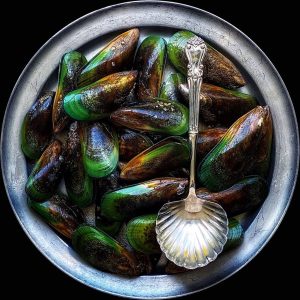
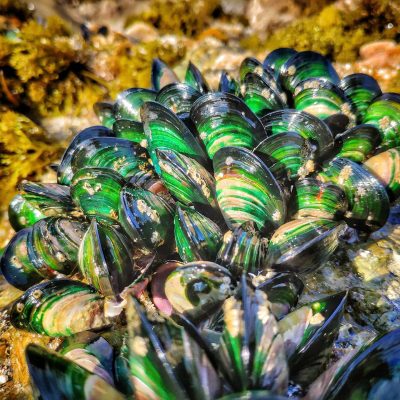
Greenshell mussels belong to a species found only in New Zealand waters, scientifically known as Perna canaliculus. The emerald-green edge along their shells gives them their common name and makes them instantly recognizable in markets worldwide. They grow significantly larger than common blue mussels, often reaching lengths of up to 240 millimeters.
The species thrives in New Zealand’s cool, nutrient-rich coastal waters where ocean currents deliver a constant supply of phytoplankton. These conditions allow the mussels to grow quickly while developing the distinctive sweet, tender meat that has made them famous. The pristine environment means the mussels accumulate minimal contaminants compared to shellfish from more polluted waters.
Their unique properties extend beyond appearance and taste. Greenshell mussels contain unusually high concentrations of omega-3 fatty acids, particularly EPA and DHA, along with a range of minerals including zinc, iron, and selenium. This nutritional profile has sparked interest from supplement manufacturers who extract these compounds for health products, creating an additional revenue stream for the industry.
Farming Without Feed
 Pin
Pin Courtesy of Fishers Island Oysters
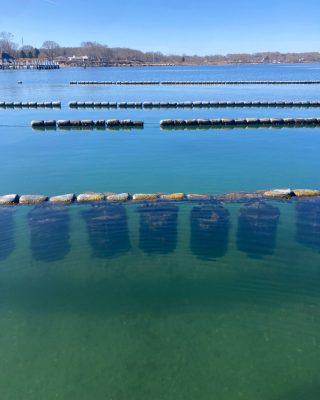
The greenshell mussel farming model operates on a beautifully simple principle. Farmers suspend ropes from floating platforms called longlines, which stretch across designated marine areas. Young mussels attach themselves to these ropes and spend the next 12 to 18 months feeding on naturally occurring plankton carried by ocean currents.
This system eliminates the largest environmental problem plaguing most aquaculture operations: feed production and waste. Traditional fish farming requires massive quantities of manufactured feed, often containing wild-caught fish, creating pressure on ocean stocks. Greenshell mussels need none of this infrastructure. They extract their nutrition directly from the water, growing efficiently without human intervention beyond the initial rope placement.
The absence of artificial feeding also means no excess nutrients accumulate beneath the farms. While salmon or shrimp operations can create dead zones from waste buildup, mussel farms actually remove nutrients from the water column. Each mussel filters up to 20 liters of seawater daily, extracting microscopic algae and particles. This natural filtration process improves local water clarity and quality, benefiting the broader marine ecosystem.
The Ninety Mile Beach Miracle
The entire greenshell mussel industry depends on a natural phenomenon that occurs along Ninety Mile Beach on New Zealand’s North Island. Each year, wild greenshell mussels spawn offshore, releasing millions of microscopic larvae into the ocean. Ocean currents sweep these larvae along the coast until they reach this particular stretch of coastline.
At Ninety Mile Beach, conditions align perfectly for mussel settlement. The larvae attach to seaweed and rocks in the intertidal zone, clustering so densely they create visible dark patches along the shore. Farmers monitor these natural settlements carefully, timing their collection to maximize spat survival. They gather the young mussels by hand or with specialized equipment, then transport them to rope-seeding facilities.
This reliance on wild spat collection rather than hatchery production keeps the genetic diversity of farmed mussels high and reduces operational costs dramatically. However, it also creates vulnerability. Variations in ocean conditions, temperature, or currents can significantly impact spat settlement from year to year. The industry has developed sophisticated monitoring systems to predict and respond to these natural fluctuations, ensuring stable production despite environmental variability.
Underwater Cities of Life
Greenshell mussel farms transform open water into thriving marine habitats. The rope structures create three-dimensional surfaces where other organisms can settle and grow. Within weeks of installation, the ropes become encrusted with algae, barnacles, and other invertebrates. These communities attract fish seeking food and shelter.
Research conducted by New Zealand’s National Institute of Water and Atmospheric Research has documented impressive biodiversity around mussel farms. Species counts often exceed those in nearby open water areas. Small fish use the rope structures as nursery habitats, while larger predatory fish patrol the farms hunting for prey. Seabirds have learned that mussel farms offer reliable fishing grounds, congregating in visible flocks above productive farming areas.
The ecosystem benefits extend to the seafloor below. Unlike fish farms where waste accumulates, the material falling from mussel farms consists of natural biological particles that quickly become food for bottom-dwelling organisms. Scallops, crabs, and various worms thrive in these nutrient-enriched sediments. Some farmers have observed that scallop populations increase near their mussel operations, creating potential for complementary harvesting strategies that maximize the productivity of marine farming zones.
The Omega-3 Powerhouse
Greenshell mussels pack an impressive nutritional punch that has attracted attention from health researchers worldwide. A single 100-gram serving delivers approximately 400 milligrams of omega-3 fatty acids, rivaling many fish species. These essential fats support cardiovascular health, reduce inflammation, and play crucial roles in brain function.
The specific types of omega-3s found in greenshell mussels make them particularly valuable. They contain both EPA and DHA in significant quantities, the two forms most readily used by human bodies. Additionally, researchers have identified unique fatty acids and lipids in greenshell mussels that may have anti-inflammatory properties beyond standard omega-3s. Clinical studies have explored these compounds as potential treatments for arthritis and joint pain.
Beyond omega-3s, greenshell mussels provide high-quality protein with all essential amino acids, along with substantial amounts of vitamin B12, iron, and selenium. The iron content particularly stands out, with a single serving providing nearly a third of daily requirements in a highly bioavailable form. This nutrient density combined with low calorie content makes them an excellent food choice for health-conscious consumers seeking sustainable protein sources.
Zero-Input, Maximum Output
The economic efficiency of greenshell mussel farming challenges conventional aquaculture wisdom. While most seafood farming requires substantial ongoing inputs for feed, antibiotics, and water management, mussel operations need almost none of these. After the initial infrastructure investment in ropes and floating systems, the primary costs involve labor for harvesting and maintenance.
This low-input model creates remarkable profit margins when conditions align favorably. The mussels essentially grow themselves, converting free ocean nutrients into valuable protein without requiring purchased feed. Energy costs remain minimal since the ocean provides all necessary water circulation. The absence of disease problems that plague intensive fish farming eliminates expensive veterinary interventions and chemical treatments.
The industry’s 100,000-tonne annual harvest translates into significant economic value for New Zealand’s coastal communities. Export markets, particularly in Asia, North America, and Europe, pay premium prices for these sustainably produced mussels. Processing facilities provide employment in rural coastal areas where economic opportunities can be limited. The sector has become a model for how marine resources can generate wealth while maintaining environmental integrity, a combination that policy makers globally find increasingly attractive as pressure mounts to feed growing populations sustainably.
Climate-Friendly Protein Source
Greenshell mussel farming produces one of the lowest carbon footprints of any protein source. The mussels require no land, no freshwater, no fertilizer, and no manufactured feed. They grow using solar energy captured by phytoplankton, creating a food production system that operates almost entirely on renewable resources. Life cycle assessments consistently rank bivalve aquaculture among the most environmentally friendly protein sources available.
The climate benefits extend beyond low emissions. Mussels actively remove carbon dioxide from seawater as they build their calcium carbonate shells. While the net carbon sequestration remains relatively small compared to industrial emissions, every contribution helps. More significantly, substituting mussel protein for beef or pork in diets delivers substantial emissions reductions. The greenhouse gas savings from choosing mussels over beef can exceed 95 percent per gram of protein consumed.
Ocean acidification poses the primary climate-related threat to the industry. As atmospheric carbon dioxide levels rise, oceans absorb more CO2, lowering pH levels. This acidification makes it harder for shellfish to build and maintain their shells. New Zealand’s relatively pristine waters currently buffer against the worst effects, but long-term projections worry industry scientists. Research programs are exploring selective breeding for acid-tolerant mussel strains and monitoring ocean chemistry to anticipate and adapt to changing conditions.
From Ocean to Plate in Hours
The harvest process for greenshell mussels combines traditional maritime skills with modern efficiency. Specialized vessels equipped with hydraulic systems cruise along the longlines, mechanically stripping mussels from the ropes. Onboard conveyor systems sort the harvest by size, separating market-ready mussels from smaller individuals that get returned to grow longer.
Fresh mussels reach processing facilities within hours of harvest, where workers clean, grade, and package them for market. Speed matters tremendously for maintaining quality since shellfish deteriorate rapidly after leaving the water. Many operations use seawater refrigeration systems to keep mussels at optimal temperatures throughout processing. Half-shell products get individually inspected and arranged on trays, while whole mussels go into mesh bags or vacuum-sealed packages.
The industry has developed sophisticated supply chains to deliver fresh mussels to international markets. Air freight carries premium products to Asian and North American restaurants, arriving within 48 hours of harvest. Frozen products reach broader markets, though connoisseurs insist fresh mussels offer superior flavor and texture. Some processors have pioneered frozen half-shell products that surprisingly retain much of the fresh mussel experience, opening new market opportunities for high-quality frozen seafood that competes with fresh options.
Quality Control and Food Safety
New Zealand’s greenshell mussel industry operates under strict regulatory oversight designed to maintain the country’s reputation for premium seafood. The Marine Stewardship Council has certified many operations, verifying sustainable harvesting practices and stock management. These certifications open doors to environmentally conscious consumers willing to pay premiums for verified sustainable products.
Food safety monitoring occurs at multiple levels throughout the production chain. Government agencies test coastal waters regularly for biotoxins, bacteria, and chemical contaminants. Algae blooms occasionally produce toxins that accumulate in filter-feeding shellfish, requiring temporary harvest closures until natural clearance occurs. This precautionary approach has maintained New Zealand’s excellent food safety record while preserving consumer confidence in the products.
Individual farming operations implement their own quality assurance protocols beyond regulatory requirements. Temperature monitoring, hygiene standards, and traceability systems ensure products meet international food safety expectations. Many companies pursue additional certifications like organic or sustainability labels that differentiate their products in crowded marketplaces. The industry recognizes that maintaining premium pricing depends on flawless quality standards that justify the higher costs compared to conventional farmed seafood from other regions.
Challenges
Despite its success, the greenshell mussel industry faces several emerging challenges. Competition for coastal space intensifies as recreational users, conservation advocates, and other industries vie for access to prime marine areas. Balancing aquaculture expansion with other ocean uses requires careful planning and stakeholder engagement. Some regions have reached practical limits on farming capacity given current technology and space availability.
Disease outbreaks remain a constant concern, though greenshell mussels have proven relatively resistant compared to other bivalve species. Periodic mortality events from unknown causes worry farmers and researchers alike. Climate change brings additional uncertainties around water temperatures, ocean chemistry, and storm frequency that could disrupt the carefully balanced natural systems the industry depends on. Developing resilience through diversification and adaptive management strategies occupies substantial research attention.
The industry’s future likely involves technological advancement alongside environmental stewardship. Innovations in rope materials, farming structures, and harvesting equipment could improve efficiency and reduce labor costs. Expanding into deeper waters might relieve coastal space pressures while accessing untapped productive zones. Value-added processing, particularly for health supplements and specialty food products, offers opportunities to capture more revenue from each harvested mussel. The sector appears well-positioned for continued growth if it can navigate environmental uncertainties while maintaining the sustainability principles that differentiate New Zealand’s approach from industrial aquaculture elsewhere.
A Model Worth Copying
New Zealand’s greenshell mussel industry demonstrates how large-scale food production can align with environmental protection. The model has attracted interest from coastal nations worldwide seeking to develop sustainable aquaculture industries. The key insights translate across different species and regions: work with natural systems rather than against them, minimize external inputs, and maintain the environmental quality that production depends on.
Other countries have attempted to replicate aspects of New Zealand’s success with varying results. Some regions lack the pristine water quality that allows New Zealand to produce premium products with minimal intervention. Others struggle with regulatory frameworks that either impose excessive restrictions or provide insufficient environmental protection. The cultural and institutional factors supporting New Zealand’s approach prove as important as the biological and oceanographic conditions.
The broader lesson extends beyond aquaculture into food production generally. Systems that operate as integral parts of healthy ecosystems rather than separate industrial processes offer better long-term sustainability prospects. Greenshell mussels prove this principle can work at commercial scale, producing substantial volumes of nutritious food while enhancing rather than degrading the natural environment. As global demand for protein increases while environmental pressures mount, this New Zealand success story offers valuable insights for feeding humanity sustainably.
FAQs
Yes, Perna canaliculus is endemic to New Zealand waters. While other green-lipped mussel species exist globally, true greenshell mussels grow exclusively around New Zealand’s coasts, making them unique to that region.
Yes, always cook greenshell mussels thoroughly before consuming. Steam, boil, or bake them until shells open. Raw or undercooked shellfish can harbor harmful bacteria and biotoxins that proper cooking eliminates.
Fresh greenshell mussels keep for 3-5 days when refrigerated properly at 32-35°F. Store them in a bowl covered with damp cloth, never in sealed plastic or water. Discard any with broken shells or those that don’t close when tapped.
Greenshell farming requires no feed, antibiotics, or freshwater. Mussels filter natural ocean nutrients while their farm structures create marine habitats. This zero-input system produces protein with minimal environmental impact compared to land-based agriculture.
Attempts to farm greenshell mussels elsewhere have largely failed. The species requires New Zealand’s specific water conditions, and international biosecurity regulations restrict live exports to prevent ecological disruption in other marine environments.









 Login with Google