























 Pin
Pin Photo courtesy Horizon Dwellers
Synopsis: Small robots that fit in your hand are proving themselves remarkably capable in medicine, disaster response, and scientific exploration. These miniature machines can sense their surroundings, learn through experience, and collaborate in groups to accomplish intricate tasks. What began as experimental laboratory work has matured into practical technology being deployed in hospitals, emergency situations, and research facilities. Understanding how these diminutive yet powerful devices function—and where they’re headed next—reveals a future where technology becomes more intimate, accessible, and genuinely useful in our daily lives.
The telegraph once shrunk the world. The telephone carried voices across oceans. Computers transformed from room-filling giants into pocket companions. Yet what’s happening now with pocket-sized robots represents something altogether different. Engineers aren’t just making things smaller—they’re making them capable in ways that defy common sense at such diminutive scales.
These machines are so small that some require microscopes to see properly, yet they possess genuine intelligence and real sensing capabilities. They navigate through human blood vessels hunting cancer cells, slither through earthquake rubble searching for survivors, and perform surgery inside beating hearts through incisions barely wider than a pencil. The smallest machines are proving to be the most revolutionary, quietly rewriting the rules about what technology can accomplish.
Table of Contents
The Miracle of the Miniature
 Pin
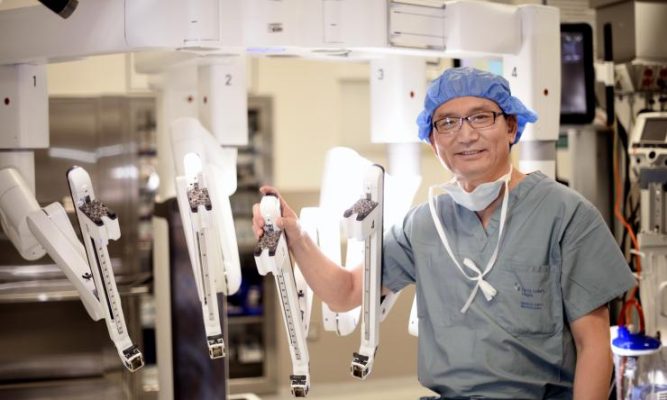
Pin Dr. Kenneth Liao at Baylor College with Robotic Cardiovascular Surgeon / Photo courtesy Baylor College of Medicine
The human heart is a stubborn, complicated organ, beating away in a space roughly the size of a fist, surrounded by ribs that don’t particularly care to make a surgeon’s job easier. For most of medical history, fixing what went wrong in there meant cracking open a person’s chest like opening a stubborn oyster, which was about as pleasant as it sounds. Now, here in 2026, surgeons are performing intricate heart repairs using robots small enough to slip through incisions barely wider than a buttonhole.
Dr. Kenneth Liao at Baylor College of Medicine recently completed his 900th robotic heart surgery, a milestone that would have seemed pure fantasy to the surgeons of previous generations. These pocket-sized machines work with a precision that human hands, steady as they may be, simply cannot match. They don’t tremble. They don’t tire. They operate in spaces so confined that a surgeon’s fingers would be about as useful as a butter knife in a sword fight.
What strikes observers most about this development is not merely the technical achievement, though that’s considerable enough. It’s the philosophical shift it represents. Humanity spent centuries building bigger, stronger, more powerful machines. Now engineers have learned that sometimes the greatest power comes in the smallest packages. A robot the size of a deck of cards can repair a valve in the human heart with more delicacy than the most skilled surgeon working with traditional tools. That’s not just engineering—that’s a kind of poetry.
When Machines Became Smaller Than Salt
 Pin
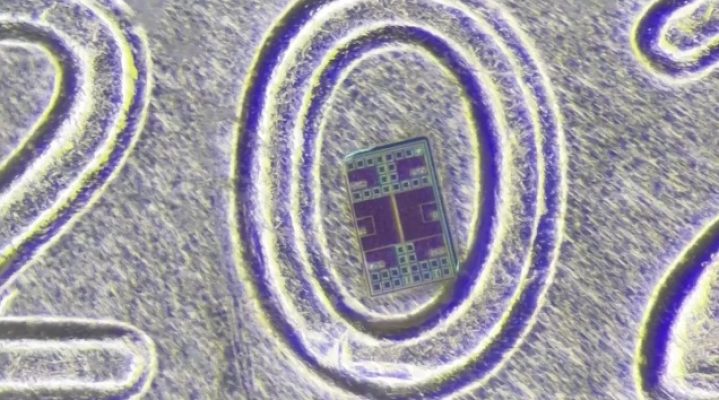
Pin A microrobot is placed on top of a penny to show just how small it is. / Photo courtesy University of Pennsylvania
Now, if a robot small enough to fit through a buttonhole seems impressive, consider this: researchers have managed to build a robot with an onboard computer, sensors, and a motor—the whole contraption less than a millimeter in size, smaller than a grain of salt. Squeezing an entire thinking machine into something tinier than the period at the end of this sentence strikes most observers as worthy of sustained attention and perhaps a moment of quiet wonder.
These microscopic machines aren’t merely scientific curiosities built to impress other scientists at conferences. They’re being designed to navigate the human bloodstream, traveling to places where even the smallest surgical instruments cannot reach. They swim through veins like determined little fish, guided by magnets or light, carrying medicines directly to diseased cells while leaving healthy tissue completely unbothered. It’s rather like having a postal service operating inside the body, delivering packages only to the addresses that need them.
The journey from laboratory curiosity to practical medical tool has been neither quick nor simple. Engineers had to solve problems that would make a chess master’s head spin. How does one power something so small? How does it know where to go? How can anyone control it once it’s inside a living human being? Each question led to a dozen more, and yet, through stubborn persistence and considerable cleverness, researchers have begun to answer them all. The result is a fleet of tiny machines that can hunt down cancer cells, clear blocked arteries, and deliver treatments with a precision that would have seemed like witchcraft to our grandparents.
The Cancer Hunters
 Pin
Pin The Cancer Hunters Nanorobots
Cancer has been humanity’s ancient enemy, a foe that strikes without warning and fights with terrible cunning. Traditional treatments—chemotherapy and radiation—have always been something of a scorched-earth approach. They kill the cancer, certainly, but they also kill plenty of healthy cells along the way, which is why people undergoing treatment often feel worse before they feel better. It’s like trying to kill a wasp in the house by burning down the entire building.
Nanorobots are changing this brutal calculus. These machines can be loaded with cancer-fighting drugs and then navigate directly to tumor sites, delivering their deadly cargo only where it’s needed. Studies have shown that enzyme-powered nanobots can boost drug delivery by four times within six hours compared to inactive versions. The cancer cells get the full force of the treatment, while healthy cells go about their business undisturbed. It’s targeted warfare at the cellular level.
What makes these tiny warriors particularly clever is their ability to respond to their environment. Some nanorobots can detect the acidic conditions that surround tumors and release their drugs only when they find those conditions. Others use magnetic fields for navigation, allowing doctors to steer them through the bloodstream like tiny ships. In experiments with bladder cancer, radioiodine-loaded nanobots reduced tumors by ninety percent at minimal dose levels. That’s not just an improvement over existing treatments—it’s a revolution in how medical science thinks about fighting disease.
The Swarm Advantage
Something both fascinating and slightly unsettling emerges when watching dozens of tiny robots work together like a colony of ants, each one following simple rules that somehow add up to complex, coordinated behavior. Scientists call this approach “swarm robotics,” and it’s proving to be one of the more remarkable developments in the field. A single small robot can accomplish modest tasks, but a hundred of them working in concert can achieve things that seemed impossible just a few years ago.
These robot swarms don’t need a central commander barking orders. Instead, each robot follows basic instructions—stay close to neighbors, move toward the target, avoid obstacles—and the collective intelligence that emerges from these simple rules is genuinely surprising. They can form shapes, create structures, and solve problems by working together. It’s rather like a flock of birds wheeling through the sky, each individual following local cues while the whole group creates patterns of remarkable complexity.
Medical researchers are particularly excited about swarms because they can accomplish tasks that single robots cannot. A swarm of micro-robots can map the interior of an organ, search for diseased tissue across a wide area, or work together to deliver larger amounts of medicine than any single robot could carry. They can communicate with each other, share information about what they’ve found, and coordinate their efforts without any human intervention. It’s cooperative behavior at a scale so small microscopes are needed to see it, and it’s opening doors researchers didn’t even know existed.
Threading the Needle in Disaster
 Pin
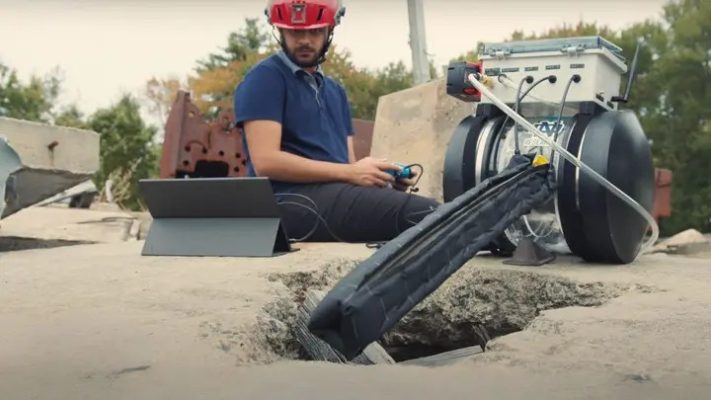
Pin Soft Pathfinding Robotic Observation Unit (MIT Lincoln Laboratory) / Photo courtesy Kurt “CyberGuy” Knutsson
When buildings collapse—whether from earthquakes, explosions, or the slow rot of neglect—the race to find survivors becomes a desperate affair measured in hours. Traditional rescue methods involve brave souls crawling into unstable rubble, risking their lives in spaces where another shift of debris could prove fatal. But MIT researchers and their colleagues have developed something that changes this dangerous equation: soft robots that can snake through wreckage like mechanical vines, exploring spaces too tight and too treacherous for humans or dogs.
The Soft Pathfinding Robotic Observation Unit, mercifully shortened to SPROUT, is a vine robot that can grow and maneuver around obstacles through small spaces. First responders deploy SPROUT under collapsed structures to explore, map, and find optimal routes through debris. The beauty of its design is its fundamental flexibility—unlike rigid robots that get stuck on the first piece of rebar they encounter, SPROUT simply flows around obstacles like water finding its way downhill.
Chad Council, a member of the SPROUT team, describes the reality plainly: the urban search-and-rescue environment can be brutal and unforgiving, where even the most hardened technology struggles to operate. The vine robot’s soft, inflatable design mitigates many challenges that stop other platforms cold. It can extend to considerable lengths, threading through gaps barely wider than a thumb, carrying cameras and sensors that give rescue teams eyes in places they could never otherwise see. The mechanical performance matters, certainly, but the real goal is providing rescue teams with a complete picture before anyone enters a rubble pile—turning blind courage into informed strategy.
Flying Machines No Bigger Than Bees
MIT engineers have created aerial microrobots that can fly with the speed and agility of actual insects. These tiny flying machines can complete ten consecutive somersaults in eleven seconds, maintaining their trajectory even when wind tries to knock them off course. Trained circus performers couldn’t manage that feat, and here are robots the size of bumblebees performing aerial gymnastics that would make a hummingbird envious.
The secret to their success lies in a clever two-part control system that combines high performance with computational efficiency. Previous generations of these flying microrobots were slow and could only manage smooth, gentle flight paths. But with new AI-driven controllers, their speed and acceleration have increased by roughly four hundred and fifty percent and two hundred and fifty percent respectively. They can now dart through tight spaces, dodge obstacles, and execute complex maneuvers that bring them remarkably close to matching the flight capabilities of actual insects.
The practical applications are considerable. In future disaster scenarios, these flying robots could be deployed to search for survivors trapped beneath rubble after earthquakes. Like real insects, they could flit through tight spaces that larger robots cannot reach, simultaneously avoiding obstacles and falling debris. They’re being designed to carry cameras and sensors that would allow them to locate people, assess structural damage, and map safe routes for rescue teams—all while flying through environments too dangerous or too cramped for conventional drones.
The European Rescue Revolution
Across Europe and Japan, a four-year research initiative called CURSOR brought together rescue organizations, research institutes, and companies to develop a new generation of disaster response tools. At the heart of this effort are small two-wheeled robots equipped with advanced sensors and chemical detectors, designed to find survivors in the critical seventy-two hours after a disaster when chances of survival remain decent. After that window closes, hope fades rapidly.
These compact machines, sometimes nicknamed “Smurfs” for their yellow color and diminutive size, can be deployed when situations become too dangerous for human rescuers or when there are simply too many locations to search at once. When an earthquake strikes, rescue teams must make terrible choices about where to search first. The Smurfs help by multiplying their reach, exploring multiple sites simultaneously while human rescuers focus on the most promising locations.
The philosophy behind these robots differs from earlier rescue machines. Previous efforts tried to build robots so well that they would never get stuck, which made them expensive and caused rescuers to fear losing them. The CURSOR team focused instead on quantity over perfection—building affordable robots that rescue teams wouldn’t hesitate to send into dangerous situations. If one gets stuck or damaged, it’s not a catastrophe. The important thing is getting information that helps save lives, and sometimes that requires accepting that tools will be lost in the process.
Snakes Made of Air and Ambition
The RoBoa, developed by students at ETH Zurich, takes the concept of flexible rescue robots to its logical conclusion. This “vine-like search and rescue robot” slithers forward like a snake through collapsed buildings, its inflatable fabric tube body extending up to one hundred meters as it searches for survivors. Behind its sensor-packed head trails an air-filled tube connected to a supply box containing computing power, electronics, and additional rolled-up tubing ready to deploy.
What makes RoBoa particularly clever is its versatility. It can bring light into dark spaces, establish communication with trapped survivors through a speaker and microphone, and even thread supply lines through debris to deliver water, food, and medicine to people awaiting rescue. Its pneumatically adjustable diameter allows it to squeeze through gaps or expand to provide structural support, depending on mission requirements. The current prototype is controlled using a handheld wireless remote, making it accessible to rescue teams without specialized training.
The Swiss Rescue Troops have been testing RoBoa in realistic scenarios, and the results suggest genuine practical value. An earlier prototype successfully located a trapped person in a collapsed building, which is the sort of real-world validation that matters more than any laboratory demonstration. Beyond search and rescue, the technology shows promise for infrastructure inspection, environmental monitoring, and mapping tasks in confined spaces where traditional equipment cannot venture.
The Magnetic Navigators
Sylvain Martel’s team at Polytechnique Montréal spent more than a decade refining swarms of tiny robots that could be steered through living pigs using the magnetism of MRI machines. The hope was simple enough in concept, though devilishly difficult in execution: create nanorobots that could deliver cancer-fighting drugs directly to tumors. The challenge lay in navigation—how does one guide something smaller than a grain of sand through the branching maze of blood vessels to reach a specific organ?
The answer they developed uses magnetic fields to steer the robots like invisible hands guiding them through the bloodstream. By adjusting the position of the pig in the MRI machine and manipulating the magnetic fields, they could direct their tiny fleet through arterial branches toward the liver. It’s navigation at a scale that makes traditional surgery look crude by comparison. Instead of cutting through tissue to reach disease, doctors send in a microscopic expedition that travels through existing pathways.
This approach to cancer treatment represents a fundamental shift in medical thinking. Rather than treating the whole body and hoping the medicine reaches the tumor, doctors send the medicine directly where it’s needed under precise control. The nanorobots become autonomous delivery vehicles navigating the circulatory system, responding to magnetic guidance while carrying their therapeutic cargo. When they reach their destination, they release their drugs exactly where they’ll do the most good, leaving healthy tissue untouched and reducing the brutal side effects that make cancer treatment so difficult to endure.
The Challenges That Remain
For all their promise, pocket-sized robots still face considerable obstacles before they become routine medical and rescue tools. Biocompatibility remains a genuine concern—foreign objects cannot simply be sent swimming through someone’s bloodstream without carefully ensuring they won’t trigger immune responses or cause unintended harm. The materials must be proven safe over extended periods, which requires extensive testing that takes years to complete properly.
Power remains another stubborn problem. Batteries that can fit inside something smaller than a grain of salt don’t hold much energy, which limits how long these robots can operate and what tasks they can perform. Researchers are exploring various solutions—some robots harvest energy from their environment, others use external magnetic or light-based power sources, and still others rely on chemical reactions to generate the force they need to move. Each approach has advantages and limitations that must be carefully weighed.
Control and navigation present their own technical puzzles. How does one steer something so small through a medium as complex as the human body? How can anyone know where it is at any given moment? How can engineers ensure it goes where intended and stops when it should? These questions require sophisticated sensing, communication, and feedback systems, all of which must be miniaturized to fit inside machines barely visible to the naked eye. The solutions exist in laboratories and experimental settings, but translating them into reliable clinical practice remains a work in progress requiring patience, funding, and continued innovation.
The Future Is Already Arriving
The remarkable thing about pocket-sized robots is that they’re not a distant dream—they’re already here, already working, already saving lives in ways that would have seemed like pure fantasy a generation ago. Surgeons are using them for heart procedures. Researchers are testing them for cancer treatment. Rescue teams are deploying them in disaster zones. The future, as it often does, has arrived ahead of schedule and without much fanfare.
What observers are witnessing is the early stage of a transformation in how humans interact with technology. These machines are becoming small enough, smart enough, and capable enough to work alongside people at scales barely perceivable. They’re not replacing human skill and judgment—they’re extending it, amplifying it, allowing doctors and rescuers to do things that were simply impossible before. A surgeon’s expertise combined with a robot’s precision creates outcomes neither could achieve alone.
The trajectory is clear enough. These robots will continue to shrink, become more capable, and find applications researchers haven’t yet imagined. They’ll map the interior of engines, inspect infrastructure, explore environments too hazardous for humans, and deliver treatments too delicate for traditional tools. They represent a quiet revolution, one measured not in dramatic announcements but in steady accumulation of capabilities. The pocket-sized robots have already conquered what seemed impossible. The question now is not whether they’ll continue to surprise us, but rather what impossible tasks they’ll make routine next.
FAQs
Yes, researchers have successfully tested nanorobots in living animals using magnetic guidance. While still in experimental stages, they’ve demonstrated safe navigation through blood vessels to deliver drugs directly to tumors.
They use thermal sensors to detect body heat, cameras for visual identification, and even chemical detectors to sense breathing. Some can also bring two-way communication equipment to talk with survivors.
Different robots use different solutions: some harvest energy from magnetic or light fields, others use chemical reactions, and some use external power transmitted wirelessly through their environment.
Yes, robotic surgical systems are already performing hundreds of thousands of procedures. Smaller micro and nanorobots for drug delivery are in clinical trials with promising results.
Researchers are actively developing swarm robotics for medical use. Multiple robots working together could map organs, deliver larger drug doses, or perform coordinated treatments that single robots cannot achieve.










 Login with Google