


















 Pin
Pin Courtesy of Deep China
Synopsis: In 1978, China embarked on an audacious gamble: stop advancing deserts with a living wall of trees stretching 4,500 kilometers. This colossal reforestation effort involves planting 88 billion trees across 13 provinces by 2050. Decades in, the results tell a complicated story of ambition meeting reality. Millions of hectares transformed from wasteland to forest, yet water shortages and survival challenges persist. The project reveals both human determination and nature’s stubborn indifference to our grandest plans.
It’s magnificently foolish about deciding to fight a desert. Deserts have been winning arguments against civilizations since people first got the notion to plant seeds in dry ground. They’ve buried cities, swallowed kingdoms, and generally made it clear they don’t care much for human plans.
Yet in 1978, China looked at its expanding northern deserts and said, essentially, “Not today.” The great green wall of china was born—a scheme so ambitious it would’ve made the pyramid builders pause. Plant 88 billion trees across 4,500 kilometers. Turn sand into forest. Simple enough on paper.
Four decades later, the results are in. Well, partially in. The full verdict won’t arrive until 2050, which tells you something about the scale we’re discussing. But already, this peculiar war between human persistence and natural stubbornness has produced some fascinating chapters worth examining.
Table of Contents
When Sand Becomes Everyone's Problem
 Pin
Pin Courtesy of Economic Daily China
Northern China’s deserts weren’t content staying put. They had expansion plans, and those plans included farmland, villages, and eventually, major cities. By the 1970s, sand arrived uninvited to Beijing’s doorstep every spring like a particularly rude houseguest.
These weren’t gentle dustings. Entire storms—thick, choking walls of grit—rolled eastward from the Gobi. Visibility dropped to nothing. Breathing became an indoor activity. Koreans and Japanese watched Chinese sand settle on their cars and wondered about international property rights.
The government calculated losses: topsoil vanishing, crops failing, people relocating. Someone eventually asked the obvious question—why not just plant trees? Lots of them. An absurd number of them. Enough trees to make the desert reconsider its career choices.
The Basic Idea (Which Isn't That Simple)
 Pin
Pin Courtesy of Deep China
The plan sounds straightforward until you examine the details. Plant drought-resistant trees where sand threatens productive land. Create barriers that slow wind, trap moisture, and convince other vegetation to join the party. Wait several decades. Enjoy your forest.
Reality adds complications. Different regions need different species. Some areas get poplars, others receive acacias or shrubs. Scientists make educated guesses about what might survive. Nature provides test results, often harshly.
Locals get recruited into this botanical army. Farmers receive incentives to plant trees instead of crops on marginal land. Some embrace this arrangement. Others remain skeptical about trading wheat for wood. Both responses seem reasonable when you’re betting your livelihood on saplings.
Numbers That Make Your Head Spin
 Pin
Pin Courtesy of Deep China
The Chinese government committed to planting 88 billion trees. That’s roughly eleven trees for every human currently alive. The project covers 406,000 square kilometers—picture Germany, then add a bit more for good measure.
By 2020, they’d planted around 66 billion of those trees. Forest coverage jumped from 5% to 13% in targeted areas. These numbers sound impressive until you learn that many planted trees don’t survive. The desert doesn’t surrender territory easily.
The timeline stretches 73 years. That’s longer than most human careers. People who started this work as young adults are now watching their grandchildren continue it. There’s something both admirable and slightly mad about projects that outlast individual lifetimes.
Unexpected Guests Show Up
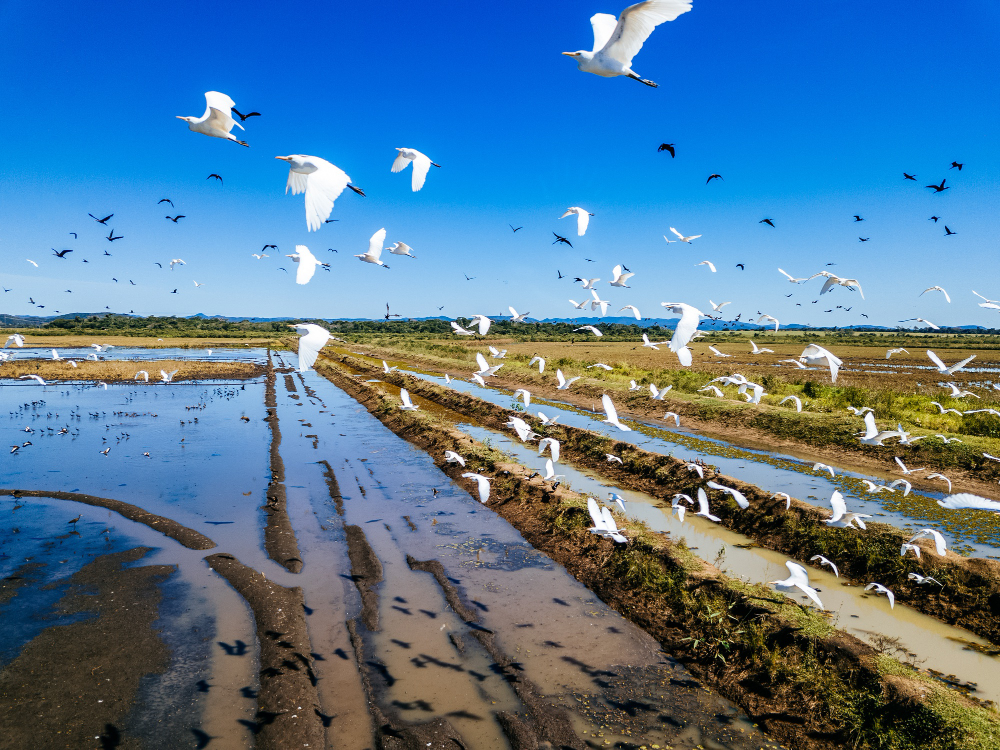
Something curious happened in these new forests. Birds returned. Not all at once, and not in overwhelming numbers, but enough to notice. Species absent for decades started appearing in surveys. They apparently received the memo about available real estate.
Small mammals followed. The forests created pockets of shade, slightly higher humidity, and protection from temperature extremes. Life finds these improvements attractive. Insects multiplied, which delighted the birds and annoyed everyone else in predictable fashion.
The ecological recovery happens slowly, almost reluctantly. Each layer builds on previous ones. Soil improves as roots hold it and organic matter accumulates. The desert doesn’t retreat dramatically—it just stops advancing in certain places. Sometimes that’s victory enough.
The Water Bill Arrives
Here’s where optimism met hydrology. Trees need water. Northern China doesn’t have much. Someone should’ve done that math earlier, but hindsight always was clearer than foresight.
Wells started running dry in some areas. Groundwater tables dropped. Communities that had pumped water for generations suddenly couldn’t. Turns out you can’t just add millions of thirsty trees without consequences. Nature keeps meticulous accounts.
Adjustments followed. Scientists recommended sparser planting in water-poor regions. Some areas switched to shrubs and grassland instead of dense forest. The revised approach lacks the dramatic appeal of solid tree coverage but has that useful quality of actually working. Progress sometimes requires embracing less ambitious versions of success.
The Monoculture Mistake
Early planners loved poplars. These trees grow fast, look impressive in reports, and give the appearance of rapid progress. So they planted poplars. Lots of poplars. Fields of nothing but poplars.
Nature responded by sending beetles. Beetle populations love monocultures—it’s like setting up an all-you-can-eat buffet with one menu item they particularly enjoy. Entire stands died. The uniform forest offered no resistance whatsoever.
Modern strategy embraces diversity. Mix species, plant shrubs alongside trees, include ground cover. It’s messier and slower but considerably harder to destroy wholesale. Evolution figured this out millions of years ago. Humans eventually caught up.
Regular Folks Doing Irregular Things
Rural families became the project’s workforce. Many transitioned from farming marginal land to managing small forests. The government paid them, which helped. Some discovered they preferred trees to temperamental crops.
Villages transformed. Places facing abandonment found new purpose. A few developed eco-tourism operations, guiding visitors through landscapes that had looked entirely different twenty years prior. The irony of charging people to see what used to be wasteland probably wasn’t lost on anyone.
Children grow up planting trees at school. They learn species names and water requirements. Whether this creates lifelong environmental commitment or just memories of muddy field trips remains to be seen. But at least they’re doing something besides watching screens for a few hours.
When Sandstorms Lose Enthusiasm
Beijing’s spring air quality improved. Not perfectly—this isn’t fairy tale territory—but measurably. Satellite data confirmed fewer and weaker dust storms reaching the capital. Politicians claimed credit. Scientists noted correlation isn’t quite causation but agreed the forests helped.
Farmers reported better conditions too. Their topsoil stayed put more reliably. Crops didn’t get buried mid-season as frequently. These practical improvements matter more than any environmental report. When your livelihood depends on keeping sand out of seedlings, effective matters more than elegant.
Bad years still happen. Weather doesn’t follow scripts. Climate change adds unpredictable variables to already complicated equations. The green wall helps significantly but can’t prevent everything. Anyone promising perfect solutions in environmental work is either lying or hasn’t been paying attention.
The Global Audience Takes Notes
Other countries watch China’s experiment with interest. Africa’s planning a similar project across the Sahel. They’re studying what worked, what failed, and what probably should’ve been obvious from the start.
The project proves large-scale restoration is possible, though not easy or cheap. It requires sustained political will, substantial funding, and willingness to adapt when reality diverges from plans. That last part trips up many ambitious projects.
Scientists worldwide analyze the data. Research papers multiply. International conferences discuss techniques and outcomes. One country’s massive environmental gamble becomes humanity’s shared learning experience. That’s progress, assuming we actually learn something from it.
Problems Don't Retire on Schedule
Climate change complicates everything, as it tends to do. Temperatures rise unpredictably. Rainfall patterns shift. Trees selected for specific conditions find those conditions changing. Nature’s goalposts keep moving while the game continues.
Funding never seems quite adequate. Initial planting generates excitement and resources. Maintaining established forests decades later proves less glamorous. Political priorities shift. Economic pressures mount. The 2050 finish line sits distantly ahead, and maintaining commitment across multiple government administrations challenges any system.
Results vary wildly by region. Some areas transformed spectacularly. Others limp along with poor survival rates and stunted growth. The overall statistics mask tremendous local variation. Declaring the project successful or failed oversimplifies a complex, ongoing story with multiple endings.
Why This Matters Everywhere
This project tests whether humans can intentionally repair large-scale environmental damage. We’re excellent at causing such damage—that part comes naturally. Fixing it requires sustained effort over timescales that make quarterly earnings reports look absurdly short-term.
If China succeeds, it proves repair is possible. If it fails, we learn expensive lessons about limitations. Either way, the attempt matters. Doing nothing guarantees certain outcomes. Trying something audacious at least offers chances at different ones.
The green wall represents optimism meeting pragmatism. Planting trees for people not yet born requires believing the future matters. That perspective seems increasingly rare in short-term thinking cultures. Maybe watching trees grow slowly teaches patience. Or maybe it just keeps us busy while nature decides whether to cooperate with our plans.
FAQs
Depends on your definition of “work.” Completely stop desertification? Unlikely. Significantly slow it while creating useful forests? Already happening. Lower your expectations and you’ll be pleasantly surprised.
Because northern China is essentially a harsh, unforgiving landscape that kills weak things. Survival rates of 15-30% sound terrible until you realize the survivors are tough enough to reproduce and spread.
Billions of yuan across decades. Exact totals vary depending on who’s counting and what they’re including. It’s expensive—though probably cheaper than letting deserts consume productive land indefinitely.
They can try. Success depends on local conditions, available resources, and sustained commitment. Africa’s attempting something similar. Results will vary, as they always do when humans negotiate with nature.
The deserts resume advancing. Established forests might persist in favorable areas, but without maintenance and continued planting, the project stalls. You can’t half-win against deserts—they’re patient and don’t accept partial victories.









 Login with Google