






















 Pin
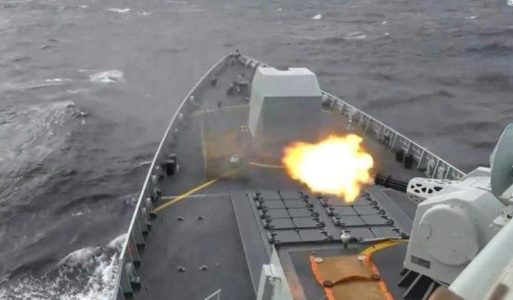
Pin Photo courtesy of Reuters
Synopsis: In late December 2025, China fires rockets towards Taiwan during Justice Mission 2025, its largest military exercise around the island to date. The drills include live-fire rocket launches, naval maneuvers, aircraft operations and scenarios meant to simulate a blockade of Taiwan’s key ports. Taipei condemned the actions as provocative and placed its forces on high alert. The exercises reflect escalating cross-strait tensions and broader geopolitical frictions tied to U.S. arms sales and regional security dynamics.
Late December brought a dramatic rise in tensions across the Taiwan Strait. China’s military kicked off a massive set of coordinated war games it called Justice Mission 2025, complete with live-fire exercises and simulated blockade scenarios designed to test its ability to isolate Taiwan by sea and air. China fires rockets towards Taiwan as part of these drills, a move Taiwan’s government sharply criticized as reckless and destabilizing.
Beijing says it’s a routine training to “safeguard sovereignty,” while Taipei views it as military intimidation at a moment of heightened political sensitivity. Regional capitals and global markets are now watching closely, mindful of how military signaling can spill into diplomatic or economic shocks.
For ordinary people on either side of the Strait, blips on radar screens and distant rocket trails don’t change daily life… yet. But the broader implications reach into international alliances and the fragile peace that has long defined cross-strait relations.
Table of Contents
HOW THE WAR GAMES UNFOLDED
China’s Justice Mission 2025 was anything but quiet. Live-fire drills stretched over multiple days, with rockets launched into designated zones around Taiwan. The exercises spanned air, sea, and land elements — from fighter jets and destroyers to artillery units — and included scenarios to cut off Taiwan’s major sea routes and ports.
Military spokespeople emphasized testing coordinated operations across branches: sea-air integration, anti-submarine activity, and simulated containment of maritime targets. Much of the planning was mapped out in zones encircling the island, some overlapping with Taiwan’s declared territorial waters.
For Taiwan, detecting these rocket firings to its north was a worrying confirmation that the drills weren’t purely theoretical. Taipei responded with heightened alerts, scrambling its own defense assets and monitoring activity around its contiguous zones.
WHY THE BLOCKADE SCENARIO MATTERS
A blockade isn’t just another exercise — it’s a strategic profile in conflict planning. By rehearsing how to cut off an island’s access to supply routes and international support, military planners probe the feasibility of exerting real pressure without triggering a full conflict.
China’s drills specifically targeted key Taiwanese ports like Keelung in the north and Kaohsiung in the south, signaling the focus on controlling major gateways rather than outer ocean lanes.
Such a scenario, in theory, could slow or suspend inbound goods, energy, and vital imports to Taiwan — a serious challenge for an economy deeply integrated with global supply chains. For analysts, the blockade scenario is less about imminent war and more about nudging strategic calculations by Taipei and its supporters abroad.
TAIPEI’S RESPONSE AND CONCERNS
Taiwan’s government didn’t take these drills lightly. Officials publicly condemned the rocket launches and encirclement maneuvers, labelling them provocative and a threat to regional stability.
Taipei activated rapid-response procedures and readied defensive units, including coast guard patrols and air defense monitoring. While there were no direct confrontations, the sense of urgency was palpable among military planners and civil authorities.
Commercial flight routes also faced disruptions as temporary safety zones were declared in the airspace around Taiwan during live-fire windows, a reminder that even military exercises can ripple into civilian life and logistics.
CHINA’S OFFICIAL JUSTIFICATION
Beijing framed the drills as a necessary demonstration of strength and readiness. Officials repeatedly pointed at external forces supporting Taiwan — especially recent U.S. arms sales — as justification for the exercises.
Chinese state media and defense spokespeople framed the rocket launches and simulated blockades as warnings to “separatist forces” and foreign involvement they see as escalating tensions.
The message, from China’s perspective, is simple: build deterrence, show capability, and make clear the costs of moving toward formal independence or increased military ties with others.
GLOBAL REACTIONS
International responses have been mixed but vigilant. Washington acknowledged the situation while defending its support for Taiwan’s defensive needs. Other regional partners, including Japan and Australia, watched closely for implications on Indo-Pacific security.
Some governments quietly urged calmer diplomacy, wary that miscalculation during drills could spiral into unintended conflict. Analysts also noted that expanding these drills closer to Taiwan than ever before signifies a shift in how China operationalizes its military footprint.
The European Union and others called for restraint and adherence to existing peace frameworks, underscoring the stakes beyond the Strait itself.
WHAT THIS MEANS FOR REGIONAL SECURITY
Years of military modernization in China’s People’s Liberation Army have aimed at enhancing its ability to project force in the Taiwan Strait and beyond. Exercises like these serve as both practice and signal — to domestic audiences and foreign capitals alike.
For Taiwan’s defense planners, the impedance of potential blockades and new flight and sea routes has become a priority in long-term readiness planning.
For neighbors and partners, this episode reinforces the fragile balance of power in East Asia, where diplomatic efforts, economic ties, and military postures intersect daily in subtle but meaningful ways.
LIVES BETWEEN THE LINES
Most people in Taiwan and across the region go on with their routines, yet these large-scale drills ripple along in global supply chains, aviation routes and investor sentiment. Even if the rockets arc into designated water zones, the psychological impact lands on wider audiences.
It’s a reminder that geopolitics is not just maps and missiles — it’s commerce, confidence and the daily choice of billions of people who prefer stability over posturing.
IMPORTANT DETAILS AT A GLANCE
- Name of the drills: Justice Mission 2025 — China’s largest around Taiwan.
- Main feature: Live-fire rocket launches and simulated blockade scenarios.
- Taiwan’s reaction: High alert and rapid response deployments.
- International context: Comes amid recent U.S. big arms package to Taiwan.
FAQs
Beijing says the blockade drills test joint military readiness and send a “stern warning” against what it calls separatism and external interference.
Rockets were fired toward zones north of Taiwan, with debris entering its contiguous zone, but no confirmed damage was reported.
Taipei condemned the drills, heightened military alert, and carried out rapid-response measures.
Yes. China linked the timing to a recent U.S. arms package to Taiwan, calling it provocative.
While serious, experts say blockades in drills don’t automatically signal war — but risk miscalculation.







 Login with Google