

















 Pin
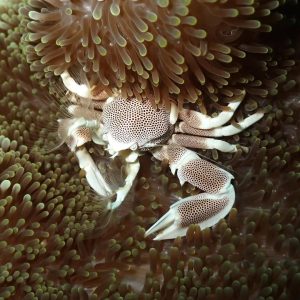
Pin Porcelain Anemone Crab / Photo courtesy Meghann Rademan
Synopsis: Crabs have earned an undeserved reputation as plain, mud-colored creatures that scuttle along beaches and hide under rocks. The reality beneath the waves tells a completely different story. These ten species wear colors so vivid they rival tropical fish, and their patterns show such intricate detail they seem hand-painted. From volcanic shores to coral gardens, these crustaceans prove that evolution crafts beauty even in the most unexpected creatures. Their stunning appearances serve practical purposes—camouflage, warning signals, and species recognition—but the end result captivates anyone lucky enough to spot them. Each species represents a masterpiece of natural design, combining survival strategy with visual splendor that makes them true ocean jewels.
The common perception of crabs falls somewhere between “beach nuisance” and “dinner entree.” Most people think of them as drab brown scavengers that move sideways and pinch toes. This widespread belief couldn’t be further from the truth when it comes to the ocean’s most colorful characters.
The top 10 most beautiful crabs shatter every boring assumption about these armored creatures. Some species sport neon colors that glow like underwater traffic lights. Others wear patterns so delicate and precise they look like tiny works of art that somehow learned to walk. A few have decorated themselves with such creative flair that calling them “crabs” feels like an insult to their fashion sense.
Table of Contents
1. Sally Lightfoot Crab
 Pin
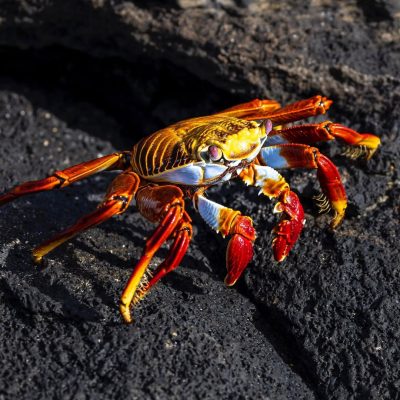
Pin Sally Lightfoot Crab / Photo courtesy Michele Buhofer
The Sally Lightfoot crab earned its cheerful name honestly, dancing across black volcanic rocks with the grace of a ballet performer. These crabs wear shells painted in brilliant reds, oranges, and yellows that create such a stark contrast against the dark Galápagos coastline that visitors can spot them from considerable distances. The color combination shifts slightly with each individual, like nature handed out a box of warm crayons and told each crab to pick their favorites.
Charles Darwin himself noted these flashy crustaceans during his famous voyage, though he seemed more impressed by their acrobatic abilities than their appearance. They can leap gaps between rocks that would seem impossible for a creature built so low to the ground. The bright coloration that makes them so photogenic also serves as a warning to predators that they taste terrible and move far too quickly to be worth the effort.
Young Sally Lightfoots don’t share their parents’ glamorous wardrobe. Juveniles wear dark, camouflaged shells that help them blend into the rocks while they’re still small and vulnerable. Only as they mature do they develop those famous fiery colors, transforming from wallflowers into the life of the tidal zone party. The transformation happens gradually, which means you can often find crabs in various stages of color development, each one representing a different chapter in the species’ remarkable life story.
2. Candy Crab
 Pin
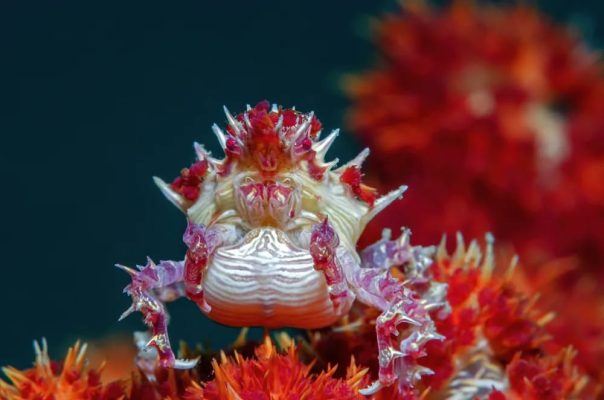
Pin Candy Crab / Photo courtesy Thomas Bannenberg
The candy crab lives by a simple philosophy: when you make your home in soft coral, you might as well become the coral. These tiny crustaceans have perfected the art of disappearing in plain sight, matching not just the color but also the texture of their coral hosts with remarkable precision. They appear in shades of pink, red, white, and sometimes yellow, depending on which coral species they’ve chosen as their personal fortress.
What makes the candy crab truly exceptional isn’t just color matching but detail work that borders on obsessive. Their shells develop small bumps and projections that mimic the polyps and branches of soft corals perfectly. The effect makes them nearly impossible to spot unless they move, and even then, the movement looks so much like coral swaying in the current that most predators swim right past without a second glance.
These crabs can actually change their color to match a new coral home, though the process takes several weeks rather than happening instantly like a chameleon. They’re picky about their real estate too, selecting specific coral species that provide both good camouflage and protection from larger fish. The relationship benefits both parties since the crab helps keep the coral clean while the coral provides a safe place to hide. Size-wise, candy crabs rarely exceed two centimeters, making them one of the smaller beauties on this list, but they pack tremendous visual impact into that compact frame.
3. Harlequin Box Crab
 Pin
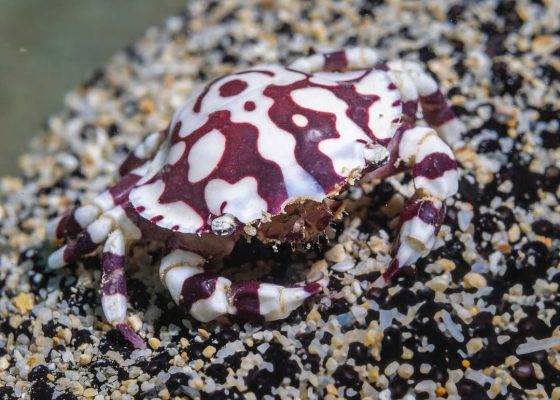
Pin Harlequin Box Crab / Photo courtesy ARMS Australia
The harlequin box crab wears a pattern that looks like someone took a fine brush and carefully dabbed dark brown or red spots across a cream-colored canvas. The spots vary in size and placement, giving each crab a unique appearance while maintaining the overall harlequin theme. The name comes from the resemblance to the diamond-patterned costumes worn by harlequin characters in classical theater, though these crabs pull off the look with considerably more grace.
These crabs have formed an unusual partnership with sea anemones, often taking up residence right among the stinging tentacles that would send most creatures fleeing. The relationship works because the crab has developed immunity to the anemone’s venom, gaining protection while the anemone gets help with cleaning and leftover food scraps. The spotted pattern helps the crab blend with the dappled light and shadows created by anemone tentacles, adding another layer of protection beyond the stinging defenses.
Box crabs get their name from their distinctly square-shaped carapace, which sets them apart from their more oval or round-shelled cousins. The harlequin variety brings elegance to that boxy frame with their sophisticated spotting pattern. They’re generally calm creatures that move deliberately rather than scuttling around frantically like many crab species. This measured approach to life, combined with their striking appearance, makes them favorites among underwater photographers who appreciate subjects that hold still long enough for a proper portrait.
4. Halloween Hermit Crab
 Pin
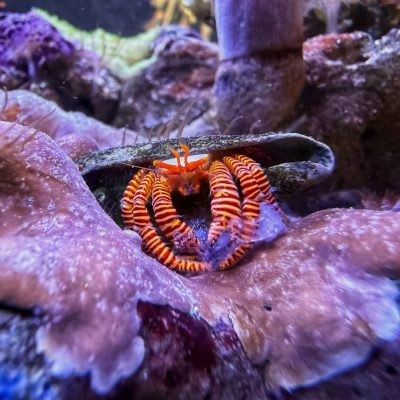
Pin Halloween Hermit Crab / Photo courtesy Joanne Ashton
The Halloween hermit crab arrived at the costume party dressed as itself and still won best outfit. This species sports vibrant horizontal stripes in orange and red that wrap around its legs like festive candy cane patterns, though with a decidedly autumn color scheme. The bold banding continues across the crab’s body, creating a living decoration that brightens up reef environments throughout the Indo-Pacific region.
Unlike their spotted and solid-colored cousins, hermit crabs face the additional challenge of matching their borrowed shells to their natural coloring. The Halloween hermit doesn’t seem particularly concerned about coordination, often selecting shells that clash wonderfully with their bright leg stripes. This creates an even more eye-catching appearance, like someone wearing a formal tuxedo with neon orange sneakers and pulling it off through sheer confidence.
These crabs stay relatively small, which limits their shell options but makes them popular residents in home aquariums. Their personality matches their appearance—they’re active, curious, and constantly on the move looking for food, better shells, or just interesting things to investigate. The striping pattern serves multiple purposes beyond looking festive, helping the crabs recognize each other during mating season and possibly warning predators that they’re prepared to defend themselves vigorously despite their small size. They’re proof that sometimes nature has a sense of humor about color coordination.
5. Porcelain Anemone Crab
 Pin
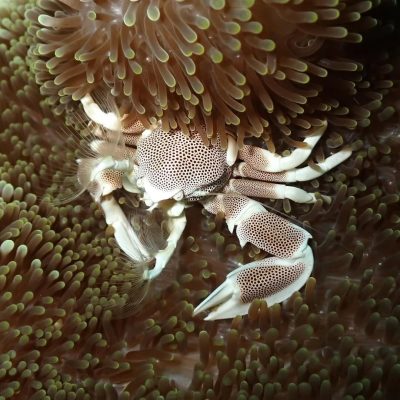
Pin Porcelain Anemone Crab / Photo courtesy Meghann Rademan
The porcelain anemone crab earned its name through a combination of its delicate appearance and fragile nature rather than any actual resemblance to dishware. These crabs feature white shells covered in fine reddish-brown spots that create a stippled, almost watercolor effect. The overall impression suggests something too beautiful and delicate to survive the rough-and-tumble reef environment, yet they thrive in some of the ocean’s most challenging habitats.
What sets these crabs apart beyond their lovely appearance is their feeding method. They spend much of their day waving specialized fan-like appendages through the water, filtering out tiny food particles with movements that look like underwater cheerleading. The fans are covered in fine hairs that trap plankton and organic matter, which the crab then transfers to its mouth with tidy precision. The whole performance has a graceful, almost hypnotic quality that makes them entertaining neighbors for the sea anemones they live among.
Like the harlequin box crab, porcelain anemone crabs have developed immunity to anemone stings and make their homes right in the tentacles. The relationship provides mutual benefits, with the crab getting protection and the anemone getting cleaning services. These crabs are surprisingly territorial about their anemone homes, engaging in elaborate threat displays and occasional wrestling matches when another crab tries to move in. For such delicate-looking creatures, they show considerable backbone when defending their real estate, proving that pretty doesn’t necessarily mean pushover.
6. Blue Land Crab
 Pin
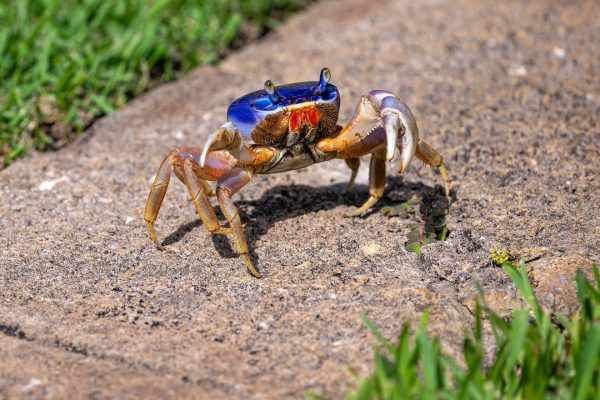
Pin Blue Land Crab / Photo courtesy Emre Dikici
The blue land crab takes a different approach than its marine cousins, spending most of its life on dry ground and only returning to the ocean when it’s time to release eggs. Young crabs start life with practical brown shells that provide excellent camouflage in muddy burrows and among leaf litter. Then something remarkable happens as they mature—the brown fades away and gets replaced by a stunning powdery blue or lavender hue that covers the entire carapace.
This transformation seems counterproductive from a camouflage standpoint, since a bright blue crab stands out like a neon sign against brown dirt and green vegetation. The color likely serves other purposes, possibly as a status symbol during mating season or as a way for adult crabs to recognize each other quickly. The blue comes from special pigments in the shell that reflect certain wavelengths of light while absorbing others, creating that distinctive powder-blue shade that looks almost artificial in its intensity.
These crabs grow considerably larger than most of the species on this list, with some individuals reaching dinner-plate proportions. They’re also surprisingly fast runners when motivated, despite their size and terrestrial lifestyle. Coastal residents in their range often encounter them during the rainy season when the crabs emerge from their burrows en masse to feed and socialize. The sight of dozens of bright blue crabs marching across a lawn or road has startled many an unsuspecting person who expected more conventional wildlife. Their beauty comes with strength and attitude to match, making them one of the more formidable pretty crabs.
7. Arrow Crab
 Pin
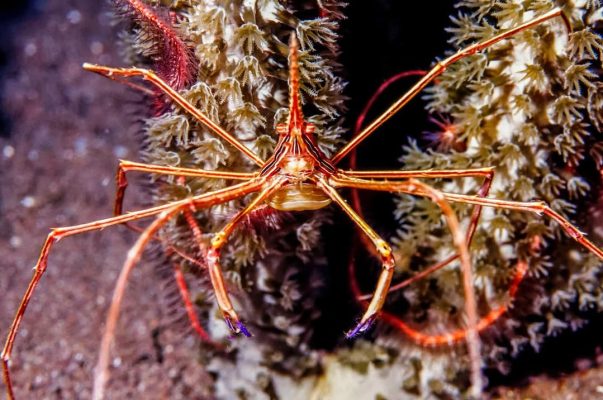
Pin Arrow Crab / Photo courtesy Marine Biology Lovers
The arrow crab breaks the mold of what most people expect a crab to look like. With extremely long, spindly legs that extend far beyond its small body and a pointed rostrum that gives it a distinctly arrow-like profile, this species resembles a spider that decided to try ocean living. The body features iridescent blue and gold lines that catch the light beautifully, creating a shimmering effect as the crab moves through reef crevices.
Those impossibly long legs serve multiple purposes beyond making the crab look like it escaped from a science fiction story. They allow the arrow crab to reach into tight spaces to extract food that other crabs can’t access. The length also helps them pluck parasites off fish, making them useful members of the reef cleaning crew. The legs are surprisingly strong despite their delicate appearance, and the crab uses them to move with a slow, deliberate stalking motion that’s quite different from the sideways scuttle of typical crabs.
Arrow crabs prefer to hunt at night, using their excellent eyesight and long reach to catch small worms, shrimp, and other prey. The metallic coloring that makes them so attractive to aquarium keepers probably helps them blend with the play of light on the reef at night. They’re generally solitary creatures that only tolerate company during mating season, though they maintain relatively peaceful dispositions compared to many crab species. Their unique body plan and beautiful coloring make them instantly recognizable, proving that sometimes the strangest-looking creatures turn out to be the most captivating.
8. Orangutan Crab
 Pin
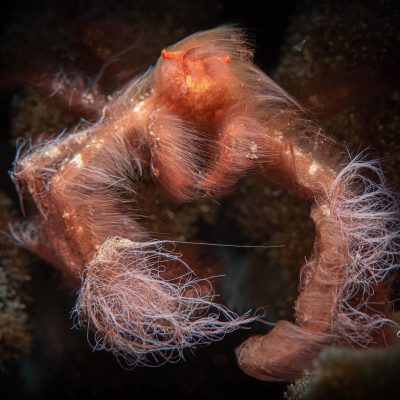
Pin Orangutan Crab / Photo courtesy Philip Seys
The orangutan crab earned its primate-inspired name through its covering of fine, reddish-brown hairs that give it a distinctly fuzzy appearance. These aren’t random hairs but carefully cultivated decorations that the crab maintains as part of its camouflage strategy. The overall effect makes it look less like a crustacean and more like a tiny, aquatic version of the great apes it’s named after, complete with a somewhat bewildered expression that seems to ask why everyone keeps staring.
This species belongs to the decorator crab family, known for their habit of attaching various items to their shells for camouflage. The orangutan crab takes a minimalist approach compared to some relatives that pile on everything from sponges to small rocks. Instead, it relies primarily on its natural hair covering, which blends beautifully with the algae and bryozoans found in its preferred habitat. The hairs also trap sediment and tiny organisms, which actually improves the camouflage over time as the crab becomes a mobile miniature ecosystem.
Despite looking cuddly, these crabs are fully equipped with the standard crab defensive toolkit, including pincers that can deliver a respectable nip if bothered. They’re relatively small, rarely exceeding a few centimeters in size, which makes their hairy covering all the more impressive in its detail. The reddish-brown color can vary slightly between individuals and may change somewhat based on diet and environment. Underwater photographers adore them for their unusual appearance and the challenge of spotting them against their carefully chosen backgrounds. They prove that in the ocean, even the concept of “cute and fuzzy” has a completely different interpretation than on land.
9. Pom Pom Crab
 Pin
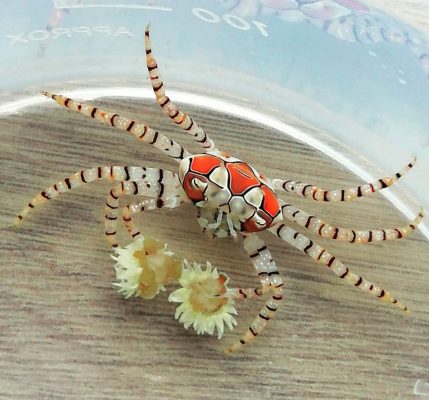
Pin Pom Pom Crab / Photo courtesy Good Grief Reef
The pom pom crab, also known as the boxer crab, has developed one of the most unusual and endearing defensive strategies in the crustacean world. This tiny species carries small sea anemones in its claws, waving them around like a cheerleader’s pom poms or a boxer’s gloves when threatened. The anemones provide stinging protection while the crab provides transportation and access to food scraps, creating a partnership that benefits both parties and looks absolutely ridiculous in the best possible way.
These crabs rarely grow larger than a centimeter or two, making them one of the smallest species on this list. What they lack in size they make up for in personality and tactical creativity. When a pom pom crab loses one of its anemones, it will search frantically for a replacement or, in cases of desperation, tear its remaining anemone in half so it has a matched set. The anemone regenerates from this division, eventually creating two full-sized stinging weapons for the crab’s arsenal.
The crab itself features a cream or light brown coloring with darker markings, though most people never notice the crab’s actual appearance because they’re too busy watching the anemone show. The way the crab waves its pom poms has a distinctly choreographed quality, moving them in specific patterns that seem designed to maximize the threatening display. They’re peaceful creatures that would rather wave their stinging accessories than fight, but they’ll use those anemones if pressed. The sight of a tiny crab performing what looks like an underwater cheer routine makes them favorites among divers and aquarium enthusiasts, proving that sometimes the smallest packages contain the biggest surprises.
10. Rainbow Crab
 Pin
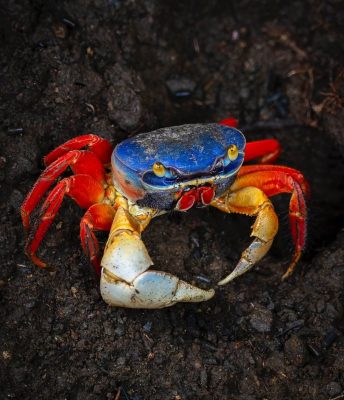
Pin Rainbow Crab / Photo courtesy Phil Zampino
The rainbow crab lives up to its name by displaying a color combination that spans multiple primary hues. These crabs sport a deep blue or purple carapace that forms the base of their spectacular appearance. Their legs add bright red or orange to the palette, creating a bold contrast that catches the eye immediately. The claws often feature white or cream coloring with darker tips, completing a look that uses nearly every color in the crayon box with surprising effectiveness.
This species has become popular in the pet trade, though keeping them requires specific conditions since they need both land and water areas to thrive. In their natural habitat, rainbow crabs live in coastal areas where they can easily move between terrestrial and aquatic environments. They’re semi-terrestrial, meaning they spend significant time on land but need water access for various biological processes. The vivid coloring likely serves multiple purposes, from species recognition to warning potential predators about their strong pincers and generally grumpy disposition when bothered.
Rainbow crabs show considerable personality, often appearing to assess situations with what looks like careful thought before making decisions. They’re territorial and will defend their chosen spots with determination, using those colorful claws to make their point clear. The color intensity can vary based on diet, age, and overall health, with the most vibrant individuals typically being well-fed adults in their prime. These crabs represent the grand finale of the beautiful crab parade—proof that nature saved some of its best color combinations for creatures that most people would never expect to be anything other than plain brown. They remind us that the ocean holds surprises in every shadow and under every rock, waiting for someone to look closely enough to appreciate them.
FAQs
Most cannot change color quickly, though some like the candy crab can shift shades over several weeks to match new coral homes. Their colors come from permanent shell pigments rather than rapid-change skin cells.
Best to admire from a distance. Many use bright colors to warn of strong pincers, bad taste, or partnerships with stinging anemones. Their beauty comes with built-in “don’t touch” warnings that wise visitors respect.
Different species live in specific regions. Sally Lightfoots inhabit the Galápagos, while many others prefer Indo-Pacific coral reefs. Research your destination’s marine life before planning a crab-spotting adventure.
Some species like rainbow crabs adapt well to captivity with proper care, but others require specialized conditions. Research each species’ specific needs before considering them as pets—their beauty demands responsible ownership.
Juveniles typically need camouflage for protection while adults use bright colors for mating displays and territory defense. The color change signals maturity and readiness to join the adult social scene.










 Login with Google